Work record
A Theory of Justice
1971 · Postwar Contemporary · Political Theory · English
Abstract
Background. At a time when analytic philosophers doubted that grand political theory could still be written and welfare economics leaned on aggregate happiness, a Harvard professor gathered twenty years of essays into one systematic book.
Thesis. Fair principles for a society's main institutions are those that equals would accept if none knew whether fortune had made them rich or poor, gifted or ordinary, devout or secular. Such choosers, Rawls contends, would guarantee the same fundamental freedoms to everyone before anything else, and would tolerate gaps in income and position only where careers are genuinely open and the worst-off gain from the arrangement.
Structure. The opening third builds and defends the hypothetical bargain; the middle applies it to constitutions, markets, obligations to future generations and principled lawbreaking; the last asks whether citizens raised under such rules would come to embrace them as part of their own flourishing.
Significance. Widely credited with reviving normative political thought, the book provoked libertarian, utilitarian and communitarian rejoinders and remains the reference point for debate about fairness, equality and liberty. Rawls himself reworked its foundations in later books, presenting the view as a political conception that citizens holding different religious and moral doctrines could share, and critics continue to dispute both its method and its conclusions.
Key figures
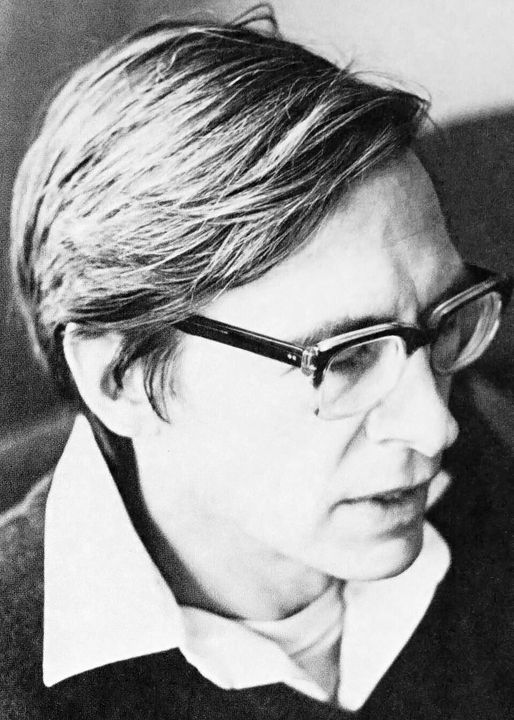
- John Rawls: Harvard philosopher proposing justice as fairness
- The parties in the original position: Imagined choosers deprived of knowledge of their own circumstances
- The classical utilitarians: Bentham, Mill and Sidgwick, the tradition Rawls seeks to replace

Summary
A Theory of Justice is the major work of the American philosopher John Rawls, published by the Belknap Press of Harvard University Press in 1971 after nearly two decades of articles on the same themes. Rawls sets out to offer an alternative to utilitarianism, the view that the right policy is whatever produces the greatest total happiness, which he thought had dominated modern moral and political philosophy. He calls his alternative 'justice as fairness' and presents it as a generalization of the social contract theory of Locke, Rousseau and Kant. The book opens with the claim that justice is the first virtue of social institutions, and that each person has an inviolability founded on justice that even the welfare of society as a whole cannot override. Its subject is the basic structure of society: the way the major institutions distribute rights, duties and the advantages of social cooperation. To find principles for that structure, Rawls imagines an 'original position', a hypothetical agreement among free and equal persons who choose principles from behind a 'veil of ignorance'. They do not know their place in society, their class, their natural talents, or their own idea of the good life, so they cannot tailor principles to their own advantage. Rawls argues that they would choose two principles. The first gives each person an equal right to the most extensive scheme of basic liberties, such as political liberty, freedom of speech and conscience, and the rule of law, compatible with the same liberties for all. The second permits social and economic inequalities only if they are attached to positions open to all under fair equality of opportunity and if they work to the greatest benefit of the least advantaged; this last condition is the 'difference principle'. The first principle has priority over the second, so that basic liberties may not be traded for economic gains. Rawls defends these choices partly by arguing that rational parties facing such uncertainty would secure the best worst outcome, and partly by the method of 'reflective equilibrium', in which principles and our considered judgments about particular cases are adjusted to one another. Part Two, Institutions, applies the principles to a constitutional democracy: equal liberty of conscience, toleration, the rule of law, the distributive role of markets and government, the just savings owed to future generations, and the duty to comply with law, including a well-known account of civil disobedience and conscientious refusal. Part Three, Ends, asks whether a society governed by these principles would be stable, discussing moral development, the good of self-respect, the 'Aristotelian principle' that people enjoy exercising their developed capacities, and the congruence of justice with each person's good. A revised edition appeared in 1999. The book revived political philosophy in the English-speaking world and drew vigorous responses from critics of many schools.
Virtues in this work
- Justice: Rawls opens the book by calling justice the first virtue of social institutions and builds his whole theory on that claim.
- Prudence: The parties in the original position choose principles cautiously, guarding against the worst outcomes in a matter of the highest importance.
- Humility: The veil of ignorance asks each reasoner to set aside knowledge of his own advantages when judging what is fair to all.
Plot or Argument
- Part One, Chapter I: Justice as Fairness
The role of justice and the basic structure of society; the main idea of the original position; contrasts with classical utilitarianism and intuitionism; the method of reflective equilibrium.
- Part One, Chapter II: The Principles of Justice
Statement of the two principles, the interpretations of the second principle, fair equality of opportunity, the difference principle, primary goods, and principles for individuals such as fairness and natural duties.
- Part One, Chapter III: The Original Position
The circumstances of justice, the veil of ignorance, the rationality of the parties, and the arguments for the two principles over utilitarian alternatives, including the reasoning about choice under uncertainty.
- Part Two, Chapter IV: Equal Liberty
The four-stage sequence from the original position to constitution, legislation and application; equal liberty of conscience, toleration, political liberty and the rule of law; the priority of liberty.
- Part Two, Chapter V: Distributive Shares
The economic institutions of a just basic structure, the problem of justice between generations and the just savings principle, legitimate expectations and desert.
- Part Two, Chapter VI: Duty and Obligation
The duty to comply with an unjust law within a nearly just constitution, majority rule, and the definition and justification of civil disobedience and conscientious refusal.
- Part Three, Chapter VII: Goodness as Rationality
A theory of the good as the rational plan of life, the Aristotelian principle, and self-respect as perhaps the most important primary good.
- Part Three, Chapters VIII–IX: The Sense of Justice and The Good of Justice
Moral development through family, association and principle; the stability of justice as fairness compared with utilitarianism; the idea of social union; and the congruence of the right and the good.
Characters
- John Rawls, author
Harvard philosopher presenting a systematic theory of justice for a democratic society.
- The parties in the original position, hypothetical choosers
Free, equal and rational representatives who choose principles of justice without knowing their own place in society.
- The least advantaged, reference group
Those with the lowest share of primary goods, whose prospects the difference principle measures.
- Locke, Rousseau and Kant, predecessors
The social contract thinkers whose tradition Rawls claims to carry to a higher level of abstraction.
- Bentham, Mill and Sidgwick, chief opponents
The classical utilitarians whose theory Rawls takes as the main alternative to be answered.
Lessons
The veil of ignorance
Rawls asks what principles we would choose for society if we did not know what position we would occupy in it. The thought experiment is meant to model impartiality: no one can favour his own class, talents or beliefs. Students can use it as a tool for testing rules of any group, while also asking whether it leaves out things that matter to justice.
- What facts are hidden from the parties behind the veil of ignorance, and why?
- Why does Rawls think principles chosen this way would be fair?
- Can a person reason well about justice without knowing anything about his own convictions and commitments?
Liberty first
Rawls's first principle, equal basic liberties for all, has priority over the second: freedom of conscience, speech and political participation may not be sacrificed for greater economic welfare. This 'priority of liberty' distinguishes his theory from views that would balance liberty against other goods.
- Which liberties does Rawls count as basic?
- Why does he refuse to trade basic liberties for economic gains?
- Are there circumstances in which Rawls allows liberty to be limited?
The difference principle and its critics
Rawls holds that inequalities in wealth and income are just only if they work to the greatest benefit of the least advantaged and offices are open to all under fair equality of opportunity. Robert Nozick replied that justice concerns how holdings were acquired and transferred, not their overall pattern; others questioned whether rational parties would really choose so cautiously. The debate remains one of the central ones in political philosophy.
- State the difference principle in your own words.
- Why does Rawls regard natural talents as undeserved from a moral point of view?
- How does Nozick's view of just holdings differ from Rawls's, and which considerations does each emphasize?
Civil disobedience in a nearly just society
Rawls defines civil disobedience as a public, nonviolent, conscientious act contrary to law, done to bring about a change in law or policy, addressed to the majority's sense of justice and accepting the legal penalty. He limits its justification to serious violations of basic liberty or fair opportunity, when normal appeals have failed.
- What features distinguish civil disobedience from other kinds of lawbreaking in Rawls's account?
- Why does Rawls require that the disobedient person accept the legal penalty?
- How does his account compare with Martin Luther King Jr.'s Letter from Birmingham Jail?
Context
In the decades after the Second World War, academic philosophy in Britain and America was dominated by linguistic analysis, and many philosophers doubted that systematic political theory was possible. Utilitarianism remained the chief framework for thinking about public policy. Rawls wrote during the expansion of the welfare state and amid debates over civil rights, conscientious objection and the Vietnam War, though the book addresses principles rather than particular controversies.
Composition
Rawls developed the theory over some twenty years, in papers such as 'Justice as Fairness' (1958), 'Distributive Justice' (1967) and 'The Justification of Civil Disobedience' (1969), circulating drafts of the book to colleagues in the 1960s. Harvard's Belknap Press published it in 1971. Rawls revised the text for the German translation of 1975, and those revisions were published in English as the revised edition of 1999, which is the edition most often cited today.
Reception
The book was quickly recognized as a landmark and is credited with reviving normative political philosophy. It provoked responses from many directions: Robert Nozick's Anarchy, State, and Utopia (1974) defended a libertarian theory of entitlements; utilitarians such as John Harsanyi criticized the reasoning of the original position; communitarian critics including Michael Sandel, Alasdair MacIntyre and Michael Walzer questioned its picture of the self and its universal ambitions; and others asked whether its principles were too demanding or not demanding enough. Rawls responded in later work, especially Political Liberalism (1993), by recasting his view as a political conception for a society of many reasonable religious and moral doctrines.
Comparisons
- the-social-contract
Rousseau's general will and his concern that each person, uniting with all, remain as free as before are among the sources Rawls names for justice as fairness.
- second-treatise-of-government
Locke grounds legitimate government in the consent of free and equal persons in a state of nature; Rawls replaces the historical or natural state with a hypothetical original position.
- utilitarianism
Mill's utilitarianism is the main theory Rawls sets out to answer, objecting that maximizing total welfare does not take seriously the distinction between persons.
- groundwork-of-the-metaphysics-of-morals
Rawls offers a 'Kantian interpretation' of justice as fairness, reading the original position as a procedural expression of Kant's idea of persons as free and equal rational beings who give themselves the moral law.
- the-nicomachean-ethics
Rawls's 'Aristotelian principle', that people enjoy exercising their developed capacities, draws on Aristotle's account of activity and happiness, though Rawls places the right before the good.
- sermons-and-letter-from-birmingham-jail
King's defence of civil disobedience in 1963 is the most famous American example of the practice that Rawls analyzes and justifies within a nearly just constitutional order.
Quotes
“Justice is the first virtue of social institutions, as truth is of systems of thought.”
“Each person possesses an inviolability founded on justice that even the welfare of society as a whole cannot override.”
For Students
A reading companion for classical Christian high school students. See the student guide.
Reading Guide
Watch for
- The opening claims of §1 about justice as the first virtue of institutions and the inviolability of persons.
- The 'basic structure of society' as the subject of justice.
- The original position and the veil of ignorance as a device for choosing principles impartially.
- The exact wording of the two principles and the priority of the first over the second.
- The account of civil disobedience in Chapter VI.
Key terms and names
- Original position
- Rawls's hypothetical situation in which free and equal persons choose principles of justice for their society.
- Veil of ignorance
- The restriction on knowledge in the original position: the parties do not know their place in society, talents or conception of the good.
- Difference principle
- The part of the second principle permitting social and economic inequalities only if they benefit the least advantaged members of society.
- Primary goods
- Things every rational person is presumed to want whatever else he wants: rights and liberties, opportunities, income and wealth, and the social bases of self-respect.
- Reflective equilibrium
- The state reached by adjusting general principles and considered judgments about particular cases until they agree.
- Utilitarianism
- The theory that right actions and institutions are those that produce the greatest total or average happiness, which Rawls aims to replace.
Seminar Questions
- Comprehension What are the two principles of justice, and which has priority?
- Comprehension What do the parties in the original position not know about themselves?
- Comprehension How does Rawls define civil disobedience?
- Interpretation Why does Rawls think the parties would reject the principle of maximizing average utility?
- Interpretation What does Rawls mean by saying utilitarianism does not take seriously the distinction between persons?
- Interpretation Why does Rawls treat natural talents as arbitrary from a moral point of view, and how do his critics respond?
- Big Question Is justice best understood as a fair procedure, a fair pattern of outcomes, or respect for what people have rightly acquired?
- Big Question Can principles of justice be chosen without reference to a shared view of the good life?
Faith Connections
- Leviticus 19:15 (Scripture)
'Thou shalt not respect the person of the poor, nor honour the person of the mighty': Scripture's command of impartial judgment can be compared with the impartiality the veil of ignorance is meant to secure.
- Matthew 7:12 (Scripture)
The Golden Rule asks each person to treat others as he would be treated; readers have compared it with Rawls's device of choosing rules without knowing one's own place.
- Genesis 1:27 (Scripture)
The creation of every person in God's image is the Christian ground for the equal dignity that Rawls expresses as an inviolability founded on justice; students can ask what ground Rawls himself offers.
- Augustine, City of God IV.4 (Church Fathers)
Augustine asks what kingdoms are without justice but great robberies, an older statement of the primacy of justice that Rawls places at the start of his book.
Logic and Rhetoric
Central argument: Principles of justice for the basic structure of society are those that free and equal persons would agree to in a fair initial situation. If the parties choose behind a veil of ignorance, not knowing their place, talents or conception of the good, no one can tailor principles to his own advantage. Facing such uncertainty about matters of the greatest importance, rational parties would secure equal basic liberties first and permit inequalities only when offices are open to all and the inequalities benefit the least advantaged. These principles also match our considered judgments in reflective equilibrium. Therefore justice as fairness is a better account of justice than utilitarianism.
Rhetorical device: thought experiment. The original position asks readers to imagine choosing the rules of their society without knowing whether they will be rich or poor, talented or not, believer or unbeliever.
Debate: Resolved: Social and economic inequalities are just only if they benefit the least advantaged.
Writing Prompts
Essay: Explain Rawls's original position and veil of ignorance, and evaluate whether they lead to the two principles he defends.
Comparison with Second Treatise of Government: Locke and Rawls both ground political principles in an agreement among free and equal persons. Compare Locke's state of nature with Rawls's original position and explain how their different starting points shape their conclusions about property.
Medical Lens
A work of political philosophy. Rawls lists health and vigour among the natural primary goods, which are influenced by the basic structure but not directly under its control; later writers extended his theory to the just distribution of health care, but the book itself does not treat medicine.
Creative Prompts
- Classroom
Behind a 'veil of ignorance', have the class draft rules for sharing a limited classroom resource without knowing which student they will be; then compare the rules with Rawls's two principles.
- Dialogue
Write a conversation between Rawls and Robert Nozick about whether a basketball star's earnings, freely paid by fans, can be unjust.
- Essay
Explain why Rawls thinks utilitarianism fails to take seriously the distinction between persons, and evaluate his alternative.
Further Reading
- Anarchy, State, and Utopia, Robert Nozick
The best-known libertarian response, published in 1974.
- Liberalism and the Limits of Justice, Michael J. Sandel
A communitarian critique of Rawls's conception of the person.
- Justice as Fairness: A Restatement, John Rawls
Rawls's shorter and revised presentation of the theory.
- Political Liberalism, John Rawls
Verification notes
Copyrighted; summary and student layer are paraphrase. Both quotations were confirmed in identical wording on the University of Hong Kong philosophy course page (https://philosophy.hku.hk/courses/law/Rawls%20Justice%20Intro%20(new%20JaF).htm) and on Wikiquote, which cites the revised edition (1999), Ch. 1, §1, 'The Role of Justice' (https://en.wikiquote.org/wiki/A_Theory_of_Justice); they are marked unverified because no copy was consulted. The wording of both sentences is generally reported as the same in the 1971 and 1999 editions. Chapter structure (three parts, nine chapters) and publication history follow standard accounts. The basketball example in the creative prompt refers to Nozick's Wilt Chamberlain argument in Anarchy, State, and Utopia.
- Text is under copyright; check quotations against an authorized edition before publication.
- That the two quoted sentences are identical in the 1971 first edition and the 1999 revised edition.
- Chapter and section titles as listed in plotOrArgument.
- Dates of Rawls's early papers ('Justice as Fairness' 1958; 'Distributive Justice' 1967; civil disobedience paper 1969).