Work record
Slaughter-House Cases
1873 · 19th Century · Court Decision · English
Abstract
Question Presented. Did Louisiana violate the Thirteenth or Fourteenth Amendment when it confined all butchering in and around New Orleans to one chartered company's facility for a quarter century?
Arguments. The independent butchers said the grant reduced them to a kind of servitude, took their livelihood without due process, denied them equal treatment, and abridged a fundamental freedom belonging to every American to work at an honest trade. The state replied that it had simply relocated a noxious business for the sake of sanitation, that such regulation had always belonged to the states, and that any butcher remained free to work at the new abattoir.
Holding. By the narrowest margin the justices sustained the statute. Miller read the postwar amendments chiefly as guarantees for emancipated people, confined the federal citizenship clause to rights derived from the national government, and found neither a taking of property nor discrimination against a class. Four colleagues, led by Field, would have struck the monopoly down.
Significance. As the earliest major construction of Section 1, the ruling largely retired the citizenship-rights guarantee from litigation. Later generations pressed the dissenters' ideas through due process instead, and the clause reappeared only in 1999, in a dispute over welfare benefits for new residents of California.
Key figures
- Samuel F. Miller: Justice speaking for the narrow majority
- Stephen J. Field: Lead dissenter joined by three colleagues
- Joseph P. Bradley: Dissenter who added his own opinion
- John A. Campbell: Former justice representing the butchers
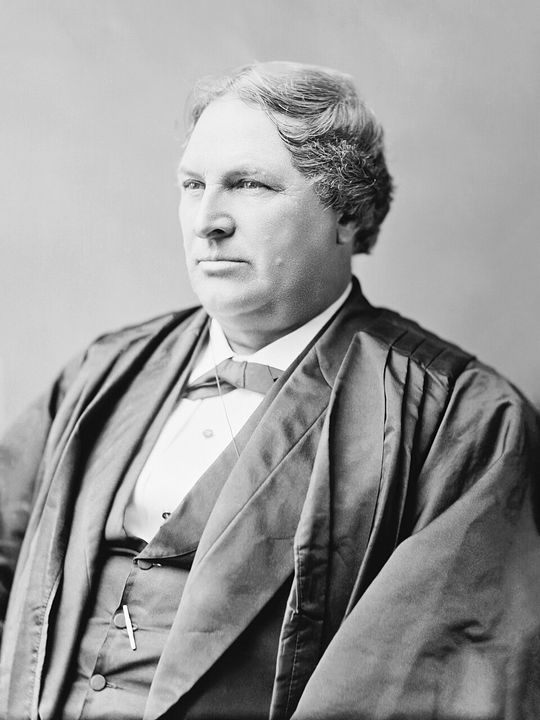

Summary
In March 1869 the Louisiana legislature passed an act entitled "An act to protect the health of the city of New Orleans," which chartered the Crescent City Live-Stock Landing and Slaughter-House Company and gave it for twenty-five years the sole right to maintain stock landings and slaughterhouses in the parishes of Orleans, Jefferson and St. Bernard. Every butcher in that district of over a thousand square miles had to bring his animals to the company's slaughterhouse below the city and pay its fees. Defenders of the act pointed to the offal that butchers had long thrown into the Mississippi above the city's water supply. The Butchers' Benevolent Association sued, and after the Louisiana Supreme Court upheld the law, several consolidated cases reached Washington. Their counsel, former Justice John A. Campbell, argued that the monopoly imposed an involuntary servitude forbidden by the Thirteenth Amendment and violated the new Fourteenth Amendment, ratified in 1868, by abridging the privileges or immunities of citizens of the United States, depriving them of property without due process, and denying equal protection. Louisiana answered that the law was an ordinary exercise of the police power over public health, of a kind states had always used, and that the butchers could still practice their trade at the company's facility. On 14 April 1873 the Court upheld the law, five to four. Justice Miller, in the first full interpretation of the postwar amendments, found in all three one pervading purpose: securing the freedom of the formerly enslaved and protecting them from those who had held them. The Fourteenth Amendment distinguished national citizenship from state citizenship, he reasoned, and its Privileges or Immunities Clause protected only rights owing their existence to the national government, such as access to the seat of government, protection on the high seas and use of navigable waters. To read it as placing all civil rights under federal protection would make the Court a perpetual censor of state legislation and change the whole federal system, which Miller would not presume without plain language. The restraint on the butchers was not a deprivation of property, and the Equal Protection Clause was aimed at discrimination against freedmen as a class. Justice Field, joined by Chase, Swayne and Bradley, argued that the amendment protects the common rights of free citizens, including the right to pursue a lawful calling, against state abridgment, and that the health rationale did not justify a monopoly. Justice Bradley added that the choice of an occupation is both liberty and property. The library text contains Miller's opinion and excerpts from the Field and Bradley dissents; Swayne's dissent and the footnotes are absent. The decision left the Privileges or Immunities Clause with little independent force. The arguments of Field and Bradley were later developed under the Due Process Clause, notably in Lochner v. New York (1905). Louisiana's 1879 constitution ended the monopoly, and in Saenz v. Roe (1999) the Court relied on the clause to protect a right of newly arrived residents to equal treatment.
Virtues in this work
- Prudence: Miller weighs the consequences of a broad reading for the whole federal system before deciding a dispute among New Orleans butchers.
- Industry: The butchers went to law to defend the trade by which about a thousand of them supported their families.
- Justice: Field and Bradley insist that every citizen, whatever his race or condition, has an equal claim to pursue a lawful calling without a state-made monopoly in the way.
Plot or Argument
- The statute and the police power
Miller describes the 1869 act and holds that its provisions for locating slaughterhouses below the city and inspecting animals fall within the police power, which extends to the health and comfort of the people. Granting the business to a single corporation, he says, is a choice of means the legislature may make, as English and American precedents on markets and ferries show.
- The history of the three amendments
Recounting the war, the Black Codes and the struggles of Reconstruction, Miller concludes that one pervading purpose underlies the Thirteenth, Fourteenth and Fifteenth Amendments: the freedom of the formerly enslaved race and the protection of the freedman. That purpose must guide their interpretation, though others may claim their protection in proper cases.
- Two citizenships
The first sentence of the Fourteenth Amendment, Miller notes, overturned the Dred Scott decision and made national citizenship independent of state citizenship. Because the Privileges or Immunities Clause speaks only of citizens of the United States, it protects only the rights of national citizenship, leaving the great body of civil rights where it had always been, with the states.
- What national citizenship secures
Miller lists examples: to come to the seat of government, to use the ports and navigable waters, to demand protection abroad and on the high seas, to petition and assemble peaceably, to enjoy the writ of habeas corpus, and to become a citizen of any state by residence. None is at stake for the butchers.
- Due process, equal protection and the federal system
The restraint on the butchers is no deprivation of property under any admissible construction, and the Equal Protection Clause was aimed at state action against the freedmen as a class. Miller declines to read the amendments as subjecting the states to federal control over all civil rights, which would radically change the relation between state and nation.
- Field's dissent
Field accepts the police power but finds only two genuine sanitary provisions in the act. The rest is a monopoly unlike grants of ferries or patents for inventions. He argues that the Thirteenth Amendment reaches all forms of involuntary servitude and that the Fourteenth protects the common rights of citizens against state legislation; the excerpt ends as he begins to discuss the Citizenship Clause.
- Bradley's dissent
Bradley joins Field and adds that citizenship of the United States carries fundamental rights inherited from English liberty, among them the right to choose a lawful employment, which no state may take away. Calling the act a police regulation in pretence only, he treats a monopoly on a common trade as an abridgment of those rights.
Characters
- Samuel F. Miller, author of the opinion of the Court
Kentucky-born physician turned Iowa lawyer, appointed by Lincoln in 1862.
- Stephen J. Field, principal dissenter
Californian appointed by Lincoln in 1863 and a firm advocate of the right to pursue a lawful calling.
- Joseph P. Bradley, dissenting justice
New Jersey railroad lawyer appointed in 1870 who had ruled for the butchers on circuit.
- John A. Campbell, counsel for the butchers
Alabamian who had resigned from the Court in 1861 and argued the cases for the plaintiffs in error.
- Butchers' Benevolent Association of New Orleans, plaintiffs in error
Organization of independent butchers who challenged the monopoly.
- Crescent City Live-Stock Landing and Slaughter-House Company, defendant in error
Seventeen-member corporation chartered in 1869 with the exclusive slaughtering right.
Lessons
Reading new amendments by their purpose
Miller interpreted the Reconstruction amendments through the history that produced them, concluding that their central aim was the freedom and protection of the formerly enslaved. His approach shows how a single dominant purpose can shape, and also limit, the reading of broad constitutional words.
- What events does Miller recount to identify the purpose of the amendments?
- Does recognizing one pervading purpose mean the amendments protect no one else? What does Miller say?
- How might the butchers have answered Miller's reading of history?
The federal balance
Miller feared that a broad reading would make the Court a perpetual censor of state laws and transform the relation between states and nation. The dissenters believed the amendments had deliberately made that change. Both sides argued about the structure of the Union as much as about butchers.
- Why does Miller think the consequences of the butchers' argument are a reason to reject it?
- Is it legitimate for judges to consider the consequences of an interpretation?
- What did the Congress of 1866 intend to change in the federal system, according to the dissenters?
Health law and economic liberty
Louisiana defended its act as sanitary regulation; Field replied that only two provisions concerned health and the rest created a monopoly. The case asks how courts should judge a law whose stated purpose and practical effect seem to diverge.
- Which provisions does Field accept as genuine health regulations?
- Should courts examine whether a law's stated purpose is its real purpose?
The right to work at a trade
Field and Bradley placed the freedom to follow a lawful calling among the most valuable rights of a free citizen, tracing it to English opposition to monopolies. That idea, rejected here, later shaped decades of constitutional argument about economic regulation.
- Why does Bradley call the right to choose an occupation a form of property?
- How did the Thirteenth Amendment's ban on involuntary servitude figure in the butchers' argument?
- What limits on the right to pursue a trade would Field and Bradley accept?
Context
New Orleans in the 1860s suffered repeated outbreaks of cholera and yellow fever, and reformers blamed in part the refuse from slaughterhouses upstream of the city. Reconstruction-era Louisiana was governed by a Republican legislature, and opponents charged that the slaughterhouse charter had been obtained by bribery. Nationally, Congress had passed the Civil Rights Act of 1866 and the Fourteenth Amendment, and the meaning of its new guarantees was unsettled.
Composition
The act passed on 8 March 1869 and took effect that June. Hundreds of suits followed in state courts; Justice Bradley, sitting on circuit in 1870, sided with the butchers, but the Louisiana Supreme Court upheld the act. The cases were argued in the Supreme Court in January 1872 and, after the illness and absence of a justice, reargued in February 1873. The library text, from Wikisource, gives Miller's opinion with excerpts from the Field and Bradley dissents.
Reception
The decision confined the Privileges or Immunities Clause, and three years later United States v. Cruikshank (1876) also read federal protection of rights narrowly. Field and Bradley's dissents were cited in later cases on economic liberty, while legal scholars of differing views have argued since the twentieth century that Miller read the clause too narrowly. In McDonald v. Chicago (2010) the Court declined to revisit the decision, with Justice Thomas urging that it be reconsidered.
Comparisons
- dred-scott-v-sandford
Miller says the Fourteenth Amendment's first sentence overturns the Dred Scott decision, then builds his reading on its distinction between national and state citizenship.
- barron-v-baltimore
By limiting the Privileges or Immunities Clause to rights of national citizenship, the majority left in place much of Barron's rule that the Bill of Rights did not bind the states.
- lochner-v-new-york
Lochner protected freedom of contract under the Due Process Clause, developing the liberty to pursue a calling that Field and Bradley had defended in 1873.
- plessy-v-ferguson
Both cases read the Fourteenth Amendment in ways that limited federal oversight of state legislation, and both drew dissents that later became influential.
- the-founding-documents
The Fourteenth Amendment's phrase about privileges or immunities echoes the Privileges and Immunities Clause of Article IV, a comparison central to Miller's reasoning.
- charles-river-bridge-v-warren-bridge
Field distinguishes public franchises such as bridges and ferries from a monopoly on an ordinary trade, recalling the debate over exclusive grants decided in 1837.
Quotes
Frequently cited
“no one can fail to be impressed with the one pervading purpose found in them all, lying at the foundation of each, and without which none of them would have been even suggested; we mean the freedom of the slave race, the security and firm establishment of that freedom, and the protection of the newly-made freeman and citizen from the oppressions of those who had formerly exercised unlimited dominion over him.”
Frequently cited
“It is quite clear, then, that there is a citizenship of the United States, and a citizenship of a State, which are distinct from each other, and which depend upon different characteristics or circumstances in the individual.”
Frequently cited
“And, in my judgment, the right of any citizen to follow whatever lawful employment he chooses to adopt (submitting himself to all lawful regulations) is one of his most valuable rights, and one which the legislature of a State cannot invade, whether restrained by its own constitution or not.”
“But, however pervading this sentiment, and however it may have contributed to the adoption of the amendments we have been considering, we do not see in those amendments any purpose to destroy the main features of the general system.”
“It is nothing less than the question whether the recent amendments to the Federal Constitution protect the citizens of the United States against the deprivation of their common rights by State legislation.”
“The abolition of slavery and involuntary servitude was intended to make every one born in this country a freeman, and as such to give to him the right to pursue the ordinary avocations of life without other restraint than such as affects all others, and to enjoy equally with them the fruits of his labor.”
For Students
A reading companion for classical Christian high school students. See the student guide.
Reading Guide
Watch for
- The provisions of the 1869 act and the size of the district it covered.
- Miller's history of the war and Reconstruction and the purpose he draws from it.
- The distinction between citizenship of the United States and citizenship of a state.
- Miller's list of the rights that belong to national citizenship.
- Field's separation of genuine health regulations from the monopoly grant, and Bradley's appeal to English liberties.
Key terms and names
- Police power
- The general authority of a state to regulate for the health, safety, morals and welfare of its people.
- Privileges or Immunities Clause
- The Fourteenth Amendment's provision that no state shall abridge the privileges or immunities of citizens of the United States.
- Monopoly
- An exclusive right granted to one person or company to carry on a trade, shutting out all others.
- Involuntary servitude
- Compulsory labor for another, forbidden by the Thirteenth Amendment except as punishment for crime.
- Calling
- A person's trade or occupation; the dissenters argued the right to pursue one is fundamental.
- Black Codes
- Laws passed by Southern states in 1865 and 1866 restricting the freedmen, which Miller cites as background to the amendments.
Seminar Questions
- Comprehension What did the 1869 Louisiana act require of butchers in New Orleans and the surrounding parishes?
- Comprehension Which rights of national citizenship does Miller list, and why do none of them help the butchers?
- Interpretation How does Miller's account of the amendments' one pervading purpose shape his answer to the butchers?
- Interpretation Why does Miller treat the consequences of the butchers' reading as a decisive argument against it?
- Interpretation On what grounds does Field distinguish the slaughterhouse monopoly from exclusive grants for ferries, bridges and patents?
- Big Question Is the freedom to earn a living by an honest trade a fundamental right that governments must respect?
Faith Connections
- 2 Thessalonians 3:10-12 (Scripture)
Paul's instruction that Christians work quietly and eat their own bread honors ordinary labor, the kind of livelihood the butchers believed the monopoly impaired.
- Leviticus 13-14 (Scripture)
The Mosaic laws on uncleanness and the inspection of houses show an ancient concern for community health, the interest Louisiana invoked for its act.
- Adam Smith, The Wealth of Nations, Book I, ch. 10 (Great Conversation)
Smith called the property every man has in his own labor the most sacred and inviolable, a view echoed in Bradley's defense of the right to choose a calling.
Logic and Rhetoric
Central argument: Because the Reconstruction amendments were adopted chiefly to secure the freedom of the formerly enslaved, and because the Fourteenth Amendment distinguishes national from state citizenship, the Privileges or Immunities Clause protects only rights of national citizenship; a state regulation of slaughtering, a matter of police power, therefore abridges none of them.
Rhetorical device: argument from consequences. Miller warns that the butchers' reading would make the Court a perpetual censor of state legislation, then declines to transform the federal system without plain words (quote 2).
Debate: Resolved: that the Privileges or Immunities Clause protects the right to pursue a lawful calling against state legislation.
Memory Work
It is quite clear, then, that there is a citizenship of the United States, and a citizenship of a State, which are distinct from each other, and which depend upon different characteristics or circumstances in the individual.
And, in my judgment, the right of any citizen to follow whatever lawful employment he chooses to adopt (submitting himself to all lawful regulations) is one of his most valuable rights, and one which the legislature of a State cannot invade, whether restrained by its own constitution or not.
Writing Prompts
Essay: Compare Miller's and Field's readings of the Fourteenth Amendment and explain which better fits the amendment's words and the history Miller recounts.
Comparison with Lochner v. New York: Trace how the right to pursue a lawful calling defended by the Slaughter-House dissenters reappears as freedom of contract in Lochner v. New York, and assess how the argument changed.
Medical Lens
The Louisiana statute was framed as a sanitary measure for a city troubled by epidemics, and the opinions debate how far a state's power over public health justifies concentrating slaughtering below the water supply; the discussion is legal rather than medical.
Creative Prompts
- Classroom
Reargue the cases in February 1873: John A. Campbell's team for the butchers, Louisiana's team for the company, and a nine-member bench that must divide between a majority and dissents.
- Essay
Make a two-column chart of the rights of national citizenship Miller lists and the rights Field and Bradley believed the amendment protected, then write a paragraph explaining what difference the choice makes.
- Dialogue
Write a conversation in 1869 between a New Orleans butcher and a city health officer about where animals should be slaughtered and who should control the business.
Further Reading
- The Slaughterhouse Cases: Regulation, Reconstruction, and the Fourteenth Amendment, Ronald M. Labbé and Jonathan Lurie
Detailed history of the New Orleans slaughterhouse controversy and the litigation.
- The Fourteenth Amendment: From Political Principle to Judicial Doctrine, William E. Nelson
Study of the amendment's framing and its interpretation in the decades after 1868.
- Mr. Justice Miller and the Supreme Court, 1862-1890, Charles Fairman
Older study of the author of the majority opinion.
Verification notes
All six quotations were found by Grep as exact strings in content/texts/slaughter-house-cases.txt; the first begins mid-sentence and is given in lower case as in the source. The five-to-four vote and the 14 April 1873 date appear in the opinion itself. Web searches were unavailable while this record was written; the dates of argument, the bribery allegations and the bibliographic details of the furtherReading titles follow standard accounts and should be checked.
- Confirm the dates of first argument (January 1872) and reargument (February 1873).
- Confirm that Justice Bradley ruled for the butchers on circuit in 1870.
- Confirm the title and publication details of the Fairman biography of Miller.