Work record
Sweatt v. Painter
1950 · Postwar Contemporary · Court Decision · English
Abstract
Question Presented. Did Texas meet its duty under the Fourteenth Amendment's equal protection guarantee by offering a Black applicant a newly created law school of its own instead of admitting him to the flagship university in Austin?
Arguments. Counsel for the applicant contended that the substitute school trailed the university in professors, books, courses and standing, and that training lawyers apart from most of the bar and bench could never be equal; they also urged the justices to abandon the 1896 Plessy rule. The state maintained that Plessy still governed, that it had moved quickly and honestly to build a comparable school, and that higher education belonged to state discretion.
Holding. Nine justices agreed that the substitute school did not provide substantial equality. The Chief Justice weighed both countable resources and harder-to-measure goods such as faculty reputation, alumni influence and tradition, and found that a law student cut off from 85 percent of the state's people lacked an equal opportunity. Sweatt was entitled to enter the university at once.
Significance. Without overruling Plessy, the ruling made separate graduate and professional programs very hard to defend, and NAACP lawyers built on its reasoning in the school cases decided in 1954.
Text. The library reproduces the Chief Justice's opinion in full, apart from its notes.
Key figures
- Heman Marion Sweatt: Houston letter carrier refused a place at the state university's law school
- Theophilus S. Painter: University of Texas president and first-named respondent
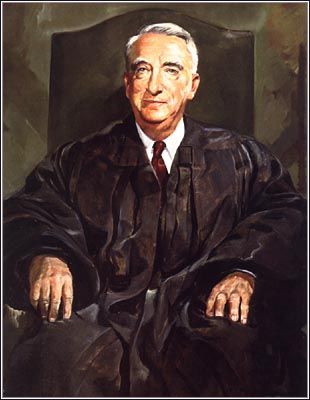
- Fred M. Vinson: Chief Justice who compared the two Texas law schools for a unanimous bench
- Thurgood Marshall: NAACP Legal Defense Fund attorney for Sweatt
- Price Daniel: Texas attorney general defending the separate school

Summary
In February 1946 Heman Marion Sweatt, a Houston mail carrier and a graduate of Wiley College, applied to the University of Texas Law School in Austin. The university's president, Theophilus S. Painter, refused him admission because state law reserved the university for white students, and at that time no law school in Texas admitted Black applicants. Sweatt sued in state court for a writ of mandamus ordering his admission. The trial judge agreed that Texas owed him a legal education but gave the state six months to provide one; Texas responded by authorizing a separate law school, first in rented rooms in Austin and later at the new Texas State University for Negroes in Houston. Sweatt declined to enroll, the Texas courts held the new school substantially equivalent, and the Court granted certiorari in 1949. The question was whether a state that offered Black students a separate law school had satisfied the Equal Protection Clause of the Fourteenth Amendment. Sweatt's lawyers, led by Thurgood Marshall of the NAACP Legal Defense Fund, argued that the new school was unequal in every measurable respect and that separation itself made equality impossible in professional training; they also asked the Court to reconsider Plessy v. Ferguson (1896). Texas, represented by Attorney General Price Daniel, answered that Plessy permitted separate facilities so long as they were substantially equal, that the state had acted promptly and in good faith, and that education was a matter for state policy. On 5 June 1950 the Court ruled unanimously for Sweatt. Chief Justice Vinson compared the two schools in faculty, courses, library, law review and student body and found the university superior. He gave still greater weight to qualities that cannot be counted, such as the reputation of the faculty, the standing of the alumni, tradition and prestige. Because law is a practical profession learned in exchange with others, a school that admitted none of the groups making up most of the state's lawyers, judges and jurors could not offer an equal education. Relying on Missouri ex rel. Gaines v. Canada (1938) and Sipuel v. Board of Regents (1948), he held that Sweatt's right was personal and present and ordered his admission. The Court expressly declined to decide whether Plessy should be reexamined. The library text gives Vinson's opinion as printed in the U.S. Reports, with its notes left out. Sweatt enrolled at the law school in September 1950 but left without a degree; he later earned a master's degree at Atlanta University and worked for the National Urban League. The Texas school that grew from the case became the law school of Texas Southern University, later named for Thurgood Marshall. Four years after Sweatt, Brown v. Board of Education (1954) cited it, together with McLaurin, in holding that separate public schools are inherently unequal.
Virtues in this work
- Justice: The Court insists that Sweatt is owed, as an individual and without delay, the same legal education Texas offered other applicants.
- Prudence: Vinson deliberately decides only what the case requires, leaving the broader question of Plessy for a later day.
- Fortitude: Sweatt pressed his claim through four years of hearings and appeals rather than accept the separate school.
Plot or Argument
- A narrow question about graduate schools
Vinson pairs the case with McLaurin and limits it to how far equal protection restricts racial distinctions in state professional and graduate education, declining the broader questions the parties had briefed.
- From mandamus suit to certiorari
The opinion recounts Sweatt's 1946 application, the six-month continuance the trial court granted Texas, the hastily organized separate school, and the state courts' finding that it was substantially equivalent.
- Counting faculty, books and students
Vinson sets the figures side by side: sixteen full-time professors, 850 students and over 65,000 volumes at the university against five professors, 23 students and some 16,500 volumes at the newer separate school.
- What cannot be measured
The Court gives decisive weight to reputation, alumni influence, tradition and prestige, and to the isolation of a school cut off from most of the people its graduates would practice among.
- Personal and present rights
Citing Gaines, Sipuel and Fisher v. Hurst, Vinson holds that Sweatt is entitled now, as an individual, to an equal legal education, that the separate school does not provide it, and that he must be admitted, leaving Plessy unexamined.
Characters
- Heman Marion Sweatt, petitioner
Houston postal worker who applied to the University of Texas Law School in 1946 and refused to enroll in the separate school Texas created.
- Theophilus S. Painter, respondent
Zoologist and president of the University of Texas, named first among the officials who denied Sweatt admission.
- Chief Justice Fred M. Vinson, author of the opinion of the Court
Wrote for a unanimous Court that the separate law school did not offer substantial equality.
- Thurgood Marshall, counsel for Sweatt
Chief lawyer of the NAACP Legal Defense Fund, who argued that separation itself prevented equal professional training.
- Price Daniel, Attorney General of Texas
Defended the separate school as a good-faith provision of substantially equal facilities under Plessy.
Lessons
Measuring equality in a law school
Vinson's opinion first compares what can be counted, such as professors, volumes and courses, and then turns to reputation, alumni and tradition. By ruling that those intangible qualities count in judging equality, the Court made it very difficult for a newly founded separate school to match an established one.
- Which measurable differences between the two Texas law schools does Vinson list?
- Why does he call the intangible qualities more important than the countable ones?
- Can an institution's tradition and prestige be shared with a newcomer, or must they be earned over time?
Learning law among the people it serves
The Court reasoned that law is learned in conversation with classmates, practitioners and the public. A school that drew from only a small part of the population would leave its students unprepared for the courtrooms and offices where they would practice, so isolation was itself a form of inequality.
- What does Vinson mean by an academic vacuum?
- Why does it matter that the excluded groups made up 85 percent of Texas's population?
- Is this argument special to law schools, or could it apply to every level of education?
Deciding no more than the case requires
Vinson opens by stating the principle that the Court decides constitutional questions only as far as necessary. Although both sides argued about Plessy v. Ferguson, the Court ordered Sweatt's admission without overruling it, a restraint that left the larger question for Brown four years later.
- Why does the Court say much of the research presented to it is unnecessary to its decision?
- What are the advantages and risks of deciding constitutional cases narrowly?
Rights that are personal and present
Following Gaines and Sipuel, the Court treated the right to equal education as belonging to Sweatt himself and as owed immediately. A promise that a separate school would someday become equal could not satisfy a student applying now.
- What does it mean that Sweatt's right was personal rather than shared by a group?
- Why did the Court reject the argument that excluding white students from the separate school was the same as excluding Sweatt from the university?
- How should a court weigh a state's good faith against an individual's claim to equal treatment now?
Context
After Plessy v. Ferguson (1896) the southern and border states maintained separate public schools and universities under the rule that separate facilities were lawful if equal. Beginning in the 1930s the NAACP, under Charles Hamilton Houston and then Thurgood Marshall, brought suits aimed first at graduate and professional schools, where the inequality of separate provision was easiest to show. Missouri ex rel. Gaines v. Canada (1938) held that a state could not send Black law students out of state, and Sipuel v. Board of Regents (1948) required Oklahoma to provide legal education promptly.
Composition
Sweatt filed suit in May 1946 in the district court of Travis County. Texas opened a provisional law school in Austin in March 1947 and the Texas State University for Negroes in Houston established its own law school soon afterward. The case was argued in Washington on 4 April 1950, and the United States filed a brief supporting Sweatt. Vinson's opinion was issued with McLaurin v. Oklahoma State Regents and Henderson v. United States, a railroad dining-car case.
Reception
Southern officials read the decision as requiring admission to existing graduate schools where separate ones could not be made equal, and several state universities began admitting Black graduate students. Legal Defense Fund lawyers concluded that the reasoning about intangible qualities pointed toward a direct challenge to separate public schools, which they brought in the cases decided as Brown v. Board of Education. Historians such as Mark Tushnet and Gary Lavergne have described Sweatt as a turning point in the litigation campaign.
Comparisons
- plessy-v-ferguson
Texas defended its separate law school under the 1896 rule, and Vinson declined either to apply it or to reexamine it, deciding instead that the two schools were not in fact equal.
- brown-v-board-of-education
Warren's 1954 opinion quoted Sweatt's attention to qualities incapable of objective measurement and carried that reasoning from law schools to public elementary and high schools.
- everson-v-board-of-education
Decided three years earlier, Everson also turned on how far the Fourteenth Amendment limits a state's choices about schooling, there in transporting parochial pupils rather than in admitting graduate students.
- democracy-in-america
Tocqueville described lawyers as a kind of American aristocracy formed by their training, which helps explain why the justices treated access to an elite law school as access to public life.
Quotes
Frequently cited
“What is more important, the University of Texas Law School possesses to a far greater degree those qualities which are incapable of objective measurement but which make for greatness in a law school.”
“It is difficult to believe that one who had a free choice between these law schools would consider the question close.”
“The law school, the proving ground for legal learning and practice, cannot be effective in isolation from the individuals and institutions with which the law interacts.”
“Few students and no one who has practiced law would choose to study in an academic vacuum, removed from the interplay of ideas and the exchange of views with which the law is concerned.”
“It is fundamental that these cases concern rights which are personal and present.”
“We hold that the Equal Protection Clause of the Fourteenth Amendment requires that petitioner be admitted to the University of Texas Law School.”
For Students
A reading companion for classical Christian high school students. See the student guide.
Reading Guide
Watch for
- Vinson's opening statement that the Court will decide constitutional questions only as narrowly as possible.
- The side-by-side figures on faculty, students and library volumes at the two schools.
- The list of qualities incapable of objective measurement.
- The argument that law cannot be learned in isolation from the people it governs.
- The final paragraph's refusal to reach the question of reexamining Plessy.
Key terms and names
- Mandamus
- A court order commanding an official to perform a duty, here the admission of Sweatt to the law school.
- Equal Protection Clause
- The Fourteenth Amendment provision forbidding a state to deny any person within its jurisdiction the equal protection of the laws.
- Separate but equal
- The rule associated with Plessy v. Ferguson that racially separate facilities were constitutional if substantially equal.
- Certiorari
- The order by which the Court agrees to review a lower court's decision.
- Accreditation
- Formal recognition by a professional body that a school meets its standards, which the first separate Texas law school lacked.
Seminar Questions
- Comprehension Why was Sweatt refused admission in 1946, and what did the Texas trial court do in response to his suit?
- Comprehension What qualities does Vinson name that cannot be objectively measured?
- Comprehension How did the separate law school at the Texas State University for Negroes compare with the university in faculty, students and library?
- Interpretation How does Vinson answer the argument that excluding white students from the new school was equivalent to excluding Sweatt from the university?
- Interpretation Why might the Court have chosen to order Sweatt's admission without deciding whether Plessy should be overruled?
- Interpretation What role do the earlier decisions in Gaines and Sipuel play in Vinson's reasoning?
- Big Question What makes an education truly equal: its buildings and books, its teachers, or the community of learners it gathers?
Faith Connections
- Proverbs 27:17 (Scripture)
The proverb that iron sharpens iron fits the Court's reasoning that lawyers are formed by the exchange of views with others.
- Acts 10:34-35 (Scripture)
Peter's declaration that God is no respecter of persons is a text Christians have drawn on in discussing equal treatment under law.
Logic and Rhetoric
Central argument: Vinson argues that equal protection guarantees each applicant a legal education substantially equal to the state's best, that the separate school falls below the university in measurable resources and still more in reputation, tradition and access to the wider legal community, and that Sweatt must therefore be admitted now.
Rhetorical device: argument from comparison. Vinson lists the university's faculty, library and alumni and then the separate school's, letting the contrast carry the argument before he states that a free chooser would not find the question close (quote 1).
Debate: Resolved: that intangible qualities such as reputation and tradition should count when a court judges whether two schools are equal.
Memory Work
What is more important, the University of Texas Law School possesses to a far greater degree those qualities which are incapable of objective measurement but which make for greatness in a law school.
The law school, the proving ground for legal learning and practice, cannot be effective in isolation from the individuals and institutions with which the law interacts.
Writing Prompts
Essay: Explain how Chief Justice Vinson moves from counting library volumes to weighing tradition and prestige, and assess whether each stage of his comparison is needed for the holding.
Comparison with Brown v. Board of Education of Topeka: Compare how Sweatt and Brown each judge equality in education, noting what Brown borrowed from Sweatt and what question Brown answered that Sweatt left open.
Medical Lens
The opinion concerns admission to a state law school and contains nothing on medicine, health or the body.
Creative Prompts
- Classroom
Stage the April 1950 argument: one team speaks for Sweatt with Marshall's evidence on the two schools, another for Texas with Price Daniel's defense of substantial equality, and a bench of student justices questions both.
- Essay
Draw up a comparison table of the two Texas law schools using only figures given in Vinson's opinion, then write a paragraph on what the table cannot show.
- Dialogue
Write a conversation in 1950 between Heman Sweatt and a classmate on his first day at the University of Texas Law School about what the case did and did not decide.
- Essay
Explain why the Court refused to decide whether Plessy v. Ferguson should be reexamined, and argue whether that restraint helped or hindered the later Brown decision.
Further Reading
- Before Brown: Heman Marion Sweatt, Thurgood Marshall, and the Long Road to Justice, Gary M. Lavergne
Full-length history of Sweatt's life, the Texas litigation and the people on both sides.
- The NAACP's Legal Strategy against Segregated Education, 1925-1950, Mark V. Tushnet
Study of the graduate-school cases that culminated in Sweatt and McLaurin.
- Simple Justice, Richard Kluger
Narrative history of Brown v. Board of Education with chapters on the earlier university cases.
Verification notes
All six quotations come from Vinson's opinion, the only opinion in the case, and each was found by Grep as an exact substring of content/texts/sweatt-v-painter.txt. Figures for the two schools are taken from the opinion itself. Biographical details on Sweatt, Painter and counsel, and the dates of the provisional Austin school, come from standard histories such as Lavergne's and are less certain than the opinion's own facts.
- Confirm that the provisional law school opened in Austin in March 1947 and the date the Houston law school began instruction.
- Confirm that Sweatt enrolled in September 1950 and the year he left the law school.
- Confirm that Price Daniel personally argued the case for Texas in the Supreme Court.