Work record
The Subjection of Women
1869 · 19th Century · Essays · English
Abstract
Background. Victorian wives possessed almost no separate legal standing, could not vote and found universities and professions closed. Mill composed this case at Avignon soon after Harriet's death and withheld it until a growing suffrage campaign offered a hearing.
Argument. Male authority, the essay contends, arose from force and endures through habit, interest and affection. Because observers see only women formed by restriction, claims about feminine nature prove nothing. English matrimonial law gave husbands near-total control, and the decency of most men cannot excuse rules that arm the cruel few.
Proposals. Mill seeks full civil equality in marriage, municipal and parliamentary votes, and access to every occupation, answering objections drawn from scripture, anatomy, temperament and the scarcity of female genius.
Method. The reasoning is largely utilitarian, measuring institutions by the happiness and improvement they produce, yet it also appeals to the modern conviction that birth should not assign anyone a permanent rank. Mill argues by historical analogy, legal description and careful rebuttal rather than by appeal to feeling.
Key Concepts. Rule by force; habit mistaken for nature; coverture; judging laws by their worst cases; partnership instead of command in the home; the vote as distinct from office; social gains from developing every talent.
Significance. Widely translated, the essay became a foundational text for suffrage and legal-reform movements while provoking substantial rebuttals, notably from Fitzjames Stephen, defending the husband's headship.
Key figures
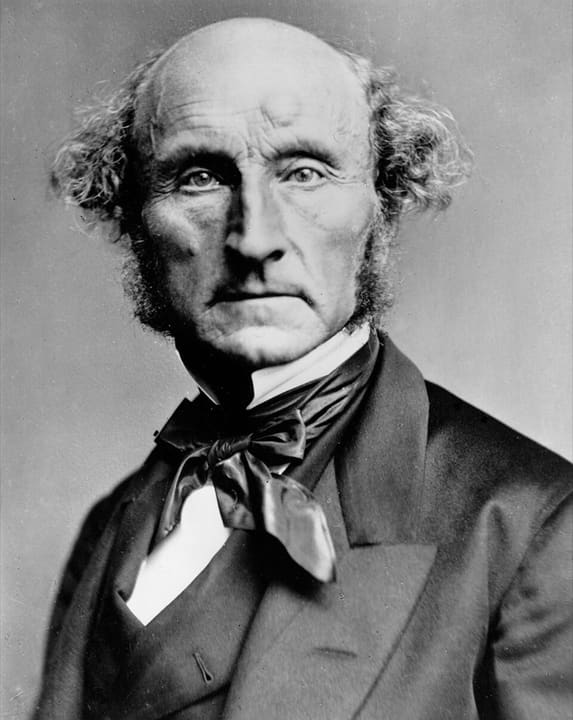
- John Stuart Mill: Liberal philosopher and former Westminster MP who championed the female franchise
- Harriet Taylor Mill: His late wife and collaborator, author of an 1851 essay on enfranchisement
- Helen Taylor: Harriet's daughter, who helped revise the manuscript
- Elizabeth I: Tudor monarch offered as evidence of female statecraft
- St. Paul: Apostle whose household precepts the essay interprets

Summary
The Subjection of Women is John Stuart Mill's extended argument that the legal subordination of women to men in mid-Victorian Britain was wrong in principle and an obstacle to human improvement, and that it should give way to perfect equality before the law. Mill drafted it in 1860–1861, after the death of his wife Harriet Taylor Mill, and published it with Longmans in 1869. In his Autobiography he credited its ideas largely to Harriet and some passages to her daughter Helen Taylor. The library text is the complete first edition from Project Gutenberg, in four untitled chapters. Chapter I faces the difficulty of arguing against a deep-rooted feeling. Mill argues that the authority of husbands over wives began in physical force, the law of the strongest, and survived when other forms of rule by force, such as slavery and absolute monarchy, had been given up. Every form of dominion, he notes, has seemed natural to those who held it. Modern society has adopted the principle that birth should not fix a person's station, so the one exception for women needs justification. What is called the nature of women, he argues, cannot be known while women are educated and placed as they are; and if women cannot by nature do something, there is no need to forbid it. Chapter II examines marriage law. Under the common-law rule of coverture, a wife's property, earnings and legal person were merged in her husband's; she had no rights over her children against him and could rarely leave him. Mill compares her legal position with that of a slave, while granting that most husbands are better than the law allows them to be. Laws, he says, must be judged by what they permit the worst to do. He rejects the claim that every association needs one master and pictures marriage as a partnership of equals, a school of sympathy in equality. He also answers the argument from St. Paul's counsel to wives. Chapter III turns to the vote and to professions and public offices. The suffrage, Mill argues, is a right to share in choosing those who hold public trust and belongs to women as much as to men. He cites Elizabeth I, Deborah, Joan of Arc and the women rulers of Indian states as evidence of capacity for government, discusses women's practical intuition and nervous temperament, questions arguments from brain size, and explains the small number of women of genius in art and science by their education and domestic burdens. Chapter IV lists the benefits of equality: justice at the heart of family life, the doubling of talent available to society, a better moral influence of women on opinion, and the private happiness of women spared a wasted life. Critics, notably James Fitzjames Stephen in Liberty, Equality, Fraternity (1873), defended the authority of the husband as natural and necessary; the book was quickly translated and read across Europe and America.
Virtues in this work
- Justice: Mill asks that marriage law be judged by what it allows the worst husband to do, not by the conduct of the best.
- Friendship: Chapter II pictures the ideal marriage as a friendship of equals who share pursuits and improve one another.
- Fortitude: Mill openly acknowledges he is arguing against a deep-rooted feeling and an almost universal opinion, and presses the case anyway.
Plot or Argument
- Chapter I: the burden of proof and the law of the strongest
Mill states his thesis and admits that he argues against feeling, not merely opinion. The subjection of women began with physical force and has persisted because every man has an interest in it and because the subordinate are bound to their rulers by affection. Every dominion has seemed natural to those who exercised it, as slavery did to Aristotle. Modern society holds that birth should not decide a person's place; women's position is the single surviving exception. Their supposed nature is the product of training and circumstance and cannot yet be known.
- Chapter II: the law of marriage
Mill describes the wife's legal position in England: her property and earnings belong to her husband unless secured by settlement, she cannot act at law on her own, she has no legal authority over her children, and separation is difficult. He compares her situation to slavery, adding that the law protects even a violent husband. Good husbands do not justify bad laws. He rejects the idea that a family needs an absolute head, pointing to business partnerships, and argues that marriage between equals would train both partners and their children in the virtues of a free society.
- Chapter III: the vote, the professions and women's capacities
Women should have the parliamentary and municipal vote, which is a distinct question from their fitness for office. On that question, Mill argues that women's achievements as rulers prove capacity, that the practical and intuitive cast of many women's minds is an asset, that their nervous susceptibility is largely the product of idle and hot-house upbringing, and that the claim of smaller brains proves nothing. The lack of great women composers, painters and philosophers reflects lack of education, leisure and tradition rather than nature.
- Chapter IV: what good would equality do?
Mill names four benefits: replacing a relation of command with one of justice in the most universal of human relations; doubling the mental resources available to society; improving the influence of women on men and on public opinion; and adding to the happiness of women, who would no longer feel the unhappiness of a life with no outlet for their faculties. He closes by urging that no restraint should be placed on any person's conduct except for evil actually caused.
Characters
- John Stuart Mill, author
Philosopher and former Member of Parliament who had proposed women's suffrage in the Commons.
- Harriet Taylor Mill, acknowledged influence
Mill's wife, author of The Enfranchisement of Women (1851), to whom he attributed much of the book's thought.
- Queen Elizabeth I, example
Cited with Deborah and Joan of Arc as proof that women can govern.
- St. Paul, authority discussed
Whose counsel to wives Mill reads as accepting the institutions of his day rather than fixing them for all time.
- Plato, authority
Credited with teaching, partly from Spartan example, the political equality of the sexes.
Lessons
Custom is not the same as nature
Mill's first argument is that long habit makes any arrangement feel natural to those who live with it. He asks readers to separate what women are now, after centuries of a particular education and law, from what they might be, and argues that only freedom can show what their nature really is.
- What examples does Mill give of arrangements that once seemed natural to those who benefited from them?
- Why does he say that what women cannot do by nature need not be forbidden by law?
- Is there any way to know human nature apart from the circumstances people grow up in?
Judge a law by what it permits the worst to do
Mill grants that most English husbands treat their wives far better than the law requires. But laws exist for the bad as well as the good, and a law that gives one person unchecked power over another must be judged by its effects in the worst cases.
- Why does Mill refuse to accept the good conduct of most husbands as a defence of the marriage law?
- What powers did English law give a husband over his wife's property and children in 1869?
- Where else might this principle of judging laws by the worst case apply?
Marriage as a school of equality
Mill believed the family forms character. A household ruled by command trains children in command and obedience; a marriage of equals, he argued, would teach sympathy, justice and the virtues needed by free citizens. His critics answered that a family, like a ship, needs one final authority.
- What does Mill mean by calling the family a school of sympathy in equality?
- How does Mill answer the argument that every association needs a single head?
- How might a defender of traditional Christian marriage, such as Chrysostom, describe the virtues of marriage differently?
Wasted talents are a loss to everyone
Mill argues that opening education and professions to women would double the mental power available to society and spare many women a life of frustration. His case is utilitarian: equality is right because it increases the general good and the happiness of individuals.
- What four benefits does Chapter IV promise from equality?
- How does Mill explain why there had been few women of genius in the arts and sciences?
- Is the strongest case for equality its usefulness to society or its justice to persons?
Context
In 1869 a married Englishwoman's legal existence was, under the doctrine of coverture, largely merged into her husband's. The Divorce and Matrimonial Causes Act of 1857 had made divorce available through the courts, but on unequal terms, and the Married Women's Property Acts of 1870 and 1882 were still to come. Women could not vote in parliamentary elections, attend most universities or enter most professions. A women's movement had grown in the 1850s and 1860s around Barbara Leigh Smith Bodichon, Emily Davies, Elizabeth Garrett and others, and in 1866 Mill presented a suffrage petition to Parliament.
Composition
Mill wrote the essay in 1860 and 1861 at Avignon, revised it with Helen Taylor's help, and held it back until he judged the moment favourable. Longmans, Green, Reader and Dyer published it in May 1869. Mill's Autobiography says that the conviction it expresses was shared with Harriet Taylor and owed much to her, and that it was enriched by ideas and passages from Helen Taylor.
Reception
The book sold well and was translated within a year or two into several European languages; it was read widely by suffrage campaigners in Britain, America, Scandinavia and elsewhere. Opponents answered it directly, most fully James Fitzjames Stephen, who argued that marriage required a head and that the differences between the sexes justified different roles. Later readers have debated how far Mill's case depends on utilitarian reasoning and how far on a principle of justice, and how much of the book reflects Harriet Taylor's own writing.
Comparisons
- on-liberty
On Liberty limits the power of society over the individual; The Subjection of Women applies the same principle to the household, arguing that no adult should be under the legal command of another.
- vindication-of-the-rights-of-woman
Wollstonecraft in 1792 also attributes the apparent weaknesses of women to their education and argues for rational training; Mill adds a detailed legal critique of marriage and a case for the vote.
- the-republic
Mill cites Plato's teaching on the equality of the sexes; Book V of the Republic admits women to the guardian class on the ground that the difference of sex is irrelevant to ruling.
- mill-considerations-on-representative-government
Mill's 1861 treatise argues for widening the franchise and counts difference of sex as no more relevant to political rights than difference of height; this book develops that case.
- a-dolls-house-and-other-plays
Ibsen's 1879 play stages the marriage Mill describes in Chapter II, in which a wife has no independent legal standing, and ends with Nora leaving to educate herself.
- jane-eyre
Brontë's heroine insists that she has a soul and heart equal to Rochester's and will marry only as an equal, a fictional statement of the ideal of marriage Mill argues for.
Quotes
“the legal subordination of one sex to the other--is wrong in itself, and now one of the chief hindrances to human improvement”
“What is now called the nature of women is an eminently artificial thing”
“the true virtue of human beings is fitness to live together as equals”
“What is needed is, that it should be a school of sympathy in equality, of living together in love, without power on one side or obedience on the other.”
“The right to share in the choice of those who are to exercise a public trust, is altogether a distinct thing from that of competing for the trust itself.”
“But it is quite certain that a woman can be a Queen Elizabeth, or a Deborah, or a Joan of Arc, since this is not inference, but fact.”
“the almost total disappearance of "hysterics" and fainting fits, since they have gone out of fashion”
“doubling the mass of mental faculties available for the higher service of humanity”
For Students
A reading companion for classical Christian high school students. See the student guide.
Reading Guide
Watch for
- How Mill admits at the start that he is arguing against feeling, and why that makes his task harder.
- The phrase the law of the strongest and the history of force that Mill traces through slavery and monarchy.
- The detailed description of the married woman's legal position in Chapter II.
- Mill's handling of St. Paul's counsel to wives and his distinction between the apostle's acceptance of institutions and approval of them.
- The examples of women rulers in Chapter III and the argument about brain size.
Key terms and names
- Coverture
- The common-law doctrine under which a married woman's legal identity was covered by her husband's, so that her property, earnings and contracts were his.
- Law of the strongest
- Mill's name for rule founded on physical force, which he argues lies at the origin of the legal subordination of women.
- Suffrage
- The right to vote; Mill distinguishes it from the right to hold office and argues women should have both parliamentary and municipal votes.
- Settlement
- A legal arrangement made before marriage, usually among the wealthy, to keep some property in trust for a wife's separate use.
- Utilitarianism
- The moral theory, shared by Mill, that actions and institutions are right as they promote happiness; it shapes Chapter IV's case from benefits.
Seminar Questions
- Comprehension What thesis does Mill state in the first paragraph of the essay?
- Comprehension According to Chapter II, what rights over property and children did English law give a husband in 1869?
- Comprehension What four benefits of equality does Mill name in Chapter IV?
- Interpretation Why does Mill think it impossible to know the nature of women under present conditions? What would count as evidence for him?
- Interpretation How does Mill read St. Paul's words to wives, and how might a traditional Christian interpreter answer his reading?
- Interpretation Mill compares the wife's legal position to slavery but also says most husbands are better than the law. How do these two claims work together in his argument?
- Big Question Does a family need a single head, or can it be governed as a partnership of equals?
- Big Question Should laws be shaped by what is customary, by what is natural, or by what makes people happiest, and how can we tell the three apart?
Faith Connections
- Ephesians 5:21-33 (Scripture)
Paul's passage on marriage, which Mill discusses, begins with mutual submission, asks wives to submit to their husbands and husbands to love their wives as Christ loved the church. Traditional readers see a pattern of loving headship; Mill reads Paul as accepting the institutions of his time. Students can study the whole passage before weighing either reading.
- Galatians 3:28 (Scripture)
There is neither male nor female, for ye are all one in Christ Jesus. Christians have long debated whether this equality before God carries implications for law and household order, a question Mill raises from outside the faith.
- John Chrysostom, Homily 20 on Ephesians (Church Fathers)
Chrysostom describes a marriage of love in which the husband cares for his wife as Christ for the church and she honours him, offering a Christian picture of mutual devotion within an ordered household that contrasts with Mill's model of partnership.
- Plato, Republic V (Great Conversation)
Mill credits Plato with teaching the equality of the sexes; Socrates argues that women of the guardian class should share in education and rule, a precedent Mill cites.
Logic and Rhetoric
Central argument: The legal subordination of women originated in force, and every arrangement founded on force has seemed natural to those who profited from it. Modern society holds that birth should not determine a person's station, and the subordination of women is the only remaining exception. What women are capable of cannot be known while law and education hold them in a fixed place, and what they cannot naturally do need not be forbidden. Equality would bring justice into marriage, double the talents available to society and increase human happiness. Therefore the law should give women perfect equality with men.
Rhetorical device: burden-of-proof reversal. In Chapter I Mill notes that in every other question the presumption is in favour of freedom and impartiality, so those who would restrict liberty must justify the restriction. He then complains that, on this subject alone, he is expected to prove a negative, and by naming the unfairness he shifts the burden back to his opponents.
Debate: Resolved: That the law should treat husband and wife as legal equals in property, contract and guardianship of children.
Memory Work
the true virtue of human beings is fitness to live together as equals
What is needed is, that it should be a school of sympathy in equality, of living together in love, without power on one side or obedience on the other.
Writing Prompts
Essay: Mill argues that what is called the nature of women is an artificial thing. Explain how he supports the claim in Chapters I and III, present the strongest objection a contemporary such as James Fitzjames Stephen might raise, and judge which side has the better of the argument.
Comparison with A Vindication of the Rights of Woman: Wollstonecraft and Mill both argue that education has shaped what women seem to be. Compare their reasons, their views of marriage and their remedies, and decide which writer grounds her or his case more firmly.
Medical Lens
Mill engages directly with the medical arguments of his day about women's minds and bodies. In Chapter I he observes that physicians and physiologists had learned something of bodily differences between the sexes but that hardly any medical practitioner was a psychologist, so their opinions on women's mental character carried little weight. In Chapter III he answers the argument from women's nervous susceptibility, treating much of it as unused energy and the product of a sheltered upbringing, and points to the decline of hysterics and fainting fits once they went out of fashion as evidence that such symptoms were shaped by custom. He also takes up the anatomical claim, current among Victorian craniologists, that women's smaller brains proved inferior capacity, arguing that brain size relative to body was unsettled and that the quality and activity of the brain mattered as much as its bulk. Chapter IV's description of the weariness and dissatisfaction of a wasted life reads, for a modern clinician, as a period account of low mood bound up with lack of purposeful work; any such reading is interpretive.
- Chapter I
Medical practitioners and physiologists know something of bodily differences, but few are psychologists and their views of women's minds are no better than common opinion.
- Chapter III
Nervous susceptibility as an objection to women's fitness for business; hysterics and fainting fits disappearing with fashion; the hot-house upbringing of upper-class girls.
- Chapter III
The anatomical argument from the size of women's brains, and Mill's reply on proportion, quality and the circulation of blood through the brain.
- Chapter IV, closing pages
The weariness, disappointment and dissatisfaction with life of women whose faculties have no outlet: the feeling of a wasted life.
Creative Prompts
- Dialogue
Write an exchange of letters in 1873 between Mill and James Fitzjames Stephen on whether marriage needs a head, each making his strongest case.
- Classroom
Give small groups the facts of an English married woman's legal position in 1869 (property, earnings, children, separation). Have them draft a short reform bill and compare it with the Married Women's Property Act of 1882.
- Essay
Mill says custom makes every dominion seem natural. Choose one historical example he gives and explain how the argument from nature was used and answered.
Further Reading
- Autobiography, John Stuart Mill
Mill's account of his education, his crisis of 1826, and his partnership with Harriet Taylor.
- Liberty, Equality, Fraternity, James Fitzjames Stephen
The most substantial contemporary reply to Mill's arguments on liberty and on women.
- Essays on Sex Equality, John Stuart Mill and Harriet Taylor Mill, ed. Alice S. Rossi
Includes Harriet Taylor's The Enfranchisement of Women and early essays by both.
- John Stuart Mill: Victorian Firebrand, Richard Reeves
Verification notes
Dates of composition (1860–1861) and publication (Longmans, 1869), Mill's 1867 amendment to the Reform Bill and the acknowledgment of Harriet and Helen Taylor in the Autobiography are standard. All eight quotations were found by search in the stored Project Gutenberg text (content/texts/the-subjection-of-women.txt) and copied exactly, including the double hyphen of the first; chapter locations were fixed by the chapter headings in that file. The summary of the 1869 legal position follows Mill's own Chapter II and standard legal histories.
- The month of publication (usually given as May 1869).
- Which European translations appeared within the first year.