Work record
A Vindication of the Rights of Woman
1792 · 18th Century · Political Theory · English
Abstract
Background. Having already rebutted Burke in defence of the Revolution, Wollstonecraft turned to a gap she saw in its programme: French plans for public instruction would train boys as citizens and send girls home. Her reply, issued by her London publisher in 1792, appeals directly to a leading legislator.
Argument. Reason is the Creator's gift to every soul, and goodness is measured by a single rule. An upbringing aimed at charm, softness and the approval of suitors therefore wrongs girls, leaving them feeble, vain and dependent. Physical vigour, serious study and useful work would make them companions to their husbands, sensible mothers and responsible members of the nation.
Content. Successive chapters test Rousseau, Fordyce, Gregory and Chesterfield, treat modesty and reputation as obligations of both sexes, suggest careers in medicine and trade, and sketch free parish schools mixing pupils of each sex and every rank.
Form. The prose is earnest and often digressive, mixing scriptural appeal, Lockean psychology, satire of fashionable manners and personal observation from her years as a teacher and governess; she announced it as a first volume, though no sequel followed.
Significance. Admired on publication, then shadowed for decades by Godwin's frank memoir, the treatise was revived by nineteenth-century campaigners and is now a landmark in debates over schooling and civic equality. Scholars weigh its Christian, Enlightenment and radical strands differently.
Key figures
- Mary Wollstonecraft: Former schoolmistress and governess writing for Joseph Johnson's circle
- Talleyrand: Ex-bishop and deputy whose education report she addresses
- Rousseau: Genevan author of Emile, answered on almost every page
- James Fordyce and John Gregory: Popular Scottish moralists whose advice books she weighs
- Catharine Macaulay: English historian hailed as proof of female intellect
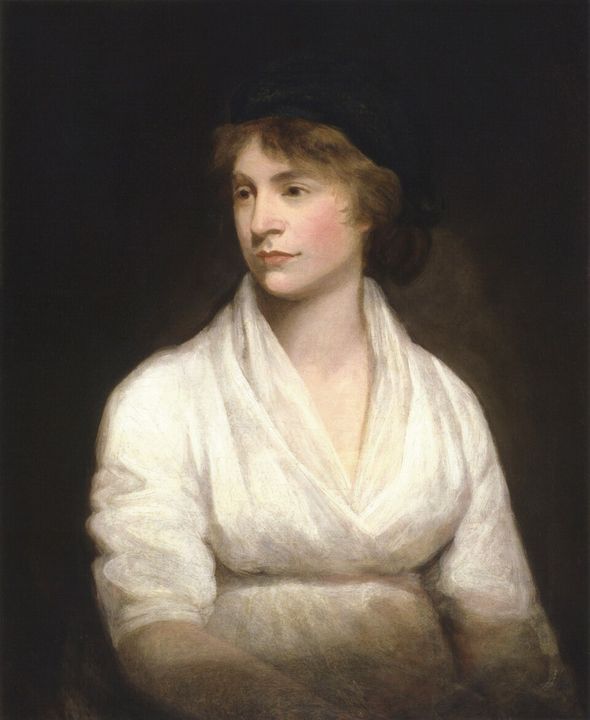

Summary
Mary Wollstonecraft wrote A Vindication of the Rights of Woman in about six weeks in the autumn of 1791, and Joseph Johnson published it in London early in 1792. Two years earlier she had answered Edmund Burke's Reflections on the Revolution in France with A Vindication of the Rights of Men. She dedicated the new book to Charles-Maurice de Talleyrand-Périgord, the former Bishop of Autun, whose 1791 report to the French National Assembly on public instruction would have educated girls only at home after early childhood. If the Revolution proclaimed the rights of man, she argues, it must not leave half the nation in ignorance. The library text, from Project Gutenberg, gives the complete work with an anonymous nineteenth-century biographical sketch drawn from William Godwin's memoir of her, the dedication, an introduction and thirteen chapters. The argument rests on a religious and rational premise. God gave human beings reason so that they might grow in virtue and knowledge, and virtue has one standard for both sexes. Chapter 1 traces the rights and duties of mankind to reason and criticizes hereditary rank, standing armies and the clergy's dependence as sources of vice. Chapters 2 and 3 answer the opinion that women have a separate sexual character of softness, docility and charm. Women taught from infancy that beauty is their sceptre, she writes, learn only to adorn their prison; they should instead strengthen body and mind, gain the respect of their husbands, and become rational companions and capable mothers. Chapter 4 describes how a narrow education makes women creatures of sensation and cunning, and says she wishes them to have power not over men but over themselves. Chapter 5 examines writers on women's conduct: Rousseau's portrait of Sophie in Emile, the sermons of James Fordyce, John Gregory's Legacy to his Daughters, several women authors, among whom she praises Catharine Macaulay, and Lord Chesterfield's letters. Chapters 6 to 11 consider the early association of ideas, modesty as a virtue for both sexes, reputation and chastity, the harm done by hereditary wealth and rank, the affection of parents, and duties to parents. Here she proposes that women might study medicine and practise as physicians and midwives, run businesses and take part in public life. Chapter 12, on national education, proposes free government day schools in every parish where boys and girls of all ranks would be taught together from five to nine, followed by schools that would separate pupils by future occupation. Chapter 13 shows the follies ignorance produces, from fortune-tellers and the magnetisers who claimed to heal by animal magnetism to sentimental novels, love of dress and ignorant child-rearing, and closes by calling for a revolution in female manners.
Virtues in this work
- Temperance: Chapter 4 sets the aim of women's education as power over themselves, the government of passion by reason.
- Fortitude: Chapters 2 and 3 reject cultivated weakness and call women to strength of body and mind for the duties of life.
- Industry: Chapter 9 proposes that women study medicine, practise midwifery and manage farms and shops.
- Piety: The whole argument rests on the claim that God gave women reason and immortal souls to grow in virtue toward him.
Plot or Argument
- Dedication to Talleyrand and Introduction
Wollstonecraft addresses Talleyrand, whose report on national education had proposed educating girls at home, and asks how a constitution founded on reason can leave women dependent and uninstructed. The introduction states her aim: to show that women have been made weak and artificial by a false education and by books written to please men, and to persuade them to seek strength of mind and body.
- Chapter 1: the rights and duties of mankind
Human beings are raised above the animals by reason, which makes possible virtue and knowledge. Wollstonecraft criticizes Rousseau's praise of the state of nature and argues that the vices of society come from hereditary honours, wealth and arbitrary power, including the dependence of soldiers and of clergy on their superiors.
- Chapters 2–3: the supposed sexual character
She disputes Milton's picture of Eve formed for softness and grace, and the advice of Rousseau and Dr. Gregory that women should cultivate weakness and artful charm. If virtue has one eternal standard, it is the same in nature for both sexes. Bodily strength and exercise, not cultivated delicacy, prepare women for their duties, and beauty used as a sceptre makes the mind roam round its gilt cage.
- Chapter 4: the causes of women's weakness
A narrow education, an early concern with pleasing, and dependence on marriage make women creatures of sensibility and cunning. Rousseau warns that educating women like men will reduce their power over men; she answers that she wishes them to have power not over men but over themselves.
- Chapter 5: writers on female conduct
In five sections she criticizes Rousseau's Sophie, Dr. James Fordyce's Sermons to Young Women, Dr. John Gregory's A Father's Legacy to his Daughters, women writers such as Mrs. Piozzi, Madame de Staël and Madame de Genlis, and Lord Chesterfield's Letters, while praising Hester Chapone and above all Catharine Macaulay.
- Chapters 6–8: association of ideas, modesty and reputation
Early habits fix the mind's associations, so an education devoted to appearance shapes a woman's whole character. Modesty is purity of mind and belongs to men as well as women; Christ and Moses are examples. A concern only for reputation, rather than for real chastity and virtue in both sexes, undermines morality.
- Chapters 9–11: rank, parents and children
Hereditary wealth and rank corrupt both rich and poor. Women might study the art of healing and be physicians as well as nurses, practise midwifery, manage farms and shops, and perhaps have their own representatives in government. Parental affection should be rational, and children owe duties to parents who have earned respect, not blind submission.
- Chapter 12: national education
Wollstonecraft argues for day schools established by government, where children live at home and learn with others. From five to nine, boys and girls of every class should be taught together free of charge in botany, mechanics, astronomy, reading, writing and arithmetic, with exercise in the open air; older pupils would be divided by their future occupations. Make women free, she says, and they will quickly become wise and virtuous.
- Chapter 13: follies of ignorance and concluding reflections
She describes women who consult fortune-tellers and magnetisers, those who live on sentimental novels, the love of dress, a fitful sensibility, and ignorance in caring for children's health. Her concluding reflections call for a revolution in female manners that would make women better wives, mothers, citizens and Christians.
Characters
- Mary Wollstonecraft, author and narrator
Writer, teacher and reviewer who argues in her own voice for the education and moral independence of women.
- Charles-Maurice de Talleyrand-Périgord, dedicatee
Former Bishop of Autun whose 1791 report on public education to the French National Assembly occasioned the book.
- Jean-Jacques Rousseau, chief opponent
Author of Emile, whose account of Sophie's education for pleasing Emile Wollstonecraft answers throughout, while admiring his genius.
- Dr. John Gregory, conduct writer
Scottish physician whose A Father's Legacy to his Daughters she treats with respect but faults for advising artifice.
- Dr. James Fordyce, conduct writer
Presbyterian minister whose Sermons to Young Women she criticizes as sentimental.
- Catharine Macaulay, admired predecessor
Historian whose Letters on Education Wollstonecraft praises as a model of a woman's strong understanding.
Lessons
Virtue has one standard
Wollstonecraft's central claim is that God gave women and men the same reason and the same calling to virtue. Courage, prudence, honesty and self-command are not masculine or feminine; they are human, and an education that trains women only to please denies them the means of becoming good.
- Why does Wollstonecraft argue that virtue must have one standard if there is one God?
- What does she mean by saying she wants women to have power over themselves rather than over men?
- Which virtues does she think a false education keeps women from practising?
Education shapes character
Using the idea of the association of ideas, Wollstonecraft argues that early habits shape the whole mind. Girls taught from infancy to care chiefly for beauty and approval will form those habits; girls taught to reason, exercise and work will form others. Character, she holds, is largely made by education.
- How does the image of the gilt cage describe the effect of a narrow education?
- Why does Chapter 12 propose that boys and girls be taught together in day schools?
- What would Wollstonecraft say to someone who argued that women's weakness was natural?
Marriage as friendship between rational companions
Wollstonecraft argues that love founded on beauty fades, but friendship founded on respect lasts. A wife who is educated and virtuous can be her husband's companion and a wise mother, and she will need no artifice to keep his esteem.
- Why does Wollstonecraft think friendship a firmer basis for marriage than romantic passion?
- How does she connect women's education with the health and upbringing of children?
- Does she want women to leave their family duties, or to do them better? Find evidence.
A revolution in manners as well as laws
Writing during the French Revolution, Wollstonecraft argues that new constitutions are not enough without a reform of character and habits. Her revolution is chiefly moral and educational: women reforming themselves, and so the world, by reason and virtue.
- Why does she dedicate the book to Talleyrand, and what does she ask of him?
- What does she mean by separating unchangeable morals from local manners?
- Can laws change a society's character, or must manners change first?
Context
Wollstonecraft wrote in London at the height of the debate over the French Revolution, among the circle of Dissenters and radicals around the publisher Joseph Johnson, which included Richard Price, Thomas Paine, William Blake and William Godwin. The Revolution's Declaration of the Rights of Man and of the Citizen (1789) prompted questions about who would share in its rights, and French debates over national education raised the place of girls. In England, conduct books by Fordyce and Gregory and Rousseau's Emile were widely read as guides to the education of young women, and writers such as Catharine Macaulay had already argued for a common education of the sexes.
Composition
Wollstonecraft wrote the book quickly in late 1791, and it appeared from Joseph Johnson early in 1792, with a revised second edition later the same year. She described it as a first volume, but no second volume appeared. The library text is the Project Gutenberg edition, which prints the work complete with a biographical sketch taken from Godwin's Memoirs of the Author of A Vindication of the Rights of Woman (1798).
Reception
The book was reviewed favourably at first and quickly translated into French and reprinted in America. After Godwin's candid Memoirs of 1798 revealed details of her private life, her reputation suffered for decades, and Horace Walpole's earlier gibe calling her a 'hyena in petticoats' was much repeated. In the nineteenth century writers on women's education and suffrage, including John Stuart Mill's circle and American reformers, returned to it, and it is now read as a founding text in the history of arguments for women's education and civil equality. Scholars differ on how far her argument is religious, how far it belongs to Enlightenment rationalism, and how it relates to the radical politics of the 1790s.
Comparisons
- the-social-contract
Wollstonecraft shared many of Rousseau's republican hopes from The Social Contract and his hostility to hereditary rank, but argued that his Emile, by educating Sophie only to please, contradicted his own principles of liberty and reason.
- reflections-on-the-revolution-in-france
Burke's Reflections provoked her first Vindication, of the Rights of Men; the second extends her reply by arguing that manners and inherited sentiment, which Burke praised, had made women weak and dependent.
- burke-paine-debate
The pamphlet war over the French Revolution in which Burke and Paine were the chief voices is the setting of both her Vindications; she wrote as one of the earliest replies to Burke.
- the-subjection-of-women
Mill's 1869 essay argues from liberty and utility, and from the analogy of law and custom, for the equality of the sexes; Wollstonecraft argues chiefly from reason, virtue and religion and concentrates on education and manners.
- frankenstein
Her daughter Mary Shelley read her mother's works, and Frankenstein's creature, who learns by reading Paradise Lost and Plutarch and is shaped by neglect, explores the power of education and association that the Vindication describes.
- paradise-lost
Wollstonecraft quotes Milton's portrait of Eve formed for softness and sweet attractive grace, criticizes it in Chapter 2, and appeals elsewhere to Milton's lines on rational fellowship between Adam and Eve.
Quotes
“In fact, how can they, if virtue has only one eternal standard?”
“Strengthen the female mind by enlarging it, and there will be an end to blind obedience”
“Taught from their infancy, that beauty is woman's sceptre, the mind shapes itself to the body, and, roaming round its gilt cage, only seeks to adorn its prison.”
“It is time to effect a revolution in female manners, time to restore to them their lost dignity”
“I do not wish them to have power over men; but over themselves.”
“Women might certainly study the art of healing, and be physicians as well as nurses.”
“day schools for particular ages should be established by government, in which boys and girls might be educated together.”
“Make them free, and they will quickly become wise and virtuous, as men become more so”
For Students
A reading companion for classical Christian high school students. See the student guide.
Reading Guide
Watch for
- The dedication to Talleyrand, which frames the book as an appeal to the principles of the French Revolution.
- The religious premise that God gave reason to both sexes, so that virtue has one standard.
- The many replies to Rousseau, and the respect Wollstonecraft still shows for his genius.
- The image of the gilt cage in Chapter 3 and the theme of strength of body as well as mind.
- The practical plan for coeducational day schools in Chapter 12.
Key terms and names
- Vindication
- A defence or justification; Wollstonecraft's title answers those who denied that women's rights rest on the same grounds as men's.
- Sexual character
- In the book's vocabulary, the supposed set of distinct virtues proper to women, such as softness and docility, which Wollstonecraft rejects.
- Sensibility
- A quickness of feeling prized in 18th-century culture; Wollstonecraft argues that sensibility without reason makes women weak and capricious.
- Association of ideas
- The theory, from Locke and Hartley, that early experiences link ideas together in the mind and shape character, used in Chapter 6.
- Conduct book
- A book of advice on manners and morals for young women, such as those by Fordyce and Gregory examined in Chapter 5.
- Magnetisers
- Followers of Franz Anton Mesmer who claimed to heal by animal magnetism, mocked in Chapter 13.
Seminar Questions
- Comprehension Why does Wollstonecraft dedicate the book to Talleyrand, and what had his report on education proposed for girls?
- Comprehension What does Rousseau recommend for the education of Sophie, and what are Wollstonecraft's main objections?
- Comprehension What kind of schools does Chapter 12 propose, and who would attend them?
- Interpretation How does Wollstonecraft's belief in God support her argument that the virtues of men and women are the same in nature?
- Interpretation Why does she treat modesty in Chapter 7 as a virtue for both sexes rather than a feminine one?
- Interpretation How does she connect a woman's education with her duties as a wife and mother?
- Big Question Are virtues the same for everyone, or do different callings require different virtues?
- Big Question What is education for: to make a person pleasing, useful, or good?
Faith Connections
- Genesis 1:27 (Scripture)
That God created man in his own image, male and female, underlies Wollstonecraft's claim that women share the same rational and immortal nature and the same calling to virtue.
- Proverbs 31:10-31 (Scripture)
The capable wife who considers a field and buys it, trades, opens her mouth with wisdom and is praised for fearing the Lord rather than for beauty fits Wollstonecraft's picture of the industrious, rational woman.
- 1 Peter 3:3-4 (Scripture)
Peter directs women to the hidden person of the heart rather than outward adorning, a passage close to Wollstonecraft's criticism of an education devoted to dress and appearance.
- John Milton, Paradise Lost IV and VIII (Great Conversation)
Wollstonecraft criticizes Milton's description of Eve formed for softness and grace, and appeals to Adam's request in Book VIII for an equal partner in rational delight.
Logic and Rhetoric
Central argument: God gave human beings reason so that they might attain virtue and knowledge. Women possess the same reason and an immortal soul. Virtue has one eternal standard. Therefore women must be educated to exercise their reason and form virtuous habits as men are, and the education that trains them only to please, by making them weak and dependent, frustrates the end for which they were made.
Rhetorical device: metaphor. In Chapter 3 she writes that a mind taught that beauty is woman's sceptre roams round its gilt cage and only seeks to adorn its prison; the image turns the language of ornament and royalty into one of confinement.
Debate: Resolved: That boys and girls should receive the same education.
Memory Work
I do not wish them to have power over men; but over themselves.
Taught from their infancy, that beauty is woman's sceptre, the mind shapes itself to the body, and, roaming round its gilt cage, only seeks to adorn its prison.
Writing Prompts
Essay: Wollstonecraft argues from reason and religion that virtue has one standard for both sexes. Explain her argument and show how it shapes her practical proposals for education in Chapter 12.
Comparison with Reflections on the Revolution in France: Burke praises inherited manners and the age of chivalry; Wollstonecraft argues that inherited manners have made women weak. Compare their views of custom and reason.
Medical Lens
Health runs through the Vindication's argument. Wollstonecraft attacks the cultivated delicacy and 'sickly' sensibility recommended to women by conduct writers and argues that exercise, fresh air and a robust tone of nerves are as necessary to women as to men, so that strength of body supports strength of mind. In Chapter 9 she proposes that women study medicine and practise as physicians and midwives, regretting that the man-midwife (accoucheur) was displacing the midwife. In Chapter 13 she addresses women who consult the magnetisers, practitioners of Mesmer's animal magnetism, and asks whether they know anything of the human frame: chronic disorders, she writes, are cured slowly by regimen, air, exercise and a few medicines prescribed by those who have studied the body. The same chapter blames ignorance for the deaths of infants and describes women ridiculed for following medical advice on infant care. Her own death from puerperal fever in 1797, after the birth of Mary Shelley, gives these passages a historical poignancy, though the book itself does not discuss childbirth at length. Her views belong to eighteenth-century medicine and the regimen tradition; modern readings are interpretive.
- Ch. 2-3
Bodily weakness and sickly delicacy cultivated as feminine charms, contrasted with exercise and the healthy tone of nerves and muscles.
- Ch. 9
Women as physicians, nurses and midwives, and the replacement of the midwife by the accoucheur.
- Ch. 12
Ignorant child-rearing blamed for infant deaths, and women mocked for following physicians' advice on the care of infants.
- Ch. 13, sect. 1
Fortune-tellers and magnetisers, with Wollstonecraft's account of regimen, air, exercise and medicine as the only sound means of restoring health.
- Ch. 13, sect. 5
The rearing of children as laying a foundation of sound health of body and mind, and the cost of ignorance in nurseries.
Creative Prompts
- Dialogue
Write a conversation in 1792 between Wollstonecraft and Dr. John Gregory's daughter, who has been raised on her father's Legacy, about what makes a woman admirable.
- Classroom
Using Chapter 12, design a timetable for one of Wollstonecraft's parish day schools for children aged five to nine, including the subjects and outdoor exercise she proposes.
- Essay
Wollstonecraft says she wants women to have power over themselves, not over men. Explain what she means by self-government and how education produces it.
Further Reading
- Memoirs of the Author of A Vindication of the Rights of Woman, William Godwin
Her husband's memoir of 1798, the source of the biographical sketch in the library text.
- Mary Wollstonecraft: A Revolutionary Life, Janet Todd
- Mary Wollstonecraft and the Feminist Imagination, Barbara Taylor
Emphasizes the religious foundations of her argument.
- Emile, or On Education, Jean-Jacques Rousseau
Book V, on Sophie, is the text she answers most often.
- Letters on Education, Catharine Macaulay
The 1790 work Wollstonecraft praises in Chapter 5.
Verification notes
Publication facts, the dedication to Talleyrand and the contents of each chapter follow the stored Project Gutenberg text and standard biographies. All eight quotations were found by search in content/texts/vindication-of-the-rights-of-woman.txt and copied exactly. The biographical sketch printed in the library text is anonymous and drawn from Godwin's Memoirs; it is not part of Wollstonecraft's work. Walpole's phrase comes from a 1795 letter and is reported only as a period insult. Medical passages are located by chapter and section because the edition has no line numbers.
- Whether the Gutenberg text follows the first or the revised second edition of 1792.
- The claim that the book was written in about six weeks, which rests on Godwin's Memoirs.