Work record
TSC Industries, Inc. v. Northway, Inc.
1976 · Postwar Contemporary · Court Decision · English
Abstract
Question Presented. What makes a fact left out of a proxy solicitation material under the SEC's antifraud rule, and could a federal appeals court declare several omissions material without sending the dispute to trial?
Arguments. The shareholder plaintiff urged a broad test because the rules protect investors and insiders write the documents. The two corporations replied that asking only whether an investor might care about something sweeps in nearly everything, and that the statement had already revealed the acquirer's stake, its board seats and the premium on offer.
Holding. All eight participating justices rejected the might-consider standard. A fact counts as material only where it is substantially likely that a reasonable voter would think it important, viewed alongside everything else disclosed. Because such judgments usually belong to a jury or trial judge, the appellate ruling for Northway was reversed and the case returned for further proceedings.
Why it matters for advisers. The definition announced here, later applied to Rule 10b-5, is the measure regulators and courts use when deciding whether an adviser's or broker's omission or misstatement to clients concerns a material fact. It asks what a reasonable investor would consider important, not what might conceivably interest someone.
Text. Marshall's full opinion is included, minus its notes, so readers can follow each omission through his analysis.
Key figures
- Northway, Inc.: Shareholder that challenged the joint proxy statement
- National Industries, Inc.: Acquirer holding a 34 percent stake in TSC
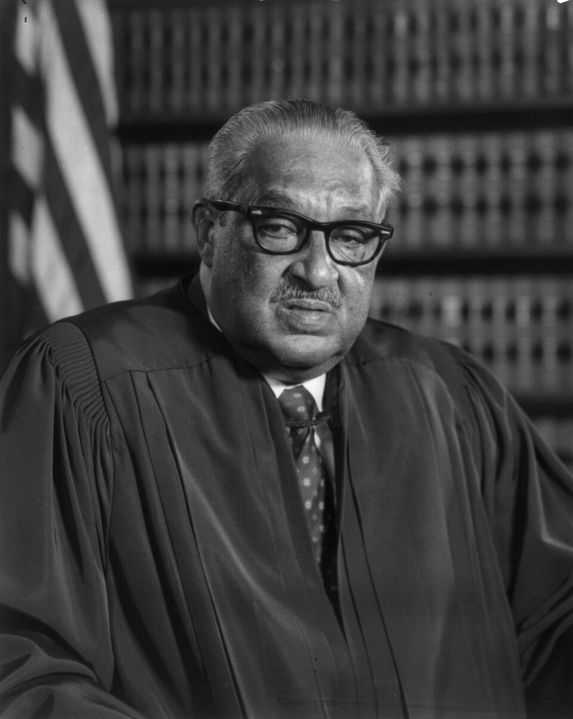
- Thurgood Marshall: Wrote the unanimous definition of a material fact
- Henry J. Friendly: Second Circuit judge whose earlier standard the Court largely followed

Summary
In February 1969 National Industries, Inc. bought 34 percent of the voting stock of TSC Industries, Inc. from TSC's founder, Charles E. Schmidt, and his family. Schmidt and his son left the TSC board, five National nominees joined it, National's president Stanley R. Yarmuth became TSC's board chairman, and its executive vice president Charles F. Simonelli became chairman of TSC's executive committee. In October 1969 the TSC board, with National's nominees abstaining, approved selling all of TSC's assets to National in exchange for National preferred stock and warrants. A joint proxy statement issued on 12 November 1969 recommended the deal, shareholders approved it, and TSC was liquidated. Northway, Inc., a TSC shareholder, sued under Section 14(a) of the Securities Exchange Act of 1934 and the SEC's proxy Rules 14a-3 and 14a-9, claiming the proxy statement omitted material facts. It pointed to the failure to say that Yarmuth and Simonelli held TSC's top board posts, the omission of SEC filings describing National as a possible parent of TSC, the omission of a later letter from the investment bank Hornblower & Weeks-Hemphill, Noyes about the likely value of National's warrants, and the omission of purchases of National stock by National and by Madison Fund, which Northway suggested had propped up the price. The Seventh Circuit held several omissions material as a matter of law, reasoning that a fact is material if a reasonable shareholder might consider it important, and ordered partial summary judgment for Northway. The question was how to define a material fact under Rule 14a-9 and whether these omissions were material so clearly that no trial was needed. Northway argued for a generous standard because the proxy rules exist to protect shareholders and management controls the proxy statement. TSC and National argued that the might-consider-important test set the threshold far too low and that the proxy statement had disclosed the essential facts about National's stake and the premium offered. On 14 June 1976 the Court reversed, eight to nothing. Justice Marshall held that an omitted fact is material if there is a substantial likelihood that a reasonable shareholder would consider it important in deciding how to vote, meaning that disclosure would have significantly altered the total mix of information available. A lower threshold, he warned, could lead management to bury shareholders in trivial information. Materiality is a mixed question of law and fact, ordinarily for the trier of fact, and summary judgment is proper only when reasonable minds cannot differ. Reviewing each omission against what the proxy statement did disclose, the Court found none material as a matter of law and remanded. The library text is Marshall's opinion with its notes omitted. Basic Inc. v. Levinson (1988) adopted the TSC standard for Rule 10b-5 cases, and it remains the general definition of materiality in federal securities law.
Virtues in this work
- Prudence: Marshall weighs the value of disclosure against the cost of overwhelming shareholders, choosing a standard that serves informed judgment.
- Justice: The Court resolves doubts about omitted facts in favor of shareholders while refusing to impose liability for insignificant omissions.
- Humility: The opinion leaves delicate judgments about what a reasonable shareholder would think to the trier of fact rather than to appellate judges.
Plot or Argument
- National's purchase and the sale of TSC
Marshall describes National's acquisition of the Schmidt shares, the placement of National officers at the head of TSC's board, the October 1969 approval of the asset sale and the joint proxy statement, and Northway's suit under the proxy rules.
- Purposes of Section 14(a)
Drawing on Borak and Mills, the Court explains that the proxy rules protect the informed exercise of shareholder voting rights, which gives the definition of materiality heightened importance.
- Might or would?
The Court rejects the Seventh Circuit's test, a fact a reasonable shareholder might consider important, as too suggestive of mere possibility, and finds the lower court's reliance on Mills misplaced.
- The standard announced
Balancing the rule's protective purpose against the danger of an avalanche of trivial disclosure, the Court defines a material fact as one that a reasonable shareholder would, with substantial likelihood, consider important in voting, judged against the total mix of information.
- A mixed question for the trier of fact
Because materiality requires delicate judgments about what a reasonable shareholder would infer, summary judgment is appropriate only where the omissions are so obviously important that reasonable minds cannot differ.
- The omissions examined
The proxy statement disclosed National's 34 percent stake and its five board nominees, so omitting the officers' titles and the SEC filings was not material as a matter of law; the Hornblower letter added little to what directors already knew; and the stock purchases mattered only if coordinated, which remained a disputed fact.
Characters
- Northway, Inc., respondent
TSC shareholder that sued over omissions in the joint proxy statement.
- TSC Industries, Inc. and National Industries, Inc., petitioners
The acquired company and its acquirer, joint issuers of the November 1969 proxy statement.
- Stanley R. Yarmuth, president of National and chairman of TSC's board
His dual role was among the omitted facts Northway called material.
- Charles E. Schmidt, TSC's founder
Sold his family's 34 percent stake to National in February 1969 and left the board.
- Justice Thurgood Marshall, author of the opinion of the Court
Defined materiality as a substantial likelihood that a reasonable shareholder would consider a fact important.
Lessons
The reasonable shareholder and the total mix
Marshall's test asks not whether a fact would have changed a shareholder's vote, nor merely whether it might have mattered, but whether there is a substantial likelihood a reasonable shareholder would consider it important. The fact is judged against everything else disclosed, which the Court called the total mix.
- How does Marshall's standard differ from the Seventh Circuit's might-consider-important test?
- Why does the Court say the standard does not require proof that disclosure would have changed the vote?
- Who is the reasonable shareholder, and why does the law use an imagined person rather than the actual voters?
Too much information
The Court recognized that a disclosure rule can fail by demanding too much as well as too little. If every possible fact could create liability, management might fill proxy statements with trivia and make informed decisions harder rather than easier.
- What danger does Marshall describe with the image of an avalanche of trivial information?
- Can you think of other documents, such as product warnings or contracts, where too much detail obscures what matters?
Judges and juries on mixed questions
Materiality applies a legal standard to particular facts and requires judgments about what a reasonable investor would infer. The Court held such judgments belong ordinarily to the trier of fact, reserving summary judgment for cases where reasonable minds cannot differ.
- Why does the Court call materiality a mixed question of law and fact?
- What would be lost if appellate judges decided materiality themselves in most cases?
- When is it fair to decide a case without a trial?
Reading what was disclosed
In each instance the Court compared the omitted fact with what the proxy statement already said. National's 34 percent stake and its five directors were prominently disclosed, so the officers' titles added little. The analysis models how to read a disclosure document as a whole.
- Which facts about National's control did the proxy statement disclose?
- Why did the Court treat the stock purchases as material only if they were coordinated?
Context
Section 14(a) of the Securities Exchange Act of 1934 authorized the SEC to regulate the solicitation of proxies, the ballots by which most shareholders vote. In J. I. Case Co. v. Borak (1964) the Court recognized a private right to sue for proxy violations, and in Mills v. Electric Auto-Lite Co. (1970) it held that a material defect plus a proxy solicitation essential to the transaction establishes causation. The conglomerate mergers of the late 1960s produced many transactions in which an acquirer already held a large stake in the target.
Composition
Northway filed suit on 4 December 1969, the day before the TSC shareholder meeting, and in 1972 amended its complaint to seek damages. The Seventh Circuit's 1975 decision conflicted with the Second Circuit's standard in Gerstle v. Gamble-Skogmo (1973), written by Judge Henry Friendly, which the Supreme Court largely followed.
Reception
The TSC definition became the general test of materiality throughout federal securities law. Basic Inc. v. Levinson (1988) applied it to Rule 10b-5 cases, and the SEC and the courts have used it in assessing disclosures in registration statements, periodic reports and advisers' communications. Debate continues over how the total-mix idea applies to information already public and to quantitative thresholds.
Comparisons
- basic-inc-v-levinson
Twelve years later the Court expressly adopted the TSC standard for Rule 10b-5 and added a probability-and-magnitude test for contingent events such as merger talks.
- ernst-and-ernst-v-hochfelder
Decided in the same term, Hochfelder fixed the mental-state element of Rule 10b-5 claims as TSC fixed the materiality element of proxy claims.
- sec-v-capital-gains-research-bureau
The 1963 decision described the securities laws as substituting full disclosure for caveat emptor; TSC asked how much disclosure that philosophy actually requires.
- the-wealth-of-nations
Smith observed that directors of joint-stock companies manage other people's money rather than their own, the separation of ownership and control that proxy disclosure rules address.
Quotes
Frequently cited
“management's fear of exposing itself to substantial liability may cause it simply to bury the shareholders in an avalanche of trivial information a result that is hardly conducive to informed decisionmaking.”
Frequently cited
“An omitted fact is material if there is a substantial likelihood that a reasonable shareholder would consider it important in deciding how to vote.”
Frequently cited
“Put another way, there must be a substantial likelihood that the disclosure of the omitted fact would have been viewed by the reasonable investor as having significantly altered the "total mix" of information made available.”
“The question of materiality, it is universally agreed, is an objective one, involving the significance of an omitted or misrepresented fact to a reasonable investor.”
“Some information is of such dubious significance that insistence on its disclosure may accomplish more harm than good.”
“The issue of materiality may be characterized as a mixed question of law and fact, involving as it does the application of a legal standard to a particular set of facts.”
For Students
A reading companion for classical Christian high school students. See the student guide.
Reading Guide
Watch for
- The roles of Yarmuth and Simonelli at both National and TSC.
- The Seventh Circuit's might-consider-important formulation and Judge Friendly's criticism of it.
- The avalanche of trivial information Marshall warns against.
- The phrase total mix and how it changes the question.
- How the Court compares each omission with what the proxy statement disclosed.
Key terms and names
- Proxy statement
- A document sent to shareholders when management asks for authority to vote their shares, describing the matters to be decided.
- Materiality
- The legal measure of whether a fact is important enough that its omission or misstatement can create liability.
- Total mix
- All the information available to a reasonable investor, against which an omitted fact's significance is measured.
- Summary judgment
- A decision without trial, proper only when there is no genuine dispute about material facts.
- Rule 14a-9
- SEC rule forbidding proxy solicitations containing false or misleading statements of material fact or omitting material facts needed to make statements not misleading.
- Warrant
- A security giving the holder the right to buy a company's stock at a set price.
Seminar Questions
- Comprehension How did National come to have influence over TSC before the proxy statement was issued?
- Comprehension What four kinds of omitted information did Northway claim were material?
- Interpretation Why does Marshall think a standard set too low would hurt the shareholders it is meant to protect?
- Interpretation Why does the Court say the stock purchases by National and Madison Fund mattered only if they were coordinated?
- Interpretation How does the total-mix idea affect the Court's analysis of the omitted officers' titles?
- Big Question How should those who hold information decide what others need to know in order to make a fair decision?
Faith Connections
- Proverbs 18:17 (Scripture)
He that is first in his own cause seemeth just; but his neighbour cometh and searcheth him, a proverb about how one side's presentation can mislead until the omitted facts are examined.
- Ecclesiastes 5:2-3 (Scripture)
The Preacher counsels that words be few and warns that a fool's voice is known by multitude of words, a reminder that more words do not always mean more truth.
- Adam Smith, The Wealth of Nations, Book V, Chapter 1 (Great Conversation)
Smith's remark that directors of joint-stock companies, managing other people's money, cannot be expected to watch over it with the vigilance of private partners anticipates the problem that proxy rules address.
Logic and Rhetoric
Central argument: Marshall reasons that the proxy rules aim at informed voting, that a materiality test set too low would defeat that aim by flooding shareholders with trivia while one set too high would excuse real omissions, and that the right balance asks whether a reasonable shareholder would, with substantial likelihood, consider a fact important within the total mix.
Rhetorical device: vivid image. Marshall's picture of management burying shareholders in an avalanche of trivial information (quote 2) turns an abstract policy concern into a memorable warning.
Debate: Resolved: that disclosure law should require companies to tell investors every fact a reasonable investor might consider important.
Memory Work
An omitted fact is material if there is a substantial likelihood that a reasonable shareholder would consider it important in deciding how to vote.
Put another way, there must be a substantial likelihood that the disclosure of the omitted fact would have been viewed by the reasonable investor as having significantly altered the "total mix" of information made available.
Writing Prompts
Essay: Explain the substantial-likelihood test for materiality and apply it to one of the omissions Northway challenged, reaching your own conclusion about whether a reasonable shareholder would have considered it important.
Comparison with Basic Inc. v. Levinson: Compare how TSC defines materiality for a completed fact in a proxy statement with how Basic adapts that definition for uncertain future events such as merger negotiations.
Medical Lens
A dispute over omissions in a corporate proxy statement; the opinion defines materiality for shareholder voting and has no medical content.
Creative Prompts
- Classroom
Give students a one-page mock proxy statement for an asset sale and a list of ten omitted facts. In small groups, students apply Marshall's substantial-likelihood test to each fact and report which ones a reasonable shareholder would consider important.
- Essay
Rewrite the relevant paragraph of the November 1969 TSC proxy statement so that it addresses Northway's complaints about National's control without burying shareholders in detail.
- Dialogue
Write a conversation between a TSC shareholder deciding how to vote in December 1969 and a friend who has read the proxy statement closely, showing what each finds important in the total mix.
- Essay
Compare the words might and would in the competing materiality tests, and explain how a single word can change the scope of a legal duty.
Further Reading
- The Modern Corporation and Private Property, Adolf A. Berle and Gardiner C. Means
The 1932 study of the separation of ownership from control in large corporations, which shaped the disclosure philosophy behind the proxy rules.
- The Law of Securities Regulation, Thomas Lee Hazen
Treatise whose chapters on proxy regulation and materiality trace how courts have applied the TSC standard.
Verification notes
Each of the six quotations from Marshall's opinion was located by Grep as an exact substring of content/texts/tsc-industries-v-northway.txt; the source text drops the dash before a result that is hardly conducive, and the quote keeps that form. The transaction dates, officers' names and the 4 December 1969 filing come from the stored opinion. The vote (8-0, Stevens not participating) is as given in the task.
- Confirm the decision date of 14 June 1976 and the argument date.
- Confirm whether the case was later resolved by trial or settlement on remand.