Work record
An Introduction to Mathematics
1911 · Early 20th Century · Essays · English
Abstract
Background. Fresh from co-writing Principia Mathematica with Russell, Whitehead accepted an invitation to explain his discipline to lay readers in a new inexpensive series, the Home University Library.
Argument. The subject's strength comes from generality. Because its statements concern any objects at all, letters standing for unspecified numbers can capture laws of motion, curves, waves and growth.
Structure. After opening chapters on generality, letters, applications, mechanics and notation, the book widens the idea of number up to imaginary quantities, joins algebra to curves through Cartesian axes, and proceeds through functions, cycles in nature, trigonometry, infinite sums, differentiation, the axioms of space, and measurable magnitude.
Key Concepts. Abstraction; the variable; symbolism as labour-saving; extension of number; dependence of one quantity on another; periodicity; limits. Each is introduced through concrete cases before the general idea is named.
Availability. American readers may use the book freely, yet its formulas, diagrams and special symbols are set in mathematical type that does not convert cleanly to plain prose. For that reason the library offers a summary and study guide here, without storing the text or quoting from it.
Significance. Still reprinted more than a century later, it is valued as an exposition of mathematical ideas rather than drills, and it foreshadows the author's later philosophy of nature and education.

Summary
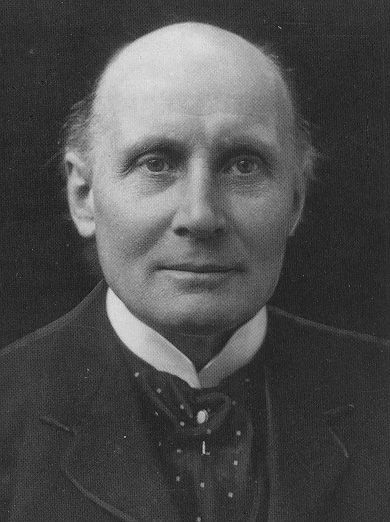
An Introduction to Mathematics is a short book written for general readers in the Home University Library of Modern Knowledge, a popular series of compact introductions published in London by Williams and Norgate and in New York by Henry Holt in 1911. Whitehead wrote it just after the first volume of Principia Mathematica, and it was his first book for a wide public. Its aim is not to teach techniques but to show what mathematics is about and why its ideas matter to science and to ordinary thought. The opening chapter argues that mathematics is the science of abstraction. When we say that one and one make two, we speak of no particular things at all, and this generality is the source of mathematics' power. The next chapters introduce the variable, the letter that stands for any number, and show how the idea of any and some, expressed in algebra, lets a single statement cover endless cases. Whitehead then explains how mathematics is applied: physical laws such as those of motion are mathematical relations among measured quantities, and he gives a chapter to dynamics and the work of Galileo and Newton. A chapter on symbolism argues that good notation relieves the mind of routine work so that it can attend to new problems. The middle of the book traces generalizations of number, from whole numbers to fractions, negative numbers, irrational numbers and the so-called imaginary numbers, which Whitehead treats in two chapters as an extension that turned out to have practical uses. Chapters on coordinate geometry and conic sections show how Descartes's method joins algebra and geometry, so that curves such as the ellipse, parabola and hyperbola can be studied through equations. A chapter on functions presents the idea of one quantity depending on another. The later chapters treat periodicity in nature, from the seasons and the tides to vibrations and waves, and the trigonometrical functions that describe them; series, including the problem of convergence and the meaning of an infinite sum; the differential calculus, explained through limits and rates of change; geometry as the study of space and its axioms; and quantity, on how measurement is possible. A brief note recommends books for further study. The book has stayed in print, has been praised by mathematicians for its clarity, and is often recommended to students who want to see the shape of the subject before its details. The library does not store its full text: the work is in the public domain in the United States, but its digital edition is typeset mathematics with formulas and diagrams that do not survive conversion to plain text, so this record gives a summary and guide only.
Virtues in this work
Plot or Argument
- Chapter I: The abstract nature of mathematics
Mathematics deals with properties that hold of any things whatever, and its abstractness is the reason it applies so widely.
- Chapters II-V: Variables, application, dynamics and symbolism
The variable expresses the ideas of any and some; physical laws are relations among variables; Galileo's and Newton's dynamics show the method at work; good symbols economize thought.
- Chapters VI-VIII: Generalizations of number
Number is extended step by step to fractions, negatives, irrationals and imaginary numbers, each extension justified by the operations it makes possible.
- Chapters IX-XI: Coordinate geometry, conics and functions
Descartes's coordinates let equations describe curves; the conic sections serve as examples; the function names the dependence of one variable on another.
- Chapters XII-XIII: Periodicity and trigonometry
Repeating phenomena in nature, from day and year to vibrations, call for periodic functions, and trigonometry supplies them.
- Chapters XIV-XV: Series and the calculus
Infinite series and the question of convergence lead to the idea of a limit, on which Whitehead builds an account of the differential calculus.
- Chapters XVI-XVII: Geometry and quantity
Geometry is treated as the study of space from axioms, and the final chapter asks what makes a quantity measurable.
Lessons
The power of abstraction
Whitehead argues in his first chapter that mathematics is useful precisely because it ignores the particular things it counts or measures. A statement about any number applies to apples, planets and electric currents alike. The book invites readers to see abstraction as a strength rather than a retreat from reality.
- What does Whitehead mean by calling mathematics abstract?
- Why does abstraction make mathematics more, not less, applicable to the world?
- Are there dangers in treating real things only through their measurable properties?
Notation as a tool of thought
In the chapter on symbolism Whitehead argues that good symbols let the mind carry out routine operations almost mechanically, freeing attention for new problems. He connects this to the general advance of civilization through habits and tools that do work for us.
- How does algebraic notation make a problem easier than writing it out in words?
- What other tools or habits save thought in the way Whitehead describes?
- Can relying on routine ever hinder understanding?
Periodicity in nature
Whitehead's chapter on periodicity shows that days, seasons, tides, heartbeats and sound waves share a mathematical form. Trigonometric functions, first developed for measuring triangles, turn out to describe repetition throughout nature.
- What examples of periodic events does Whitehead give?
- Why should functions invented for triangles describe vibrations and waves?
- What does the fit between mathematics and nature suggest about the order of the world?
Context
In the decades before 1911, mathematicians had placed analysis on rigorous foundations through the work of Cauchy, Weierstrass, Dedekind and Cantor, and Frege, Peano, Russell and Whitehead were attempting to ground arithmetic in logic. At the same time, British publishers were producing inexpensive series of introductions for the growing reading public; the Home University Library, begun in 1911, enlisted leading scholars to write short books on their subjects.
Composition
Whitehead wrote the book while Principia Mathematica was in press and while he was moving from Cambridge to London. It appeared in 1911 in the Home University Library (Williams and Norgate, London; Henry Holt, New York) in seventeen chapters with a note on books. Reprints remain available.
Reception
The book was widely read and is still cited as a model of explaining mathematics to non-specialists; reviewers have praised its clarity and its account of why mathematical ideas matter. Some of its examples and terminology reflect the state of mathematics in 1911, and students may notice that later developments, such as modern set theory and computing, are absent.
Comparisons
- euclid-elements-book-i
Euclid's axiomatic geometry is the classical model behind Whitehead's chapter on geometry, which treats space as a system derived from axioms.
- russell-problems-of-philosophy
Published a year later by Whitehead's collaborator, Russell's short book for the same kind of general reader asks what we can know, including our knowledge of mathematical truths.
- principia
Newton's laws of motion are Whitehead's chief example of mathematics applied to nature, and his chapter on the calculus explains the method Newton invented.
- hardy-a-mathematicians-apology
Hardy, a younger Cambridge mathematician, defends pure mathematics for its beauty, where Whitehead stresses how abstract ideas prove useful.
- plato-meno
Socrates draws a geometrical truth out of an untaught slave boy; Whitehead likewise suggests that mathematical understanding lies within reach of any careful reader.
Quotes
For Students
A reading companion for classical Christian high school students. See the student guide.
Reading Guide
Watch for
- The opening argument that mathematics deals with any things whatever, not particular things.
- How the variable, introduced in Chapter II, becomes the key idea for everything after.
- The step-by-step justification of each new kind of number in Chapters VI-VIII.
- The examples of repetition in nature in the chapter on periodicity.
- How the idea of a limit links the chapters on series and on the calculus.
Key terms and names
- Abstraction
- Whitehead's name for considering properties apart from the particular things that have them, the defining activity of mathematics.
- Variable
- A symbol standing for any member of a class of numbers, which lets one statement cover endless cases.
- Imaginary number
- A number whose square is negative; Whitehead shows how this extension of number became useful.
- Coordinate geometry
- Descartes's method of locating points by numbers so that curves can be described by equations.
- Periodic function
- A function that repeats its values at regular intervals, used to describe cycles and vibrations.
- Convergence
- The property of an infinite series whose sums approach a fixed value, central to the chapter on series.
Seminar Questions
- Comprehension What does Whitehead mean when he says mathematics is abstract, and what example does he use to show it?
- Comprehension How does Descartes's coordinate method connect algebra and geometry, according to Chapters IX and X?
- Interpretation Why does Whitehead think good notation is so important to the progress of mathematics?
- Interpretation How does Whitehead justify calling fractions, negatives and imaginary quantities numbers?
- Interpretation What does the chapter on periodicity suggest about the relation between mathematics and the natural world?
- Big Question Why should abstract mathematics, worked out on paper, describe the motions of planets and the vibrations of strings?
Faith Connections
- Wisdom of Solomon 11:20 (Scripture)
Thou hast ordered all things in measure and number and weight. Augustine and medieval writers often cited this verse; Whitehead's account of the mathematical order in nature gives it fresh illustration.
- Psalm 104 (Scripture)
The psalmist praises God for appointing the moon for seasons and the sun its going down, the same cycles that Whitehead studies in his chapter on periodicity.
- Augustine, On Free Choice of the Will II (Church Fathers)
Augustine argues that the truths of number are unchanging and common to all minds, and treats them as a path toward the eternal Truth, a theological reflection on the abstraction Whitehead describes.
Logic and Rhetoric
Central argument: Mathematics studies relations that hold for any things whatever. Relations of this kind are found throughout nature, in motion, number, space and repetition. Therefore the most abstract science is also the most widely applicable, and understanding its leading ideas illuminates both science and ordinary thought.
Rhetorical device: argument from example. In the chapter on periodicity Whitehead piles up cases, from days and seasons to tides and vibrations, before introducing the trigonometric functions that unite them.
Debate: Resolved: that mathematics is discovered rather than invented.
Writing Prompts
Essay: Using Whitehead's chapters on variables and on periodicity, explain why abstraction makes mathematics useful in the natural sciences.
Comparison with Elements, Book I: Compare Euclid's method of proceeding from definitions and postulates with Whitehead's account of geometry and of mathematics as abstraction. What does each think mathematics is about?
Medical Lens
The book does not treat medicine. Its chapter on periodicity mentions rhythmic natural processes in general terms, but there is no medical content of substance.
Creative Prompts
- Classroom
Collect five examples of periodic events from daily life and science, graph one of them, and discuss Whitehead's claim that one mathematical form fits them all.
- Essay
Explain Whitehead's view that abstraction is the source of mathematics' usefulness, using an example from physics or economics.
- Dialogue
Write a conversation in which Whitehead explains to a skeptical student why imaginary numbers deserve the name number.
Further Reading
- The Aims of Education and Other Essays, Alfred North Whitehead
- Science and the Modern World, Alfred North Whitehead
- Introduction to Mathematical Philosophy, Bertrand Russell
- What Is Mathematics?, Richard Courant and Herbert Robbins
Verification notes
Abstract-only record: the work is public domain in the United States, but no plain-text edition is stored because the available digital edition (Project Gutenberg #41568, distributed as PDF and TeX) is typeset mathematics. No quotations are given, following the manifest's quote note. Chapter titles follow the standard seventeen-chapter contents (checked against a listing of the reprint and Project Gutenberg's catalogue entry, https://www.gutenberg.org/ebooks/41568); publication details follow library catalogue records. Whitehead's well-known remarks on civilization and symbolism are paraphrased, not quoted.
- Confirm the chapter order and titles against the 1911 first edition.
- Check any quotation from the book against a public-domain scan before adding it.