Work record
Zelman v. Simmons-Harris
2002 · Postwar Contemporary · Court Decision · English
Abstract
Question Presented. Does Ohio breach the Establishment Clause when it gives Cleveland families tuition scholarships usable at private schools, most of them church-affiliated, as one of several alternatives to a failing public district?
Arguments. The taxpayers contended that the money ended up funding religious instruction, that parents had scant secular alternatives in practice, and that the arrangement resembled New York's tuition aid invalidated in 1973. Ohio replied that its plan treated religious and secular schools alike, aimed to rescue children from academic failure, and reached parochial classrooms only when parents chose to send it there.
Holding. By five to four the justices sustained the program. Rehnquist found it neutral and a matter of genuine individual decision, counting charter, magnet and tutoring options alongside the scholarships. Thomas stressed the stakes for poor minority pupils. Souter, for the four dissenters, said the ruling abandoned Everson; Breyer feared renewed strife among religious communities.
Significance. The decision cleared a federal path for voucher programs nationwide. Debate shifted to state constitutions, and the Court later held, in cases from 2017 to 2022, that states funding private education may not shut out schools simply because they are religious.
Text. Rehnquist's opinion is given whole, with parts of the Thomas, Souter and Breyer opinions and no notes.
Key figures
- Susan Tave Zelman: Ohio schools superintendent defending the scholarships
- Doris Simmons-Harris: Cleveland taxpayer challenging aid that reached parochial schools
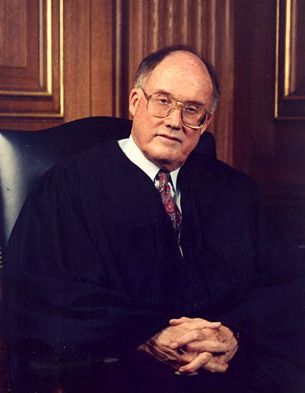
- William H. Rehnquist: Chief Justice who upheld aid steered by parental decisions
- Clarence Thomas: Concurring justice who invoked Frederick Douglass on learning and freedom
- David H. Souter: Principal dissenter defending Everson's ban on tax support for religious teaching

Summary
In 1995 a federal court placed the Cleveland City School District, which enrolled more than 75,000 mostly low-income children, under state control after findings of a crisis of magnitude; the district had met none of eighteen state performance standards. Ohio responded with several programs, including community (charter) schools, magnet schools and a Pilot Project Scholarship Program. The scholarship program gave tuition aid, up to $2,250 for the poorest families, which parents could use at participating private schools, religious or secular, or at public schools in adjacent districts, and it gave tutoring grants to students who stayed in the public schools. Checks were made out to parents, who endorsed them to the school they chose. In the 1999-2000 school year 46 of the 56 participating private schools were religious, and 96 percent of scholarship students attended them; no suburban public district took part. Ohio taxpayers, among them Doris Simmons-Harris, sued Susan Tave Zelman, the state superintendent, and the lower federal courts held that the program advanced religion. The question was whether the program violated the Establishment Clause. The respondents argued that it channeled public money to religious schools that used it for religious education, that families had few realistic secular alternatives, and that the program was functionally like aid struck down in Committee for Public Education v. Nyquist (1973). Ohio argued that the program was neutral, served the secular purpose of rescuing children from failing schools, and directed aid to religious schools only through parents' independent choices among many public and private options. On 27 June 2002 the Court reversed, five to four. Chief Justice Rehnquist, relying on Mueller v. Allen, Witters and Zobrest, held that a neutral program giving aid directly to a broad class of individuals, who then direct it to religious schools by their own genuine and independent choice, is one of true private choice that does not offend the Establishment Clause. He counted all the options open to Cleveland parents, including community and magnet schools, rather than the scholarship schools alone. Justice Thomas, concurring, quoted Frederick Douglass on education and emancipation and argued that the Fourteenth Amendment should not be used to block states from helping poor urban children. Justice Souter, for four justices, argued that the decision could not be reconciled with Everson's rule against tax support for religious teaching and that neutrality and choice were illusory on these facts. Justice Breyer, joined by Stevens and Souter, stressed the risk of religiously based social conflict. The library text gives Rehnquist's opinion with excerpts from Thomas, Souter and Breyer; Justice O'Connor's concurrence and Justice Stevens's dissent are not included, and notes are omitted. Later decisions, including Trinity Lutheran Church v. Comer (2017), Espinoza v. Montana Department of Revenue (2020) and Carson v. Makin (2022), held that a state offering aid to private schools may not exclude religious schools because they are religious.
Virtues in this work
- Justice: Thomas insists that poor urban families deserve the same freedom to seek a good education for their children that wealthier families already have.
- Fortitude: Souter holds that constitutional limits must be kept especially in hard cases where a sympathetic purpose invites impatience with them.
- Prudence: Breyer weighs the long-term social consequences of public funding for religious schools in a religiously diverse nation.
Plot or Argument
- A school district in crisis
Rehnquist describes the Cleveland district's failures, the 1995 state takeover, and the scholarship, tutoring, community-school and magnet-school programs Ohio created in response.
- Direct aid and private choice
The Court distinguishes programs that give aid directly to religious schools from those in which aid reaches them only through individuals' independent choices, tracing the second line through Mueller, Witters and Zobrest.
- A program of true private choice
Ohio's program is neutral toward religion, gives aid to a broad class defined by residence and need, permits all schools to participate, and offers no financial incentive to choose religious schools.
- Counting the options
Rehnquist rejects reliance on the 96 percent figure, noting that Cleveland parents could also choose community schools, magnet schools, tutoring or adjacent public schools, and that the percentage fluctuates from year to year.
- Nyquist distinguished
The New York program struck down in 1973 was designed to aid private religious schools specifically, and the Court had there reserved the question of neutral aid offered to all.
- Thomas's concurrence
Thomas frames the case in terms of the education of minority children in failing urban schools and questions whether the Establishment Clause should restrain states as it restrains Congress.
- Souter's and Breyer's dissents
Souter traces the Court's aid cases from Everson and argues that substantial aid to religious teaching was formerly forbidden; Breyer recounts nineteenth-century conflicts over schooling and warns of renewed religious division.
Characters
- Susan Tave Zelman, petitioner
Ohio Superintendent of Public Instruction, responsible for administering the scholarship program.
- Doris Simmons-Harris, respondent
Cleveland parent and taxpayer among those who challenged the program.
- Chief Justice William H. Rehnquist, author of the opinion of the Court
Held that the program was one of true private choice and therefore consistent with the Establishment Clause.
- Justice Clarence Thomas, concurring
Argued that the program served poor minority children and that states deserve latitude in matters of religion and education.
- Justice David H. Souter, dissenter
Wrote for four justices that the decision departed from the no-aid principle of Everson.
- Justice Stephen G. Breyer, dissenter
Emphasized the risk of social conflict when public money supports religious education.
Lessons
Whose choice directs the money?
Rehnquist's opinion turns on the path by which aid reaches a religious school. When the government gives aid to parents who then choose among many schools, the decision to support religious education belongs to the parents, not the state. Souter answered that the form of a payment should not hide its substance, especially when most participating schools were religious.
- How do the checks in the Ohio program reach the schools, and why does that matter to the majority?
- Why does Souter say that neutrality and choice are illusory in this case?
- If a family chooses to spend a public benefit at a religious institution, has the government supported religion?
Measuring genuine options
The opinions disagree about what alternatives Cleveland parents really had. The majority counted community schools, magnet schools and tutoring alongside the scholarship schools, while the dissent focused on the scholarship schools, nearly all religious. The case shows how the frame of comparison can shape a constitutional result.
- Why does Rehnquist refuse to rely on the 96 percent figure?
- Why did no suburban public district participate, and how does each side treat that fact?
- What would make a parent's choice among schools genuinely free?
Education and opportunity
Thomas began with Frederick Douglass's words that education means emancipation and argued that poor urban families want the best education for their children wherever it is offered. The dissenters did not dispute the crisis in Cleveland but held that constitutional limits apply most clearly in hard and sympathetic cases.
- How does Thomas use Douglass and Brown v. Board of Education in his concurrence?
- What does Souter mean by saying constitutional limitations preserve values in hard cases?
- Should the urgency of a social problem affect how a court reads a constitutional limit?
Religion and social peace
Breyer recalled the nineteenth-century conflicts between Protestant and Catholic communities over public schools and argued that funding religious schools could reopen such divisions. Supporters of the program responded that excluding religious schools from neutral aid can itself treat religious families unequally.
- What historical conflicts does Breyer describe?
- Why might a voucher program create, or reduce, religious tension in a community?
Context
Proposals for school vouchers date at least to Milton Friedman's 1955 essay on the role of government in education, and Milwaukee began the first modern publicly funded program in 1990. Cleveland's schools were placed under state control in 1995 as part of long-running desegregation litigation. The Court's Establishment Clause cases had moved from Everson's no-aid principle through Lemon and Nyquist to decisions, such as Mueller v. Allen (1983), Witters (1986), Zobrest (1993), Agostini v. Felton (1997) and Mitchell v. Helms (2000), that emphasized neutrality and private choice.
Composition
The Ohio legislature created the Pilot Project Scholarship Program in 1995, and it began operating in the 1996-1997 school year. A state-court challenge ended in 1999 with a procedural ruling that the legislature promptly cured. The federal suit was filed in July 1999; the Supreme Court stayed the district court's injunction so that students could remain enrolled while appeals proceeded. Three dissents and two concurrences were filed when the case was decided on the last day of the term.
Reception
Advocates of school choice hailed the decision and several states and the District of Columbia later adopted voucher or tax-credit programs, while opponents turned to state constitutional provisions, including so-called Blaine Amendments, restricting aid to religious schools. Later cases such as Espinoza v. Montana Department of Revenue (2020) and Carson v. Makin (2022) limited the reach of those provisions. Scholars remain divided over whether Zelman faithfully applied earlier precedents or marked a change in direction.
Comparisons
- everson-v-board-of-education
Souter opened his dissent by quoting Everson's statement that no tax may be levied to support religious institutions, and argued that the majority could not leave Everson on the books.
- lemon-v-kurtzman
Breyer quoted Lemon's warning about political division along religious lines; the majority distinguished direct salary payments of the kind struck down in 1971 from aid steered by parents' choices.
- pierce-v-society-of-sisters
Pierce secured parents' freedom to choose religious schools in 1925; Zelman addressed whether a state may help low-income parents pay for that choice.
- brown-v-board-of-education
Thomas quoted Brown's statement that no child may reasonably be expected to succeed in life if denied the opportunity of an education.
- the-wealth-of-nations
Smith's discussion of how teachers' pay and competition affect instruction anticipates the economic reasoning behind voucher proposals.
Quotes
Frequently cited
“We believe that the program challenged here is a program of true private choice, consistent with Mueller, Witters, and Zobrest, and thus constitutional.”
Frequently cited
“How can a Court consistently leave Everson on the books and approve the Ohio vouchers? The answer is that it cannot.”
“It permits such individuals to exercise genuine choice among options public and private, secular and religious. The program is therefore a program of true private choice.”
“While the romanticized ideal of universal public education resonates with the cognoscenti who oppose vouchers, poor urban families just want the best education for their children, who will certainly need it to function in our high-tech and advanced society.”
“If there were an excuse for giving short shrift to the Establishment Clause, it would probably apply here. But there is no excuse. Constitutional limitations are placed on government to preserve constitutional values in hard cases, like these.”
“I do so because I believe that the Establishment Clause concern for protecting the Nation’s social fabric from religious conflict poses an overriding obstacle to the implementation of this well-intentioned school voucher program.”
For Students
A reading companion for classical Christian high school students. See the student guide.
Reading Guide
Watch for
- The description of the Cleveland district's performance at the opening of the opinion.
- How tuition checks are made payable to parents rather than schools.
- Rehnquist's list of features that make the program neutral.
- Thomas's opening quotation from Frederick Douglass.
- Souter's quotation of Everson's no-tax rule.
Key terms and names
- Voucher
- A publicly funded scholarship that parents may apply to tuition at a school of their choosing.
- True private choice
- The Court's description of a program in which aid reaches religious schools only through the independent decisions of individuals.
- Neutrality
- Evenhanded treatment of religious and secular recipients in setting eligibility for a government program.
- Community school
- Ohio's term for a publicly funded school run independently of the local school board, often called a charter school.
- Magnet school
- A public school that emphasizes a particular subject or teaching method to attract students from across a district.
Seminar Questions
- Comprehension What kinds of aid did the Ohio program provide, and to whom?
- Comprehension What percentage of participating private schools were religious, and what percentage of scholarship students attended them?
- Comprehension How does Rehnquist distinguish this program from the one struck down in Nyquist?
- Interpretation Why does Souter argue that the majority cannot leave Everson on the books?
- Interpretation How does Thomas's concern for minority children shape his view of the Establishment Clause?
- Big Question Who should decide what kind of school a child attends: parents, the community, or the state?
Faith Connections
- Ephesians 6:4 (Scripture)
The charge to fathers to bring up children in the nurture and admonition of the Lord underlies many families' desire for religious schooling.
- Psalm 82:3-4 (Scripture)
The call to defend the poor and fatherless and do justice to the afflicted and needy bears on the shared concern of both sides for Cleveland's low-income children.
Logic and Rhetoric
Central argument: Rehnquist reasons that a program neutral toward religion, giving aid directly to a broad class of individuals who choose among genuine secular and religious options, does not advance religion, because any aid reaching religious schools does so by private choice; Souter replies that the Court's precedents forbade substantial public support of religious teaching and that the Cleveland program, in practice, provided it.
Rhetorical device: rhetorical question. Souter asks how a Court can leave Everson on the books and approve the vouchers, and answers in a single short sentence (quote 4).
Debate: Resolved: that a state may include religious schools in a tuition scholarship program for low-income families.
Memory Work
It permits such individuals to exercise genuine choice among options public and private, secular and religious. The program is therefore a program of true private choice.
If there were an excuse for giving short shrift to the Establishment Clause, it would probably apply here. But there is no excuse. Constitutional limitations are placed on government to preserve constitutional values in hard cases, like these.
Writing Prompts
Essay: Evaluate whether the Ohio program offered Cleveland parents a genuine choice, using the facts as presented by both Rehnquist and Souter.
Comparison with Everson v. Board of Education: Compare the bus-fare reimbursement upheld in Everson with the tuition vouchers upheld in Zelman, and explain whether the reasoning of Everson supports or undercuts the later decision.
Medical Lens
The opinions address tuition scholarships for Cleveland schoolchildren and raise no questions of medicine or health.
Creative Prompts
- Classroom
Hold a Cleveland town meeting in 1996 at which parents, public-school teachers, parochial-school principals and taxpayers debate whether the new scholarship program should include religious schools.
- Essay
Write a short brief for either side answering this question only: should the Court count community and magnet schools when deciding whether Cleveland parents had genuine choices?
- Dialogue
Write a conversation between a Cleveland mother using a scholarship at a Catholic school and a neighbor who believes public money should stay in public schools.
- Essay
Compare how Thomas and Breyer each use history, one turning to Frederick Douglass and Brown, the other to nineteenth-century school conflicts, and explain which history you find more relevant to the case.
Further Reading
- Capitalism and Freedom, Milton Friedman
Contains the chapter on the role of government in education that set out the modern case for vouchers.
- Separation of Church and State, Philip Hamburger
Historical study relevant to the dispute between Souter and the majority over the meaning of the no-aid principle.
Verification notes
Two quotations from Rehnquist, one from Thomas, two from Souter and one from Breyer were each found by Grep as exact substrings of content/texts/zelman-v-simmons-harris.txt, including the curly apostrophe in Breyer's sentence. Program figures (tuition caps, 56 schools, 96 percent) come from Rehnquist's opinion. The three separate opinions are excerpts in the stored text. Doris Simmons-Harris's description as a Cleveland parent comes from secondary accounts.
- Confirm that Doris Simmons-Harris was a Cleveland parent as well as a taxpayer.
- Confirm that the Pilot Project Scholarship Program was enacted in 1995.