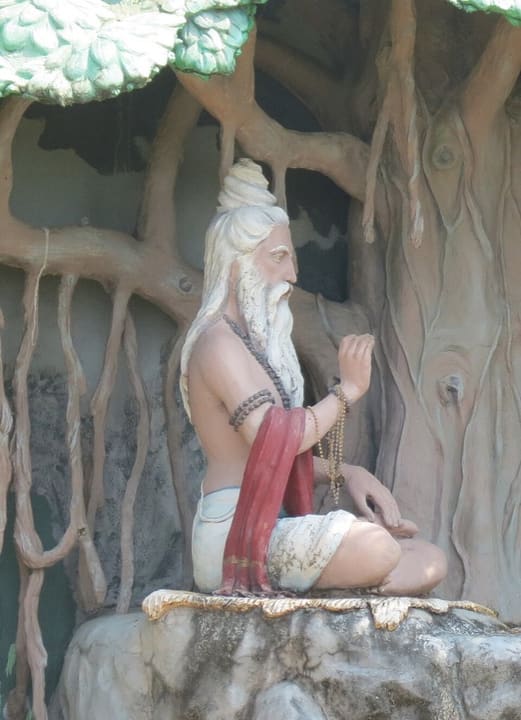
The Bhagavad Gita ('Song of the Lord') is traditionally attributed to the sage Vyasa, the legendary compiler of the Mahabharata, in which it is embedded. In reality it is the work of one or more unknown poets, composed in Sanskrit over a period usually placed between the fifth and second centuries BCE. Its seven hundred verses became one of the central scriptures of Hinduism.
c. 2nd century BCE · Ancient · Religious Scripture
The Bhagavad Gita is a dialogue of seven hundred verses in eighteen chapters, forming part of the sixth book of the Mahabharata, the great Sanskrit epic of the war between two branches of a royal family, the Pandavas and the Kauravas. It is set on the battlefield of Kurukshetra at the moment before battle begins.