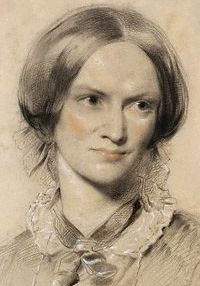
Charlotte Brontë (1816-1855) was the eldest surviving child of Patrick Brontë, the Irish-born perpetual curate of Haworth in the West Riding of Yorkshire. After her two elder sisters died following their time at the Clergy Daughters' School at Cowan Bridge, she was educated largely at home and at Roe Head, worked as a teacher and governess, and studied in Brussels in 1842-43. Jane Eyre (1847), published under the pseudonym Currer Bell, was followed by Shirley (1849) and Villette (1853). She married her father's curate, Arthur Bell Nicholls, in 1854 and died the following March.
“Laws and principles are not for the times when there is no temptation: they are for such moments as this, when body and soul rise in mutiny against their rigour”
“Medicine can give nobody good spirits. My art halts at the threshold of Hypochondria: she just looks in and sees a chamber of torture, but can neither say nor do much.”
Jane Eyre is the life story, told by Jane herself, of an orphan girl who grows into a governess and finally a wife, keeping her conscience and her self-respect through poverty, temptation and grief. At ten Jane lives at Gateshead Hall with her aunt by marriage, Mrs. Reed, who resents her, and her bullying cousin John.
Lucy Snowe tells her own story, years after the events, in a reserved voice that often withholds what she feels and sometimes what she knows. As a girl she stays with her godmother Mrs. Bretton in the old town of Bretton, where she watches the tiny, intense Paulina Home attach herself to Mrs. Bretton's teenage son Graham.