Work record
Jane Eyre
1847 · 19th Century · Novel · English
Abstract
Background. Charlotte Brontë, a Yorkshire clergyman's daughter who had herself taught and governessed, offered the book as an autobiography edited by Currer Bell. Its school chapters recall the institution at Cowan Bridge where two of her sisters fell fatally ill.
Plot. Cast out of her aunt's household, the narrator survives a harsh charity school, then takes a post teaching Adèle at Thornfield, where she and its master grow attached despite rumors and nocturnal alarms. Their marriage ceremony collapses when Bertha's existence is exposed. Jane departs penniless, is rescued near death by the Riverses, gains an inheritance and kin, declines St. John's call to India, and returns after a summons in the night to the maimed widower.
Narration. An older Jane recounts her youth with frequent addresses to the reader, mixing realistic detail with omens, dreams and a possibly supernatural voice. Five households, from Gateshead to Ferndean, mark the stages of her growth.
Themes. Conscience under temptation, the spiritual equality of persons regardless of station, the claims of earthly love against self-denying vocation, and forgiveness.
Significance. A best-seller on publication, the book established the first-person heroine as a moral centre of the English novel and has been continually adapted and reimagined, notably in Rhys's Wide Sargasso Sea.
Main characters
- Jane Eyre: Orphan narrator who becomes teacher, governess and heiress
- Edward Rochester: Brooding employer concealing a living wife
- Bertha Mason: Rochester's insane Jamaican-born wife, kept in the attic
- Helen Burns: Lowood schoolfriend, a model of patient faith
- St. John Rivers: Zealous cousin who seeks Jane as a missionary wife
- Mrs. Reed: Hostile aunt who withholds news of Jane's uncle
- Mr. Brocklehurst: Pinching patron of the charity school
- Miss Temple: Lowood's humane superintendent
- Adèle Varens: French child in Jane's care at Thornfield

Summary
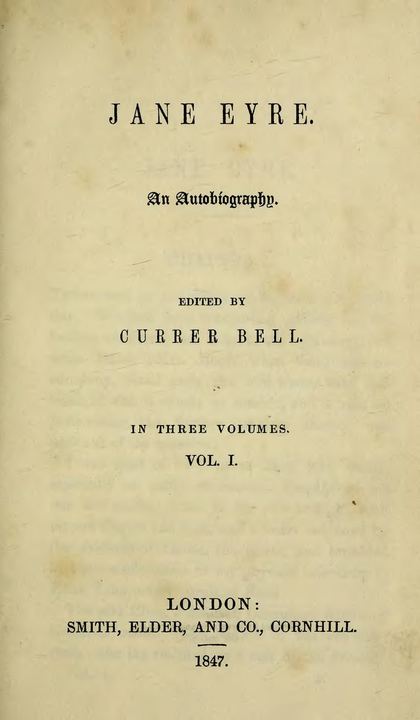
Jane Eyre is the life story, told by Jane herself, of an orphan girl who grows into a governess and finally a wife, keeping her conscience and her self-respect through poverty, temptation and grief. At ten Jane lives at Gateshead Hall with her aunt by marriage, Mrs. Reed, who resents her, and her bullying cousin John. After she strikes back at John she is locked in the red-room where her uncle died and collapses in terror; the kindly apothecary Mr. Lloyd suggests school. At Lowood, a charity school run by the stern and stingy clergyman Mr. Brocklehurst, Jane suffers cold, hunger and public shaming, but finds a mother-figure in the superintendent, Miss Temple, and a friend in Helen Burns, who teaches her Christian forbearance. Typhus sweeps the school in spring, and Helen dies of consumption in Jane's arms. The scandal brings reform, and Jane stays eight years, six as pupil and two as teacher. Advertising for a post, she becomes governess to Adèle Varens, the French ward of Edward Rochester of Thornfield Hall. Rochester, brusque, moody and twenty years her senior, comes to value her frankness, and they fall in love. Strange events trouble the house: a mocking laugh from the third storey, a fire set in Rochester's bed, and a night attack on the visitor Richard Mason, all blamed on the servant Grace Poole. Rochester courts the beautiful Blanche Ingram to test Jane's feelings, then proposes to Jane in the orchard; that night lightning splits the great horse-chestnut. On the wedding morning a solicitor and Mason halt the service: Rochester has a living wife, Bertha Mason, whom he married in Jamaica and who is insane and confined in the attic. Rochester begs Jane to live with him abroad; she refuses and leaves Thornfield secretly at dawn with almost nothing. After days of wandering, sleeping on the moor and begging, she is taken in at Moor House by the clergyman St. John Rivers and his sisters Diana and Mary. She teaches a village school, learns that her uncle John Eyre has left her twenty thousand pounds, discovers that the Riverses are her cousins, and divides the fortune equally among them. St. John asks her to marry him and go with him as a missionary to India, offering duty without love. As she is about to yield, she hears Rochester's voice calling her name. Returning, she finds Thornfield a blackened ruin: Bertha set it on fire and leapt from the roof, and Rochester, trying to save her, lost an eye and a hand and the sight of the other eye. Jane goes to him at Ferndean, they marry, and after two years he regains partial sight in time to see their first son. The novel closes with St. John's letter from India awaiting death. It was published in London in October 1847 by Smith, Elder and Co. as Jane Eyre: An Autobiography, edited by Currer Bell; the library text includes the preface to the second edition, dedicated to Thackeray.
Virtues in this work
- Fortitude: Jane leaves Thornfield at dawn with no money, rather than stay unlawfully with the man she loves.
- Charity: Jane forgives the dying Mrs. Reed and divides her uncle's twenty thousand pounds equally with her newfound cousins.
- Temperance: She governs her passion for Rochester when every feeling urges her to yield.
- Honor: Jane insists to Rochester that she is his equal in soul and refuses to be dressed up or kept as an ornament.
- Humility: Rochester at Ferndean acknowledges God's judgment on his pride and thanks God for Jane's return.
Plot or Argument
- Gateshead (Chapters I-IV)
The orphan Jane is mistreated by the Reeds, locked in the red-room, examined by Mr. Lloyd, and sent to school after defying her aunt.
- Lowood (Chapters V-X)
Under Brocklehurst's harsh regime Jane is befriended by Helen Burns and Miss Temple; typhus strikes, Helen dies of consumption, and Jane rises to teacher before seeking a new place.
- Thornfield: governess and master (Chapters XI-XX)
Jane teaches Adèle, meets Rochester when his horse falls on the ice, saves him from a fire in his bed, watches him court Blanche Ingram, and helps nurse the wounded Mason.
- Gateshead revisited (Chapters XXI-XXII)
Jane returns to her dying aunt, learns that John Reed is dead and that Mrs. Reed hid her uncle's letter, and forgives her.
- Proposal and the wedding halted (Chapters XXIII-XXVII)
Rochester proposes in the orchard; the wedding is stopped by the revelation of Bertha Mason; Jane refuses to become his mistress and flees.
- Moor House and Morton (Chapters XXVIII-XXXV)
Starving on the moors, Jane is sheltered by the Rivers family, teaches the Morton school, inherits a fortune, finds she has cousins, and resists St. John's call to marry him and go to India.
- Ferndean and conclusion (Chapters XXXVI-XXXVIII)
Answering a mysterious call, Jane finds Thornfield burned and Rochester maimed and blind; she marries him, he partly recovers his sight, and St. John's last letter closes the book.
Characters
- Jane Eyre, narrator and heroine
A plain, passionate, principled orphan who becomes a teacher and governess and tells her own story.
- Edward Fairfax Rochester, master of Thornfield Hall
A sardonic, worldly gentleman secretly bound to a mad wife, who loves Jane and is humbled by disaster.
- Bertha Antoinetta Mason, Rochester's wife
A Creole heiress from Jamaica, insane and hidden on Thornfield's third storey, who finally burns the house.
- Helen Burns, Jane's friend at Lowood
A patient, devout schoolgirl who teaches Jane to forgive and dies of consumption.
- Miss Maria Temple, superintendent of Lowood
A just and gentle teacher who clears Jane's name and models self-command.
- Mrs. Sarah Reed, Jane's aunt by marriage
The mistress of Gateshead, who keeps Jane from her inheritance and cannot forgive her even on her deathbed.
- Mr. Brocklehurst, treasurer of Lowood
A clergyman who preaches humility to the starved pupils while his own family lives in luxury.
- St. John Rivers, clergyman and Jane's cousin
A handsome, ambitious, self-denying missionary who wants Jane as a fellow laborer rather than a beloved wife.
- Diana and Mary Rivers, Jane's cousins
Warm, intelligent sisters who nurse Jane back to health and become her family.
- Adèle Varens, Rochester's ward
A lively French girl, daughter of an opera dancer, whom Jane teaches and loves.
- Mrs. Alice Fairfax, housekeeper at Thornfield
A kind elderly relation of Rochester's who welcomes Jane but knows little of the house's secret.
- Grace Poole, Bertha's keeper
A taciturn servant, fond of drink, whom Jane suspects of the strange attacks.
Lessons
Principles are for moments of temptation
When Rochester begs her to stay as his mistress, Jane admits that every feeling urges her to yield. She leaves because the law of God and the principles she held when calm are meant precisely for such a moment. The novel presents conscience as a commitment kept against one's own desires.
- What arguments does Rochester make for Jane to stay, and which are hardest to answer?
- Why does Jane say that laws and principles are not for times with no temptation?
- What does her flight cost her, and does the novel reward it?
Helen's forbearance and Jane's fire
At Lowood Helen Burns urges patience and forgiveness; Jane insists that she must strike back at those who are unjust. Over the novel Jane learns something from Helen without losing her own strong sense of justice, and she forgives Mrs. Reed at her deathbed. Brontë sets two kinds of Christian response side by side and lets each correct the other.
- How does Helen answer Jane's anger at the Reeds and Brocklehurst in Chapter VI?
- Where does Jane later act more like Helen?
- Is Helen's patience weakness or strength?
Equal souls
In the orchard Jane tells Rochester that, though she is poor, obscure, plain and little, she has as much soul and heart as he, and that they stand equal before God. Her dignity rests not on rank, beauty or wealth but on her nature as a spiritual being. That conviction lets her refuse both Rochester's unlawful offer and St. John's loveless one.
- What is the ground of the equality Jane claims in Chapter XXIII?
- How does her inheritance change her position, and why does she share it?
Two ways of serving God
St. John Rivers offers Jane a life of heroic missionary sacrifice without love; Rochester, humbled and repentant at Ferndean, offers love within marriage. Jane honors St. John's zeal, and the book ends with his words, but she judges that marrying without love would be a kind of death for her. The novel asks how calling, duty and love belong together.
- Why does Jane refuse St. John even though she admires him?
- How has Rochester changed by the time Jane returns?
- Why do you think Brontë ends the book with St. John rather than with Jane and Rochester?
Context
Jane Eyre belongs to the England of the 1840s, when a genteel woman without money had few respectable ways to earn a living beyond teaching or governessing, and when charity schools, evangelical religion and the treatment of the insane were matters of public debate. Lowood draws on the Clergy Daughters' School at Cowan Bridge, where Charlotte and her sisters were pupils in 1824-25 and after which her sisters Maria and Elizabeth died; Helen Burns is generally held to be drawn from Maria. Bertha's confinement at home under a paid keeper reflects a practice still common among wealthy families, at the time the Lunacy Acts of 1845 were reorganizing the asylum system.
Composition
Brontë wrote the novel in 1846-47 at Haworth, after her first novel, The Professor, was rejected. Smith, Elder and Co. published it in three volumes on 16 October 1847 as Jane Eyre: An Autobiography, edited by Currer Bell. A second edition followed in early 1848 with a preface defending the book and dedicating it to Thackeray, and the third edition added a note that Currer Bell was the author of no other novel than this.
Reception
The novel was an immediate popular success, and Thackeray and G. H. Lewes praised it, while some reviewers objected to its heroine's rebelliousness and to its sharp portrait of a clergyman. Speculation about the identity of Currer Bell lasted until the Brontës were known. It has remained one of the most read English novels, inspiring many stage and screen versions and later novels such as Jean Rhys's Wide Sargasso Sea (1966), which imagines Bertha's history.
Comparisons
- wuthering-heights
Emily Brontë's novel, published two months later, also sets violent love on the Yorkshire moors, but where Catherine and Heathcliff defy every law, Jane keeps her principles and is united with Rochester within them.
- the-pilgrims-progress
Jane's journey from Gateshead to Ferndean follows the shape of a pilgrimage, and the last paragraph likens St. John to Bunyan's Greatheart; Brontë's heroine, like Christian, must leave what she loves to keep faith.
- pride-and-prejudice
Both novels end in a marriage of equals across a gap in wealth, but Austen's comedy of manners and Brontë's passionate first-person narrative give very different accounts of love; Brontë herself told G. H. Lewes in 1848 that Austen's world felt like a carefully fenced garden with no open country.
- great-expectations
Two first-person stories of orphans raised by harsh guardians who come into unexpected money and must learn what it is worth; Satis House and Thornfield both hide a ruined bride.
- the-secret-garden
Burnett's Yorkshire manor with a hidden invalid and a lonely orphan heroine borrows the atmosphere of Thornfield and turns it toward healing.
- villette
Charlotte Brontë's last novel (1853) returns to a reserved, poor heroine making her way as a teacher, but Lucy Snowe narrates with far more concealment than Jane, and the ending is left open.
- the-tenant-of-wildfell-hall
Anne Brontë's novel (1848) appeared a year after Jane Eyre; Helen Graham's diary records a marriage to a dissolute husband and her decision to leave him, a contrast to Jane's refusal to stay with Rochester as his mistress.
Quotes
Frequently cited
“There was no possibility of taking a walk that day.”
Frequently cited
“Women are supposed to be very calm generally: but women feel just as men feel”
Frequently cited
“Do you think, because I am poor, obscure, plain, and little, I am soulless and heartless? You think wrong!”
Frequently cited
“I am no bird; and no net ensnares me; I am a free human being with an independent will, which I now exert to leave you.”
Frequently cited
“Laws and principles are not for the times when there is no temptation: they are for such moments as this, when body and soul rise in mutiny against their rigour”
Frequently cited
“Reader, I married him.”
“It is far better to endure patiently a smart which nobody feels but yourself, than to commit a hasty action whose evil consequences will extend to all connected with you”
“breathed typhus through its crowded schoolroom and dormitory, and, ere May arrived, transformed the seminary into an hospital.”
For Students
A reading companion for classical Christian high school students. See the student guide.
Reading Guide
Watch for
- The red-room in Chapter II and how it returns in Jane's dream the night she decides to leave Thornfield.
- What Helen Burns says about enduring injustice in Chapter VI, and whether Jane ever comes to agree.
- Each strange event at Thornfield (the laugh, the fire, the attack on Mason, the torn veil) and who is blamed for it.
- The great horse-chestnut in the orchard, struck by lightning on the night of the proposal.
- The contrast between Rochester's proposal in Chapter XXIII and St. John's in Chapter XXXIV.
Key terms and names
- Governess
- A woman employed to teach children in a private household, as Jane teaches Adèle at Thornfield; neither servant nor family.
- Lowood Institution
- The charity school for orphan girls where Jane spends eight years; its harsh early regime is reformed after the typhus outbreak.
- Thornfield Hall
- Rochester's manor house, whose third storey hides his secret and which ends as a burned ruin.
- Bigamy
- Marrying while already married; the crime Rochester attempts when the wedding is halted in Chapter XXVI.
- Resurgam
- Latin for I shall rise again, the word inscribed on the marble tablet that, years later, marks Helen Burns's grave.
- Currer Bell
- The pseudonym under which Charlotte Brontë published the novel, presented as the book's editor.
Seminar Questions
- Comprehension Why is Jane locked in the red-room, and what happens to her there?
- Comprehension What does Jane discover on her wedding day, and how does Rochester explain it?
- Comprehension How does Jane learn that the Rivers family are her cousins, and what does she do with her inheritance?
- Interpretation Mr. Brocklehurst and St. John Rivers are both clergymen. How does Brontë distinguish their faith?
- Interpretation Why does Jane refuse to stay with Rochester as his mistress, even though she believes no one would be harmed?
- Interpretation Is the voice Jane hears calling her name meant to be supernatural, providential or psychological? What evidence does the book give?
- Big Question On what does a person's dignity rest, if not on wealth, beauty or social rank?
- Big Question Should love or duty decide whom we marry, and can the two be reconciled?
Faith Connections
- Matthew 5:44 and Romans 12:17-21 (Scripture)
Helen Burns tells Jane that the Bible bids us return good for evil and love our enemies; Jane's forgiveness of the dying Mrs. Reed in Chapter XXI puts that teaching into practice.
- Matthew 5:29-30 (Scripture)
Jane recalls the command to pluck out the right eye and cut off the right hand when she resolves to leave Rochester, and the novel later takes from Rochester an eye and a hand.
- Revelation 22:20 (Scripture)
The novel ends with St. John's prayer, Amen; even so come, Lord Jesus, the last words of the Bible, setting his heavenly hope beside Jane's earthly happiness.
- John Bunyan, The Pilgrim's Progress (Great Conversation)
Brontë compares St. John to Bunyan's Greatheart, and Jane's own story moves like a pilgrimage through trials toward rest.
Logic and Rhetoric
Central argument: Jane is poor, plain and alone, yet she possesses a soul equal before God to anyone's. A soul so valued must not be sold for comfort, love or approval: not to Rochester's unlawful offer nor to St. John's loveless one. Therefore she must keep her principles even at great cost, and only a love that honors conscience can make her happy.
Rhetorical device: apostrophe to the reader. Jane repeatedly addresses the reader directly, most famously in the line opening Chapter XXXVIII, drawing the audience into her confidence as if hearing her testimony.
Debate: Resolved: that Jane was right to refuse St. John Rivers's proposal.
Memory Work
Laws and principles are not for the times when there is no temptation: they are for such moments as this, when body and soul rise in mutiny against their rigour
Do you think, because I am poor, obscure, plain, and little, I am soulless and heartless? You think wrong!
Writing Prompts
Essay: Trace Jane's struggle between passion and principle from the red-room to Ferndean. Argue whether the novel finally reconciles the two.
Comparison with Wuthering Heights: Compare Jane and Rochester with Catherine and Heathcliff. Argue which sister presents the truer account of passionate love, and why.
Medical Lens
Jane Eyre gathers many of the medical concerns of the 1840s into one life. Bertha Mason is the best-known madwoman in English fiction: Rochester describes her madness as inherited from a mother shut in an asylum, in keeping with the period's hereditary theories of insanity, and keeps her at home under a paid keeper rather than in an institution, explaining that his conscience recoiled from lodging her at his damp, unhealthy manor at Ferndean. Grace Poole is hired from the Grimsby Retreat, a fictional name that may recall the York Retreat of the Quaker moral-treatment movement; this is a reader's association, not stated in the novel. Bertha's violence, including the night she stabs and bites Mason and Jane's comparison of her to a vampire, belongs to Gothic convention as much as to clinical observation, and any modern diagnosis is speculative. Lowood shows the link between institutional diet, damp and crowding and disease: typhus sweeps the school, while Helen Burns dies separately of consumption, the distinction Jane notes. The child Jane's collapse in the red-room is treated by an apothecary, Mr. Lloyd, who perceives that unhappiness rather than the fall made her ill. Later episodes include Mrs. Reed's fatal stroke after her son's reported suicide, Jane's near-starvation on the moors, the surgeon Carter's attendance on Mason, and the amputation of Rochester's crushed hand and his blindness after the fire.
- Chapters II-III
Jane faints from terror in the red-room and is examined by the apothecary Mr. Lloyd, who recommends a change of scene and school.
- Chapters V and IX
Lowood's scant, spoiled food and damp situation; the spring typhus epidemic; Helen Burns's death from consumption; the public inquiry and reform that follow.
- Chapter XX
Rochester and the surgeon Carter dress Mason's knife and bite wounds; Mason says his attacker sucked his blood.
- Chapters XXVI-XXVII
Bertha is shown in her attic room with Grace Poole; Rochester recounts her family history of madness, his reasons for keeping her at Thornfield, and the hiring of her keeper from the Grimsby Retreat.
- Chapters XXVIII and XXXVI-XXXVII
Jane's starvation on the moors; the account of the fire, Bertha's death, the amputation of Rochester's hand and his blindness, and his partial recovery of sight.
Listen to the book
Public-domain audiobook from LibriVox, read by Dawn Sutton. Recording: Jane Eyre: An Autobiography (version 4) on LibriVox (Internet Archive).
LibriVox recordings are volunteer readings released into the public domain. The reading may follow a different edition from the text in this library.
Creative Prompts
- Classroom
Map Jane's five homes (Gateshead, Lowood, Thornfield, Moor House, Ferndean) and for each one write what Jane lacks there and what she gains.
- Essay
Compare Rochester's proposal in Chapter XXIII with St. John's in Chapter XXXIV. What does each man want Jane to be?
- Dialogue
Write a conversation between Helen Burns and the adult Jane on the night before she leaves Thornfield.
- Fiction
Tell the night of the fire at Thornfield from the point of view of Grace Poole.
Further Reading
- The Life of Charlotte Brontë, Elizabeth Gaskell
The 1857 biography by Brontë's friend and fellow novelist.
- Villette, Charlotte Brontë
- The Brontës, Juliet Barker
- Wide Sargasso Sea, Jean Rhys
A 1966 novel imagining Bertha Mason's early life in the West Indies.
Verification notes
Plot, characters and publication facts are standard. Chapter locators follow the attached Gutenberg text, which includes the preface to the second edition. The link between the Grimsby Retreat and the York Retreat is offered as an association, not a documented source. Brontë's remark on Austen paraphrases her January 1848 letter to G. H. Lewes. The Grimsby Retreat is spelled Grimbsy once in the attached text. Quotes were checked by exact search against the attached text.
No verification flags recorded.