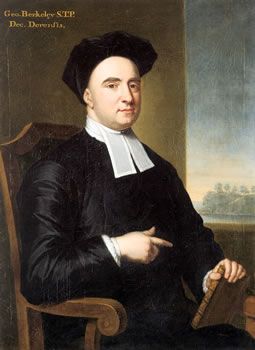
George Berkeley (1685-1753) was an Irish philosopher and Anglican clergyman, born near Kilkenny and educated at Trinity College Dublin, where he became a fellow. In his twenties he published An Essay towards a New Theory of Vision (1709), the Principles (1710) and Three Dialogues between Hylas and Philonous (1713). He spent 1729-1731 in Rhode Island while pursuing a plan for a college in Bermuda, became Bishop of Cloyne in 1734, and in later years wrote Alciphron, The Analyst and Siris. He died at Oxford in 1753.
Frequently Cited
“we have first raised a dust and then complain we cannot see.”
George Berkeley's Treatise Concerning the Principles of Human Knowledge, published in Dublin in 1710 when its author was a twenty-five-year-old fellow of Trinity College, argues that the material world, understood as an unthinking substance existing outside every mind, is a philosophers' invention. What exists are minds and the ideas they perceive; for sensible things, to be is to be perceived.