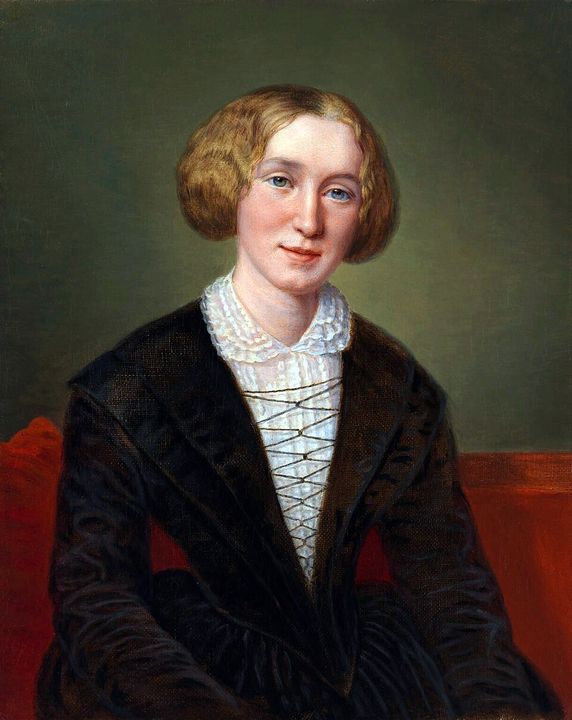
George Eliot was the pen name of Mary Ann Evans (1819-1880), born on a Warwickshire estate where her father was land agent. Raised in an earnest evangelical faith, she became a translator, critic and editor of the Westminster Review before turning to fiction with Scenes of Clerical Life and Adam Bede. Her novels, including The Mill on the Floss, Silas Marner and Middlemarch, are known for their moral seriousness and close portraits of English provincial life.
“In old days there were angels who came and took men by the hand and led them away from the city of destruction. We see no white-winged angels now. But yet men are led away from threatening destruction: a hand is put into theirs, which leads them forth gently towards a calm and bright land, so that they look no more backward; and the hand may be a little child’s.”
Silas Marner is George Eliot's short novel of a lonely linen-weaver restored to human fellowship by a child. In his youth Silas belonged to a strict dissenting congregation at Lantern Yard in a northern manufacturing town, where he was respected for his piety and for the cataleptic fits the brethren took for spiritual visitations.
Middlemarch, subtitled A Study of Provincial Life, follows several households in and around a Midlands market town from 1829 to 1832, the years leading to the first Reform Act. Its Prelude recalls Saint Teresa of Ávila and asks what becomes of women with a similar longing for a great life who are born into an age that gives it no outlet.