Work record
Aaron v. SEC
1980 · Postwar Contemporary · Court Decision · English
Abstract
Question Presented. When the Securities and Exchange Commission asks a federal court to forbid future fraud, must it show that the defendant meant to deceive, or is carelessness enough?
Arguments. The supervisor maintained that the 1976 reading of the Exchange Act's antifraud clause, demanding intent, binds every plaintiff alike. The agency countered that stopping deception before investors lose money is different from awarding damages afterward, and that courts of equity had long halted misrepresentation without inquiring into motive.
Holding. Six justices vacated the Second Circuit's judgment. Proof of intent is needed for the Exchange Act provision and for the first clause of the 1933 Act section, whose words describe schemes to defraud; the other two clauses, which speak of untrue statements and of practices with fraudulent effect, need no such proof. Three justices would have dispensed with intent altogether in agency injunction cases.
Why it matters for advisers. The ruling means the SEC can obtain injunctions against advisers, brokers and their supervisors under Sections 17(a)(2) and 17(a)(3) by showing negligence, while Section 10(b) and Section 17(a)(1) claims require intent. The facts also illustrate how supervisory inaction after warnings can lead to enforcement.
Text. Stewart's and Burger's opinions appear whole, along with much of Blackmun's, whose survey of equity practice gives readers the strongest statement of the losing position.
Key figures
- Aaron: Supervisor at a New York broker-dealer who ignored warnings about his salesmen
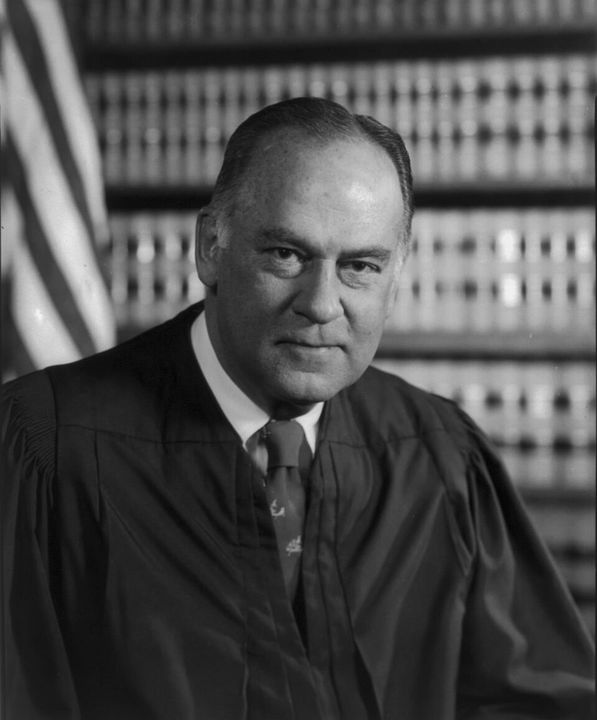
- Potter Stewart: Read each clause of the 1933 Act's antifraud section on its own terms
- Warren E. Burger: Concurred, warning against enjoining those who act in good faith
- Harry A. Blackmun: Partial dissenter for three, invoking the tradition of equity

Summary
The petitioner, Aaron, was a managerial employee of E. L. Aaron & Co., a New York broker-dealer that made a market in the stock of Lawn-A-Mat Chemical & Equipment Corp., a seller of lawn-care franchises. He supervised the firm's salesmen and kept its due diligence files. Between November 1974 and September 1975 two of his registered representatives, Norman Schreiber and Donald Jacobson, told prospective buyers that Lawn-A-Mat was about to manufacture a new small car and tractor and that its stock would rise sharply. None of it was true, and the company was losing money. A lawyer for Lawn-A-Mat twice telephoned the petitioner to report the false statements; he promised they would stop but did little beyond passing the complaint to one of the salesmen. In February 1976 the Securities and Exchange Commission sued for an injunction. The District Court found that he had intentionally failed to stop statements he knew were fraudulent and enjoined him; the Second Circuit affirmed on the ground that negligence alone suffices when the SEC seeks an injunction. The question was whether the Commission must prove scienter, an intent to deceive, manipulate or defraud, to enjoin violations of Section 17(a) of the Securities Act of 1933, Section 10(b) of the Securities Exchange Act of 1934 and Rule 10b-5. Aaron argued that Ernst & Ernst v. Hochfelder (1976) had read Section 10(b) to require intent and that the same words cannot mean something different when the SEC sues. The Commission answered that public injunction suits differ from private damages actions, that equity traditionally granted relief against misrepresentation without proof of intent, and that the agency needs flexible tools to stop deception early. On 2 June 1980 the Court vacated the judgment, six to three. Justice Stewart held that Hochfelder's reading of Section 10(b) depended on the statute's words and history, not on who brings the suit, so scienter is required there in SEC actions too. Section 17(a) divided differently: its first clause, forbidding any device, scheme or artifice to defraud, requires scienter, but its second and third clauses, about obtaining money through untrue statements and about practices that operate as a fraud, focus on the effect on investors and require none. The injunction provisions add nothing to these elements, though a defendant's intent remains relevant to whether future violations are likely. Because the lower court had not decided the case on these terms, it was sent back. Chief Justice Burger concurred, noting that the record amply supported a finding of intentional failure and that an injunction should not issue against someone acting in good faith. Justice Blackmun, with Justices Brennan and Marshall, agreed about Section 17(a)(2) and (3) but would not require scienter anywhere in SEC injunction suits, relying on equity's tradition and on SEC v. Capital Gains Research Bureau (1963). The library text includes Stewart's and Burger's opinions in full and a large part of Blackmun's, with notes removed.
Virtues in this work
- Justice: Stewart gives each clause of the statute its own meaning, so that defendants are held to the standard Congress actually wrote.
- Prudence: Burger cautions that an injunction is a drastic remedy that should not fall on those who acted in good faith.
- Fortitude: The case faults a supervisor who, warned twice of false sales talk, lacked the resolve to stop the salesmen in his charge.
Plot or Argument
- The Lawn-A-Mat sales campaign
Stewart recounts the false promises about a new car and tractor, the lawyer's two warning calls, the petitioner's failure to act, the District Court's finding of intentional failure, and the Second Circuit's holding that negligence was enough.
- Section 10(b) in SEC suits
Hochfelder rested on the statute's terms and history, which do not change with the identity of the plaintiff. The SEC must therefore prove scienter to enjoin violations of Section 10(b) and Rule 10b-5, as private plaintiffs must to recover damages.
- The three clauses of Section 17(a)
Device, scheme or artifice to defraud in clause (1) denotes intentional misconduct; clause (2), on obtaining money by untrue statements, contains no hint of intent; clause (3), on practices that operate as a fraud, looks to effects on investors. The legislative history does not overcome this plain textual division.
- The injunction provisions
Sections 20(b) and 21(d) neither add nor remove a scienter element; the Commission must show the substantive violation it seeks to enjoin. A court weighing whether future violations are likely may still consider how intentional past wrongdoing was.
- Burger's concurrence
The Chief Justice would have affirmed on the District Court's findings alone, answers the dissent that Congress, not the Court, drew the distinction, and describes an injunction as a drastic remedy not suited to those acting in good faith.
- Blackmun's partial dissent (excerpt)
Blackmun distinguishes public enforcement from private damages, argues that the word device has been read broadly, and contends that equity courts never required proof of intent to grant relief against misrepresentation, as Capital Gains recognized.
Characters
- Aaron, petitioner
Managerial employee of E. L. Aaron & Co. responsible for supervising salesmen and keeping due diligence files.
- Norman Schreiber and Donald Jacobson, registered representatives
Salesmen who promoted Lawn-A-Mat stock with false claims about a new car and tractor.
- Milton Kean, attorney for Lawn-A-Mat
Twice telephoned the petitioner to report the salesmen's misrepresentations.
- Justice Potter Stewart, author of the opinion of the Court
Held that the SEC must prove scienter under Section 10(b) and Section 17(a)(1) but not under Sections 17(a)(2) and (3).
- Chief Justice Warren E. Burger, concurring
Joined the Court and stressed that injunctions should not issue against those acting in good faith.
- Justice Harry A. Blackmun, concurring in part and dissenting in part
Would have let the SEC enjoin all the violations without proving intent, joined by Brennan and Marshall.
Lessons
One statute, three standards
Stewart's opinion reads the three clauses of Section 17(a) one by one and finds that they ask different questions: the first about the defendant's purpose, the second and third about the effect on investors. Careful attention to each clause produced a split result that neither side had fully urged.
- Which words in Section 17(a)(1) does Stewart read as requiring intent?
- Why does Section 17(a)(3)'s phrase operates or would operate point toward effects rather than purpose?
- Is it sensible for a single section of a statute to contain different mental-state requirements?
Does the plaintiff change the meaning?
The Second Circuit had held that a government agency seeking an injunction should face a lighter burden than a private party seeking money. The Court rejected the idea that the words of Section 10(b) mean one thing when the SEC sues and another when an investor does, while Blackmun argued that public enforcement and private damages differ in purpose.
- Why does Stewart say Hochfelder's reasoning applies equally to SEC suits?
- What differences between public injunctions and private damages does Blackmun emphasize?
Supervision and responsibility
The facts concern a supervisor who learned of his salesmen's false statements and did almost nothing. Burger's concurrence observes that he neither discharged nor rebuked them, and the District Court found that his failure was intentional. The case shows how responsibility in a firm can attach to those who oversee others.
- What steps could the petitioner have taken after the lawyer's calls?
- Why did the District Court consider his inaction intentional rather than merely careless?
- How much responsibility should a supervisor bear for what employees say to customers?
Law and equity
Blackmun's dissent draws on the old distinction between courts of law, which required proof of intent before awarding damages for fraud, and courts of equity, which could undo or stop misrepresentation without it. The majority treated the statutory words as decisive; the dissent treated the equity tradition as part of their meaning.
- What did Capital Gains say about the elements needed in a suit for equitable relief?
- Should old distinctions between law and equity guide the reading of a twentieth-century statute?
Context
After Hochfelder (1976) required scienter in private damages suits under Section 10(b), the courts of appeals divided over whether the SEC faced the same requirement when it sought injunctions, its most common enforcement tool. Penny-stock promotions by small broker-dealers, often using telephone sales campaigns, were a recurring subject of SEC actions in the 1970s.
Composition
The SEC filed suit in the Southern District of New York in February 1976, and all defendants except the petitioner consented to injunctions. The Second Circuit affirmed in 1979, relying on its earlier decision in SEC v. Coven (1978) for Section 17(a). The Supreme Court granted certiorari to resolve the conflict among the circuits.
Reception
The decision fixed the mental-state rules that still govern SEC antifraud enforcement: scienter for Section 10(b) and Section 17(a)(1), negligence sufficient for Sections 17(a)(2) and (3). The SEC has since relied heavily on the latter clauses in settled cases. Commentators have debated whether Stewart's clause-by-clause reading reflects congressional design or a drafting accident, as Blackmun suggested.
Comparisons
- ernst-and-ernst-v-hochfelder
Aaron carried Hochfelder's scienter rule from private damages suits into SEC injunction actions, with Blackmun dissenting in both cases.
- sec-v-capital-gains-research-bureau
Blackmun's partial dissent builds on the 1963 holding that the SEC need not prove intent to enjoin an investment adviser's undisclosed scalping, a point the Aaron majority confined to its own statute.
- chiarella-v-united-states
Decided earlier in the same term, Chiarella also read Section 10(b) through its common-law background, a method Blackmun accused the Aaron majority of applying unevenly.
- united-states-v-ohagan
In 1997 the Court pointed to the scienter requirement affirmed in Aaron as a limit that kept the misappropriation theory from reaching innocent conduct.
Quotes
Frequently cited
“The language of § 17(a) strongly suggests that Congress contemplated a scienter requirement under § 17(a)(1), but not under § 17(a)(2) or § 17(a)(3).”
“By contrast, the language of § 17(a)(2), which prohibits any person from obtaining money or property "by means of any untrue statement of a material fact or any omission to state a material fact," is devoid of any suggestion whatsoever of a scienter requirement.”
“But it is not this Court that "drives a wedge"; Congress has done that.”
“An injunction is a drastic remedy, not a mild prophylactic, and should not be obtained against one acting in good faith.”
“If the Commission is denied the ability effectively to nip in the bud the misrepresentations and deceptions that its investigations have revealed, honest investors will be the ones who suffer.”
“I can agree with the Court that the language of the statutes is the starting point of analysis, but at least in present circumstances I strongly disagree with the conclusion that it is the ending point as well.”
For Students
A reading companion for classical Christian high school students. See the student guide.
Reading Guide
Watch for
- The false claims about a small car and tractor in the Lawn-A-Mat sales campaign.
- The petitioner's only response to the lawyer's two telephone calls.
- Stewart's separate treatment of each clause of Section 17(a).
- Burger's description of an injunction as a drastic remedy.
- Blackmun's reliance on the difference between courts of law and courts of equity.
Key terms and names
- Scienter
- Intent to deceive, manipulate or defraud.
- Injunction
- A court order forbidding a person from doing something in the future, here from violating the securities laws.
- Section 17(a)
- The antifraud provision of the Securities Act of 1933, covering fraud in the offer or sale of securities, divided into three clauses.
- Broker-dealer
- A firm that buys and sells securities for customers and for its own account.
- Market maker
- A dealer that stands ready to buy and sell a particular stock, providing a market in it.
- Due diligence file
- A firm's collection of information about a security it sells, used to form a reasonable basis for recommendations.
Seminar Questions
- Comprehension What false statements did Schreiber and Jacobson make, and how did the petitioner learn of them?
- Comprehension Which provisions require scienter in an SEC injunction suit after this decision, and which do not?
- Interpretation Why does Stewart conclude that the identity of the plaintiff cannot change the meaning of Section 10(b)?
- Interpretation How does Burger use the requirement of likely future violations to soften the practical effect of the holding?
- Interpretation What does Blackmun mean by saying that the language of a statute is the starting point but not the ending point?
- Big Question Should government regulators be held to the same proof as private litigants, or should their role in protecting the public allow them a lighter burden?
Faith Connections
- 1 Samuel 3:13 (Scripture)
God judges the house of Eli because his sons made themselves vile and he restrained them not, a biblical account of responsibility for failing to stop known wrongdoing by those under one's charge.
- Exodus 20:16 (Scripture)
Thou shalt not bear false witness against thy neighbour, a commandment against deceptive speech that underlies the law's concern with untrue statements.
- Thomas Aquinas, Summa Theologiae II-II, q. 77 (Great Conversation)
Aquinas asks whether a seller sins by not declaring a defect in the thing sold, an early treatment of misrepresentation and silence in trade.
Logic and Rhetoric
Central argument: Stewart reasons that Hochfelder's reading of Section 10(b) rested on its words and history, which do not depend on the plaintiff, and that the three clauses of Section 17(a) must be read separately, with intent required only where the words describe a scheme to defraud; Blackmun answers that public equity suits historically required no proof of intent.
Rhetorical device: metaphor. Blackmun speaks of letting the Commission nip deception in the bud (quote 4), and Burger turns Blackmun's own image of driving a wedge back on him (quote 2).
Debate: Resolved: that the SEC should be able to obtain injunctions against securities fraud without proving the defendant intended to deceive.
Memory Work
The language of § 17(a) strongly suggests that Congress contemplated a scienter requirement under § 17(a)(1), but not under § 17(a)(2) or § 17(a)(3).
An injunction is a drastic remedy, not a mild prophylactic, and should not be obtained against one acting in good faith.
Writing Prompts
Essay: Explain why the Court found that different clauses of Section 17(a) require different proof of intent, and evaluate whether Blackmun's appeal to the tradition of equity offers a better reading.
Comparison with Ernst & Ernst v. Hochfelder: Compare Blackmun's dissents in Hochfelder and Aaron, showing how his argument shifted from the investor's loss in a private suit to the public role of the SEC in an enforcement action.
Medical Lens
An SEC enforcement action over false sales talk about a lawn-care franchiser's stock; nothing in the opinions bears on medicine or health.
Creative Prompts
- Classroom
Divide the class into three panels, each assigned one clause of Section 17(a). Each panel reads its clause aloud, decides whether it requires proof of intent, and defends its answer against the other panels before comparing with Stewart's opinion.
- Dialogue
Write the second telephone call between Milton Kean and the petitioner in 1975, and then a version in which the petitioner responds as a responsible supervisor would.
- Essay
Draft a short written supervisory procedure for a small brokerage firm describing what a manager must do when told that salesmen are making false statements, drawing on the facts of the case.
- Essay
Explain Burger's point that the dispute may be much ado about nothing because injunctions require a likelihood of future violations, and assess whether he is right.
Further Reading
- The Law of Securities Regulation, Thomas Lee Hazen
Treatise with extended discussion of Section 17(a), Rule 10b-5 and the mental-state rules for SEC enforcement.
- The Transformation of Wall Street: A History of the Securities and Exchange Commission and Modern Corporate Finance, Joel Seligman
Covers the SEC's enforcement program in the 1970s, when injunction suits like this one were its principal weapon.
Verification notes
Six quotations (two from Stewart, two from Burger, two from Blackmun) were matched by Grep as exact substrings of content/texts/aaron-v-sec.txt. The facts of the Lawn-A-Mat campaign, the names of the salesmen and the lawyer, and the February 1976 filing come from the stored opinion, which does not give the petitioner's first name. The 6-3 vote is as given in the task; the composition of the majority beyond Stewart and Burger is from general references.
- Confirm the decision date of 2 June 1980 and the argument date.
- Confirm the petitioner's full name (the opinion calls him only the petitioner).
- Confirm that Justices White, Powell, Rehnquist and Stevens joined Stewart's opinion.