Work record
The Alexiad
c. 1148 · Medieval · History · Ancient Greek
Abstract
Background. After Manzikert the eastern Roman state was beset on all sides. A young general from a military family took power in 1081 and held it for nearly four decades. His eldest daughter, a highly educated princess living in retirement, composed his biography in her sixties.
Content. The narrative moves from early campaigns and a palace coup through two Norman invasions, long wars with steppe horsemen and Turkish emirs, and the passage of the First Crusade, whose leaders the emperor binds by oath. Later books turn to a peace treaty with the Norman prince, wars in Anatolia, a charitable foundation for orphans and the disabled, a heresy trial, and the ruler's final sickness and death.
Voice. Classicizing Greek prose carries Homeric and biblical allusions, while frequent personal intrusions, laments and memories make the author a visible presence. She names her sources: her own recollection, family members, veteran soldiers and state papers.
Translation. The library text is Dawes's 1928 English version, transcribed by OCR, with Latinized spellings of names and ellipses where the manuscripts are damaged.
Significance. It is the principal Greek source for its reign and the essential eastern witness to the Crusade. Its author is often counted the first woman historian of the Greek tradition. Historians prize its documents while debating its chronology and the extent of filial bias.
Key figures
- Alexios I Komnenos: Soldier-emperor who restored the empire after 1081
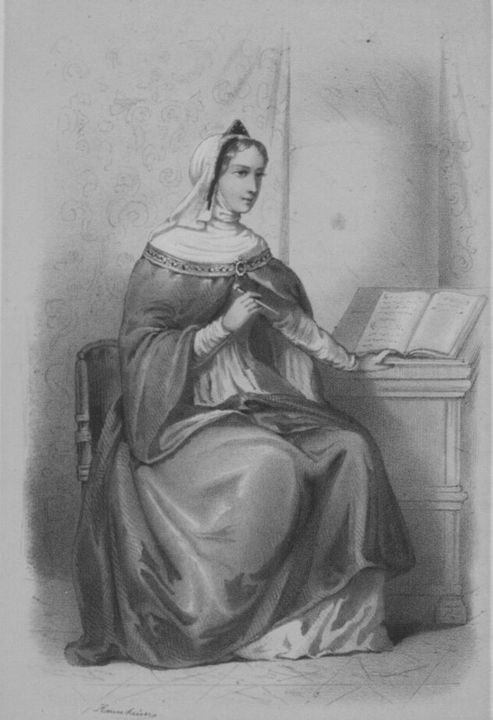
- Anna Komnene: Imperial princess, scholar and narrator
- Anna Dalassena: The emperor's mother, entrusted with civil rule
- Irene Doukaina: Empress and devoted nurse of her husband
- Robert Guiscard and Bohemond: Norman father and son who invaded from Italy
- Raymond of Saint-Gilles: Crusader count friendly to the emperor

Summary
The Alexiad is the life and reign of the Byzantine emperor Alexios I Komnenos (ruled 1081–1118), written by his daughter Anna in fifteen books. In her preface Anna introduces herself as born in the purple and trained in Aristotle and Plato, explains that her husband, the Caesar Nikephoros Bryennios, had begun a history of her father but died of an illness brought home from campaign, and promises to praise or blame as the facts require. Books I–III follow the young general Alexios against the rebels Roussel of Bailleul, Nikephoros Bryennios the elder and Basilakios, and the coup of 1081 by which the Komnenos brothers seized Constantinople from Nikephoros III Botaneiates, with the help of the Doukas family and of Alexios's formidable mother Anna Dalassena, to whom he entrusted the civil government. Books IV–VI tell of the invasion by the Norman duke Robert Guiscard and his son Bohemond, the defeat at Dyrrachium in 1081, the emperor's desperate seizure of church treasure, the trial of the philosopher John Italos, Robert's death in 1085, and, as a domestic interlude, Anna's own birth in 1083. Books VII–IX recount the wars with the nomadic Pechenegs (the 'Scythians'), from the rout at Dristra to their destruction at Levounion in 1091 with Cuman help, and campaigns against the Turkish emir Tzachas of Smyrna and against plotters such as Nikephoros Diogenes. Books X–XI turn to the First Crusade. Anna describes the arrival of Peter the Hermit and the great Frankish lords, among them Hugh of Vermandois, Godfrey of Bouillon, Raymond of Saint-Gilles and Bohemond, the oaths Alexios required of them, the recovery of Nicaea in 1097, the taking of Antioch and Jerusalem, and Bohemond's refusal to return Antioch to the empire. Books XII–XIII describe Bohemond's new invasion across the Adriatic, the second siege of Dyrrachium in 1107–1108, and the Treaty of Devol, whose text Anna reproduces. Books XIV–XV cover the Turkish wars in Asia Minor, the emperor's painful gout, the founding of the great Orphanage in Constantinople for the poor, the disabled and orphans, the trial and burning of the Bogomil leader Basil, and Alexios's last illness and death in August 1118, which Anna narrates in grief. Anna wrote in an elevated Attic Greek modeled on Thucydides and Polybius, drawing on her own memories, family papers, imperial documents and veterans' testimony. The library text is the English translation by Elizabeth A. S. Dawes, published in London by Kegan Paul in 1928, in an OCR transcription in which gaps in the medieval manuscripts appear as ellipses.
Virtues in this work
- Fortitude: Alexios escapes the rout at Dyrrachium, rebuilds his army, and fights on against the Normans and Pechenegs after repeated defeats.
- Prudence: Alexios secures the Crusade leaders' oaths and recovers Nicaea through negotiation with its garrison rather than by storm.
- Charity: Alexios founds the Orphanage, assigning servants to the blind and lame and giving orphans an education.
- Piety: Anna writes the whole history to honor her father, and nurses him with her own hands in his last illness.
- Industry: Alexios sits through Frankish audiences from evening until past midnight, outlasting all his exhausted courtiers.
Plot or Argument
- Preface: history against the flood of time
Anna presents herself, declares that history rescues deeds from oblivion, sets out the historian's duty of impartiality, and mourns her husband Nikephoros Bryennios, whose unfinished history she continues.
- Books I–II: the rise of the Komnenoi
Alexios captures Roussel of Bailleul, defeats the rebels Bryennios and Basilakios, and with his brother Isaac and the Doukas family stages the revolt of 1081 that brings him to the throne.
- Book III: a new court
Botaneiates retires to a monastery, Alexios is crowned, quarrels between the Komnenos and Doukas factions are settled, and Alexios entrusts government to his mother Anna Dalassena by a golden bull.
- Books IV–VI: the Norman war
Robert Guiscard besieges Dyrrachium; Venetian ships help the empire, but Alexios is defeated in battle and escapes on horseback. Bohemond campaigns in Greece until mutiny forces his withdrawal; John Italos is tried; Robert dies at Cephalonia; Anna is born in the purple chamber.
- Books VII–IX: Pechenegs, Turks and plotters
Defeat by the Pechenegs at Dristra is followed by years of war ending at Levounion in 1091; John Doukas fights Tzachas at Mytilene and suppresses revolts in Crete and Cyprus; the conspiracy of Nikephoros Diogenes is uncovered.
- Book X: the Crusaders arrive
After the heresy of Nilus and an invasion of Cumans led by a false son of Romanus Diogenes, Peter the Hermit's followers and then the Frankish counts reach Constantinople, and Alexios secures their oaths with gifts, diplomacy and force.
- Book XI: Nicaea, Antioch and Jerusalem
Nicaea surrenders to the emperor's agent Boutoumites; the Crusaders take Antioch, where Bohemond keeps the city for himself, and go on to Jerusalem; Raymond of Saint-Gilles alone keeps faith with Alexios; Tancred seizes Laodicea.
- Books XII–XIII: Bohemond's second invasion
Bohemond raises an army in the West and besieges Dyrrachium with tower and mine; Alexios blockades him and sows suspicion among his officers until Bohemond sues for peace and swears the Treaty of Devol, which Anna quotes in full.
- Book XIV: the emperor's labors
After Bohemond's death Alexios campaigns against the Turks despite worsening gout, which Anna traces to a polo injury, to long audiences with talkative Franks, and to anxiety; she also explains her sources and laments her own sorrows.
- Book XV: Orphanage, heresy and death
Alexios defeats the Sultan of Iconium and leads refugees home in a protected square; he founds the Orphanage, confronts the Bogomils and has their leader Basil burned; finally his physicians dispute his treatment, and he dies in 1118 while his family keeps watch.
Characters
- Alexios I Komnenos, emperor and subject of the history
General who seized the throne in 1081 and spent his reign defending the empire on every frontier.
- Anna Komnene, narrator and historian
The emperor's daughter, who speaks in her own voice of her learning, her griefs and her witness of events.
- Irene Doukaina, empress
Alexios's wife, who travels with him on campaign and nurses him through his gout and final illness.
- Anna Dalassena, emperor's mother and regent
Shrewd matriarch of the Komnenoi to whom Alexios entrusts civil administration.
- Nikephoros Bryennios, Caesar, Anna's husband
Soldier and historian whose unfinished history Anna takes up.
- Robert Guiscard, Norman duke and antagonist
Duke of Apulia who invades the empire in 1081 and dies in 1085.
- Bohemond, Norman prince and antagonist
Robert's son, a Crusade leader who takes Antioch for himself and invades the empire again in 1107.
- Raymond of Saint-Gilles, Crusade leader
Count of Toulouse, the Crusader whom Anna presents as most loyal to her father.
- Godfrey of Bouillon and Hugh of Vermandois, Crusade leaders
Frankish lords who swear oaths to Alexios at Constantinople.
- John Italos, philosopher on trial
Teacher of Aristotle and Plato condemned for heterodox teaching.
- Basil the Bogomil, heretic leader
Monk and teacher of the Bogomil sect whom Alexios draws out, tries and condemns.
- Nicholas Kallikles and Michael Pantechnes, imperial physicians
Doctors who disagree over purging the emperor during his last illness.
Lessons
History as rescue from oblivion
Anna opens with the image of time as a river that drowns all things, and of history as a bulwark against it. She writes so that great deeds will not be lost in silence, and she promises to blame friends and praise enemies when the facts require. Her history is both a daughter's tribute and an attempt at the historian's discipline, and readers can watch both at work.
- What does Anna say a historian owes to readers, and what does she fear readers will say about her?
- Where in the Alexiad does Anna seem to praise her father's enemies or admit his defeats?
- Can a person who loves the subject of a history still write it truthfully?
An empire seen from within
The First Crusade is usually told from the side of the Western knights. Anna shows it from Constantinople: an emperor who had asked for mercenaries suddenly receives whole peoples on the march, must feed and guide them, secure oaths that cities taken will be returned, and guard his capital. Her view of the Franks as brave, talkative and grasping is one side of a meeting of two Christian worlds.
- What problems did the arrival of the Crusaders create for Alexios?
- Why did Alexios want the Frankish leaders to swear oaths to him, and how did Bohemond's conduct at Antioch affect relations afterward?
- How might a Crusader chronicle describe the same events differently?
Rule as endurance
Anna's Alexios is less a conqueror than a man who holds an empire together through decades of crisis by patience, stratagem and labor. She shows him sitting like a bronze statue through endless audiences, campaigning while crippled by gout, and leading refugees home in a protected square. Endurance in duty is her measure of greatness.
- Which of Alexios's qualities does Anna praise most often?
- Are cunning and stratagem fitting virtues for a Christian ruler? Look at examples in Books IV, XIII and XV.
Charity in stone
In Book XV Anna describes the Orphanage that Alexios built in Constantinople: a city within the city for orphans, the old, the blind and the lame, with servants assigned to the disabled and a school for the young. She compares it to Solomon's porch and to Christ's healing of the blind and lame. Public works of mercy are part of her portrait of a Christian emperor.
- Who lived in the Orphanage, and how was it organized and funded?
- Why does Anna say that her father could not do what Christ did, but did what was possible?
- What institutions of mercy in your own community continue this tradition?
Context
When Alexios came to the throne in 1081 the Byzantine Empire, which called itself the Empire of the Romans, had lost most of Anatolia to the Seljuk Turks after the battle of Manzikert (1071) and faced the Normans of southern Italy in the west and the Pechenegs across the Danube. Over thirty-seven years Alexios restored the army and finances, made alliances with Venice (granting Venetian merchants tax-free trade in return), and dealt with the First Crusade (1096–1099), which began partly in answer to his appeal to Pope Urban II for western soldiers. The reign also saw sharp controversies over heresy and the use of church property.
Composition
Anna wrote in the 1140s, decades after the events, in retirement near the Kecharitomene convent; in Book XIV she says she is writing in her old age and names her sources: her own recollections, the accounts of her father and uncles, veterans who had become monks, and documents such as the chrysobull for Anna Dalassena and the Treaty of Devol, which she reproduces. Her Greek is a learned classicizing style full of allusions to Homer, the tragedians and the Bible. Elizabeth A. S. Dawes, a classical scholar of London, published the first complete English translation in 1928.
Reception
The Alexiad survives in a small number of manuscripts and was first printed in part in 1610 and fully in 1651. It is the chief Greek source for Alexios's reign and the Byzantine view of the First Crusade, and it is regularly read beside Latin Crusade chronicles. Edward Gibbon used it extensively while criticizing its rhetoric and partiality; modern historians value its documents and eyewitness detail while noting the chronological tangles in some books. Anna is often called the first woman historian in the Greek tradition. Scholars have discussed how far the work reflects her own judgments and how far it continues her husband's and her circle's work, and how far her praise of Alexios is shaped by her disappointment under John II.
Comparisons
- psellos-chronographia
Psellos, whom Anna quotes and admired, wrote the previous century's imperial history in a vivid personal voice; the Alexiad continues that tradition of the historian as a participant at court.
- villehardouin-conquest-of-constantinople
A century later the Fourth Crusade captured the city whose defense Anna describes; Villehardouin gives a Western knight's account of the Byzantine-Latin encounter from the other side.
- kaldellis-the-new-roman-empire
Kaldellis's modern history of Byzantium treats Alexios's restoration and the Komnenian age and relies on the Alexiad as a principal source.
- herrin-byzantium
Herrin's thematic history has a chapter on Anna Komnene and places her among learned Byzantine women and the culture of the court.
- the-history-of-the-peloponnesian-war
Anna models her preface, speeches and claims of accuracy on Thucydides, whose Attic Greek was the standard Byzantine historians imitated.
- usama-ibn-munqidh-memoirs
Usama, a Syrian emir of the same century, gives a Muslim nobleman's view of the Franks who settled in the Levant after the First Crusade; set beside Anna's Byzantine view, the two show how the Crusaders appeared to their neighbors.
Quotes
“Time in its irresistible and ceaseless flow carries along on its flood all created things, and drowns them in the depths of obscurity”
“He must never shirk either blaming his friends or praising his enemies.”
“as I am writing history, it is not correct to deduce her character from her descent and ancestors, but from her disposition and virtue”
“For the whole of the West and all the barbarian tribes which dwell between the further side of the Adriatic and the pillars of Heracles, had all migrated in a body and were marching into Asia through the intervening Europe”
“for he was a marvel for the eyes to behold, and his reputation was terrifying”
“For like a hammer-wrought statue, made perhaps of bronze or cold iron, he would sit the whole night through”
“he gave servants to every maimed man and the same care to the halt as to the healthy.”
“For I was there myself by order of my mistress to adjudge the physicians’ arguments, and I heard all they said and for my part agreed with Callicles’ proposals.”
For Students
A reading companion for classical Christian high school students. See the student guide.
Reading Guide
Watch for
- The preface's image of time as a flood and history as a bulwark, and Anna's promise of impartiality.
- Anna's portraits of women: Anna Dalassena's government, Irene's care, and Anna's own learning.
- How Alexios wins by stratagem, diplomacy and patience as often as by battle.
- Book X–XI: the First Crusade as seen from Constantinople, especially the oaths and the dispute over Antioch.
- Book XV: the Orphanage, the Bogomil trial, and Anna's account of her father's death.
Key terms and names
- Porphyrogenita (born in the purple)
- A child born to a reigning emperor in the purple chamber of the palace; Anna explains the name in Book VI.
- Romans (Rhomaioi)
- The name the Byzantines used for themselves; Anna's 'Roman Empire' is the empire ruled from Constantinople.
- Kelts, Franks and Latins
- Anna's terms for the western Europeans, including Normans and Crusaders.
- Scythians
- A classicizing name Anna uses for steppe peoples such as the Pechenegs and Cumans.
- Chrysobull
- A 'golden bull', an imperial decree sealed with gold, such as the one granting Anna Dalassena authority in Book III.
- Treaty of Devol
- The agreement of 1108 by which Bohemond became the emperor's vassal for Antioch; Anna reproduces it in Book XIII.
- Bogomils
- A dualist sect in the Balkans and Constantinople whose leader Basil Alexios questioned and condemned.
- Caesar
- In Komnenian Byzantium a high court title below emperor, held by Anna's husband Nikephoros Bryennios.
Seminar Questions
- Comprehension Why does Anna say she took up her husband's unfinished history, and what does she promise about praise and blame?
- Comprehension What did Alexios ask of the Crusade leaders at Constantinople, and what happened at Antioch?
- Comprehension What was the Orphanage, and who lived and worked there?
- Interpretation Anna often interrupts her narrative with her own grief and memories. Does this make her history more or less trustworthy? Use examples.
- Interpretation How does Anna portray Bohemond? Why might she give so much space to describing an enemy?
- Interpretation Anna praises Alexios for both piety and cunning. How does she reconcile these qualities in scenes such as the Bogomil trial?
- Big Question Can we trust a history written by someone who loved its subject and lived through its events? What do such histories offer that a neutral account cannot?
Faith Connections
- Psalm 90:4–6, 12 (Scripture)
'Thou carriest them away as with a flood.' Anna's opening image of time sweeping away all things echoes the psalmist, who answers it with the prayer to number our days and apply our hearts to wisdom.
- James 1:27 (Scripture)
'Pure religion and undefiled before God and the Father is this, To visit the fatherless and widows in their affliction.' The Orphanage that Anna describes in Book XV is an imperial example of this charge.
- Exodus 20:12 (Scripture)
'Honour thy father and thy mother.' The whole Alexiad is a daughter's act of honor, and Anna also wrestles with whether filial love can be reconciled with a historian's honesty.
- Thucydides, History of the Peloponnesian War I.22 (Great Conversation)
Thucydides' statement of method, testing reports by eyewitnesses, stands behind Anna's account of her own sources in the preface and Book XIV.
Logic and Rhetoric
Central argument: Great deeds are lost to oblivion unless recorded; Alexios saved a nearly collapsing empire from Normans, steppe peoples, Turks, Crusaders and heretics by courage, prudence and endurance; a historian must tell the truth even about those she loves; therefore Anna, a learned eyewitness with access to documents and veterans, writes his history so that his deeds are remembered rightly.
Rhetorical device: apostrophe and lament (the historian's personal intrusion). In the preface Anna breaks off her account of her husband's illness to exclaim that dizziness overwhelms her soul and tears blind her eyes, then cries out at what a counselor the empire has lost.
Debate: Resolved: Alexios I acted wisely in requiring the leaders of the First Crusade to swear oaths of loyalty to him.
Memory Work
Time in its irresistible and ceaseless flow carries along on its flood all created things, and drowns them in the depths of obscurity
He must never shirk either blaming his friends or praising his enemies.
Writing Prompts
Essay: Anna promises to blame friends and praise enemies when the facts require it. Choose three episodes from the Alexiad and evaluate how well she keeps that promise.
Comparison with Chronographia: Compare Psellos's portraits of eleventh-century emperors with Anna's portrait of her father. How does each historian use personal presence at court, and how does each handle praise and criticism of rulers?
Medical Lens
The Alexiad is a political history, but its medical passages are unusually detailed and give a rare look at twelfth-century Byzantine court medicine from a learned layperson who, according to her funeral oration, had studied medicine herself. Anna traces her father's gout through Books XII–XV, attributing it to a polo injury, to long standing during audiences, and to anxiety, and records that Irene's rubbing eased the pain. Book XV narrates his last illness: first a 'rheumatic' flux that the physician Nicholas Kallikles wanted to purge before it moved from the extremities to the heart, opposed by Michael Pantechnes and the majority; then breathlessness, a sensation of a stone on the heart, swelling, diarrhoea and death. The dispute reflects Galenic humoral reasoning, and Anna presents herself as judging the physicians' arguments. Modern readers have proposed various retrospective diagnoses for the final illness, including heart failure; such readings are interpretive. In Book I Anna compares the empire's rebels to fevers whose causes physicians trace to climate, diet or the humours. The preface records her husband's fatal 'internal tumour'. Book XV describes the Orphanage, a charitable foundation housing orphans, the aged, the blind and the lame, part of the Byzantine tradition of philanthropic institutions that included hospitals.
- Preface, 3–4
Nikephoros Bryennios returns from campaign with a fatal internal tumour; the family forbids him to talk for fear it may burst; Anna's grief.
- Book I
Anna's analogy between the empire's rebels and fevers that physicians attribute to climate, diet or the humours.
- Book XII
Irene accompanies Alexios on campaign partly because only her careful rubbing can ease his gout.
- Book XIV
Anna's account of the causes of her father's gout: a polo injury, long audiences with the Frankish counts, and anxiety for the empire.
- Book XV, the Orphanage
The charitable city for orphans, the aged, the blind and the lame, with servants assigned to the disabled.
- Book XV, last illness
The physicians' dispute over purging, Alexios's breathlessness and swelling, the family's vigil, and his death in August 1118.
Creative Prompts
- Classroom
Map the threats to the empire in 1081: Normans across the Adriatic, Pechenegs on the Danube, Seljuk Turks in Anatolia. Then mark the routes of the First Crusade to Constantinople, Nicaea, Antioch and Jerusalem.
- Essay
Write the scene of Bohemond's oath to Alexios at Constantinople twice: once as Anna might tell it, and once as a Norman chronicler might.
- Dialogue
Stage the physicians' council in Book XV: Kallikles urges purging, Pantechnes and the majority refuse, and Anna, sent by the empress, must weigh the arguments.
- Classroom
Design a floor plan of Alexios's Orphanage from Anna's description in Book XV, labeling the houses for the disabled, the school, the church and the services provided.
Further Reading
- Anna Comnena: A Study, Georgina Buckler
- The Alexiad (trans. E. R. A. Sewter, rev. Peter Frankopan), Anna Komnene
- The First Crusade: The Call from the East, Peter Frankopan
- Anna of Byzantium, Tracy Barrett
- Byzantium: The Surprising Life of a Medieval Empire, Judith Herrin
Verification notes
Book divisions are not marked in the stored OCR text; book locations for quotations were inferred from the restart of section numbering and from the content, checked against the book summaries in Georgina Buckler's study, an OCR excerpt of which (her chapter on the scope of the Alexias) is appended at the end of the stored file after Dawes's translation. All eight quotations come from Dawes's translation, not from Buckler, and were found by search in content/texts/anna-komnene-alexiad.txt and copied exactly, including curly apostrophes; passages with OCR errors were avoided. Dawes spells names in Latinized forms (Alexius, Bohemund, Callicles); the record uses the now-common Greek forms (Alexios, Bohemond, Kallikles) except inside quotations. Biographical details on Anna's later life (the plot of 1118-1119, the Kecharitomene convent, the claim from her funeral oration by Georgios Tornikes that she studied medicine) are standard but rest on limited sources. The date c. 1148 follows Anna's own remark in Book XIV.
- Book locations for the quotations, which were inferred because the OCR text lacks book headings.
- Dates of the first partial (1610) and complete (1651) printed editions of the Greek text.
- That Elizabeth Dawes's 1928 version was the first complete English translation.
- The ascription of Anna's medical training to Georgios Tornikes' funeral oration.
- That Judith Herrin's Byzantium devotes a chapter to Anna Komnene.