Work record
Areopagitica
1644 · Renaissance Early Modern · Essays · English
Abstract
Background. Parliament, fighting the king and alarmed by a surge of unregulated pamphlets, had restored censorship in 1643. Milton, whose writings defending divorce had drawn hostile attention, answered with an unauthorized tract shaped like an Athenian address.
Content. The argument proceeds in four stages. Pre-publication approval, Milton claims, descends from popes and inquisitors, not from Athens or Rome. Wide reading benefits grown Christians, whose goodness is forged by meeting wickedness. Approval systems fail to keep corruption out. Finally, censorship humiliates scholars and halts a Reformation still in progress, as the old astronomer Milton met in Tuscany could testify.
Form. Though styled a speech, it was composed for print and never spoken. Its long Latinate periods, classical and biblical allusions, mock-quotation of Roman imprimaturs and sustained myths of Osiris and Samson belong to the grand oratorical manner Milton learned from ancient models.
Key Concepts. Books as living offspring of the mind; post-publication judgment versus advance restraint; the fall as the origin of knowing good through evil; virtue proved by trial; truth as a dismembered body to be reassembled; England as a people called to lead reform; limits of toleration.
Significance. Unheeded by its first audience, the tract later became the founding English plea for an unfettered press, adapted by Mirabeau during the French upheavals and echoed in nineteenth-century liberal arguments about free discussion.
Key figures
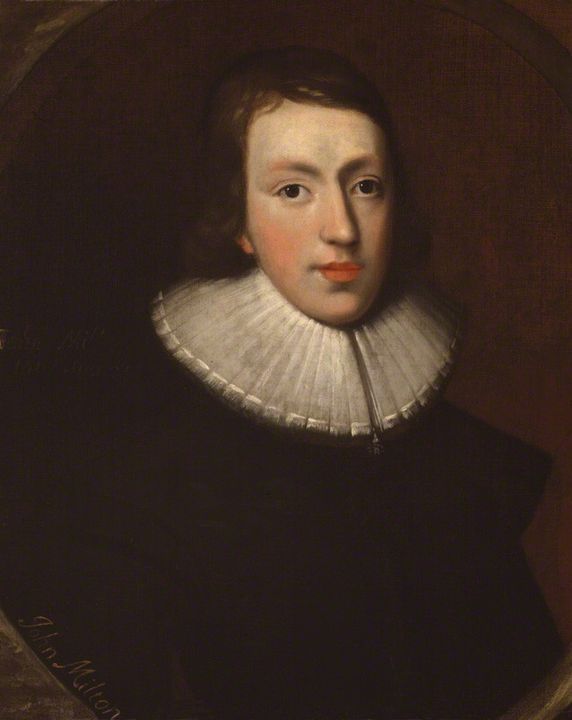
- John Milton: Poet and controversialist, speaking as a private citizen to Parliament
- The Lords and Commons: Long Parliament, author of the 1643 Licensing Order
- Galileo Galilei: Astronomer met by the young Englishman while confined by the Inquisition
- Edmund Spenser: Elizabethan poet whose knight of temperance models tested virtue
- Isocrates: Greek rhetorician whose appeal concerning the Areopagus supplies the title

Summary
Areopagitica: A Speech of Mr. John Milton for the Liberty of Unlicensed Printing, to the Parliament of England was published in London in November 1644, deliberately without a licence, a printer's name or registration with the Stationers' Company. It is written as an oration addressed to the Lords and Commons, though it was never delivered. Its title recalls the Areopagiticus of the Athenian orator Isocrates, a written speech urging the Athenian assembly to restore the authority of the ancient council of the Areopagus. Milton's target was Parliament's Licensing Order of June 1643, which required every book to be approved by an official licenser before printing. The library text is the complete pamphlet from Project Gutenberg. Milton opens by praising Parliament for welcoming public advice and states that he will argue in four parts. First, licensing was invented by those Parliament would least wish to imitate. He surveys how Athens and Rome punished only blasphemous or libellous books after publication, how the early councils merely declared which books to avoid, and how prior licensing grew under the medieval papacy, the Council of Trent and the Spanish Inquisition, with their indexes of prohibited books and their stacked imprimaturs. Second, he asks what is to be thought of reading in general. Moses, Daniel and Paul learned from pagan books; God left the diet of the mind, like the diet of the body, to each mature person's temperance. Since the fall, good and evil grow up together in the field of this world, and virtue that has never met evil is no virtue at all. Here Milton praises Spenser for leading his knight of temperance through the cave of Mammon so that he might see and know and yet abstain. Third, licensing will not achieve its aim. Bad books can be read in manuscript or imported, and a consistent licenser would also have to regulate music, dancing, dress and conversation. Fourth, licensing discourages learning, insults the scholar and the nation, and stops the discovery of truth. Milton recalls visiting Galileo, aged and under house arrest by the Inquisition, and pictures Truth hewn into pieces like the body of Osiris, its fragments still being gathered by her friends. England, he says, is a nation chosen to lead the Reformation, and London a city of free inquiry. He asks for the liberty to know, to utter and to argue freely according to conscience, while allowing that Roman Catholicism and open impiety would not be tolerated and that books may still be punished after publication. He closes by asking Parliament to recall the Order.
Virtues in this work
- Temperance: Milton argues that God entrusts each grown person with the diet of the mind as of the body, to be governed by temperance rather than by a licenser.
- Fortitude: His warfaring Christian must go out to meet his adversary and run for the immortal garland, not without dust and heat.
- Prudence: Milton distinguishes the wise punishment of proved abuses after publication from the futile attempt to prevent every abuse beforehand.
- Magnanimity: He asks Parliament to show the greatness of mind of a government willing to hear criticism and recall its own Order.
Plot or Argument
- Exordium: advice as a form of praise
Milton addresses the Lords and Commons as men who have freed England from the prelates and who should be glad to hear free advice. He announces that he will ask them to recall one of their own Orders, and claims that being willing to reconsider is itself a mark of good government.
- Part one: the inventors of licensing
Books are not dead things but carry the life of the mind that made them, so destroying a good book is like killing reason itself. Milton reviews Athens, Sparta and Rome, the Christian emperors and early councils, and finds that books were judged after publication. Prior licensing, he argues, began with the papacy and was perfected by the Council of Trent and the Inquisition, whose imprimaturs he quotes in mockery.
- Part two: the benefit of reading books of every kind
Scripture shows Moses, Daniel and Paul learning from pagan authors. God trusts each mature person with temperance in food and so also in reading. Since Adam's fall the knowledge of good is bound up with the knowledge of evil, and the true warfaring Christian must know vice and still choose the better. A cloistered virtue that has never been tried is only a blank virtue.
- Part three: licensing cannot do what it promises
Evil manners are learned without books, and the most dangerous books are read by the learned, whom licensing cannot reach. To be consistent, the state would need to license songs, dances, dress and every conversation, as Plato's ideal laws imagine. God gave Adam reason, which is freedom to choose, and set temptation before him; the state cannot make people virtuous by removing every occasion of sin.
- Part four: licensing discourages learning and stops truth
No learned man will submit his work to a licenser who may be his inferior. Milton recounts how Italian scholars envied English freedom and how he visited Galileo, a prisoner of the Inquisition. Truth came once into the world perfect, but was torn apart like Osiris; her friends must keep gathering the pieces until Christ's return, and that search requires free inquiry.
- Peroration: a nation of prophets
England is a quick and piercing nation, and London a workshop of new opinion, building the temple of the Lord from many stones. Milton sees England as a noble nation rousing itself like Samson. Let Truth and Falsehood grapple in open encounter, he says, and asks above all for the liberty to know, to utter and to argue. Toleration does not extend to open superstition or impiety, and the law may still punish mischievous books once printed. He ends by suggesting that the Order owed something to the bookselling monopolists of the Stationers' Company and asks Parliament to recall it.
Characters
- The Lords and Commons of England, audience
The Long Parliament, addressed throughout as the authority that passed the Licensing Order and can repeal it.
- Galileo Galilei, example
The Italian astronomer, visited by Milton in 1638 or 1639 while he was held by the Inquisition for his astronomy.
- Edmund Spenser, authority
The poet of The Faerie Queene, praised as a better teacher than Scotus or Aquinas for showing virtue tested by temptation.
- Isocrates, model
Athenian orator whose written Areopagiticus to the assembly gives the pamphlet its title and form.
- Protagoras, historical example
The sophist whose books the Areopagus ordered burned for doubting the existence of the gods, one of Milton's examples of punishment after publication.
Lessons
Virtue must be tested to be real
Milton's central moral claim is that goodness which has never faced temptation is untried innocence, not virtue. Since the fall, good is known alongside evil, and the Christian is a warfaring soldier who must see vice, understand it, and still choose the better. Shielding adults from every bad book cannot make them good.
- What does Milton mean by a fugitive and cloistered virtue, and why will he not praise it?
- Why does Milton call Spenser a better teacher than Scotus or Aquinas?
- Does Milton's argument apply equally to children and to grown readers? Where does he speak of mature persons?
Truth is found by many hands over time
The myth of Osiris pictures truth scattered in pieces, to be gathered by patient searchers until Christ's return. Milton thinks the Reformation is still unfinished and that new light will come through argument, writing and study. A licenser who fixes what may be printed stops the search before it is done.
- What does the image of Isis searching for the pieces of Osiris suggest about how truth is discovered?
- Why does Milton think disagreement among good men can be a sign of health in a Church and a nation?
- How does Milton's confidence that Truth wins in open encounter depend on his faith?
Judge books after they appear, not before
Milton does not deny that the state may burn or punish books that prove blasphemous or libellous. His objection is to prior restraint, the requirement that every book pass a licenser before it can be born. His history argues that ancient and early Christian authorities punished after publication and that licensing came later.
- What is the difference between licensing before printing and punishing after printing, and why does Milton care so much about it?
- Which writings does Milton say would still not be tolerated, and on what grounds?
- Why does he think a licenser's job is both impossible and degrading?
A nation that reads and argues is a strong nation
Milton praises England's quick and ingenious spirit and London's busy pens as signs of a nation rousing itself. Free inquiry, in his view, is part of a people's vigour and calling, not a danger to its order.
- What images does Milton use for England in the peroration, and what do they suggest?
- Why might Milton have chosen to address Parliament with praise rather than accusation?
Context
In 1644 England was in the middle of civil war between King Charles I and Parliament. The collapse of royal and episcopal authority after 1641 had brought a flood of pamphlets and new sects, and Parliament, worried about royalist propaganda and radical religion, restored press control by its Licensing Order of 14 June 1643. Presbyterian divines in the Westminster Assembly hoped for a national church; Independents and sectaries such as Roger Williams argued for wider toleration. Milton's own tracts on divorce (1643–1644) had been denounced, and the Stationers' Company had complained to Parliament about unlicensed books.
Composition
Milton wrote the pamphlet in the autumn of 1644, in the form of a classical oration modelled on Isocrates, and published it on or about 23 November 1644 without licence, registration or printer's name. It draws on his wide reading in classical history, Scripture, church history and Paolo Sarpi's history of the Council of Trent.
Reception
The pamphlet had little visible effect at the time, and licensing continued until the Licensing Act lapsed in 1695. Milton himself later served as a licenser of a government newsbook under the Commonwealth. In the eighteenth and nineteenth centuries Areopagitica became a classic of English prose and a standard text in arguments for freedom of the press; Mirabeau adapted it in France in 1788, and its themes reappear in Mill's On Liberty. Scholars continue to discuss how far its toleration was meant to reach, given Milton's explicit limits on Roman Catholicism and open impiety, and how it relates to his later theology.
Comparisons
- paradise-lost
The epic's account of Adam's fall, reason as freedom to choose, and God's refusal to make obedience automatic grows from the same theology Milton sketches in Areopagitica's passage on knowing good by evil.
- on-liberty
Mill's second chapter on liberty of thought argues, like Milton, that truth needs collision with error to stay alive, but bases the case on human fallibility and utility rather than on the unfinished Reformation.
- a-letter-concerning-toleration
Locke, writing in 1689, also argues for toleration among Protestants while setting limits for those whose allegiance he thought belonged to a foreign power, a boundary close to Milton's own.
- the-faerie-queene
Milton's praise of Spenser points to Book II, where Guyon passes through the cave of Mammon and the Bower of Bliss; the library's Book I shows the Redcrosse Knight likewise learning holiness through trial and error.
- the-republic
Plato would have the rulers of his city supervise the poets; Milton answers that Plato's ideal laws were never practised even in Athens and cannot serve as a pattern for a Christian commonwealth.
Quotes
“Who kills a man kills a reasonable creature, God's image; but he who destroys a good book, kills reason itself, kills the image of God, as it were in the eye.”
“a good book is the precious life-blood of a master spirit, embalmed and treasured up on purpose to a life beyond life.”
“I cannot praise a fugitive and cloistered virtue, unexercised and unbreathed, that never sallies out and sees her adversary but slinks out of the race, where that immortal garland is to be run for, not without dust and heat.”
“that which purifies us is trial, and trial is by what is contrary.”
“Truth indeed came once into the world with her divine Master, and was a perfect shape most glorious to look on”
“Methinks I see in my mind a noble and puissant nation rousing herself like a strong man after sleep, and shaking her invincible locks”
“Give me the liberty to know, to utter, and to argue freely according to conscience, above all liberties.”
“Let her and Falsehood grapple; who ever knew Truth put to the worse, in a free and open encounter?”
For Students
A reading companion for classical Christian high school students. See the student guide.
Reading Guide
Watch for
- Milton's four-part plan, announced near the start, and how each part is signalled.
- The images of books as living things: dragon's teeth, a vial, life-blood, a master spirit.
- The passage on Adam, the knowledge of good and evil, and the warfaring Christian.
- The allegory of Truth torn apart like Osiris and gathered by Isis.
- The limits Milton sets on toleration near the end, and his reasons for them.
Key terms and names
- Licensing
- The requirement, under Parliament's Order of 1643, that a book be read and approved by an official before it could be printed.
- Prior restraint
- Stopping a publication before it appears, as distinct from punishing it afterward; the practice Milton chiefly opposes.
- Imprimatur
- Latin for let it be printed; the licenser's stamp of approval, which Milton mocks by quoting several stacked on one Italian title page.
- Areopagus
- The ancient council that met on the hill of Ares in Athens; Isocrates urged its restoration in a written oration that Milton imitates.
- Stationers' Company
- The London guild of printers and booksellers, which held a monopoly on registering books and which Milton suspects of promoting the Order for its own gain.
- Sectaries
- Members of the new independent religious groups of the 1640s, whom many in Parliament feared and whom Milton defends as seekers after truth.
Seminar Questions
- Comprehension What Order is Milton asking Parliament to recall, and what did it require?
- Comprehension According to Milton's history, how did the ancient Greeks and Romans deal with dangerous books, and where did licensing before printing begin?
- Comprehension What does Milton say about his visit to Galileo?
- Interpretation Why does Milton say God left the diet of the mind, like the diet of the body, to each person's temperance?
- Interpretation How does the story of Isis and Osiris shape Milton's view of the Reformation and of disagreement in the Church?
- Interpretation Milton argues that Truth will win in a free and open encounter, yet he would not tolerate some opinions. How does he reconcile these positions in his own terms?
- Big Question Is a virtue that has never been tempted a real virtue? What follows for how parents, schools and nations should guard what people read?
- Big Question Should any authority ever decide in advance what may be published, and if so, on what principles?
Faith Connections
- Genesis 3:5-7, 22 (Scripture)
Milton grounds his argument in the fall: since Adam tasted the fruit, good and evil are known together, so the Christian life is a matter of knowing evil and choosing good.
- 1 Thessalonians 5:21 (Scripture)
Prove all things; hold fast that which is good. Milton's praise of those trying all things and assenting to the force of reason echoes Paul's counsel.
- Matthew 13:24-30 (Scripture)
The parable of the wheat and the tares, which Milton echoes when he says separating the good fish from the other fry belongs to the angels at the end of the age, supports his patience with error in this life.
- Augustine, On Christian Doctrine II.40 (Great Conversation)
Augustine's teaching that Christians may take the gold of the Egyptians, the true things in pagan learning, stands behind Milton's examples of Moses, Daniel and Paul reading the books of other nations.
Logic and Rhetoric
Central argument: Licensing was invented by authorities Parliament would not wish to imitate. Reading all kinds of books is profitable to the mature, because virtue is formed by knowing evil and choosing good. Licensing cannot keep out bad influences, which reach people by countless other means. It also discourages learning and stops the ongoing discovery of truth. Therefore Parliament should repeal the Licensing Order and judge books after publication, trusting Truth to prevail in free and open encounter.
Rhetorical device: allegory. Milton turns the Egyptian myth of Osiris into a Christian allegory: Truth, perfect when Christ was on earth, is hewn into pieces by deceivers, and her friends, like Isis, search for the scattered limbs until the Master's second coming. The story makes continued inquiry a pious duty.
Debate: Resolved: That a free people should punish mischievous books only after publication, never license them before.
Memory Work
I cannot praise a fugitive and cloistered virtue, unexercised and unbreathed, that never sallies out and sees her adversary but slinks out of the race, where that immortal garland is to be run for, not without dust and heat.
Give me the liberty to know, to utter, and to argue freely according to conscience, above all liberties.
Writing Prompts
Essay: Milton gives four reasons for repealing the Licensing Order. Explain each, decide which is strongest, and support your choice with passages from the text.
Comparison with On Liberty: Milton and Mill both argue that truth needs open conflict with error. Compare the grounds of their arguments, one in the Reformation and the fall, the other in fallibility and human progress, and argue which provides the firmer foundation for liberty of discussion.
Medical Lens
Areopagitica is not a medical work, but it reasons through the dietetics of its age. Milton compares reading to eating: wholesome meats do little good to a vitiated stomach, bad meats breed little nourishment even in the healthiest concoction (the Galenic term for digestion), and God, having enlarged the diet of the body under the rule of temperance, left the diet of the mind to each grown person. Books are said to preserve, as in a vial, the purest efficacy and extraction of the mind that bred them, an image from the still-room and the apothecary's distillation. These analogies show how naturally the physiology of nourishment and the virtue of temperance were linked in seventeenth-century moral argument.
- Part one, on the nature of books
Books compared to a vial holding the distilled efficacy and extraction of a living intellect.
- Part two, on reading
Wholesome and unwholesome meats, the vitiated stomach and healthy concoction, and God's leaving the diet of body and mind to temperance.
Creative Prompts
- Classroom
Stage a hearing before a committee of Parliament in 1644. One team argues for the Licensing Order in the voice of the Stationers' Company and the Westminster divines; another answers with Milton's four arguments.
- Essay
Milton says that which purifies us is trial. Write an essay testing the claim against a story from Scripture or literature in which a character's virtue was proved by temptation.
- Dialogue
Imagine Milton's visit to the aged Galileo in Florence. Write their conversation about the freedom to study the heavens and the duty to submit to authority.
Further Reading
- Paradise Lost, John Milton
Books III and IX treat freedom of the will and the trial of obedience.
- Milton: A Biography, William Riley Parker
- John Milton: Life, Work, and Thought, Gordon Campbell and Thomas N. Corns
- Areopagitica and Other Political Writings of John Milton, John Milton, ed. John Alvis
The pamphlet alongside Milton's tracts on kingship, the Commonwealth and church government.
Verification notes
The publication circumstances (November 1644, unlicensed and unregistered), the Licensing Order of 14 June 1643 and the four-part plan are stated in or confirmed by the text and standard accounts. All eight quotations were found by search in the stored Project Gutenberg text (content/texts/areopagitica.txt) and copied exactly; locations follow Milton's own four-part division, since the text has no numbered sections. Milton's service as licenser of Mercurius Politicus in 1651 and Mirabeau's 1788 adaptation are well documented in Milton scholarship.
- The exact day of publication (Thomason's copy is usually dated 24 November 1644; 23 November is also given).
- The year of Milton's visit to Galileo (1638 or 1639).