Work record
Posterior Analytics and Physics
4th century BCE · Ancient · Philosophy · Ancient Greek
Abstract
Background. Earlier Greek thinkers had denied change (Parmenides), explained the world by atoms (Democritus), or placed true knowledge in eternal Forms (Plato). Aristotle sought an account of knowledge rooted in experience and an account of nature that took change seriously.
Content. The logical treatise defines demonstrative science, the requirements for its premisses, the role of the middle term as cause, and the ascent from perception through memory and experience to first principles. The physical treatise analyses change into subject, form and privation, distinguishes four kinds of explanation, defends purposive nature, defines motion, place and time, rebuts Zeno, and concludes with an eternal first mover.
Key Concepts. Episteme, nous, induction, the four causes, potentiality and actuality, and the unmoved mover entered the vocabulary of philosophy, medicine and theology through these books. Aristotle's medical examples, such as the healing of round wounds and the physician's dose, show how readily he drew on the healer's craft to illustrate causes and purposes.
Significance. Commented on by Greek, Arabic, Jewish and Latin scholars, both works shaped university learning for some two thousand years. Early modern physicists replaced much of the account of motion, but the model of science as causal explanation and the question of purpose in living things remain in discussion. Aquinas's argument from motion to God is the best-known theological adaptation of the closing books.
Key figures
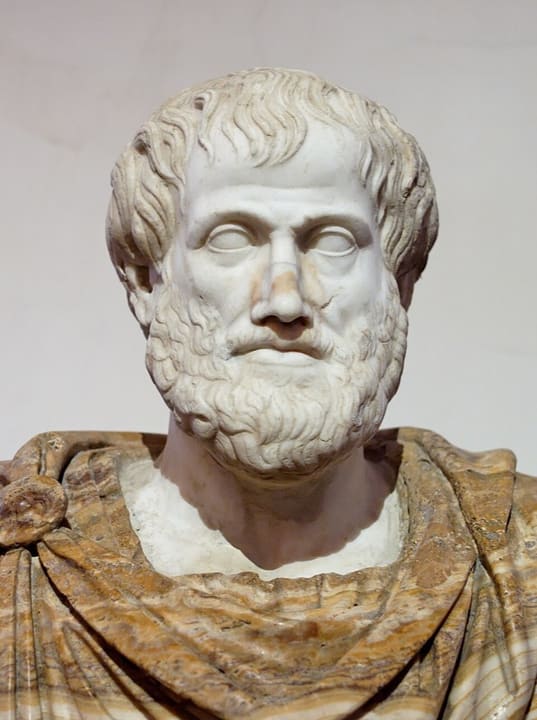
- Aristotle: Philosopher and founder of the Lyceum, former student of Plato
- Plato: Aristotle's teacher, whose doctrine of recollection the Posterior Analytics answers
- Parmenides and Melissus: Eleatic thinkers who held that being is one and unchanging, examined in Physics I
- Zeno of Elea: Author of the paradoxes against motion answered in Physics VI and VIII
- Democritus: Atomist whose particles and void Aristotle rejects
- Empedocles: Philosopher whose chance-assembled creatures Aristotle cites against purposeless nature

Summary
This volume joins two treatises by Aristotle that together set out what scientific knowledge is and how the natural world is to be understood. The Posterior Analytics, in two books, belongs to the logical works later grouped as the Organon. It opens with the claim that all teaching and learning by argument proceed from knowledge already possessed. We know a thing scientifically, Aristotle says, when we know the cause on which it depends and that it could not be otherwise, and such knowledge comes through demonstration: a syllogism whose premisses are true, primary, immediate, better known than and prior to the conclusion, and causes of it. Book I argues against an infinite regress of proofs and against circular demonstration, distinguishes knowing a fact from knowing the reasoned fact (the planets are near because they do not twinkle), compares sciences that borrow principles from one another, as when the physician knows that circular wounds heal slowly and the geometer knows why, and notes that loss of a sense means loss of the knowledge that depends on it. Book II treats the four questions of inquiry (whether a thing is, what it is, that a fact holds, why it holds), shows that the cause is the middle term of a demonstration, and discusses definition. Its final chapter explains how the first principles themselves are known: from repeated sense-perception arise memory and experience, and from experience the universal, which is finally grasped by intuition (nous), like a routed army rallying as one soldier after another makes a stand. The Physics, in eight books, applies this ideal to nature. Book I examines the earlier philosophers and identifies matter, form and privation as the principles of change. Book II defines nature as an inner source of motion and rest, sets out the four causes (material, formal, efficient and final), discusses chance and spontaneity, and argues that nature acts for an end, as the swallow builds its nest and plants send roots downward. Book III defines motion as the actuality of the potential as such and examines the infinite; Book IV treats place, the void and time, defined as the number of motion with respect to before and after. Books V and VI classify kinds of change and address continuity and Zeno's paradoxes. Books VII and VIII argue that motion is eternal and that every chain of movers must end in a first mover that is itself unmoved, one, eternal, and without parts or magnitude. The library text is the Oxford translation edited by W. D. Ross: G. R. G. Mure's Posterior Analytics (1928) and R. P. Hardie and R. K. Gaye's Physics (1930).
Virtues in this work
- Prudence: Aristotle insists that each science keep to its own principles and that the inquirer advance from what is clearer to us toward what is clearer by nature.
- Humility: Posterior Analytics II.19 grounds all knowledge in patient perception and experience rather than in innate or self-certifying insight.
- Industry: The Physics works through earlier theories, Zeno's paradoxes and the problems of place, void and time one by one before drawing its conclusions.
Plot or Argument
- Posterior Analytics I: the nature of demonstration
All learning by argument starts from prior knowledge. Scientific knowledge is knowledge of a necessary fact through its cause, gained by demonstration from true, primary, immediate premisses; Aristotle rejects infinite regress and circular proof and distinguishes the fact from the reasoned fact.
- Posterior Analytics I: unity and limits of the sciences
Each science has its own genus and principles, though some, like optics and medicine, borrow from geometry. Universal demonstration is superior to particular, error has identifiable sources, and without sense-perception induction and so knowledge of universals is impossible.
- Posterior Analytics II: inquiry, cause and definition
The four questions of inquiry all seek a middle term, which is the cause. Aristotle examines how definitions are reached and related to demonstration, and treats quick wit as the instant grasp of a middle term.
- Posterior Analytics II.19: how first principles are known
First principles are neither innate nor demonstrated. From sense-perception comes memory, from repeated memory experience, and from experience the universal, which intuition grasps as the source of all scientific knowledge.
- Physics I: the principles of change
Aristotle reviews Parmenides, Melissus and the early physicists, and concludes that change requires an underlying subject, a form, and the privation of that form.
- Physics II: nature, the four causes and purpose
Nature is an internal source of motion and rest. The four causes answer 'why?' in four ways; chance and spontaneity are incidental causes; and nature, like art, acts for the sake of an end, even when it sometimes misses its aim.
- Physics III–IV: motion, infinity, place, void and time
Motion is the fulfilment of the potential as potential. The infinite exists only potentially. Place is the innermost motionless boundary of what contains; a void does not exist; time is the number of motion in respect of before and after.
- Physics V–VI: kinds of change and continuity
Change is classified by category; motion, time and magnitude are continuous and infinitely divisible, which allows Aristotle to answer Zeno's four arguments against motion.
- Physics VII–VIII: the first unmoved mover
Whatever is moved is moved by something; the series cannot go on forever; motion has always existed; so there must be a first mover that is unmoved, one, eternal, and without parts or magnitude, causing the eternal circular motion of the heavens.
Lessons
To know is to know the cause
Aristotle distinguishes knowing that something is so from knowing why it must be so. The physician may know from experience that circular wounds heal slowly; the geometer knows the reason. Scientific knowledge, in his strict sense, is the second kind.
- What is the difference between knowing the fact and knowing the reasoned fact in the example of the planets that do not twinkle?
- Is a skilled practitioner who knows what works but not why less of an expert than a theorist?
Knowledge begins in the senses
Posterior Analytics II.19 traces knowledge from perception to memory, from memory to experience, and from experience to the universal grasped by intuition. Aristotle rejects both innate knowledge in a finished form and an endless chain of proofs.
- How does the image of a routed army rallying describe the way the mind grasps a universal?
- Why does Aristotle say that losing a sense means losing a portion of knowledge?
- Where does he part company with Plato's view of learning as recollection?
Nature acts for an end
In Physics II Aristotle argues against those who explain natural things by necessity and chance alone. Regular outcomes, such as the swallow's nest, the spider's web and the downward roots of plants, show purpose in nature even though nature does not deliberate.
- What is Aristotle's argument that 'art does not deliberate' and so deliberation is not needed for purpose?
- How does he explain natural mistakes and malformations within a purposive nature?
- Which of the four causes do modern sciences emphasize, and which do they set aside?
Every series of movers needs a first
Physics VIII argues that motion is eternal and that the chain of things moved by others cannot be infinite, so there must be a first mover that is itself unmoved. Medieval thinkers, Jewish, Muslim and Christian, adapted the argument to reason about God.
- Why does Aristotle think an infinite series of movers could not explain motion?
- What does it mean that the first mover has no parts or magnitude?
Context
Aristotle wrote in fourth-century Athens, after the natural philosophers from Thales to Democritus and in conversation with Plato. Parmenides and Zeno had argued that change and motion are impossible; atomists had explained nature by particles and void; Plato had grounded knowledge in eternal Forms. The Posterior Analytics and Physics answer these positions with a theory of demonstrative science and a philosophy of nature based on observed change.
Composition
Both treatises are school writings, probably revised over many years and used in teaching at the Lyceum; exact dates are uncertain, and parts of the Physics may be earlier than others. The texts survived through the edition of Aristotle's works attributed to Andronicus of Rhodes in the first century BC. Bekker's Berlin edition (1831) supplied the standard page numbers, which the Oxford translators used but which are removed from this library text.
Reception
Greek commentators such as Alexander of Aphrodisias, Themistius, Simplicius and Philoponus expounded both works. Al-Farabi, Avicenna and Averroes made them central to Arabic philosophy. Latin translations by James of Venice in the twelfth century brought them to the universities; Robert Grosseteste and Thomas Aquinas wrote commentaries, and Aquinas's first way of proving God's existence draws on Physics VII–VIII. Galileo, Descartes and Newton built a new physics in part by rejecting Aristotle's account of motion, while his theory of demonstration and his teleology continued to be studied and debated in philosophy and biology.
Comparisons
- de-anima
On the Soul applies the Physics' framework of matter, form and actuality to living things, and its account of perception and intellect fills in how the senses and nous of Posterior Analytics II.19 work.
- the-nicomachean-ethics
Book VI of the Ethics names scientific knowledge (episteme) and intuition (nous) among the intellectual virtues, summarizing the Posterior Analytics, and contrasts them with practical wisdom about what can be otherwise.
- politics
The Politics opens with the Physics' teleological method, arguing that the city exists by nature because it is the end toward which household and village develop.
- euclid-elements-book-i
Euclid's definitions, postulates and common notions realize the ideal of demonstrative science that Aristotle describes, deriving theorems from first principles.
- galileo-selected-writings
Galileo's new science of motion argues against the Aristotelian account of falling bodies and natural place while sharing Aristotle's aim of necessary demonstration.
- summa-theologica
Aquinas's first way (Part I, q. 2, a. 3) adapts the argument from motion to a first unmoved mover found in Physics VII–VIII.
Quotes
Frequently cited
“It is like a rout in battle stopped by first one man making a stand and then another, until the original formation has been restored. The soul is so constituted as to be capable of this process.”
Frequently cited
“If then it is both by nature and for an end that the swallow makes its nest and the spider its web, and plants grow leaves for the sake of the fruit and send their roots down (not up) for the sake of nourishment, it is plain that this kind of cause is operative in things which come to be and are by nature.”
Frequently cited
“It is plain then that nature is a cause, a cause that operates for a purpose.”
“By demonstration I mean a syllogism productive of scientific knowledge”
“But induction is impossible for those who have not sense-perception.”
“since except intuition nothing can be truer than scientific knowledge, it will be intuition that apprehends the primary premisses”
“Now what is to us plain and obvious at first is rather confused masses, the elements and principles of which become known to us later by analysis.”
“Now mistakes come to pass even in the operations of art : the grammarian makes a mistake in writing and the doctor pours out the wrong dose.”
“It is clear, therefore, that the first movent is indivisible and is without parts and without magnitude.”
For Students
A reading companion for classical Christian high school students. See the student guide.
Reading Guide
Watch for
- The opening line of the Posterior Analytics, that all teaching by argument proceeds from knowledge already possessed, and how it echoes Plato's Meno while answering it differently.
- The conditions for demonstration in Posterior Analytics I.2: premisses true, primary, immediate, better known, prior, and causes of the conclusion.
- The image of the routed army rallying in Posterior Analytics II.19, Aristotle's account of how universals take shape in the mind.
- The four causes in Physics II.3 and the argument for purpose in nature in Physics II.8, with the swallow, the spider and the roots of plants.
- The argument for a first unmoved mover in Physics VIII, and the qualities Aristotle ascribes to it.
Key terms and names
- Demonstration (apodeixis)
- A syllogism that produces scientific knowledge because its premisses are true, primary and causes of the conclusion.
- Scientific knowledge (episteme)
- Knowing that a fact holds, why it holds, and that it could not be otherwise.
- Intuition (nous)
- The intellectual grasp of first principles, which cannot themselves be demonstrated; Mure translates the word as 'intuition'.
- Induction (epagoge)
- Reasoning from particular cases known by perception to the universal they share.
- The four causes
- Material (what a thing is made of), formal (its form or essence), efficient (the source of change), and final (that for the sake of which).
- Nature (physis)
- An inner source of motion and rest in a thing, as distinct from the external source in things made by art.
- Potentiality and actuality
- What a thing can become and what it is in fulfilment; motion is defined as the actuality of the potential as such.
- Unmoved mover
- The first cause of motion in Physics VIII, which moves without being moved and has no parts or magnitude.
Seminar Questions
- Comprehension According to Posterior Analytics I.2, what must be true of the premisses of a demonstration?
- Comprehension What are the steps from sense-perception to the knowledge of universals in Posterior Analytics II.19?
- Comprehension Name the four causes in Physics II.3 and give Aristotle's example for each.
- Interpretation Why can't first principles be demonstrated, and why does that not make them uncertain for Aristotle?
- Interpretation How does Aristotle answer the objection that nature cannot act for an end because it does not deliberate?
- Interpretation Aristotle defines time as the number of motion in respect of before and after. What would follow if nothing ever changed?
- Interpretation Why does Aristotle conclude that the first mover must be without parts or magnitude?
- Big Question Aristotle thinks that to know something is to know its cause, including its purpose. Can we understand living things fully without asking what their parts are for?
Faith Connections
- Romans 1:20 (Scripture)
Paul says God's eternal power and divine nature are understood from the things that are made. Aristotle's reasoning from observed motion to a first mover is a philosophical attempt to understand what nature points to, which Christian thinkers saw as consonant with Paul's claim.
- Acts 17:24-28 (Scripture)
Paul at Athens speaks to Greek philosophers of the God who made the world and gives to all life and breath and all things. Aristotle's unmoved mover is one of the Greek philosophical conceptions Paul's hearers would have known, though Aristotle's first mover is not described as a personal Creator.
- Thomas Aquinas, Summa Theologica I, q. 2, a. 3 (Church Fathers)
Aquinas's first way argues from motion to a first mover, 'and this everyone understands to be God', drawing directly on Physics VII–VIII while placing the argument within Christian teaching on creation.
- Plato, Meno 80d–86c (Great Conversation)
Meno asks how one can seek what one does not know, and Socrates answers with the theory of recollection. The Posterior Analytics opens with the same puzzle and answers it with pre-existent knowledge and induction from perception rather than recollection.
Logic and Rhetoric
Central argument: Scientific knowledge is knowledge of necessary facts through their causes, reached by demonstration from first principles; those principles cannot be demonstrated but are grasped by intuition after induction from sense-perception; applying this to nature, natural things have an inner source of motion and are explained by four causes, including purpose; motion requires a mover, and since an infinite series of movers explains nothing, there must be a first mover that is itself unmoved, eternal and without magnitude.
Rhetorical device: analogy (from art to nature). In Physics II.8 Aristotle argues that if a house were made by nature it would be made in the same way as by art, and that 'If the ship-building art were in the wood, it would produce the same results by nature', so that what is evident in human making shows purpose in natural growth.
Debate: Resolved: Natural things cannot be fully explained without reference to purpose.
Memory Work
It is like a rout in battle stopped by first one man making a stand and then another, until the original formation has been restored. The soul is so constituted as to be capable of this process.
It is plain then that nature is a cause, a cause that operates for a purpose.
Writing Prompts
Essay: Aristotle claims that we know a thing scientifically only when we know its cause. Using the Posterior Analytics' account of demonstration and Physics II's four causes, explain what Aristotle means by 'cause' and argue whether his account of knowledge leaves room for the methods of modern experimental science.
Comparison with The Nicomachean Ethics: In Nicomachean Ethics VI Aristotle distinguishes scientific knowledge and intuition from practical wisdom. Compare the account of knowledge in the Posterior Analytics with the account of practical wisdom in the Ethics, and argue why Aristotle thinks the two require different kinds of certainty.
Medical Lens
Aristotle was a physician's son, and medicine supplies many of his examples. In the Posterior Analytics he uses medicine to show how sciences borrow principles: the physician knows that circular wounds heal more slowly, the geometer knows why, a distinction between empirical and causal knowledge that later physicians, including Galen, discussed at length. He argues that losing a sense removes the knowledge that depends on it, a point relevant to the history of thinking about sensory disability. In the Physics he illustrates the four causes with health as the end of walking about, and with reducing flesh, purging, drugs and surgical instruments as means toward health; he compares nature's purposive action to a doctor treating himself, and explains malformed births as failures of a purposive process, just as the doctor sometimes pours the wrong dose. His teleology of organs and functions became the framework of Galen's physiology and of medieval medicine. These are philosophical uses of medical examples, not clinical teaching.
- Posterior Analytics I.13 (79a)
The physician knows that circular wounds heal more slowly; the geometer knows the reason why, an example of one science taking its reasons from another.
- Posterior Analytics I.18 (81a–b)
Loss of any sense entails loss of a corresponding portion of knowledge, since universals are grasped by induction from perception.
- Physics II.3 (194b–195a)
Health as the final cause of walking; reducing flesh, purging, drugs and surgical instruments as means for the sake of health.
- Physics II.8 (199a–b)
The doctor who pours out the wrong dose and the malformations of early creatures as failures of purposive effort; nature compared to a doctor doctoring himself.
Creative Prompts
- Classroom
Choose an everyday object (a chair, a pencil, an oak tree) and in small groups identify its material, formal, efficient and final causes, then discuss which cause best answers the question 'why?'.
- Essay
Aristotle says that the physician knows that circular wounds heal slowly while the geometer knows why. Write an essay on the difference between practical know-how and causal knowledge, using an example from a field you know.
- Dialogue
Write a dialogue between Aristotle and Zeno in which Aristotle uses the infinite divisibility of time to answer the paradox of Achilles and the tortoise.
Further Reading
- Aristotle's Physics: A Revised Text with Introduction and Commentary, W. D. Ross
- Aristotle: Posterior Analytics (Clarendon Aristotle Series), Jonathan Barnes (trans. and comm.)
- Aristotle: The Desire to Understand, Jonathan Lear
- Commentary on Aristotle's Physics, Thomas Aquinas
- The Lagoon: How Aristotle Invented Science, Armand Marie Leroi
Verification notes
The stored file is an OCR text of the Oxford translation (Mure, 1928; Hardie and Gaye, 1930) with Bekker line numbers removed, but many stray line numbers, note markers and garbled Greek remain in the running text; quotations were chosen from clean passages and copied exactly, including the spaced colon in the Physics II.8 quotation. The first sentences of Physics I.1 appear to be missing from the OCR (the Physics text begins mid-chapter), so I.1 is quoted from its next paragraph. Bekker references in locators are approximate and given for orientation. Biographical facts, the transmission through Andronicus of Rhodes, and the medieval reception (James of Venice, Grosseteste, Aquinas, Averroes) follow standard accounts.
- Bekker page references for each quotation against a printed edition.
- Whether the stored OCR omits only the opening sentences of Physics I.1 or other passages as well.