Work record
Association for Molecular Pathology v. Myriad Genetics, Inc.
2013 · Postwar Contemporary · Court Decision · English
Abstract
Question Presented. Can a company patent a segment of human DNA, here the BRCA1 and BRCA2 sequences tied to hereditary breast and ovarian cancer, because it has pulled that segment out of the genome, and is laboratory-made cDNA treated any differently?
Arguments. Pathologists, geneticists and patients contended that genes are natural products beyond the reach of the Patent Act and that exclusive rights had shut down competing tests. Myriad responded that extraction yields a new molecule, that years of expensive research deserved protection, and that the patent office had issued such grants for a generation. Washington's lawyers proposed splitting the difference.
Holding. All nine justices agreed that pulling a gene from its chromosome is not invention, so natural sequences remain free for anyone to examine. Synthetic cDNA, from which the non-coding stretches have been removed, is a human creation and stays eligible. Writing separately, Scalia joined the outcome but would not endorse the opinion's molecular-biology tutorial.
Significance. Rival laboratories could now offer BRCA analysis, and the ruling joined Mayo and the later Alice decision in a cluster of cases defining what natural laws, phenomena and abstract ideas leave outside the patent system.
Why it matters for medicine. The decision touches inherited disease risk, access to diagnostic testing and second opinions, and the long-running debate over whether commercial incentives or open sharing better serve medical research.
Text. Both opinions appear in full; the official notes do not.
Key figures
- Myriad Genetics, Inc.: Patent holder and sole American provider of BRCA testing
- Association for Molecular Pathology: Pathologists' society leading the challenge with doctors and patients
- Harry Ostrer: Geneticist whose samples a rival laboratory stopped testing
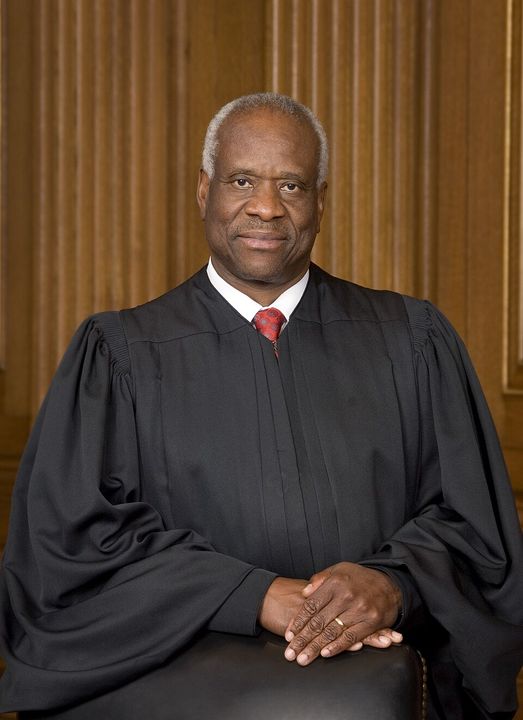
- Clarence Thomas: Wrote that separating a gene is not an act of invention
- Antonin Scalia: Concurred while declining to vouch for the scientific detail

Summary
In the 1990s scientists at Myriad Genetics, a Salt Lake City company, determined the location and nucleotide sequence of two human genes, BRCA1 and BRCA2. Certain mutations in these genes greatly raise a woman's risk of breast and ovarian cancer, and knowledge of the sequences allowed Myriad to build tests that detect those mutations. Myriad obtained patents claiming isolated DNA molecules corresponding to the genes and also synthetic complementary DNA, or cDNA, which copies only the protein-coding portions. It then sent letters asserting infringement to other laboratories, including one at the University of Pennsylvania, and most stopped testing, leaving Myriad as the only provider of BRCA analysis in the United States. Harry Ostrer, a geneticist whose samples could no longer be tested elsewhere, joined the Association for Molecular Pathology, other physicians, researchers and patients in a suit asking courts to declare the composition claims invalid. The question was whether a naturally occurring DNA segment becomes patent eligible under Section 101 of the Patent Act once it has been isolated from the rest of the genome, and whether cDNA stands on a different footing. The challengers argued that genes are products of nature, which the Court had long held cannot be patented, and that locking them up would hinder research and patient care. Myriad answered that isolation breaks chemical bonds and yields a molecule that does not exist in the body, that its discovery took years of costly work, and that the Patent and Trademark Office had granted gene patents for decades, a practice on which investors relied. The United States, as amicus curiae, argued that isolated DNA was ineligible but cDNA was not. On 13 June 2013 the Court decided the case unanimously, 9–0. Justice Thomas reasoned that Myriad had found an important and useful gene but had not created or altered the genetic information it carries, and that discovery alone, however brilliant, does not satisfy the statute. Breaking chemical bonds did not save the claims, since they were framed around genetic information rather than chemical structure. Deference to the Patent Office was unwarranted because Congress had not endorsed its practice. cDNA, by contrast, is an exons-only molecule made in the laboratory and is therefore not a product of nature, except perhaps for very short sequences. Thomas closed by listing what the Court was not deciding: method claims, new applications of knowledge about the genes, and DNA in which the order of nucleotides has been altered. Justice Scalia joined the judgment and most of the opinion but declined to endorse its detailed account of molecular biology, which he could not affirm from his own knowledge. The library text contains both opinions; the notes that accompany them in the official reports have been left out. Within days of the ruling several other laboratories announced BRCA tests. The following year, in Alice Corp. v. CLS Bank International (2014), the Court applied the Mayo framework for natural laws and abstract ideas to computer-implemented inventions.
Virtues in this work
- Justice: Thomas gives Myriad credit for a genuine scientific achievement while holding that the law rewards only what a person has made, rendering to each side what the statute allows.
- Humility: Scalia declines to affirm scientific details he cannot confirm from his own knowledge, endorsing only what the expert briefs establish.
- Prudence: The Court limits its holding carefully, listing method claims, new applications and altered DNA as questions it is not deciding.
Plot or Argument
- Genes, mutations and a medical test
Thomas opens with a short primer on DNA, exons and introns, and messenger RNA, then explains that Myriad's discovery of the BRCA1 and BRCA2 sequences let it test patients for mutations associated with a markedly higher risk of breast and ovarian cancer.
- Infringement letters and the lawsuit
The opinion recounts how Myriad's letters led the Pennsylvania laboratory to stop testing, how other suits ended in settlements, and how the case reached the Court after a remand in light of Mayo and a Federal Circuit panel in which each judge wrote separately.
- The exception for products of nature
Laws of nature, natural phenomena and abstract ideas are not patentable, Thomas restates, because they are the basic tools of science; yet the exception must not swallow patent law, since all inventions rest on natural principles at some level.
- Isolated DNA: discovery, not invention
Measured against Chakrabarty's engineered bacterium and Funk Brothers' bacterial mixture, Myriad's isolated genes fall on the unpatentable side. Severing chemical bonds does not help, because the claims rest on the genetic information, and the Patent Office's past practice receives no deference absent congressional endorsement.
- cDNA: something new from the laboratory
Removing the introns produces a molecule not found in nature. The challengers' objection that nature dictates the sequence does not alter the fact that the technician makes something new, so cDNA may be patented, except perhaps where a short segment had no introns to remove.
- What the Court left open
Thomas stresses that no method claims, applications of BRCA knowledge, or DNA with rearranged nucleotides were before the Court, and that the holding is limited to genes isolated from surrounding genetic material.
- Scalia's reservation about the science
In a short separate opinion, Scalia joins the result but withholds his assent from the molecular-biology detail, affirming only that isolated DNA matches its natural counterpart while cDNA is a synthetic creation.
Characters
- Myriad Genetics, Inc., respondent
Utah company that sequenced BRCA1 and BRCA2, patented the isolated genes and cDNA, and became the sole American provider of BRCA testing.
- Association for Molecular Pathology, lead petitioner
Professional society of laboratory pathologists that joined physicians, researchers, patients and advocacy groups in challenging the patents.
- Harry Ostrer, petitioner
Geneticist at New York University School of Medicine whose patients' samples the Pennsylvania laboratory stopped accepting; his readiness to test supplied standing.
- Justice Clarence Thomas, author of the opinion of the Court
Wrote for a unanimous Court that isolating a natural gene is not an act of invention but that cDNA may be patented.
- Justice Antonin Scalia, concurring in part and in the judgment
Agreed with the result while declining to vouch for the opinion's detailed account of molecular biology.
- Judge Kimberly Moore, Federal Circuit judge
Voted below to uphold the isolated-DNA claims partly out of regard for the Patent Office's practice and patent holders' reliance.
Lessons
Finding versus making
The decision turns on an old distinction in patent law between what a person discovers in the world and what a person makes. Thomas grants that locating the BRCA genes was valuable work, yet he holds that patents reward the creation of new things, not the uncovering of what already exists in every human cell.
- Why does Thomas treat Myriad's achievement as discovery rather than invention?
- How does the engineered bacterium in Chakrabarty differ from an isolated BRCA gene?
- Should the law reward costly discoveries even when nothing new is made?
Information or chemistry?
Myriad argued that an isolated gene is a distinct chemical because bonds are broken when it is removed. The Court answered that the claims were drawn to the genetic sequence, the information the gene carries, and that this information was unchanged. How a patent claim is written can decide its fate.
- What reason does the Court give for rejecting the chemical-bonds argument?
- Why does it matter that the claims describe genetic information rather than a chemical structure?
- Would a differently drafted claim have produced a different answer?
A line drawn through the middle
The Court did not hand either side a full victory: natural gene sequences were not patentable, but cDNA was. Drawing that line let the justices respect the product-of-nature rule while still protecting laboratory creations, the kind of incentive the patent system exists to provide.
- What makes cDNA a human creation in the Court's view?
- Why does the Court exempt very short cDNA sequences from its holding?
- Is splitting the result a sign of careful reasoning or of compromise?
Judges and scientific detail
Scalia's brief concurrence raises a question every court faces in technical cases: how far should judges vouch for science they cannot check for themselves? He relied on the expert briefs for the essential facts while declining to adopt the fuller explanation in the opinion.
- What part of the opinion does Scalia refuse to join, and why?
- Is it wise for a judge to limit what he endorses to what he can personally affirm?
Context
The Human Genome Project, launched in 1990 and declared complete in 2003, spurred both public research and private investment in genetics. By the early 2000s the Patent and Trademark Office had issued thousands of patents on isolated human gene sequences, following its view that isolation turned a natural molecule into a patentable composition. Critics in medicine and research argued that such patents restricted testing and second opinions, while biotechnology firms held that patent protection financed the expensive work of discovery.
Composition
The suit was filed in the Southern District of New York in 2009, with the American Civil Liberties Union and the Public Patent Foundation representing the plaintiffs. Judge Robert Sweet held the claims invalid in 2010; the Federal Circuit reversed in 2011; the Court vacated that judgment for reconsideration after Mayo in 2012; and the Federal Circuit again upheld the claims by a divided panel. The Court granted review limited to the question of whether human genes are patentable.
Reception
Medical and patient groups welcomed the decision as opening BRCA testing to competition, while many in the biotechnology industry stressed the protection it preserved for cDNA. Patent scholars have debated whether the opinion's reasoning about natural products is clear enough to guide later cases, particularly after Alice Corp. v. CLS Bank International (2014) extended the Mayo framework, and whether Congress should revise Section 101.
Comparisons
- diamond-v-chakrabarty
The 1980 ruling that a bacterium engineered to digest crude oil could be patented supplied the measure Thomas used: Chakrabarty's organism had markedly different characteristics from anything in nature, while Myriad's isolated genes did not.
- on-the-origin-of-species
Darwin described inheritance and variation without knowing their mechanism; Myriad shows a century and a half later how knowledge of hereditary material became property worth litigating over.
- novum-organum
Bacon pictured science as interpreting nature and bending its works to human use, a frame for the Court's line between discovering what nature has made and making something new from it.
- buck-v-bell
Both cases bring heredity before the Court: in 1927 a state's claims about inherited traits justified compulsory sterilization, while in 2013 the question was who may own knowledge of particular genes.
- hippocratic-writings
The Hippocratic tradition treated medical knowledge as something physicians share with students and patients, a backdrop for the challengers' argument that patents on genes limited what doctors could test and tell.
Quotes
Frequently cited
“For the reasons that follow, we hold that a naturally occurring DNA segment is a product of nature and not patent eligible merely because it has been isolated, but that cDNA is patent eligible because it is not naturally occurring.”
Frequently cited
“To be sure, it found an important and useful gene, but separating that gene from its surrounding genetic material is not an act of invention.”
“Groundbreaking, innovative, or even brilliant discovery does not by itself satisfy the §101 inquiry.”
“That may be so, but the lab technician unquestionably creates something new when cDNA is made.”
“We merely hold that genes and the information they encode are not patent eligible under §101 simply because they have been isolated from the surrounding genetic material.”
“It suffices for me to affirm, having studied the opinions below and the expert briefs presented here, that the portion of DNA isolated from its natural state sought to be patented is identical to that portion of the DNA in its natural state; and that complementary DNA (cDNA) is a synthetic creation not normally present in nature.”
For Students
A reading companion for classical Christian high school students. See the student guide.
Reading Guide
Watch for
- The brief primer on DNA, exons, introns and cDNA at the start of the opinion.
- How Myriad's letters to other laboratories affected testing.
- The comparison with the engineered bacterium in Chakrabarty and the bacterial mixture in Funk Brothers.
- Why the chemical-bonds argument fails.
- The list of questions the Court says it is not deciding.
Key terms and names
- Section 101
- The part of the Patent Act that defines what kinds of inventions and discoveries may be patented: any new and useful process, machine, manufacture or composition of matter.
- Product of nature
- Something that exists naturally, which the courts hold cannot be patented however useful its discovery.
- Isolated DNA
- A segment of DNA removed from the rest of the chromosome, with the same sequence it had in the body.
- Complementary DNA (cDNA)
- A laboratory-made DNA molecule copied from messenger RNA, containing only the protein-coding exons.
- Composition claim
- A patent claim to a substance or molecule itself, as distinct from a method of using or making it.
- Standing
- The requirement that a person bringing suit show a real, concrete stake in the outcome.
Seminar Questions
- Comprehension What did Myriad discover, and what did its patents claim?
- Comprehension Which kind of DNA did the Court find patentable, and which kind not?
- Interpretation Why does Thomas think Chakrabarty's bacterium was patentable while Myriad's isolated genes are not?
- Interpretation Why does the Court decline to defer to the Patent Office's long practice of granting gene patents?
- Interpretation What does Scalia's concurrence suggest about how judges should handle scientific questions?
- Big Question Can a person rightly own knowledge about something that exists in every human body?
Faith Connections
- Psalm 139:13-14 (Scripture)
The psalmist praises God for forming his inward parts in his mother's womb, a text often read in reflection on the human body as something received rather than made.
- Proverbs 25:2 (Scripture)
It is the glory of God to conceal a thing and the honor of kings to search it out, a verse that honors the work of discovery the Court praised while declining to reward it with a patent.
Logic and Rhetoric
Central argument: Thomas reasons that laws of nature and natural products cannot be patented; Myriad's isolated genes carry exactly the information found in nature, so they are discoveries rather than inventions; cDNA, made by removing introns, does not occur in nature and so may be patented.
Rhetorical device: concession. Thomas repeatedly grants the opposing point before turning it, as when he allows that Myriad found an important and useful gene before denying that separating it was invention (quote 1).
Debate: Resolved: that isolating a naturally occurring gene should be treated as a patentable invention.
Memory Work
To be sure, it found an important and useful gene, but separating that gene from its surrounding genetic material is not an act of invention.
Groundbreaking, innovative, or even brilliant discovery does not by itself satisfy the §101 inquiry.
Writing Prompts
Essay: Explain the difference the Court draws between isolated DNA and cDNA, and evaluate whether the line it draws follows from its own principle that products of nature cannot be patented.
Comparison with Diamond v. Chakrabarty: Compare the 1980 decision allowing a patent on a living, engineered bacterium with the 2013 decision denying patents on isolated human genes, and explain how the same test produced opposite results.
Medical Lens
The case concerns inherited cancer risk and who may test for it. Thomas sets out the population figures on BRCA mutations and records how Myriad's infringement letters ended testing at an academic laboratory, so that patients had a single source for analysis and no independent second opinion; the challengers framed the patents as a barrier to clinical care and research. For a history-of-medicine reader the decision marks a turn in the long story of heredity, from speculation about inherited constitution to sequence-level knowledge that could be owned, licensed and contested in court.
- Opinion of the Court, Part I–B, at the sentence beginning The average American woman has a 12- to 13-percent risk
Thomas gives the Court's figures for the lifetime cancer risk associated with BRCA mutations, the medical stakes that made Myriad's test valuable.
- Opinion of the Court, Part I–C, at the sentence beginning After learning of GDL
The opinion recounts how Myriad's letters led the University of Pennsylvania laboratory to stop testing and to refuse a physician's patient samples, the factual basis for the challengers' claim that patents restricted clinical access.
- Opinion of the Court, Part III, at the sentence beginning First, there are no method claims
Thomas notes that patents on methods of testing and on new applications of BRCA knowledge were not before the Court, leaving room for diagnostic innovation to be patented in other forms.
Creative Prompts
- Classroom
Stage the April 2013 oral argument with three teams: counsel for the challengers, counsel for Myriad, and the Solicitor General arguing the middle position that isolated DNA is ineligible but cDNA is patentable.
- Essay
Draft a two-page brief for Myriad arguing that the Patent Office's long practice of granting gene patents deserved respect, then write the paragraph from Thomas's opinion that answers it in your own words.
- Dialogue
Write a conversation in 2008 between a genetic counselor and a patient who wants a second laboratory to confirm a BRCA result, and explain why the answer depended on patent law.
- Classroom
Using a simple paper model of a gene with exons and introns, show the class what isolation does and what making cDNA does, and decide as a group which one looks more like a human creation.
Further Reading
- Who Owns You? The Corporate Gold Rush to Patent Your Genes, David Koepsell
A philosopher's argument, published before the decision, that genes belong to an unownable commons.
- The Gene: An Intimate History, Siddhartha Mukherjee
A physician's history of genetics from Mendel to genome sequencing, useful background for the science in the opinion.
- Breakthrough: The Race to Find the Breast Cancer Gene, Kevin Davies and Michael White
Account of the competition among laboratories in the early 1990s to locate BRCA1.
Verification notes
All six quotations, five from Thomas and one from Scalia, were found by Grep as exact substrings of content/texts/association-for-molecular-pathology-v-myriad-genetics.txt; the Scalia quotation was chosen to avoid a line-break hyphen in the stored text. Part designations for the passages follow the headings in the stored text. The meta file gives no text path, so fullText.path points to the stored text file. Details of the litigation history before the Court (counsel, district judge, dates) come from standard accounts rather than the opinion itself.
- Confirm that the American Civil Liberties Union and the Public Patent Foundation represented the plaintiffs and that Judge Robert Sweet decided the case in the district court in 2010.
- Confirm the statement that several laboratories announced BRCA testing within days of the decision.
- Confirm that the Human Genome Project was declared complete in 2003.