Work record
Diamond v. Chakrabarty
1980 · Postwar Contemporary · Court Decision · English
Abstract
Question Presented. Is a living micro-organism created in a laboratory a manufacture or composition of matter that may be patented under the general federal patent statute?
Arguments. The Patent Office maintained that Congress, by passing separate plant-protection laws and excluding bacteria from one of them, showed it never meant the general statute to reach life, and that so weighty a step required new legislation. The inventor answered that the statutory words are expansive and that his organism, unknown in nature, was simply a human creation.
Holding. Five justices ruled for the inventor. Burger held that the law separates nature's products from people's inventions rather than the living from the nonliving, and that hazards of genetic research were for lawmakers to weigh. Brennan, for four colleagues in dissent, found congressional intent against patents on organisms and urged the Court to leave any expansion to the legislature.
Significance. Coming as laboratories learned to recombine genes, the decision gave inventors in the new biotechnology field the security of patents, shaped decades of practice involving engineered cells and organisms, and supplied the test applied to human genes in 2013.
Text. Both opinions appear complete; the official notes are omitted from the body of the text, though some are reproduced after the dissent.
Key figures
- Ananda Mohan Chakrabarty: Inventor of an oil-degrading engineered bacterium
- Sidney A. Diamond: Commissioner of Patents and petitioner
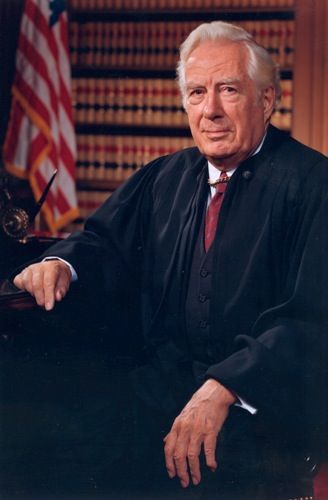
- Warren E. Burger: Chief Justice who wrote for five
- William J. Brennan Jr.: Dissented for four

Summary
In 1972 Ananda Mohan Chakrabarty, a microbiologist working for the General Electric Company, applied for a patent on a bacterium of the genus Pseudomonas into which he had introduced plasmids, hereditary units outside the chromosome, that allowed it to break down several components of crude oil. No natural bacterium had this combined capacity. The patent examiner allowed his claims to the process of making the bacteria and to an inoculum of straw carrying them, but rejected the claims to the bacteria themselves, reasoning that living things are not patentable. The Patent Office Board of Appeals agreed, relying on the history of the 1930 Plant Patent Act. The Court of Customs and Patent Appeals reversed, holding that being alive was legally insignificant. The Commissioner of Patents, Sidney Diamond, sought review. The question was whether a live, human-made micro-organism is a manufacture or composition of matter under Section 101 of the Patent Act. The government argued that Congress's special statutes for plants in 1930 and 1970 showed that it did not understand the general patent law to cover living things, that the 1970 act expressly excluded bacteria, and that so novel and consequential a question should be left to Congress. Chakrabarty answered that the statute's words were broad, that the line the law draws is between products of nature and human inventions, and that his organism was plainly an invention. On 16 June 1980 the Court affirmed, five to four. Chief Justice Burger read the statutory terms in their ordinary meaning, recalled Jefferson's 1793 act, and noted that the committee reports on the 1952 act spoke of anything under the sun that is made by man. Laws of nature, physical phenomena and abstract ideas remain unpatentable, but Chakrabarty had produced a new bacterium with markedly different characteristics from any found in nature. The plant acts, Burger reasoned, reflected a distinction between products of nature and human-made inventions, not between living and inanimate things. As for the warnings of hazards from genetic research, the Court said it had no competence to weigh them; that was a matter of high policy for Congress. Justice Brennan, joined by Justices White, Marshall and Powell, dissented. He argued that the plant acts would have been unnecessary if living organisms were already patentable, that Congress had deliberately excluded bacteria in 1970, and that when a composition uniquely implicates matters of public concern, it is for Congress, not the Court, to extend the patent monopoly. The library text contains both opinions; the footnotes of the official report are not included in the body, though several notes on the science and legislative history are appended at the end. The patent issued in 1981. The decision helped open the way for the biotechnology industry, and the Patent Office later extended its reasoning to multicellular organisms. In 2013 the Court held in Association for Molecular Pathology v. Myriad Genetics that naturally occurring DNA segments are not patentable, drawing on the line Chakrabarty drew.
Virtues in this work
- Industry: The Court treats the patent law as a reward for the inventive labor that produced an organism no one had made before.
- Humility: Both opinions acknowledge that the Court lacks the competence to judge the risks of genetic research and that Congress must weigh them.
- Prudence: Brennan counsels caution before extending a monopoly into a field of grave public concern without clear legislative direction.
Plot or Argument
- The application and its rejection
Burger describes Chakrabarty's 1972 application, the three types of claims, the examiner's rejection of claims to the bacteria themselves, the Board's reliance on the Plant Patent Act, and the reversal by the Court of Customs and Patent Appeals.
- The constitutional purpose of patents
Part II recalls that the Constitution empowers Congress to promote the progress of science and useful arts, and narrows the case to whether the organism is a manufacture or composition of matter under Section 101.
- Ordinary meaning and Jefferson's broad language
Part III applies dictionary definitions, traces the statutory terms to the 1793 act and the 1952 recodification, and holds that the organism is a product of human ingenuity, unlike the mixed natural bacteria refused a patent in Funk Brothers Seed Co. v. Kalo Inoculant Co.
- The plant acts answered
Part IV-A concludes that Congress in 1930 and 1970 distinguished products of nature from human-made inventions, not living from nonliving things, and finds no meaning in the 1970 exclusion of bacteria.
- Leaving policy to Congress
Part IV-B rejects the argument that unforeseen technologies require new legislation, distinguishes Parker v. Flook, and declines to weigh the hazards of genetic research, describing them as questions of high policy for the legislature.
- Brennan's dissent
Brennan reads the plant acts as evidence that Congress believed living organisms unpatentable, treats the express exclusion of bacteria as decisive, and argues that the Court should not extend a monopoly into a field of public concern without clear legislative direction.
Characters
- Ananda Mohan Chakrabarty, respondent
General Electric microbiologist who engineered a bacterium capable of breaking down multiple components of crude oil.
- Sidney A. Diamond, petitioner
Commissioner of Patents and Trademarks, who sought review of the ruling in Chakrabarty's favor.
- Chief Justice Warren E. Burger, author of the opinion of the Court
Held that a human-made living organism is patentable subject matter.
- Justice William J. Brennan Jr., dissenting
Argued that only Congress should extend patents to living organisms.
- Thomas Jefferson, historical author of the 1793 Patent Act
Cited by the Court for the view that ingenuity should receive liberal encouragement.
Lessons
Nature's handiwork and human invention
The Court drew the decisive line not between living and nonliving things but between what nature produces and what human ingenuity makes. Chakrabarty's bacterium did not exist in nature, so it counted as an invention, while a newly discovered plant or mineral would not.
- How does Burger distinguish Chakrabarty's bacterium from the mixed bacteria in Funk Brothers?
- What kinds of things does the Court say remain unpatentable?
- Is a living thing changed by human work still in some sense nature's handiwork?
Reading a statute's words
The majority read the words manufacture and composition of matter broadly, as Jefferson's 1793 law intended, and refused to limit them to inventions the legislators could foresee. The dissent read the later plant statutes as showing what Congress actually understood.
- Why does Burger say a statute is not confined to the applications its authors contemplated?
- What does Brennan think the 1930 and 1970 plant acts reveal?
- Should old laws be applied to technologies their authors could not imagine?
Who weighs the risks of new science?
The government and its supporters warned that genetic research might carry serious dangers. The Court answered that patent law would not stop research either way and that it had no competence to weigh such hazards; Brennan agreed that Congress should decide but drew the opposite conclusion about what the Court should do meanwhile.
- What does Burger mean by a gruesome parade of horribles?
- Why does the Court say it is without competence to entertain these arguments?
- Which institutions are best suited to judge the moral and practical risks of new technology?
Context
Techniques for transferring genetic material between organisms developed rapidly in the 1970s. Scientists themselves called for caution at the 1975 Asilomar conference, and the National Institutes of Health issued guidelines for recombinant DNA research in 1976. At the same time companies and universities sought patent protection for new biological inventions, and the Patent Office held that living things fell outside the general patent statute.
Composition
Chakrabarty filed in 1972. His case and In re Bergy, involving a pure culture of a micro-organism used to produce an antibiotic, went back and forth between the Court of Customs and Patent Appeals and the Supreme Court in the late 1970s before Bergy was dismissed as moot. The case was argued on 17 March 1980 and decided on 16 June 1980.
Reception
The decision was widely seen as a foundation of the biotechnology industry, and investment in genetic engineering firms grew in the following years. The Patent Office extended the reasoning to plants and, in 1987-1988, to animals, including the Harvard OncoMouse. Critics, including some religious leaders and ethicists, objected to patents on living things, while supporters stressed the incentives for research; later cases such as Myriad (2013) refined the boundary between natural products and inventions.
Comparisons
- association-for-molecular-pathology-v-myriad-genetics
In 2013 the Court applied Chakrabarty's line between nature's handiwork and human invention to hold isolated natural DNA unpatentable but synthetic cDNA eligible.
- frankenstein
Shelley's novel of a scientist who makes a living being and then disowns responsibility for it supplied the imagery behind many of the fears the Court called a parade of horribles.
- on-the-origin-of-species
Darwin's account of variation and selection in nature frames the distinction the Court draws between organisms nature produces and one produced by deliberate human design.
- marbury-v-madison
Burger quotes Marshall's line that it is the province of the judicial department to say what the law is, invoking it to interpret a statute Congress had already written.
Quotes
Frequently cited
“Congress intended statutory subject matter to "include anything under the sun that is made by man."”
Frequently cited
“His discovery is not nature's handiwork, but his own; accordingly it is patentable subject matter under § 101.”
“Congress thus recognized that the relevant distinction was not between living and inanimate things, but between products of nature, whether living or not, and human-made inventions.”
“What is more important is that we are without competence to entertain these arguments—either to brush them aside as fantasies generated by fear of the unknown, or to act on them.”
“The patent laws attempt to reconcile this Nation's deep seated antipathy to monopolies with the need to encourage progress.”
“It is the role of Congress, not this Court, to broaden or narrow the reach of the patent laws. This is especially true where, as here, the composition sought to be patented uniquely implicates matters of public concern.”
For Students
A reading companion for classical Christian high school students. See the student guide.
Reading Guide
Watch for
- The three kinds of claims Chakrabarty made and which were contested.
- Burger's use of dictionary definitions and of Jefferson's 1793 statute.
- The contrast with Funk Brothers and its natural bacteria.
- The Court's treatment of the plant acts and the exclusion of bacteria.
- Brennan's argument that Congress, not the Court, should decide.
Key terms and names
- Patentable subject matter
- The categories of things that can receive a patent under Section 101: processes, machines, manufactures and compositions of matter.
- Product of nature
- Something that exists in nature without human alteration, which cannot be patented even if newly discovered.
- Plasmid
- A small ring of genetic material in a bacterium, separate from its chromosome, that can carry particular traits.
- Statutory construction
- The process by which courts interpret the meaning of words in a law.
- Patent monopoly
- The exclusive right, for a limited time, to make, use or sell an invention.
- Recombinant DNA
- Genetic material formed by combining DNA from different sources, a technique developed in the 1970s.
Seminar Questions
- Comprehension What had Chakrabarty created, and which of his claims did the Patent Office reject?
- Comprehension What things does the Court say can never be patented?
- Interpretation How do Burger and Brennan read the 1930 and 1970 plant statutes differently?
- Interpretation Why does the Court refuse to consider the dangers of genetic research in deciding the case?
- Interpretation How does Burger use Thomas Jefferson's role in the 1793 Act to support his reading?
- Big Question Should human beings be able to own a living thing they have made, and are there limits to what may be owned?
Faith Connections
- Genesis 1:28; 2:15 (Scripture)
Humanity is given dominion over living creatures and set in the garden to work and keep it, texts often cited in Christian reflection on the stewardship and limits of human mastery over life.
- Psalm 24:1 (Scripture)
The earth is the Lord's and the fulness thereof, a reminder raised by religious critics who questioned patents on living organisms.
Logic and Rhetoric
Central argument: Burger reasons that the statute's broad terms cover any new product of human ingenuity, that Chakrabarty's bacterium is such a product rather than a natural phenomenon, that the plant acts distinguish nature from invention rather than life from nonlife, and that policy objections belong to Congress; Brennan replies that the plant acts show Congress thought living things unpatentable and that the Court should await a clear legislative choice.
Rhetorical device: antithesis. Burger's sentence that the discovery is not nature's handiwork but his own (quote 1) compresses the case's controlling distinction into two balanced clauses.
Debate: Resolved: that a new living organism created by human design should be eligible for a patent.
Memory Work
Congress intended statutory subject matter to "include anything under the sun that is made by man."
His discovery is not nature's handiwork, but his own; accordingly it is patentable subject matter under § 101.
Writing Prompts
Essay: Evaluate whether the Court or the dissent offered the better reading of the patent statute, considering both the words of Section 101 and the history of the plant acts.
Comparison with Association for Molecular Pathology v. Myriad Genetics, Inc.: Compare how Chakrabarty (1980) and Myriad (2013) apply the distinction between products of nature and human inventions, and explain why the bacterium was patentable but isolated natural DNA was not.
Medical Lens
Though the organism at issue was meant for cleaning oil spills, Chakrabarty became the legal foundation for patents on engineered cells, organisms and biological materials used in medicine and pharmaceutical research, and its refusal to weigh the hazards of genetic engineering left questions of bioethics to legislatures and agencies such as the NIH, whose 1976 guidelines the Court cites.
- Opinion of the Court, Part IV-B, paragraph beginning To buttress his argument, the petitioner
Summarizes warnings by scientists, including Nobel laureates, that genetic research might threaten human health or diversity, and the Court's view that patent law would not determine whether such research continued.
- Note appended to the opinion, paragraph beginning We are not to be understood as suggesting that the political branches have been laggard
Points to the National Institutes of Health guidelines of 1976 as an example of the political branches already regulating recombinant DNA research.
- Note appended to the opinion, paragraph beginning In 1873, the Patent Office granted Louis Pasteur a patent
Records that Pasteur received a patent on purified yeast in 1873 and that the Patent Office issued patents claiming micro-organisms in the late 1960s.
Creative Prompts
- Classroom
Stage a moot court for March 1980 in which the Solicitor General argues that only Congress may authorize patents on life and Chakrabarty's counsel argues from the statute's plain words, with student justices deciding.
- Essay
Write a one-page memo to a member of Congress in 1980 recommending whether Congress should confirm, limit or overturn the decision, and explain why.
- Dialogue
Imagine Thomas Jefferson and Chakrabarty discussing whether the 1793 patent law was meant to reward the making of a new living thing.
Further Reading
- Who Owns Life?, David Magnus, Arthur Caplan and Glenn McGee, eds.
Essays by ethicists and scholars on the patenting of organisms and genes after Chakrabarty.
- Genentech: The Beginnings of Biotech, Sally Smith Hughes
History of the first biotechnology company, set in the years when Chakrabarty was decided.
Verification notes
Each of the six quotations (four from Burger, two from Brennan) was found by Grep as an exact substring of the stored text; the first begins mid-sentence after the words The Committee Reports accompanying the 1952 Act inform us that. Facts about the application and the lower proceedings come from the opinion. The stored text appends several of the official notes after the dissent, and the medical-lens passages on Pasteur and the NIH guidelines point to those notes. The issue date of the patent (1981), the Harvard OncoMouse patent and the name of the Commissioner come from standard accounts.
- Confirm the year the Chakrabarty patent issued (1981, U.S. Patent 4,259,444).
- Confirm that Sidney A. Diamond was Commissioner when the petition was decided.