Work record
Bliss and Other Stories
1920 · Early 20th Century · Short Stories · English
Abstract
Background. Mansfield assembled the volume after the war, when illness kept her abroad much of the year. The Woolfs had already hand-set Prelude at Hogarth, and Murry's Athenaeum had carried several of the shorter pieces.
Contents. A New Zealand household settles into a rambling country home as seen by children, servants and adults in turn. A seedy Paris author recounts his English companion's flight from a woman nicknamed Mouse. A young wife's ecstatic evening ends with her husband murmuring to a guest. Further pieces range from a singer's hungry day and a shy painter's courtship to nursery onlookers at a party, a governess deceived on a train, and a nervous woman shaken by a child's death.
Technique. Narration slips into each mind's idiom; scenes end abruptly on a glance or gesture; trees, flowers and weather carry what characters cannot say. Several pieces use present-tense narration or a single unbroken scene.
Themes. Marriage and its secrets, childhood perception, solitude amid company, self-deception, the precarious lives of single working women, and beauty indifferent to human pain.
Significance. Constable's 1920 volume made Mansfield's name and was reprinted almost yearly through the decade; with The Garden Party two years later it helped redefine the English short story along Chekhovian lines, favoring mood, implication and the unresolved ending.
Main characters
- Kezia Burnell: Small girl at the heart of Prelude
- Linda Burnell: Her languid mother, wary of her husband
- Beryl Fairfield: Linda's unmarried sister, craving admiration
- Bertha Young: Elated London hostess of Bliss
- Pearl Fulton: Her enigmatic dinner guest
- Raoul Duquette: Self-regarding Parisian narrator of Je ne parle pas français
- Robert Salesby: Silent husband attending a sick wife at a Mediterranean hotel
- Ada Moss: Destitute singer seeking film work

Summary
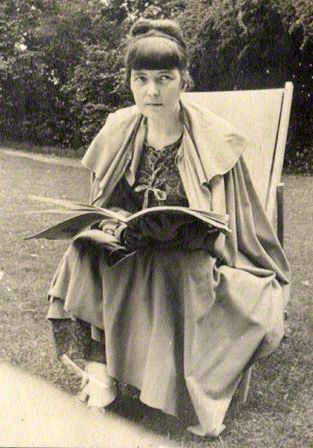
Bliss and Other Stories, Katherine Mansfield's second collection, gathers fourteen stories written between about 1915 and 1920. It opens with Prelude, her longest work, and moves between New Zealand childhood, Bohemian London, Paris cafés and the hotels of the French Riviera. The stories favor a single day or evening, a shift of mood, and an ending that stops at a moment of recognition rather than resolving a plot. Prelude, in twelve numbered sections, follows the Burnell family's move to a house in the country, modeled on Mansfield's childhood in Karori near Wellington. The small girls Lottie and Kezia are left behind for an afternoon and ride out at night on the storeman's dray; their mother Linda drifts through the days in a dreamy detachment from her hearty husband Stanley; her sister Beryl longs for romance and writes affected letters; the grandmother, Mrs. Fairfield, quietly runs the house. The handyman Pat beheads a duck before the fascinated children, and Linda shows Kezia an aloe that flowers once every hundred years. Je ne parle pas français is narrated by Raoul Duquette, a vain young Parisian writer who recalls how his English friend Dick Harmon brought a woman called Mouse to Paris and then abandoned her by letter. In Bliss, thirty-year-old Bertha Young, filled with unaccountable happiness, gives a dinner party, feels a mysterious bond with her guest Pearl Fulton as they look at the flowering pear tree in her garden, and at the end of the evening sees her husband Harry quietly arranging to meet Miss Fulton. The pear tree, she sees, is as lovely as ever. The shorter pieces vary in tone. The Wind Blows follows the girl Matilda through a gusty day of music lessons and a walk with her brother Bogey. Psychology traces a near-romance between two artists that never finds words. Pictures shows the out-of-work contralto Ada Moss tramping the film agencies of London. The Man without a Temperament portrays Robert Salesby, patient and silent, tending his invalid wife in a Riviera hotel. Mr. Reginald Peacock's Day satirizes a vain singing teacher. Sun and Moon is told by small children who see the ice-pudding house they admired at their parents' party demolished. Feuille d'Album follows a shy painter, Ian French, as he follows a girl and invents an excuse to speak to her. A Dill Pickle stages the meeting of former lovers after six years. The Little Governess sends a young Englishwoman alone to Germany, where an old man's kindness proves false. Revelations finds the nervous Monica Tyrell learning that her hairdresser's little daughter has died, and The Escape ends with a quarreling couple on a stalled journey and a husband's moment of peace before a tree. Constable of London published the collection in 1920, dedicated to John Middleton Murry; several stories had appeared first in magazines such as The New Age and The Athenaeum.
Virtues in this work
- Fortitude: Robert Salesby in The Man without a Temperament endures months of tending his invalid wife abroad without complaint, hiding his longing for home.
- Charity: Kezia's horror and tears when Pat beheads the duck in Prelude show a child's tenderness toward a creature the others treat as sport.
- Humility: Revelations turns on Monica Tyrell's self-absorption being broken by the news of a hairdresser's dead child, a lesson in seeing others' sorrow.
Plot or Argument
- Prelude
The Burnells move to a country house. Over twelve sections the children explore and play, Pat kills a duck, Beryl daydreams of suitors, the grandmother keeps house, and Linda, shown the aloe by Kezia, broods on her love and fear of her husband.
- Je ne parle pas français
In a Paris café, the narcissistic writer Raoul Duquette remembers his friendship with the Englishman Dick Harmon, who brought the gentle Mouse to Paris and then fled back to his mother, leaving her alone with Raoul.
- Bliss
Bertha Young, overflowing with happiness, prepares a dinner party, shares a silent moment with Pearl Fulton before the pear tree in moonlight, and at the party's end discovers her husband's attachment to Miss Fulton.
- The Wind Blows and Psychology
A girl's windy day of quarrels, a music lesson and a walk on the esplanade with her brother Bogey; then two artists, a man and a woman, whose friendship trembles on the edge of something more during an evening that ends in polite parting.
- Pictures and The Man without a Temperament
The aging singer Ada Moss, behind with her rent, seeks work in vain and ends the day accepting a stranger's company; at a Riviera hotel Robert Salesby nurses his invalid wife Jinnie, longing silently for England.
- Mr. Reginald Peacock's Day and Sun and Moon
A self-admiring voice teacher plays the misunderstood genius at home and the charmer with his lady pupils; two small children, Sun and Moon, watch their parents' party and grieve when the beautiful ice pudding is eaten.
- Feuille d'Album and A Dill Pickle
The painter Ian French, too shy for society, follows a girl home and stammers that she has dropped an egg he has just bought; Vera meets an old lover in a café, listens to his talk of travel and self, and leaves him in mid-sentence.
- The Little Governess
A young English governess travelling alone at night to a post in Munich accepts kindness from an old gentleman, who takes her sightseeing and then forces a kiss on her; back at the hotel, the waiter she rebuffed tells her that her new employer called, heard she had gone out with a gentleman, and left.
- Revelations and The Escape
Monica Tyrell, ruled by her nerves, goes to her hairdresser George and learns his little girl has died that morning; a wife berates her husband all the way to a missed train, and he finds a strange, deep peace before a great tree.
Characters
- Kezia Burnell, child protagonist of Prelude
Imaginative middle daughter of the Burnells, afraid of the dark and fascinated by the aloe.
- Linda Burnell, mother in Prelude
Dreamy, withdrawn wife of Stanley, who both loves and fears her husband.
- Stanley Burnell, father in Prelude
Energetic businessman proud of his new house and family.
- Beryl Fairfield, Linda's sister
Young woman restless in the country, imagining admirers and judging her own falseness.
- Raoul Duquette, narrator of Je ne parle pas français
Vain Parisian writer who betrays both his friend's confidence and the woman left in his care.
- Bertha Young, heroine of Bliss
Thirty-year-old London wife whose evening of rapture ends in discovery.
- Pearl Fulton, guest in Bliss
Cool, mysterious blonde woman whom Bertha admires and her husband secretly loves.
- Robert Salesby, husband in The Man without a Temperament
Reserved Englishman who patiently nurses his invalid wife abroad.
- Ada Moss, heroine of Pictures
Penniless contralto searching London for work.
- Monica Tyrell, heroine of Revelations
Highly strung woman whose self-absorption is broken by a stranger's grief.
Lessons
Happiness that rests on illusion
Bertha's bliss is real as a feeling but rests on a misreading of the people around her. Mansfield shows how quickly a carefully arranged life can be revealed as other than it seemed, and leaves the reader with Bertha's question about what comes next.
- What makes Bertha feel such happiness at the start of Bliss?
- How does Mansfield prepare the reader for the ending through Pearl Fulton and the pear tree?
- Is Bertha's happiness false, or only incomplete?
A child's eye on adult life
In Prelude and Sun and Moon children watch the adult world without fully understanding it, and their wonder and fear sharpen what adults overlook. Kezia's terror at the duck's death and her delight in the aloe give the story its moral center.
- What does Kezia notice that the adults do not?
- Why does Sun weep over the ruined ice pudding?
- What can a child's view of a family reveal that an adult's cannot?
Loneliness in company
Again and again Mansfield's characters stand beside one another without truly meeting: Robert and Jinnie, the two artists in Psychology, Vera and her old lover. The stories ask what keeps people from speaking honestly.
- Why can neither artist in Psychology say what they feel?
- What does Robert Salesby keep to himself, and why?
- Is silence in these stories a form of kindness or of cowardice?
Grief that interrupts self-concern
In Revelations Monica's preoccupation with her nerves is pierced by the news that George's little girl has died. Mansfield shows a self-absorbed person suddenly confronted with real sorrow, and how quickly she tries to turn it into a gesture.
- How does Monica react when she learns of the child's death?
- What does her plan to send white flowers reveal?
- How should a person respond to another's grief?
Context
Mansfield wrote these stories during and just after the First World War, while living in London, Cornwall, the south of France and Italy. Her brother Leslie's death in 1915 turned her toward memories of New Zealand childhood, the source of Prelude. She belonged to the circle of modernist writers that included Virginia Woolf and D. H. Lawrence, and with them sought new forms that rendered consciousness and atmosphere rather than conventional plot.
Composition
Prelude grew out of an earlier draft called The Aloe and was hand-printed by Leonard and Virginia Woolf at their Hogarth Press in 1918. Je ne parle pas français was first printed privately in a small edition by Murry's Heron Press. Several shorter stories first appeared in A. R. Orage's The New Age and in The Athenaeum, which Murry edited in 1919–21. Constable published the collection in London in 1920, with an epigraph from Shakespeare's Henry IV, Part 1, and reprinted it repeatedly.
Reception
The book established Mansfield's reputation, and it was followed by The Garden Party (1922). Critics have compared her with Chekhov, whom she admired, and her techniques of free indirect style, plotless structure and epiphanic endings influenced the development of the short story in English. Prelude and Bliss are among her most anthologized works.
Comparisons
- mrs-dalloway
Woolf, who printed Prelude at the Hogarth Press, builds her novel like Bliss around a hostess, a single day and a party, rendering the heroine's moods through free indirect style.
- the-waves
Woolf's experiment in childhood memory and interior voices shares Prelude's attention to how children perceive a house, a garden and their elders.
- daisy-miller
Like The Little Governess, James's novella sends an unchaperoned young woman abroad, where her innocence is misread and her trust ends badly.
- the-portrait-of-a-lady
James's Isabel Archer, like Bertha Young, discovers too late the hidden understanding between her husband and a woman she admired.
Quotes
Frequently cited
“Although Bertha Young was thirty she still had moments like this when she wanted to run instead of walk, to take dancing steps on and off the pavement, to bowl a hoop, to throw something up in the air and catch it again, or to stand still and laugh at—nothing—at nothing, simply.”
Frequently cited
“But the pear tree was as lovely as ever and as full of flower and as still.”
“There was not an inch of room for Lottie and Kezia in the buggy.”
“The curving leaves seemed to be hiding something; the blind stem cut into the air as if no wind could ever shake it.”
“My name is Raoul Duquette. I am twenty-six years old and a Parisian, a true Parisian.”
“It is only the wind shaking the house, rattling the windows, banging a piece of iron on the roof and making her bed tremble.”
“And then, after six years, she saw him again.”
“Deep, deep, he sank into the silence, staring at the tree and waiting for the voice that came floating, falling, until he felt himself enfolded.”
For Students
A reading companion for classical Christian high school students. See the student guide.
Reading Guide
Watch for
- The aloe in Prelude and the pear tree in Bliss, and how each reflects the woman who looks at it.
- The shifting point of view in Prelude, from Kezia to Linda, Beryl and the grandmother.
- How stories such as A Dill Pickle and Psychology end at a moment of recognition rather than a resolved plot.
- The unreliable narrator Raoul Duquette, and what he reveals about himself without meaning to.
- Small physical details (a cream jar, an egg, a signet ring) that carry a story's emotion.
Key terms and names
- Free indirect style
- Mansfield's technique of narrating in the third person while taking on a character's own words and moods, as in Bertha's thoughts in Bliss.
- The aloe
- The great spiky plant in the Burnells' garden that Linda says flowers once every hundred years, an image of hidden life and of her own guardedness.
- Epiphany
- A sudden moment of insight that ends many of these stories, such as Bertha's sight of Harry and Pearl Fulton.
- Unreliable narrator
- A narrator whose account the reader cannot fully trust, as with Raoul Duquette in Je ne parle pas français.
- Karori
- The village near Wellington, New Zealand, where Mansfield lived as a child and on which the Burnells' new home in Prelude is modeled.
Seminar Questions
- Comprehension Why are Lottie and Kezia left behind at the start of Prelude, and how do they finally reach the new house?
- Comprehension What does Bertha see in the hall at the end of Bliss?
- Comprehension What news does Monica Tyrell receive in Revelations, and how does she respond?
- Interpretation Why does Kezia rush at Pat after he kills the duck, while Isabel and the Trout boys are delighted?
- Interpretation What does Bertha believe about Pearl Fulton during the evening, and how should the reader judge that belief?
- Interpretation How does the old gentleman in The Little Governess win the girl's trust, and what does the story suggest about naivety?
- Big Question Can a story without a clear plot or resolution still teach something true about human life?
- Big Question Is it better to know a painful truth, as Bertha does, or to live content in ignorance?
Faith Connections
- Psalm 41:9 (Scripture)
The psalmist's familiar friend, who ate his bread and lifted up his heel against him, names the betrayal Bertha discovers in her own house at the end of Bliss.
- Romans 12:15 (Scripture)
Paul's call to weep with those who weep sets a standard for Revelations, where Monica meets George's grief first with shock and then with a gesture of white flowers.
- Matthew 6:28-29 (Scripture)
The lilies of the field, more glorious than Solomon, recall the way Mansfield's flowers and trees, such as the aloe and the pear tree, carry a beauty untouched by human trouble.
- Augustine, Confessions II (Church Fathers)
Augustine's memory of stealing pears out of a boy's restless will gives a counterpoint to Bertha's pear tree, where desire and deception also meet in a garden.
Logic and Rhetoric
Central argument: Ordinary days hold hidden turning points; people rarely say what they feel; therefore the truth of a life is often disclosed in a gesture, an object or a moment of sight, and the short story should end there rather than explain it.
Rhetorical device: symbol. In Bliss the flowering pear tree stands for Bertha's happiness and remains unchanged in the final line after her happiness has broken.
Debate: Resolved: that Bertha Young's bliss at the start of the story was a true good, even though it rested on a mistaken view of her marriage.
Memory Work
But the pear tree was as lovely as ever and as full of flower and as still.
Writing Prompts
Essay: Choose two stories from the collection and analyze how Mansfield uses a single object or image to reveal a character's inner state at the moment of recognition.
Comparison with Mrs. Dalloway: Compare Bertha Young's dinner party in Bliss with Clarissa Dalloway's party: what does each hostess learn, and how does each writer render her mind?
Medical Lens
The collection is not medical, but several stories touch the concerns of a psychiatric reader. The Man without a Temperament shows the patient, silent fatigue of a husband nursing a chronically ill wife at a Riviera hotel; her illness is not named, though Mansfield wrote the story in 1920 at Menton while ill with tuberculosis herself, and biographers often read it against her own marriage. Revelations sketches a woman whose life is ruled by her nerves in the early twentieth-century sense of the word, and Bliss renders a state of elated, almost overflowing feeling that the story treats as mood rather than illness. Readings that link these portraits to Mansfield's life are interpretive.
- The Man without a Temperament
Robert Salesby's routine of shawls, medicines and walks for his invalid wife Jinnie, and his silent memories of England.
- Revelations
Monica Tyrell's morning crisis of nerves, her flight to the hairdresser, and the news of the death of George's little daughter.
Creative Prompts
- Fiction
Write the morning after Bliss from Bertha Young's point of view, keeping Mansfield's habit of letting objects such as the pear tree carry the feeling.
- Essay
Compare the aloe in Prelude and the pear tree in Bliss as central images, and explain what each reveals about the woman who looks at it.
- Classroom
Map the twelve sections of Prelude by point of view, noting whose eyes each section uses, and discuss why Mansfield moves among them.
- Dialogue
Write the conversation that the two artists in Psychology never have, then explain why Mansfield chose to leave it unspoken.
Further Reading
- The Garden Party and Other Stories, Katherine Mansfield
Her 1922 collection, including At the Bay, the sequel to Prelude.
- Katherine Mansfield: A Secret Life, Claire Tomalin
A concise modern biography.
- Katherine Mansfield: The Story-Teller, Kathleen Jones
A full biography drawing on letters and journals.
- The Lady with the Dog and Other Stories, Anton Chekhov
Stories by the writer Mansfield most admired, in Constance Garnett's translation.
Verification notes
All eight quotes were found as exact substrings of the stored Project Gutenberg #44385 text, which reproduces the Constable edition (London, 1920, with reprint list to 1925). Story contents, order and the Shakespeare epigraph and dedication are taken from the stored text. Prelude's section numbers for the quotes follow the numbering in the text. Details of first magazine publication are given only in general terms.
- Confirm the first periodical publication of each shorter story (The New Age, The Athenaeum, Art and Letters and others) and the date of the Heron Press printing of Je ne parle pas français.
- Confirm that The Man without a Temperament was written at Isola Bella, Menton, in January 1920, as is usually stated.