Work record
Washington: A Life
2010 · Postwar Contemporary · Biography · English
Abstract
Background. Following his life of Hamilton, the biographer turned to the first president, working from the modern documentary edition of Washington's papers that had made available far more letters and records than earlier writers used.
Scope. Sixty-seven years are covered, from a Westmoreland County birth to a deathbed at Mount Vernon, with roughly equal weight given to frontier soldiering, plantation life, the eight-year war and the two terms in office.
Content. Readers see a provincial officer stung by British condescension, a planter forever in debt to London agents, a commander holding a ragged army together, an officers' revolt quieted with a pair of spectacles, a president refereeing his quarrelling secretaries, and a slaveholder who arranged freedom for his slaves only in his will.
Method. Chernow writes narrative history in scenes, quoting letters and diaries, and keeps returning to physical detail: health, teeth, money, dress and manners.
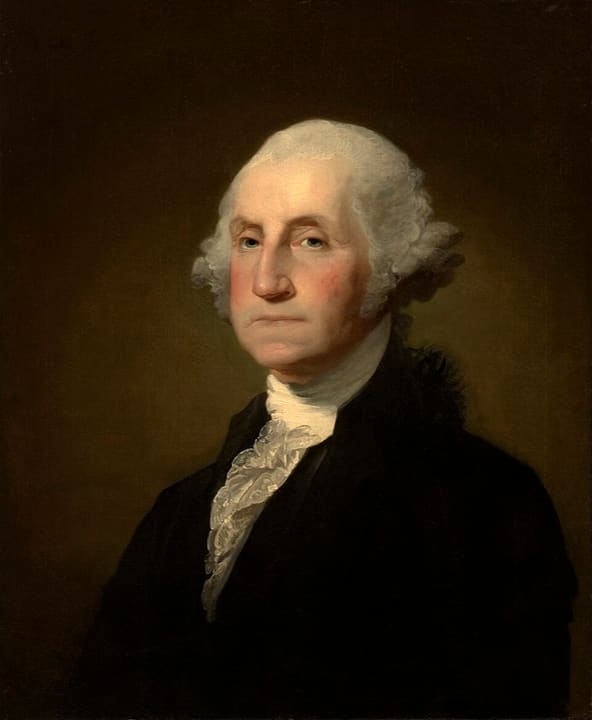
Thesis. The portrait argues that the calm figure of the Stuart canvases concealed a passionate, proud and ambitious man, and that his surrenders of power at Newburgh, Annapolis and the end of his second term flowed from disciplined restraint rather than from a placid nature.
Significance. Winner of the 2011 Pulitzer Prize for Biography, the book is widely regarded as the standard modern one-volume life, admired for balance and readability, though some reviewers found it overlong.
Key figures
- George Washington: Planter, general and first president; the subject
- Martha Washington: His wife from 1759
- Mary Ball Washington: His mother
- Alexander Hamilton: Aide-de-camp and Treasury secretary
- Thomas Jefferson: Secretary of state and party rival of Hamilton
- Marquis de Lafayette: French officer and devoted friend
- William Lee and Ona Judge: Enslaved members of the household
- Benedict Arnold: General who betrayed the cause in 1780

Summary
Washington: A Life is Ron Chernow's single-volume biography of George Washington, published in October 2010 and awarded the Pulitzer Prize for Biography in 2011. Chernow's central aim is to replace the remote, marble figure of patriotic legend with a man of strong passions, ambition and a fierce temper, held in check by a lifelong discipline of self-command. The book follows Washington from his birth in 1732 in Westmoreland County, Virginia, through a boyhood marked by his father's early death, a demanding mother and the patronage of his half-brother Lawrence and the Fairfax family. As a young surveyor and then a Virginia officer he takes part in the clash at Jumonville Glen and the surrender of Fort Necessity in 1754, survives Braddock's defeat in 1755, and commands the Virginia Regiment, learning hard lessons about frontier war and British condescension. Marriage in 1759 to the wealthy widow Martha Dandridge Custis makes him a great planter; Chernow describes his ceaseless improvement of Mount Vernon, his debts to London merchants, his turn from tobacco to wheat, and the enslaved people whose labour sustained the estate, along with the deaths of Martha's children Patsy and Jacky. Chosen by the Continental Congress in June 1775 to command the army, Washington drives the British from Boston, loses New York in 1776, crosses the Delaware to win at Trenton and Princeton, endures Valley Forge, fights at Monmouth, faces the treason of Benedict Arnold, and with French help traps Cornwallis at Yorktown in 1781. Chernow gives great weight to the Newburgh address of March 1783, in which Washington defused an officers' conspiracy, and to his resignation of his commission at Annapolis that December. He then traces Washington's role in calling for a stronger union, presiding over the Constitutional Convention of 1787, and serving two terms as the first president from 1789 to 1797, setting precedents of ceremony, cabinet government and neutrality while Alexander Hamilton and Thomas Jefferson divide into rival parties. The Whiskey Rebellion, the Jay Treaty, the escape of Martha's enslaved maid Ona Judge, and the Farewell Address of 1796 are told in detail. The last chapters describe Washington's retirement, his growing unease about slavery, his will providing for the freedom of the people he held after Martha's death, and his death at Mount Vernon on 14 December 1799 after a throat infection treated by repeated bleeding. Throughout, Chernow draws on the modern edition of the Washington Papers and on recent scholarship, and he pays close attention to Washington's health, dental troubles, finances, friendships and public image.
Virtues in this work
- Temperance: Chernow shows Washington governing a fierce temper through decades of deliberate self-command.
- Fortitude: He holds the Continental Army together through the retreats of 1776 and the winter at Valley Forge.
- Magnanimity: He resigns his commission at Annapolis in 1783 and later declines a third term as president.
- Prudence: At Newburgh in 1783 he defuses an officers' conspiracy with a personal appeal rather than force.
Plot or Argument
- Prelude and youth (1732-1753)
Chernow sets out to look behind the familiar portraits, then follows Washington's childhood in Virginia, his father's death, his strained relationship with his mother, the influence of Lawrence Washington and the Fairfaxes, surveying, and the voyage to Barbados where he survives smallpox.
- The frontier soldier (1753-1758)
The mission to the Ohio country, Jumonville Glen and Fort Necessity, Braddock's defeat, and command of the Virginia Regiment, where Washington's ambition for a royal commission is disappointed.
- The planter (1759-1775)
Marriage to Martha Custis, the building up of Mount Vernon and its enslaved workforce, quarrels with British merchants, service in the House of Burgesses, the death of Patsy Custis, and Washington's turn toward resistance to Parliament.
- The general (1775-1783)
Command of the Continental Army, Boston, the losses around New York, Trenton and Princeton, Valley Forge, Monmouth, Arnold's treason, Yorktown, the Newburgh crisis and the resignation at Annapolis.
- The statesman (1784-1789)
Retirement at Mount Vernon, worries over the weakness of the Confederation, the Potomac navigation scheme, Shays's Rebellion, presiding over the Constitutional Convention, and unanimous election as president.
- The president (1789-1797)
Inauguration in New York, the creation of the executive departments, illness in the first term, the conflict between Hamilton and Jefferson, the neutrality proclamation, the Whiskey Rebellion, the Jay Treaty controversy, and the Farewell Address.
- Last years and legacy (1797-1799)
Return to Mount Vernon, command of the provisional army during the quasi-war with France, the will providing for emancipation, his final illness and death in December 1799, and the shaping of his legend.
Characters
- George Washington, subject
Virginia planter, commander of the Continental Army and first president, presented as passionate but self-governed.
- Martha Washington, wife
Wealthy widow whom he married in 1759; a steady partner through war and presidency.
- Mary Ball Washington, mother
Demanding mother with whom Chernow describes a difficult relationship.
- Lawrence Washington, half-brother
Early model and patron who introduced him to the Fairfax circle.
- Alexander Hamilton, aide and Treasury secretary
Wartime aide-de-camp and the chief architect of the administration's financial program.
- Thomas Jefferson, secretary of state
Fellow Virginian whose rivalry with Hamilton divided the first cabinet.
- Marquis de Lafayette, officer and friend
Young French volunteer who became almost a son to Washington.
- Benedict Arnold, general turned traitor
Gifted officer whose 1780 plot to surrender West Point shocked Washington.
- William Lee, enslaved valet
Washington's personal servant through the war, freed by his will.
- Ona Judge, enslaved maid
Martha Washington's maid who escaped from the president's house in Philadelphia in 1796.
Lessons
Self-command over a strong temper
Chernow's Washington is not naturally calm; he has a hot temper, deep pride and great ambition. His greatness lies in a discipline of restraint learned over decades, from youthful rules of civility to the poise he kept as president. The book presents character as something built by long practice rather than given at birth.
- What evidence does Chernow give that Washington had a fierce temper?
- How did Washington learn to control himself, according to the early chapters?
- Is self-command a virtue in itself, or only a means to other ends?
Power surrendered
At Newburgh in 1783 Washington talked down officers tempted to threaten Congress, and at Annapolis he returned his commission; in 1796 he declined a third term. Chernow treats these refusals of power as his most consequential acts, the model that established civilian government in the new republic.
- What were the officers at Newburgh planning, and how did Washington stop them?
- Why did Washington's resignation of his commission astonish people in Europe?
- Why might giving up power be harder than winning it?
Perseverance through defeat
Washington lost more battles than he won, and in 1776 the army nearly dissolved. Chernow shows how he kept the army in being through retreats, desertions and the winter at Valley Forge, and how surprise strokes such as Trenton restored its spirit. The war was won by endurance as much as by brilliance.
- What went wrong for Washington in New York in 1776?
- Why did the victory at Trenton matter more than its size?
- What kept the army together at Valley Forge?
Slavery at Mount Vernon
Chernow describes Washington as a slaveholder who managed hundreds of enslaved people at Mount Vernon, pursued those who escaped, and over time came to doubt the institution. In his will he provided for the freedom of the people he owned after Martha's death and for the support of the elderly and education of the young. The book sets these facts beside his public life and lets readers see both.
- How did Washington's views on slavery change over his lifetime, according to Chernow?
- What did his will provide for the people he held in slavery?
- Why did he act privately in his will rather than publicly during his presidency?
Context
Washington's life spans British colonial Virginia, the Seven Years' War, the imperial crisis of the 1760s and 1770s, the Revolutionary War, the Articles of Confederation, the framing of the Constitution and the first federal administrations. Virginia's planter society rested on tobacco and wheat grown by enslaved labour, and its gentry dominated politics. Earlier biographies range from Mason Locke Weems's moralizing life of 1800, with the invented cherry-tree story, to Washington Irving's five volumes, Douglas Southall Freeman's seven-volume work (1948-57) and James Thomas Flexner's four volumes (1965-72).
Composition
Chernow began the book after finishing Alexander Hamilton (2004), and spent about six years on research, drawing heavily on The Papers of George Washington, the documentary edition published by the University of Virginia, as well as letters, diaries, account books and modern scholarship. The book was published in October 2010 in a hardcover of over nine hundred pages, followed by a paperback in 2011.
Reception
Reviewers widely praised the book's thoroughness, readability and human portrait; the historian Gordon S. Wood judged it the best single-volume life of Washington, while some critics, such as T. J. Stiles, found it too long and its prose uneven. It won the Pulitzer Prize for Biography and the New-York Historical Society's American History Book Prize in 2011, became a best seller, and has been widely used by general readers and in schools.
Comparisons
- washington-farewell-address-and-selected-letters
Chernow narrates the drafting of the Farewell Address with Madison and Hamilton and quotes Washington's letters throughout; reading the primary documents beside the biography shows Washington's own voice behind Chernow's portrait.
- newburgh-address
The Newburgh speech of March 1783, with Washington's pause to put on his spectacles, is one of Chernow's climactic scenes and the clearest example of his theme of power restrained.
- mccullough-john-adams
McCullough's life of Washington's vice president and successor is a companion modern biography of the founding era; the two books view the same first administration from different chairs.
- the-federalist-papers
Hamilton and Madison, the chief authors of The Federalist, are central figures in Chernow's account of the Constitution's adoption and the first government Washington led.
- plutarch-lives
Washington's generation read Plutarch's lives of statesmen and soldiers as models of public virtue, and his favourite play, Addison's Cato, dramatized the hero of Plutarch's Cato the Younger; Chernow's biography belongs to the same tradition of the life as moral portrait.
- personal-memoirs
Chernow later wrote a biography of Grant; Grant's own memoirs, like Washington's career, show a general who preferred plain speech and civilian authority.
Quotes
For Students
A reading companion for classical Christian high school students. See the student guide.
Reading Guide
Watch for
- Chernow's prelude on the familiar portraits of Washington, and how the rest of the book tries to look behind them.
- Each moment when Washington's temper breaks through, and how he recovers his composure.
- The Newburgh crisis of 1783 and the resignation at Annapolis, which Chernow treats as turning points for the republic.
- The treatment of Mount Vernon's enslaved people, including William Lee and Ona Judge, and the terms of Washington's will.
- The account of Washington's final illness and death in December 1799.
Key terms and names
- Continental Army
- The army raised by the Continental Congress in 1775, which Washington commanded through the Revolutionary War.
- Newburgh Conspiracy
- The 1783 plan by some unpaid officers at Newburgh, New York, to pressure Congress, which Washington defused in person.
- Mount Vernon
- Washington's Virginia plantation on the Potomac, which he enlarged throughout his life and worked with enslaved labour.
- Self-command
- The eighteenth-century ideal of mastering one's passions, which Chernow treats as the key to Washington's character.
- Jay Treaty
- The 1795 agreement with Britain that avoided war but provoked fierce opposition from Jefferson's supporters.
- Whiskey Rebellion
- The 1794 uprising in western Pennsylvania against a federal excise tax, which Washington put down by leading militia in person.
- Inoculation
- Deliberate infection with a mild case of smallpox to give immunity, which Washington ordered for the army in 1777.
Seminar Questions
- Comprehension What experiences in the French and Indian War shaped the young Washington, according to Chernow?
- Comprehension What happened at Newburgh in March 1783, and how did Washington respond?
- Comprehension What did Washington's will provide for the enslaved people of Mount Vernon?
- Interpretation Why does Chernow emphasize Washington's temper and ambition rather than his calm?
- Interpretation How did Washington try to stand above the quarrel between Hamilton and Jefferson, and did he succeed?
- Interpretation How does Chernow connect Washington's management of Mount Vernon with his leadership of the army and the government?
- Big Question Is a leader's character revealed more by what he achieves or by the power he refuses?
- Big Question How should we honour founders whose lives include both great public service and practices their own generation was beginning to question?
Faith Connections
- Proverbs 16:32 (Scripture)
Solomon says that he who rules his spirit is better than he who takes a city. Chernow's Washington wins battles, but his greater victory is the mastery of his own temper.
- Micah 4:4 (Scripture)
Washington often used the image of sitting under one's own vine and fig tree for his longed-for retirement at Mount Vernon, borrowing this prophetic picture of peace.
- Mark 10:42-45 (Scripture)
Jesus teaches that the great among his followers must be servants rather than lords. Washington's resignation of command and refusal of a third term show a public form of power laid down.
- Plutarch, Life of Cato the Younger (Great Conversation)
Washington had Addison's Cato performed for his troops at Valley Forge; the Roman Cato of Plutarch's life, who chose republican liberty over Caesar's favour, was a model for his generation.
Logic and Rhetoric
Central argument: The legend of a calm, remote Washington hides the real man. The documents show a person of strong passions, ambition and temper. Yet he consistently governed those passions and repeatedly gave up power when he could have kept it. Therefore his greatness lies not in an untroubled nature but in hard-won self-command used for the public good.
Rhetorical device: scene-setting. Chernow opens with a discussion of Gilbert Stuart's portraits and returns to vivid set scenes, such as Washington fumbling for his spectacles at Newburgh, to make the abstract theme of character visible.
Debate: Resolved: that Washington's resignation of his commission in 1783 was a greater service to the nation than his victory at Yorktown.
Writing Prompts
Essay: Chernow presents Washington as a man of fierce passions who mastered himself. Choose three episodes from different parts of his life and argue whether self-command is the key to his greatness.
Comparison with The Newburgh Address: Read Washington's Newburgh address and compare its arguments with Chernow's account of the scene. What does the biography add that the speech alone cannot show?
Medical Lens
Chernow's biography gives sustained attention to the health of a man who survived many eighteenth-century diseases. Washington caught smallpox in Barbados in 1751, which left him immune; as commander he ordered the inoculation of the Continental Army in 1777, among the largest public-health measures of the war. He suffered from malaria and dysentery, lost nearly all his teeth and wore painful dentures made of materials including ivory and human teeth, which affected his speech and appearance. His stepdaughter Patsy Custis had epilepsy and died during a seizure in 1773, and the book describes the remedies the family tried. As president he survived a large infected abscess or tumour on his thigh in 1789 and a serious respiratory illness in 1790. His death in December 1799 followed an acute throat infection, often identified as epiglottitis, treated by his physicians with repeated bloodletting that removed a large share of his blood, along with blistering and purges; modern discussions of whether the treatment hastened death remain interpretive. These matters belong to Chernow's narrative and should be checked against his notes and the cited medical histories.
- Youth: voyage to Barbados (1751)
Washington contracts smallpox while accompanying his ailing half-brother Lawrence, who died of tuberculosis soon after.
- The planter years (1773)
Patsy Custis's epilepsy and death in a seizure at Mount Vernon.
- The war years (1777)
The decision to inoculate the Continental Army against smallpox.
- Throughout, especially the presidency
Washington's dental losses, dentures and the pain they caused.
- The first term (1789-1790)
The thigh abscess or tumour and the respiratory illness that twice put the new president's life in danger.
- Final chapter (December 1799)
The throat infection, the physicians' repeated bleeding and other remedies, and Washington's composed death.
Creative Prompts
- Classroom
Build a timeline of Washington's refusals of power, from Newburgh and Annapolis in 1783 to the decision against a third term, and write one sentence on why each mattered.
- Dialogue
Write a cabinet scene in 1793 in which Hamilton and Jefferson argue over the French Revolution while Washington listens and decides.
- Essay
Chernow argues that Washington's calm was won by discipline over a fierce temper. Weigh the evidence he gives and decide whether the portrait convinces you.
Further Reading
- His Excellency: George Washington, Joseph J. Ellis
- Washington: The Indispensable Man, James Thomas Flexner
- Washington's Crossing, David Hackett Fischer
- Alexander Hamilton, Ron Chernow
- Pox Americana: The Great Smallpox Epidemic of 1775-82, Elizabeth A. Fenn
Verification notes
Publication (October 2010; hardcover of about 904 pages), the 2011 Pulitzer Prize for Biography and New-York Historical Society prize, and the reviews of Gordon S. Wood and T. J. Stiles were confirmed at https://en.wikipedia.org/wiki/Washington:_A_Life and bookseller and library catalog listings. The events of Washington's life are standard history. The book's handling of particular episodes (temper, Newburgh, slavery, health, Ona Judge, the will) is described from general knowledge of the book and should be checked against the text. The six-part division used in plotOrArgument follows the life's phases and may not match Chernow's part titles exactly. No quotations are included because no exact wording could be confirmed against a reliable source.
- Text is under copyright; check quotations against an authorized edition before publication.
- Chernow's own part and chapter divisions (often listed as six parts) and the chapters in which each episode appears.
- Details of Chernow's account of Patsy Custis's treatment, the 1789 thigh abscess and the 1790 illness.
- How long Chernow says the book took to research and write.