Work record
The Newburgh Address
1783 · 18th Century · Oratory · English
Abstract
Background. With peace near and Congress unable to raise money from the states, officers who had served for years without wages feared being sent home with nothing. Unsigned papers passed around the encampment in mid-March urging them to defy Congress, and the commander summoned a formal assembly to meet the threat.
Content. Washington rebukes the secret call to assemble, exposes the artful design of the circulated paper, and recalls his own long partnership with the army. He pictures the ruin that either proposed course would bring, upholds open discussion, vouches for the good intentions of Congress, and pledges his efforts before urging his hearers to repudiate the scheme.
Themes. Soldiers serve a republic and must not coerce it. Reason should master resentment, and freedom to speak must not become a cover for conspiracy. Honor lies in patient endurance, and a leader's credit with his men, earned through eight hard campaigns, can be spent for the common good.
Significance. Officers present later described how Washington, fumbling for his glasses before reading a congressman's letter, moved many to tears. The resolutions passed afterward pledged trust in the civilian government, Congress soon granted commuted pay, and the gathering is remembered as a defining precedent for military obedience to elected authority in the United States.
Key figures
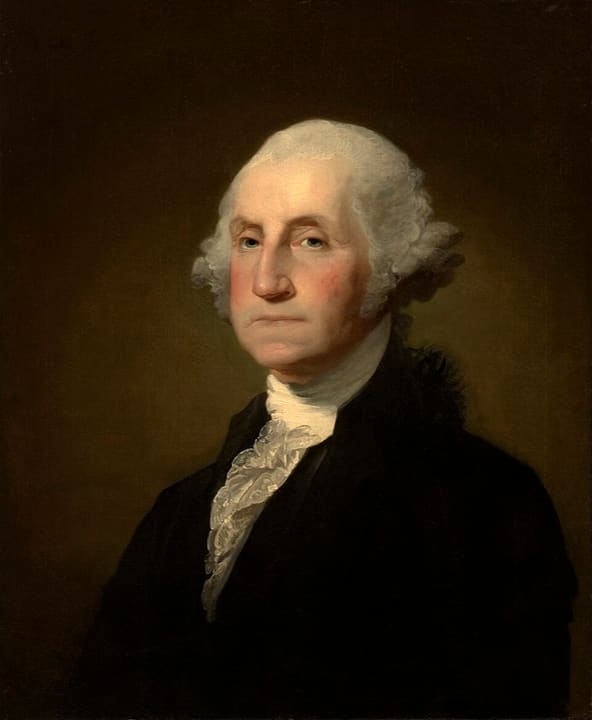
- George Washington: General addressing his officers in person
- John Armstrong Jr.: Gates's aide, usually named as the unsigned papers' writer
- Horatio Gates: Chairman of the March 15 gathering
- Henry Knox: Artillery general who proposed the loyal resolutions

Summary
The Newburgh Address is the speech George Washington read to the officers of the Continental Army on 15 March 1783 in the Temple, a large log hall the soldiers had built at their winter cantonment near Newburgh, New York. The fighting had largely ended after Yorktown, and peace with Britain was close, but the officers had gone unpaid for months. Congress had promised them half pay for life in 1780, yet under the Articles of Confederation it could only ask the states for money. In December 1782 a delegation led by General Alexander McDougall carried the officers' memorial to Philadelphia, and Congress delayed. On 10 March 1783 an unsigned summons to a meeting circulated in camp with an anonymous address, generally attributed to Major John Armstrong Jr., an aide to General Horatio Gates. It urged the officers, if peace came, not to lay down their arms until they were paid, and, if war continued, to withdraw and leave the country to defend itself. Washington forbade the unauthorized meeting and called his own for 15 March, with the senior officer to preside. A second anonymous paper claimed that his order approved the movement. When the officers met, with Gates in the chair, Washington entered and read the address he had written. He condemns the anonymous summons as unmilitary and subversive of order, and says the second paper appeals to feelings and passions rather than reason. He reminds the officers that he was among the first to join the cause and has never left their side. He turns the anonymous writer's two proposals into a choice between abandoning wives, children and farms or turning the army against Congress, and asks whether such a writer can be a friend to the army or the country. He defends free speech while condemning the address's method, assures them that Congress means to do them justice though large bodies deliberate slowly, and promises to use all his influence for them. He asks them to express their horror of anyone who would open the floodgates of civil discord, and closes by saying that their conduct could give the world an example posterity would honor. Witnesses reported that Washington then began reading a letter from Joseph Jones, a Virginia delegate in Congress, stopped, and put on spectacles that most officers had never seen him wear, remarking that he had grown gray and nearly blind in the service of his country; many officers were moved. After he left, the meeting adopted resolutions moved by Henry Knox affirming confidence in Congress and rejecting the anonymous proposals. On 22 March Congress voted the officers five years' full pay in place of half pay for life.
Virtues in this work
- Prudence: Washington forbids the irregular meeting but calls a lawful one of his own, so that the officers' grievance is heard without the anonymous writer's direction.
- Magnanimity: Holding the loyalty of the army at the war's end, Washington uses it to keep the soldiers obedient to Congress rather than to gain power for himself.
- Fortitude: He asks the officers to show patient virtue rising superior to the pressure of the most complicated sufferings, and to keep enduring until Congress can pay them.
- Humility: As witnesses reported, he put on his spectacles before his officers and spoke plainly of having grown gray in their common service.
Plot or Argument
- Against the anonymous summons
Washington opens by calling the anonymous summons inconsistent with propriety, unmilitary and subversive of order, and asks the officers' good sense to judge it. The second anonymous paper, he says, addresses feelings and passions rather than reason; its author has skill with the pen but suspect designs.
- The insidious design and Washington's own record
The address was written with great art to persuade the army that the sovereign power of the United States intends injustice. Washington explains why he opposed the hasty meeting and recalls his service: among the first to embark in the cause, the constant companion of their distresses, his own reputation bound to the army's.
- The two proposals examined
He restates the anonymous writer's alternatives, to withdraw into the unsettled country if war continues or to turn arms against Congress if peace comes, and shows what each would mean for the officers' families and for the country. He asks whether such a writer can be a friend to the army, suggests he may be an emissary of the enemy, then drops the curtain on further reasons.
- Free speech and confidence in Congress
Washington grants that men must be free to offer their opinions on serious matters, and objects only to the manner of the anonymous appeal. He gives his opinion that Congress values the army and will do it justice, explaining that large bodies with many interests deliberate slowly.
- Pledge and entreaty
He pledges whatever ability he has on their behalf, then entreats them to take no step that would sully their glory, to trust the plighted faith of the country, and to express their detestation of anyone who would overturn its liberties and deluge the rising empire in blood.
- The example for posterity
By acting so, the officers will defeat the enemy's secret artifice, give a new proof of patriotism and patient virtue, and allow posterity to say that without this day the world would never have seen the last stage of perfection human nature can reach.
- Aftermath: the spectacles and the officers' resolutions
Witnesses reported that Washington read part of a letter from Joseph Jones, put on his spectacles and spoke of having grown gray in his country's service. After his departure the officers, with Gates presiding, adopted resolutions moved by Knox affirming their confidence in Congress.
Characters
- George Washington, commander in chief
Speaker of the address, who called the 15 March meeting in place of the anonymous one.
- John Armstrong Jr., presumed anonymous author
Young aide to Gates to whom the anonymous Newburgh addresses are generally attributed.
- Horatio Gates, presiding officer
Senior general in camp, who chaired the officers' meeting on 15 March.
- Henry Knox, major general
Moved the resolutions affirming confidence in Congress after Washington withdrew.
- Alexander McDougall, head of the officers' delegation
Carried the officers' memorial on pay and pensions to Congress in December 1782.
- Joseph Jones, Virginia delegate in Congress
Author of the letter on Congress's efforts that Washington read after the address.
Lessons
Answering a grievance without rejecting the aggrieved
Washington never says the officers' complaints about pay are unjust. He separates their just claim from the anonymous writer's method, pledges his own help, and asks them to trust that Congress will act. He wins them by standing with them while refusing the course proposed.
- Where in the address does Washington show that he understands the officers' hardships?
- Why does he promise to work for them before asking them to reject the anonymous proposals?
- How might the meeting have gone if he had only scolded them?
The army under civil authority
The anonymous address suggested using the army's arms to pressure Congress. Washington answers that such a step would turn soldiers against the country they had fought for and open the floodgates of civil discord. The principle that the military obeys civil government was set in practice at Newburgh before it was written into the Constitution.
- What two courses did the anonymous writer propose, and what does Washington say each would lead to?
- Why is it dangerous for a nation when an army decides political questions?
- How does Washington's later resignation of his commission in December 1783 continue the lesson of Newburgh?
Reason against passion
Washington describes the second anonymous paper as addressed to feelings and passions rather than reason and judgment, and asks the officers to view their choice in the calm light of reason. He uses reasoned argument, rhetorical questions and appeals to honor rather than threats.
- Find a place where Washington asks a series of questions. What effect do they have?
- Why might an appeal to passion be especially powerful among tired and unpaid soldiers?
Personal credit spent for the public good
Washington reminds the officers of eight years of shared hardship and stakes his own reputation on Congress's good faith. As witnesses reported, the moment with the spectacles reminded them of the cost of that service, and his personal standing carried the day.
- Why does Washington mention that he was among the first to join the cause?
- Why do you think the spectacles moment moved the officers more than the arguments of the speech?
- Is it right for a leader to use his personal reputation to persuade people?
Context
After the British surrender at Yorktown in October 1781, the Continental Army spent two more winters in camp while peace was negotiated in Paris. Congress, dependent on requisitions to the states under the Articles of Confederation, could not pay the soldiers' arrears or fund the half pay for life promised to officers in 1780. In Philadelphia, Robert Morris, Alexander Hamilton and others who wanted Congress to have its own revenue saw the army's claims as part of the case for national funding.
Composition
The anonymous summons and first address appeared in camp on 10 March 1783; Washington's general orders of 11 March postponed the meeting to 15 March, and a second anonymous paper followed. Washington wrote his address in those days and read it at the Temple on Saturday, 15 March. The library text is the Mount Vernon transcript of the manuscript at the Massachusetts Historical Society, as published in The Papers of George Washington, and ends with Washington's signature and the address to the officers assembled at the New Building.
Reception
The officers' resolutions of 15 March were sent to Congress with Washington's address, and Congress printed the proceedings; on 22 March it commuted the officers' half pay to five years' full pay in interest-bearing certificates. The episode became a standard example of civil control of the military in the American tradition. Historians have disagreed about how far the anonymous addresses were part of a deliberate plan encouraged by members of Congress, with some describing a conspiracy and others a spontaneous protest by aggrieved officers.
Comparisons
- washington-farewell-address-and-selected-letters
The Farewell Address of 1796 returns to Newburgh's concerns, warning against faction and anything that would weaken the authority of the national government; that volume also holds his First Inaugural Address of 1789.
- articles-of-confederation
Article VIII left taxing to the states, which is why Congress could not pay the officers whose grievances Washington had to answer in March 1783.
- hamiltons-reports-and-opinion-on-the-bank
Hamilton, who wrote to Washington in early 1783 about the army's claims, later proposed in the Report on Public Credit to fund at par the certificates held by former soldiers and their buyers.
- julius-caesar
Shakespeare's Rome shows a victorious general's power overshadowing a republic; at Newburgh a victorious general used his authority to keep the army obedient to the civil government.
- the-founding-documents
The Constitution's grant to Congress of the power to tax, raise armies and pay the debts of the United States answers the weakness that produced the Newburgh crisis.
Quotes
Frequently cited
“My God! What can this Writer have in view, by recommending such measures? Can he be a friend to the Army? Can he be a friend to this Country? Rather, is he not an insidious Foe?”
Frequently cited
“reason is of no use to us—the freedom of Speech may be taken away—and, dumb & silent we may be led, like sheep, to the Slaughter.”
“I was among the first who embarked in the cause of our common Country”
“express your utmost horror & detestation of the Man who wishes, under any specious pretences, to overturn the liberties of our Country, & who wickedly attempts to open the flood Gates of Civil discord, & deluge our rising Empire in Blood.”
“had this day been wanting, the World had never seen the last stage of perfection to which human nature is capable of attaining.”
For Students
A reading companion for classical Christian high school students. See the student guide.
Reading Guide
Watch for
- The opening exclamations against the anonymous summons, and the contrast Washington draws between passion and reason.
- Paragraph 4, where Washington lists his years of service before he argues anything.
- The two choices proposed by the anonymous writer, and the series of questions that follows them in Paragraph 5.
- Washington's defense of free speech in Paragraph 7, in the middle of a speech criticizing an anonymous paper.
- The closing appeal to posterity, and what witnesses reported happened after the speech ended.
Key terms and names
- Newburgh
- Town on the Hudson River in New York near the army's winter cantonment of 1782-83.
- Cantonment
- A semi-permanent camp of huts where an army spends the winter; the Continental Army's was at New Windsor, near Newburgh.
- The Temple
- The large hall, also called the New Building, that the soldiers built at the cantonment and where Washington spoke.
- Anonymous address
- The unsigned paper urging the officers to refuse to disband or to withdraw from the war until they were paid, which Washington answered.
- Half pay for life
- The pension Congress promised officers in 1780, which it could not fund and later replaced with five years' full pay.
- Civil discord
- Strife among citizens of the same country; Washington warns that turning the army against Congress would open its floodgates.
Seminar Questions
- Comprehension Why were the officers at Newburgh angry with Congress in the winter of 1783?
- Comprehension What did the anonymous address propose the officers do if the war continued, and what if peace came?
- Comprehension What did the officers resolve after Washington left the meeting?
- Interpretation Why does Washington defend the freedom of speech in a speech that criticizes an anonymous writer?
- Interpretation In Paragraph 5 Washington suggests the anonymous writer may be an emissary of the enemy. Is this a fair argument or an exaggeration meant to persuade?
- Interpretation Why might the reported spectacles moment have persuaded the officers more than the written arguments?
- Big Question When people with a just complaint are treated unfairly by their government, what are they permitted to do, and what should they refuse to do?
Faith Connections
- Luke 3:14 (Scripture)
John the Baptist tells soldiers to do violence to no man and be content with their wages; Washington asks unpaid officers to keep their patience and not use their arms against their own country.
- Proverbs 16:32 (Scripture)
He that ruleth his spirit is better than he that taketh a city; Washington asks officers who had won a war to master their anger in the calm light of reason.
- Augustine, Letter 189 to Boniface (Church Fathers)
Augustine counsels the Roman general Boniface that a soldier may serve God and should keep faith even with those he fights, a classic Christian reflection on the soldier's duty to the commonwealth.
Logic and Rhetoric
Central argument: The anonymous address appeals to passion and proposes either deserting the country or turning arms against Congress; both would destroy the liberty the army fought for and stain its honor; Congress intends justice and Washington will press their case; therefore the officers should reject the proposals, trust the nation's faith, and win lasting glory by their patience.
Rhetorical device: erotema (series of rhetorical questions). In Paragraph 5 Washington asks four questions in a row about the anonymous writer's aims and loyalties (quote 1), letting the officers answer them silently for themselves.
Debate: Resolved: that Washington's personal reputation, rather than his arguments, ended the Newburgh crisis.
Memory Work
reason is of no use to us—the freedom of Speech may be taken away—and, dumb & silent we may be led, like sheep, to the Slaughter.
My God! What can this Writer have in view, by recommending such measures? Can he be a friend to the Army? Can he be a friend to this Country? Rather, is he not an insidious Foe?
Writing Prompts
Essay: Explain how Washington persuades the officers in the Newburgh Address, discussing his appeal to his own record, his use of rhetorical questions, and his appeal to posterity.
Comparison with Farewell Address and Selected Letters: Compare the Newburgh Address of 1783 with the Farewell Address of 1796: what does Washington fear for the republic in each, and how does he try to persuade his audience?
Medical Lens
The medical interest lies outside the written text, in the reported moment when Washington, aged fifty-one, needed spectacles to read a letter and spoke of his eyes failing in the service of his country. Presbyopia in middle age was ordinarily met with convex reading glasses, which were widely available in the eighteenth century, but Washington had rarely been seen wearing them in front of his officers. The address itself alludes to the army's distresses and complicated sufferings, the hunger, exposure and camp disease of eight years of war, without describing them.
- After the address (as reported by witnesses)
Washington pauses while reading Joseph Jones's letter, puts on spectacles, and speaks of having grown gray and almost blind in his country's service.
Creative Prompts
- Fiction
Tell the events of 15 March 1783 from the point of view of a young captain who arrived at the Temple ready to support the anonymous address.
- Classroom
Have students read the address aloud in parts, marking each place where Washington appeals to reason, to honor, or to his own record, then discuss which appeal is strongest.
- Essay
Explain how Washington uses rhetorical questions in Paragraph 5 to turn the officers against the anonymous writer.
- Dialogue
Write a conversation that evening between Henry Knox and Horatio Gates about what had happened at the meeting.
Further Reading
- Eagle and Sword: The Federalists and the Creation of the Military Establishment in America, 1783-1802, Richard H. Kohn
Includes Kohn's account of the Newburgh affair as a deliberate attempt to pressure Congress.
- Washington: A Life, Ron Chernow
Full biography with a narrative of the Newburgh meeting and the spectacles episode.
- His Excellency: George Washington, Joseph J. Ellis
Short biography that treats Newburgh as a turning point in Washington's understanding of civil authority.
- Cincinnatus: George Washington and the Enlightenment, Garry Wills
Study of how Washington's surrender of power shaped his reputation, including the events of 1783.
Verification notes
All five quotations were found by Grep in content/texts/newburgh-address.txt, which keeps Washington's spelling, capitals and ampersands; paragraph numbers count the eleven paragraphs of the address after the salutation. The remark about growing gray is reported by officers present (notably Major Samuel Shaw) in slightly different wordings and is not part of the written address, so the record describes it rather than quoting it. The attribution of the anonymous addresses to John Armstrong Jr. is the standard one. The extent of coordination between officers and members of Congress is disputed among historians and is described here only in general terms.
- Confirm that Armstrong himself later acknowledged writing the anonymous addresses, and when.
- Confirm the date and content of Hamilton's letter to Washington about the army's claims (usually given as 13 February 1783).
- Confirm the names of the committee that drafted the officers' resolutions of 15 March 1783.