Work record
The Golden Fleece and the Heroes Who Lived Before Achilles
1921 · Early 20th Century · Collection · English
Abstract
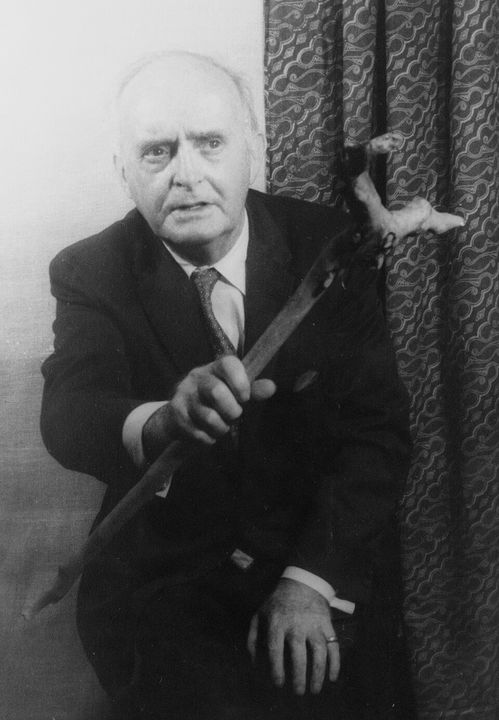
Background. An Irish poet living in New York followed his Odysseus and Norse books with this version of the Argo legend, published by Macmillan with Willy Pogány's drawings and honoured by the first Newbery committee.
Narrative. The opening part carries the crew from Thessaly past Amycus, the Harpies, Lemnos and the crashing cliffs to the Phasis. The second follows Aeetes's ordeals, Medea's divided loyalties, the flight with its fratricide, Circe's cleansing, a desert portage and the bronze sentinel of Crete. A third part gathers individual biographies: the boar hunt, a sea-nymph bride, the labyrinth, the twelve labours, Alcestis restored, the descent for Eurydice and the Corinthian sequel.
Structure. Myths are nested within the voyage as performances by its participants or by those they meet, so cosmogony, the grief of Demeter, the theft of fire and the Gorgon's beheading all reach the reader as tales heard at sea or on shore.
Themes. Companionship and shared purpose, the cost of enchantment, hope amid affliction, and the inheritance of heroic example recur from Pelion to Corinth.
Significance. Lyrical yet faithful to Apollonius in its main course, the book became a lasting classroom bridge from picture-book myths to Greek epic and tragedy, and its gentler ending sets it apart from Euripides and Kingsley.
Main characters
- Jason: Chiron's foster-son, captain of the Argo
- Medea: Colchian princess whose spells win the prize
- Orpheus: minstrel who sings of creation aboard ship
- Heracles: mightiest crewman, who departs to free Prometheus
- Atalanta: fleet huntress, the lone woman among the crew
- Aeetes: suspicious king guarding the ram's fleece
- Arete: Phaeacian queen with wisdom but no magic

Summary
The Golden Fleece and the Heroes Who Lived Before Achilles is Padraic Colum's retelling for young readers of the voyage of the Argo, with many other Greek myths woven into it as stories told by the heroes on the way. It was published in New York by Macmillan in 1921, with illustrations by Willy Pogány, and was named a Newbery Honor book in 1922. The library text is the complete Project Gutenberg text, without the illustrations. Part I, The Voyage to Colchis, begins on Mount Pelion, where a slave brings the infant Jason to the centaur Chiron to be raised in secret. Grown, Jason carries an old woman, the goddess Hera, across a flooded river, loses a sandal, and claims the kingdom of Iolcus from his usurping uncle Pelias, who sends him to fetch the Golden Fleece from Colchis. The story of Phrixus, Helle and the golden ram explains the Fleece. Argus builds the ship with a beam from the oak of Dodona that can speak, and the heroes gather: Heracles, Orpheus, Castor and Polydeuces, Peleus, Theseus, Atalanta the huntress and many more. On the first morning Orpheus sings of the beginning of things. Polydeuces defeats King Amycus in a boxing match, Heracles loses his young companion Hylas, and the heroes free King Phineus from the Harpies and learn the way ahead. At Lemnos the women tell the story of Demeter and Persephone; leaving the island, the heroes hear of Prometheus, Epimetheus and Pandora's jar, from which Hope came last. After passing the Clashing Rocks they see Prometheus chained on Caucasus, and Heracles leaves them to free him. Part II, The Return to Greece, takes the heroes to King Aeetes, whose daughter Medea gives Jason a charm against the fire-breathing bulls and the earth-born warriors and lulls the dragon so that he can take the Fleece. The flight from Colchis brings the slaying of Medea's brother Apsyrtus, purification by Circe, refuge with King Alcinous and Queen Arete of the Phaeacians, who protect Medea from her father's soldiers, and a storm that drives the Argo onto the sands of Libya; the heroes carry the ship across the desert, Orpheus tells the story of Perseus at the garden of the Hesperides, and they pass the bronze giant Talos and reach Iolcus. Part III, The Heroes of the Quest, tells the earlier and later stories of the voyagers: Atalanta and the Calydonian boar, Peleus and the sea-nymph Thetis, Theseus and the Minotaur, the life and labours of Heracles with the comic Battle of the Frogs and Mice, Admetus and Alcestis, Orpheus's descent for Eurydice, and finally Jason and Medea at Corinth. In Colum's ending Medea flies away after the death of Glauce, and Jason returns to Iolcus, burns the Argo as an offering to Poseidon and hangs the Fleece in the temple, where it inspires the young men of later years.
Virtues in this work
- Friendship: The heroes hold together through the Clashing Rocks and carry the Argo on their shoulders across the Libyan desert.
- Fortitude: Jason yokes the fire-breathing bulls and faces the earth-born warriors in the field of Aeetes.
- Prudence: Queen Arete, who knows no enchantments, counsels Medea to give up witchcraft and never practise against anyone's life.
- Hope: In the story told after Lemnos, Hope caught under the rim of Pandora's jar lets men and women see an end to their troubles.
Plot or Argument
- Part I, I-III: Jason, Pelias and the Fleece
Chiron raises the infant Jason on Pelion; Jason carries Hera across the river, arrives in Iolcus with one sandal and demands the kingdom; Pelias sends him for the Golden Fleece, whose history begins with Phrixus, Helle and the ram.
- Part I, IV-V: the heroes and the ship Argo
Argus builds the ship with a speaking beam from Dodona, the heroes assemble at Iolcus, Jason is chosen captain, and Orpheus sings of Chaos, the Titans and the birth of the gods.
- Part I, VI-VIII: Amycus, Hylas and Phineus
Polydeuces defeats the boxer-king Amycus; Hylas is drawn into a spring by the nymphs and Heracles searches for him; the heroes drive the Harpies from blind Phineus, who counsels them on the way to Colchis.
- Part I, IX-X: Lemnos and the stories told there
The heroes linger among the Lemnian women under Queen Hypsipyle and hear the story of Demeter and Persephone; Heracles calls them back to the quest, and they hear of Prometheus, Epimetheus and Pandora.
- Part I, XI-XII: the Clashing Rocks and Caucasus
The Argo slips between the Symplegades as a dove shows the way; on the Euxine the heroes see Prometheus chained and the vulture of Zeus, Heracles departs to free him, and they enter the river Phasis.
- Part II, I-III: Aeetes, Medea and the winning of the Fleece
King Aeetes sets Jason the trial of the bulls and the dragon's teeth; Medea, torn between her father and the stranger, gives Jason her charm and sings the dragon to sleep so that he can take the Fleece.
- Part II, IV-VI: Apsyrtus, Circe and the Phaeacians
Apsyrtus is killed in the pursuit; Circe purifies Jason and Medea; at the court of Alcinous and Arete, the queen persuades the king to protect Medea from the Colchian soldiers and counsels her to give up enchantments.
- Part II, VII-IX: Libya, Perseus and the way home
Driven onto the Libyan sands, the heroes carry the Argo across the desert, learn from the Hesperides that Heracles has passed, hear Orpheus tell the story of Perseus, find the outlet to the sea through Triton's guidance, pass Talos at Crete and come near Iolcus.
- Part III, I-III: Atalanta, Peleus and Theseus
Atalanta joins the hunt for the Calydonian boar, which ends in the death of Meleagrus when his mother Althaea burns the fateful billet of wood; Peleus wins the sea-nymph Thetis, mother of Achilles; Theseus lifts the stone, goes to Athens and kills the Minotaur.
- Part III, IV-VII: Heracles, Admetus, Orpheus, Jason and Medea
Heracles performs his labours, hears the Battle of the Frogs and Mice from captured robbers, and dies on the pyre on Oeta; Heracles wins Alcestis back from Death for Admetus; Orpheus goes down for Eurydice; Medea's magic at Iolcus and Corinth ends with her flight and Jason's return to rule.
Characters
- Jason, leader of the Argonauts
Raised by Chiron, he claims his father's kingdom and leads the quest for the Golden Fleece, depending at last on Medea.
- Chiron, king-centaur
The wise centaur of Pelion who fosters Jason and teaches him.
- Pelias, usurping king of Iolcus
Jason's uncle, who sends him on the quest hoping he will not return.
- Medea, princess and enchantress of Colchis
Aeetes's daughter, whose charms win the Fleece and whose later enchantments bring sorrow.
- Aeetes, king of Colchis
Keeper of the Fleece, who sets Jason deadly trials.
- Orpheus, minstrel of the Argo
Sings of the beginning of things and other stories, calms the heroes and overcomes the Sirens.
- Heracles, strongest of the heroes
Calls the heroes away from Lemnos and leaves the voyage to free Prometheus; his own labours fill a chapter of Part III.
- Atalanta, huntress and Argonaut
The only woman among the heroes, swift-footed, who hunts the Calydonian boar.
- Polydeuces, boxer
One of the twin sons of Leda, who defeats King Amycus.
- Peleus, Argonaut
Husband of the sea-nymph Thetis and father of Achilles.
- Phineus, blind prophet-king
Tormented by the Harpies until the sons of the North Wind drive them away; he advises the heroes.
- Arete, queen of the Phaeacians
A wise woman without enchantments who shelters Medea and counsels her to give up witchcraft.
- Prometheus, Titan
Chained on Caucasus for giving fire to men; his story is told aboard the Argo.
- Theseus, Argonaut and hero of Athens
Sails on the Argo and later kills the Minotaur.
Lessons
Stories told on the rowing benches
Colum makes the Argo a ship of storytellers. Orpheus sings of the beginning of things, the Lemnian women tell of Demeter and Persephone, the heroes hear of Prometheus and Pandora, and the daughters of Atlas tell of Perseus. The book shows how a people's myths fit together and how stories carry courage and memory on a long journey.
- What story does Orpheus sing on the first morning of the voyage?
- Why might the heroes need to hear about Prometheus just as they pass the Mountain Caucasus?
- Which of the stories inside the story did you like best, and why?
Heracles calls the heroes back to their purpose
At Lemnos the heroes, Jason too, nearly forget the Fleece in the comfort of the island, and Heracles reminds them of what they set out to do; Atalanta agrees. Later, at Caucasus, Heracles himself leaves the voyage for a greater labour. Colum shows that a quest needs companions who will remind each other of their purpose.
- Why does Jason want to stay in Lemnos with Hypsipyle?
- What does Heracles say to the heroes, and who supports him?
- Why does Heracles leave the Argo to go to Prometheus?
Hope under the rim of Pandora's jar
In the tale told after Lemnos, Pandora's jar spills sickness, war and strife among men, but Hope is caught under the rim and later carried into the houses of men by a weeping woman. Because of Hope, men and women rouse themselves in their afflictions and look toward gladness. Colum gives young readers a picture of hope as the gift that makes trouble bearable.
- What comes out of Pandora's jar, and what stays behind?
- Who finds Hope, and what does Hope change for men and women?
- Why do you think Colum gives Hope its own small story instead of just naming it?
Arete's counsel to Medea
Queen Arete, a woman who knows nothing of enchantments but has much human wisdom, tells Medea to forget her witcheries and never to practise against anyone's life. In the last chapter Medea cannot keep that counsel, and sorrow follows at Iolcus and Corinth. The contrast teaches the difference between power and wisdom.
- What does Arete tell Medea she must give up?
- Why does Medea begin to use her enchantments again at Corinth?
- Is it harder to give up a power than never to have had it?
Context
In the early twentieth century, American publishers commissioned richly illustrated retellings of classic myth for children, and Padraic Colum, an Irish poet who had moved to New York in 1914, became one of the most admired. Following The Adventures of Odysseus (1918) and The Children of Odin (1920), he turned to the generation of heroes before the Trojan War, using the voyage of the Argo as a frame for many Greek myths.
Composition
Colum's main source for the voyage is Apollonius of Rhodes's Argonautica, which he follows closely through Phineus, the Clashing Rocks, Medea's love, the Libyan desert and Talos. He weaves in the Hesiodic account of the beginning of things, the Homeric Hymn to Demeter for Persephone, the mock-epic Battle of the Frogs and Mice, and other myths for Part III. The book was published by Macmillan in New York in 1921 with illustrations by Willy Pogány and received a Newbery Honor in 1922, the first year the award was given.
Reception
The book has stayed in print as a companion to Colum's Odysseus and Odin retellings and is widely used in schools as a bridge from children's myth books to Apollonius and the Greek tragedians. Its lyrical prose, owed to Colum's work as a poet and his background in Irish storytelling, has often been praised, and Pogány's illustrations became closely associated with it.
Comparisons
- argonautica
Apollonius's epic is Colum's chief source for the voyage itself; comparing them shows where Colum keeps Apollonius closely (the Clashing Rocks, the carrying of Argo across Libya, Talos) and where he adds interwoven tales of his own choosing.
- kingsley-the-heroes
Kingsley's Victorian Argonauts send the ship home by a northern route past Ierne and end with Medea's revenge and Cheiron's death; Colum follows Apollonius's southern route through Libya and gives Jason a hopeful final return.
- medea-and-other-plays
Euripides's Medea shows the Corinthian ending that Colum softens: in Colum, Medea flies away after Glauce's death, and the fate of her children is not told.
- tanglewood-tales
Hawthorne's The Golden Fleece compresses the whole voyage into one story with a talking figurehead; Colum's speaking beam from Dodona and his long voyage give the same myth epic scale.
- homeric-hymns
The story of Demeter and Persephone told at Lemnos follows the Homeric Hymn to Demeter, from the flowers of the field to the pomegranate seed.
- the-iliad
Colum's subtitle places his heroes in the generation before Achilles; Peleus and Thetis's marriage in Part III leads directly to the hero of Homer's war.
Quotes
Frequently cited
“He sang how at first Earth and Heaven and Sea were all mixed and mingled together. There was neither Light nor Darkness then, but only a Dimness. This was Chaos.”
“For Æson's sake I will rear and foster this child,”
“And now because of Hope they could see an end to their troubles.”
“For upon that mountain the Titan god was held, his limbs bound upon the hard rocks by fetters of bronze.”
“Arete told her that she was to forget all the witcheries and enchantments that she knew, and that she was never to practice against the life of any one.”
“Thus, after many labors, Heracles passed away, a mortal passing into an immortal being in a great burning high above the sea.”
“BUT GO IN JOY, AND AS FOR LABOR LET THERE BE NO GRIEVING THAT LIMBS IN YOUTHFUL VIGOR SHOULD STILL TOIL.”
For Students
A reading companion for classical Christian high school students. See the student guide.
Reading Guide
Watch for
- Every story told by someone aboard the Argo or to the Argonauts, and why it might be told at that moment of the voyage.
- The speaking beam from the oak of Dodona and the times it speaks.
- Medea's struggle between loyalty to her father and her love for Jason in Part II.
- The heroes' different gifts: Polydeuces's boxing, Orpheus's music, Atalanta's speed, the sons of the North Wind's wings.
- How Colum's final chapter treats Jason and Medea, and what the inscription beside the Fleece says.
Key terms and names
- Argonauts
- The heroes who sail in the Argo, named for the ship built by Argus.
- Golden Fleece
- The fleece of the golden ram that carried Phrixus to Colchis, kept by King Aeetes in a grove guarded by a dragon.
- Symplegades
- The Clashing Rocks at the entrance to the Euxine Sea, which crash together on any ship trying to pass.
- Colchis
- Aeetes's kingdom at the far end of the Euxine, reached by the river Phasis.
- Harpies
- Winged creatures that snatch and foul the food of blind King Phineus.
- Phaeacians
- The seafaring people of King Alcinous and Queen Arete, who shelter Jason and Medea.
- Talos
- The last of the bronze men, who guards Crete by striding round it three times a day.
Seminar Questions
- Comprehension Why does Pelias send Jason to find the Golden Fleece?
- Comprehension How do the Argonauts get through the Clashing Rocks?
- Comprehension What three tasks must Jason complete in Colchis, and how does Medea help with each?
- Interpretation Why do you think Colum places the story of Pandora and Hope right after the heroes leave Lemnos?
- Interpretation Is Jason a great hero, or does he depend too much on others? Use Chiron, Heracles and Medea as evidence.
- Interpretation Why does Queen Arete tell Medea to give up enchantments, and what happens when Medea does not?
- Big Question The heroes need stories as much as oars to finish their voyage. What do the stories we hear give us for the hard parts of life?
Faith Connections
- Romans 5:3-5 (Scripture)
Paul writes that suffering produces endurance, character and hope, and that hope does not disappoint. Colum's tale of Hope found under the rim of Pandora's jar offers a pagan picture of hope in affliction that students can set beside Paul's.
- Hebrews 12:1 (Scripture)
The writer urges believers to run the race set before them, surrounded by a great cloud of witnesses. The young men of Iolcus, looking at the Fleece and the inscription beside it, are stirred to labour by the memory of heroes before them.
- C. S. Lewis, Myth Became Fact (1944) (Great Conversation)
Lewis argued that pagan myths contain real glimpses of truth that the Gospel fulfils as a myth that became historical fact. Colum's Prometheus, who suffers for the gift of fire to men, is one of the myths Christian readers have long set beside that idea.
- Deuteronomy 18:10-12 (Scripture)
Israel is forbidden to practise sorcery and enchantment. Arete's counsel that Medea give up her witcheries, and the sorrow that follows when she does not, gives students a way into why Scripture treats such powers as dangerous.
Logic and Rhetoric
Central argument: The book's implicit argument: a great labour like the quest for the Fleece needs both strength and story; the heroes succeed because they hold together, remember their purpose and draw courage from the tales of earlier heroes; and the Fleece itself, hung in the temple, becomes a story that calls later generations to their own labours.
Rhetorical device: Frame narrative (stories within a story). Orpheus's song of the beginning of things in Part I, V, the tales of Persephone and of Prometheus and Pandora told around Lemnos, and the story of Perseus in Libya are all set inside the voyage of the Argo.
Debate: Resolved: Jason, not Medea, deserves the chief credit for winning the Golden Fleece.
Memory Work
And now because of Hope they could see an end to their troubles.
BUT GO IN JOY, AND AS FOR LABOR LET THERE BE NO GRIEVING THAT LIMBS IN YOUTHFUL VIGOR SHOULD STILL TOIL.
Writing Prompts
Essay: Choose three of the stories told during the voyage and explain how each one connects to what the Argonauts are facing at that moment.
Comparison with The Heroes; or, Greek Fairy Tales for My Children: Compare Colum's and Kingsley's tellings of the Argonauts. Which writer makes Medea more sympathetic, and how does each end Jason's story?
Medical Lens
Medical themes are mythic and incidental. Medea's herbs are the book's pharmacology: a phial of juices from secret herbs protects Jason from the fiery bulls, and in the last chapter she gathers herbs on the mountains to brew a draught that removes the marks of age, a motif that goes back to Ovid's account of Aeson's rejuvenation and is turned into a trap for old, trembling Pelias. Heracles's youthful madness, sent by a goddess, leads to a killing he must be purified for at Delphi, an ancient picture of madness as divine affliction followed by guilt and sleeplessness. Blind Phineus, tormented and starved by the Harpies, and the chained, wounded Prometheus are images of chronic suffering. Pandora's jar releases sickness among men. Readings of these episodes in modern medical terms are interpretive.
- Part III, IV: The Life and Labors of Heracles
A madness sent by a goddess drives the young Heracles to kill his brother's children; afterwards sleep and rest leave him, and he goes to Delphi to be purified.
- Part III, VII: Jason and Medea
Medea gathers magic herbs and grasses, brews a draught and anoints herself so that the marks of age leave her; she then tempts the trembling old Pelias with the hope of restored health.
- Part II, II: Medea the Sorceress
Medea mingles the juice of secret herbs in a phial as a charm to protect Jason against the fire-breathing bulls.
- Part I, VII: King Phineus
The blind, aged king is starved by the Harpies, who snatch or foul his food until the sons of the North Wind drive them off.
- Part I, XII: The Mountain Caucasus
The heroes hear Prometheus cry out as the vulture of Zeus descends on him each day.
Creative Prompts
- Fiction
Choose one of the heroes on the Argo who does not get a story in the book and write the tale he or she might tell on the rowing benches one evening.
- Classroom
Draw a map of the Argo's voyage from Iolcus to Colchis and home through Libya and Crete, marking where each story inside the story is told.
- Dialogue
Write the conversation between Medea and Queen Arete on the shore of the Phaeacians' island, including Medea's answer to Arete's advice.
- Essay
Colum ends with Jason ruling Iolcus and the Fleece inspiring the young men who see it. Compare this ending with what Kingsley or Euripides tells of Jason's end and explain why Colum might have chosen his.
- Poetry
Write a short poem for Orpheus to sing as the Argo passes between the Clashing Rocks.
Further Reading
- The Adventures of Odysseus and the Tale of Troy, Padraic Colum
Colum's companion retelling of Homer for young readers.
- The Children of Odin, Padraic Colum
Colum's retelling of the Norse myths.
- The Argonautica, Apollonius of Rhodes
Colum's chief source for the voyage.
- The Heroes, Charles Kingsley
An 1856 children's retelling of the Argonauts, Perseus and Theseus.
- Mythology, Edith Hamilton
Verification notes
All quotations were checked by exact search against the stored Project Gutenberg #2395 text; the capitalised final inscription is printed that way in the text. Chapter locators follow the book's own Part and chapter numbering; embedded tales (The Beginning of Things, Prometheus, The Story of Perseus, The Battle of the Frogs and Mice) are placed in the chapters where they appear. Publication facts (Macmillan, New York, 1921; illustrations by Willy Pogány; Newbery Honor 1922) are standard. Colum's ending differs from Euripides and Kingsley; the record follows Colum's text.
- Colum's Abbey Theatre plays and his move to the United States in 1914 are standard biographical facts; check details before quoting them in print.