Work record
The Heroes; or, Greek Fairy Tales for My Children
1856 · 19th Century · Collection · English
Abstract
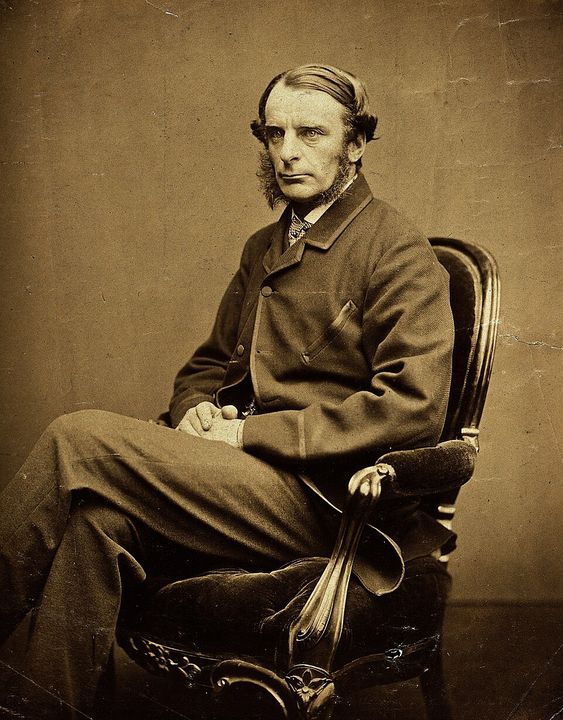
Background. An Anglican rector and popular novelist wrote this volume for Rose, Maurice and Mary during the Crimean War winter of 1855. He meant it as a Christmas gift that would introduce his children to the Hellens as old friends, and he chose plain Greek spellings over the Latinised names common in schoolbooks.
Content. Three legends follow one another. Danae's son goes north, west and south armed with divine gifts, beheads Medusa, frees Andromeda and fulfils a grim oracle. Cheiron's pupils sail the Argo to Colchis and home by a wandering northern route, with Medeia's spells winning the fleece. Aegeus's son clears the Isthmus road of brigands, kills the Minotaur, and later ruins himself by arrogance.
Themes. Courage tested by harder and harder trials, divine help for those who dare rightly, the danger of evil allies, and pride before a fall shape all three narratives.
Method. Kingsley speaks directly to his young readers, interprets the pagan gods as half-remembered truths about God, cites Paul's Areopagus speech and Clement of Alexandria, and links the heroes to Victorian explorers, nurses and soldiers.
Significance. Alongside Hawthorne's two American collections, it was among the most loved nineteenth-century children's introductions to Greek legend, and it shows plainly how Christian educators of the period reconciled classical myth with their faith.
Main characters
- Perseus: Danae's son, slayer of the snake-haired Medusa
- Athene: goddess who arms and tests the young heroes
- Cheiron: gentle centaur-schoolmaster of Pelion
- Jason: one-sandaled captain of the Argo
- Medeia: Colchian sorceress whose aid brings sorrow
- Orpheus: minstrel whose song beats the Sirens
- Theseus: Troezen youth who becomes Athens's king and falls

Summary
The Heroes; or, Greek Fairy Tales for My Children is Charles Kingsley's retelling of three Greek hero legends, Perseus, the Argonauts and Theseus, written for his children Rose, Maurice and Mary. The preface is signed from Farley Court in Advent 1855, and the book was published by Macmillan in 1856. The library text follows the 1889 Macmillan edition. In a long preface addressed to My dear children, Kingsley explains what the world owes to the old Greeks, or Hellens, and presents their gods as dim memories of the true God; he cites St. Paul at Athens and Clement of Alexandria to show that God taught the heathen too. A hero, he says, was a man who left his country better than he found it, and the meaning of the stories, though not every fact in them, is true: do right, and God will help you. The story of Perseus, in five parts, begins when Danae and her baby are cast into the sea in a chest by King Acrisius and drift to Seriphos. Grown up, Perseus rashly vows to bring the Gorgon's head to the tyrant Polydectes. Athene and Hermes appear to him on the cliffs and give him a mirror-bright shield, a diamond sword and winged sandals; he visits the Gray Sisters, the Hesperides and Atlas, slays Medusa, rescues Andromeda from the sea-monster in the land of the Aethiops, turns Polydectes to stone, and at the games at Larissa accidentally kills his grandfather with a quoit, as the oracle foretold. The Argonauts, in six parts, opens with the centaur Cheiron training young heroes on Mount Pelion, among them Jason, Heracles, Peleus and Asclepius. Jason loses a sandal carrying an old woman, who is Hera in disguise, across the flooded Anauros, and his uncle Pelias sends him for the Golden Fleece. The Argo is built with a speaking bough from Dodona; the heroes lose Hylas, free Phineus from the Harpies, slip between the blue rocks, and reach Colchis, where Medeia's charms let Jason yoke the fire-breathing bulls, defeat the earth-born warriors and take the fleece from the sleeping dragon. Fleeing, they are driven into the unknown northern and western seas, past Ierne, until they reach the Phaeacians and home; Orpheus outsings the Sirens. A sad last part tells of Medeia's revenge and Cheiron's death. Theseus, in four parts, lifts the stone at Troezen to find his father's sword and sandals, clears the road to Athens of robbers such as Sinis, Sciron and Procrustes, escapes Medeia's poison at the court of Aegeus, and kills the Minotaur with Ariadne's help. Forgetting the white sail, he causes his father's death. He rules Athens well, but grows proud, goes with Peirithoos to carry off Persephone, is chained below until Heracles frees him, and dies in exile on Scuros. Kingsley ends by praying that God will keep pride from his readers.
Virtues in this work
- Fortitude: Perseus accepts a seven years' journey from which he cannot turn back, saying it is better to die than to live useless and despised.
- Charity: Jason carries a helpless old woman across the flooded Anauros at the cost of his sandal, not knowing she is the goddess Hera.
- Justice: Theseus clears the road to Athens of Sinis, Sciron and Procrustes, punishing each robber with his own cruelty.
- Humility: Kingsley closes the book by showing Theseus ruined by pride and praying that God will keep pride from his readers after they do noble deeds.
Plot or Argument
- Preface: to my dear children
Kingsley tells his children what they owe to the Greeks, explains that the gods were half-remembered truths about the one God, defines a hero as one who leaves his country better than he found it, and sums up the meaning of the tales: do right, and God will help you.
- Perseus I-II: the chest on the sea and the rash vow
Danae and the infant Perseus are cast adrift and rescued at Seriphos by the fisherman Dictys. Perseus, mocked at Polydectes's feast, vows to bring the Gorgon's head, and Athene and Hermes come to arm him.
- Perseus III-V: the Gorgon, the Aethiops and home
Perseus finds the Gray Sisters and the Hesperides, kills Medusa by looking in his shield, saves Andromeda from the sea-monster and wins her as his wife, returns to free his mother, and fulfils the oracle by accidentally killing Acrisius at Larissa.
- Argonauts I-III: Cheiron, the lost sandal and the Argo
Cheiron teaches the young heroes in his cave; Jason carries Hera across the Anauros and arrives at Iolcos with one sandal; Pelias sets him the quest; the heroes gather and Argo is built with the speaking bough of Dodona.
- Argonauts IV: the voyage to Colchis
The heroes lose Hylas and Heracles, deliver Phineus from the Harpies, pass the blue rocks, and reach Aietes's court, where Medeia's magic helps Jason yoke the brazen bulls, sow the dragon's teeth and take the fleece.
- Argonauts V-VI: the unknown sea and the end of the heroes
Pursued by Aietes, the Argo wanders through the northern seas and past Ierne, outsings the Sirens with Orpheus, and reaches Alcinous and Arete; the last part tells of Medeia's cauldron, her revenge on Jason, and Cheiron's death and place among the stars.
- Theseus I-II: the stone and the devourers of men
Theseus lifts the stone at Troezen, chooses the dangerous road to Athens, and kills Periphetes, Sinis the pine-bender, Sciron, Kerkuon and Procrustes; at Athens Medeia tries to poison him and Aegeus recognises his son.
- Theseus III-IV: the Minotaur and the fall
Theseus sails to Crete, kills the Minotaur with Ariadne's thread and escapes; his forgotten white sail drives Aegeus into the sea. He rules Athens well, but his pride leads him to the underworld with Peirithoos, and he dies in exile.
Characters
- Perseus, hero of the first story
Son of Danae, raised on Seriphos, who slays the Gorgon Medusa with the gifts of Athene and Hermes and rescues Andromeda.
- Danae, Perseus's mother
Cast into the sea in a chest with her baby, later forced to grind at a hand-mill by Polydectes until Perseus frees her.
- Pallas Athene, goddess of wisdom
Appears to Perseus and to the Argonauts as a guide, testing each hero with a harder trial.
- Polydectes, tyrant of Seriphos
Mocks Perseus and mistreats Danae; he is turned to stone by the Gorgon's head.
- Andromeda, princess of the Aethiops
Chained to a rock for her mother's boast and rescued by Perseus, who marries her.
- Cheiron, wise centaur
Teacher of the young heroes on Pelion, who dies of a poisoned arrow and is placed among the stars.
- Jason, leader of the Argonauts
Cheiron's pupil, called the healer, who carries a disguised goddess across a river and wins the Golden Fleece.
- Medeia, princess and witch of Colchis
Helps Jason win the fleece with her charms, later plots against Pelias and Theseus and takes a terrible revenge on Jason.
- Orpheus, singer of the Argo
Keeps the heroes' spirits up and outsings the Sirens with the song of Perseus.
- Heracles, strongest of the heroes
Sails with the Argonauts until he is left behind seeking Hylas; later frees Prometheus and Theseus.
- Theseus, hero of the third story
Lifts the stone at Troezen, clears the road of robbers, kills the Minotaur and becomes king of Athens, but falls through pride.
- Ariadne, daughter of Minos
Gives Theseus the clue to the labyrinth and escapes with him, but never reaches Athens.
- Aegeus, king of Athens
Theseus's father, who throws himself into the sea when he sees the black sail.
Lessons
Do right, and God will help you
Kingsley tells his children plainly that the stories are not all true, but that their meaning is true for ever. Perseus succeeds because he dares what is right and accepts the help of the gods, and Kingsley reads that help as a picture of God's help to anyone who tries to do right.
- What does Kingsley say is true about these stories, even though not all of them happened?
- Who helps Perseus, and what does each helper give him?
- Can a story be true in its meaning even if it did not really happen? Can you think of another example?
A sharper trial for the one who overcomes
When Athene appears to Perseus, she tells him that whoever overcomes in one trial deserves a harder one. Perseus has stood up to Polydectes, so now he is offered the Gorgon. Kingsley shows children that growing in courage means being trusted with bigger tasks, and that the hero must count the cost before he begins.
- Why does Athene tell Perseus to think well before he tries to kill Medusa?
- Why does Perseus say it is better to die on the journey than to live useless and despised?
- Have you ever been given a harder job because you did an easier one well?
Each of us has a Golden Fleece to seek
Before the voyage of the Argo, Kingsley compares the Argonauts with explorers in the frozen seas, nurses in the hospitals of the East and soldiers who went to war, all of whom sought honour rather than money. He tells his children that each of them has a golden fleece to seek, a wild sea to cross and dragons to fight.
- Who are the brave people of his own day that Kingsley compares to the Argonauts?
- What does Kingsley say is better than wealth, and even better than life?
- What might your own golden fleece be, and what dragons stand in the way?
Good ends and evil means
Jason wins the fleece through Medeia's witchcraft, and the story ends sadly: she tricks Pelias's daughters, and later takes a revenge on Jason too terrible to tell. Kingsley warns that we must not seek help from evil persons or gain good ends by evil means, because an adder used against our enemies turns and stings us.
- How does Medeia help Jason in Colchis, and what does she do afterwards?
- Why does Kingsley say the old songs are right to end the story sadly?
- Is it ever right to use a bad helper to do a good thing?
How Theseus fell by his pride
Theseus begins as a model hero, choosing the dangerous road to clear it of robbers and offering himself as one of the youths sent to the Minotaur. After his triumph he grows proud, breaks the laws of God and man, and ends chained below the earth and later dying in exile. Kingsley closes the book with a prayer that God will keep pride from us after we have done good deeds.
- Why does Theseus choose the dangerous road to Athens instead of going by sea?
- What does Theseus do that shows his pride after he becomes king?
- Why is it hard to stay humble after you have done something well?
Context
Victorian England prized Greek learning as the core of a gentleman's education, and Kingsley, a clergyman, naturalist and novelist, wanted to give his own young children the Greek stories in a form that agreed with his Christian faith and his ideal of manly, useful courage. He wrote during the Crimean War, and his introduction to the Argonauts openly compares the old heroes with Arctic explorers, the nurses who went to the army hospitals in the East, and the young soldiers of his own day.
Composition
Kingsley dated his preface from Farley Court, Advent 1855, and the book was published by Macmillan at Cambridge in 1856, dedicated to his children Rose, Maurice and Mary. He drew on the Greek poets and mythographers, and his account of the voyage refers to the Songs of Orpheus, the late Orphic poems; the Argo's return by a northern and western route past Ierne follows that later tradition rather than Apollonius. A bracketed note apologises for his mixed spelling of names, explaining that he kept the plain Greek forms where he could instead of the Roman disguise in which boys usually met the myths. The library text is the Project Gutenberg transcription of the 1889 Macmillan edition, with picture captions marking where the illustrations stood.
Reception
The Heroes became one of the standard Victorian introductions to Greek myth for children and remained in print through many illustrated editions into the twentieth century. It is often read alongside Hawthorne's A Wonder-Book (1851) and Tanglewood Tales (1853); where Hawthorne used the Latin names and a playful American frame, Kingsley kept Greek names and a more solemn, openly Christian tone.
Comparisons
- a-wonder-book
Hawthorne's Gorgon's Head tells the same Perseus story as an American fireside tale with a playful Quicksilver; Kingsley tells it more solemnly, with Athene's warnings and a Christian moral drawn from it.
- tanglewood-tales
Hawthorne's The Minotaur and The Golden Fleece cover Kingsley's Theseus and Argonauts; Hawthorne softens the endings and keeps Ariadne on Crete, while Kingsley tells the sad endings of Jason and Theseus.
- colum-the-golden-fleece
Padraic Colum's 1921 retelling expands the Argonaut voyage into a long book with interwoven myths told by Orpheus and others; Kingsley's version is shorter and draws a more explicit moral.
- argonautica
Apollonius's epic is the main ancient source for the voyage: the loss of Hylas, Phineus and the Harpies, the clashing rocks and Medeia's love; Kingsley's return route past Ierne follows the later Orphic Argonautica instead.
- apollodorus-library
Apollodorus gives in brief all three of Kingsley's stories, including Perseus at Larissa and the robbers Theseus killed; reading him shows what Kingsley added in description and Christian application.
Quotes
Frequently cited
“The stories are not all true, of course, nor half of them; you are not simple enough to fancy that; but the meaning of them is true, and true for ever, and that is—Do right, and God will help you.”
Frequently cited
“for each of us has a Golden Fleece to seek, and a wild sea to sail over ere we reach it, and dragons to fight ere it be ours.”
“And we call such a man a hero in English to this day, and call it a ‘heroic’ thing to suffer pain and grief, that we may do good to our fellow-men.”
“he who overcomes in one trial merits thereby a sharper trial still.”
“Better so than live here, useless and despised”
“it stands for ever as a warning to us not to seek for help from evil persons, or to gain good ends by evil means.”
“But if men grow proud and self-willed, and misuse God’s fair gifts, He lets them go their own ways, and fall pitifully, that the glory may be His alone.”
For Students
A reading companion for classical Christian high school students. See the student guide.
Reading Guide
Watch for
- What Athene says to Perseus on the cliffs, and the three gifts he is given.
- The old woman Jason carries across the river, and the sandal he loses.
- How Orpheus saves the Argonauts from the Sirens, and what happens to Butes, who does not listen.
- The robbers Theseus meets on the road to Athens, and how he beats each one at his own trick.
- The places where Kingsley stops the story to talk to you, his children, about what it means.
Key terms and names
- Hero
- Kingsley says the Greeks used this word for brave and skilful men who left their country better than they found it.
- Gorgon
- Medusa, once a beautiful maiden, whose face turns anyone who looks at it to stone; Perseus looks at her only in his shield.
- Argo
- The ship the heroes build at Iolcos, with a bough from the oak of Dodona that can speak to them.
- Golden Fleece
- The fleece of the golden ram that carried Phrixus to Colchis, guarded by a dragon in the wood of the war-god.
- Centaur
- A creature half man and half horse; Cheiron is the wise and gentle centaur who teaches the young heroes.
- Labyrinth
- The maze in Crete where the Minotaur lives; Ariadne gives Theseus a clue of thread to find his way out.
- Oracle
- A place where people asked the gods about the future, like the one that warns Acrisius about his grandson.
Seminar Questions
- Comprehension Why do Danae and baby Perseus end up floating on the sea in a wooden chest?
- Comprehension Who is the old woman Jason carries across the river, and how does he find out?
- Comprehension What happens to Aegeus when he sees the black sail on Theseus's ship?
- Interpretation Perseus promises to bring the Gorgon's head when he is angry and ashamed. Was it a foolish promise or a brave one?
- Interpretation Why does Theseus walk the dangerous road to Athens instead of sailing the safe way?
- Interpretation Kingsley says Jason should not have taken help from Medeia. Why not, if she helped him win the fleece?
- Big Question Kingsley says that strength and virtue come from God, and that pride makes us fall. Why do people who do great things sometimes become proud?
Faith Connections
- Acts 17:26-28 (Scripture)
Kingsley's preface retells Paul's words to the Greeks at Athens: God made all nations to seek him and feel after him, for he is not far from any of us, and in him we live and move and have our being. This is why Kingsley believes God taught the old Greeks too.
- Proverbs 16:18 (Scripture)
Pride goes before destruction, and a haughty spirit before a fall. Kingsley ends the story of Theseus with the same lesson, praying that God will keep pride from us after we have done noble deeds.
- Clement of Alexandria, Stromata, Book I (Church Fathers)
Kingsley's preface names Clement, who taught that philosophy was given to the Greeks to prepare them for Christ as the Law prepared the Jews. Kingsley uses this idea to explain why Christian children can learn from Greek stories.
- John 15:13 (Scripture)
Kingsley calls it heroic to suffer pain and grief to do good to others; Christ says that no one has greater love than one who lays down his life for his friends.
Logic and Rhetoric
Central argument: All strength and wisdom come from God; the Greek heroes succeeded when they dared to do right and trusted the help of heaven, and fell when they grew proud or used evil means; therefore the stories, though not literally true, teach a true lesson: do right, and God will help you.
Rhetorical device: Direct address (apostrophe to the reader). Kingsley speaks to my children throughout, in the preface, in the introduction to the Argonauts and in the closing moral after Theseus's death, turning each story into a lesson spoken from father to child.
Debate: Resolved: Jason was right to accept Medeia's help to win the Golden Fleece.
Memory Work
The stories are not all true, of course, nor half of them; you are not simple enough to fancy that; but the meaning of them is true, and true for ever, and that is—Do right, and God will help you.
for each of us has a Golden Fleece to seek, and a wild sea to sail over ere we reach it, and dragons to fight ere it be ours.
Writing Prompts
Essay: Choose Perseus, Jason or Theseus and write about what makes him a hero, using Kingsley's own definition from the preface.
Comparison with A Wonder-Book for Girls and Boys: Read Hawthorne's The Gorgon's Head and Kingsley's story of Perseus. Which helper is more fun, Hawthorne's Quicksilver or Kingsley's Hermes, and which version do you think is closer to the old Greek story?
Medical Lens
Medicine enters through the education of heroes and the poisons of myth. On Pelion, Cheiron teaches the virtues of healing herbs; Asclepius walks apart with his herbs and snake and later goes to work his cures, and Jason learns to heal wounds so that Cheiron names him the healer. Kingsley's introduction to the Argonauts mentions the women who went out to drudge in the hospitals of the East, a contemporary reference to the Crimean War nurses of 1854-1855. Cheiron dies in agony from one of Heracles's poisoned arrows after the centaurs fight over a wine-jar, crying that wine is the bane of his race, and gives away his immortality to escape the pain. Medeia's cauldron, which seems to make an old ram young, and her attempt to poison Theseus, are classic images of the sorceress as drug-maker. King Athamas's madness and murder of his son appear in the prehistory of the fleece.
- The Argonauts, Part I
Cheiron teaches the virtues of all healing herbs; Asclepius carries herbs and a snake; Jason learns to cure wounds and is called the healer.
- The Argonauts, Part I (introduction)
Kingsley praises the ladies who went the year before to work in the hospitals of the East, alongside explorers and soldiers.
- The Argonauts, Part VI
Cheiron is wounded by a poisoned arrow after the fight over Heracles's wine-jar and, unable to die, gives his immortality to Prometheus to end his pain.
- The Argonauts, Part VI
Medeia appears to make an old ram young in her cauldron and tricks Pelias's daughters; the songs say she restored Jason's father.
- Theseus, Part II
Medeia prepares a poisoned cup for Theseus at the court of Aegeus.
Creative Prompts
- Classroom
Read aloud Athene's appearance to Perseus on the cliffs, then let children draw the three gifts Perseus receives and explain what each one is for.
- Fiction
Kingsley says each of us has a Golden Fleece to seek. Write a short story about a child of today who sets out after a golden fleece, with a wild sea to cross and a dragon to face.
- Dialogue
Act out the scene at the Anauros where Jason meets the old woman who asks to be carried across, and discovers afterwards who she was.
- Poetry
Write the song Orpheus sings to drown out the Sirens, telling the story of Perseus in a few short verses.
Further Reading
- A Wonder-Book for Girls and Boys, Nathaniel Hawthorne
Hawthorne's earlier retellings, including Perseus.
- The Water-Babies, Charles Kingsley
Kingsley's best-known children's book, a fairy tale with a moral and Christian purpose.
- The Golden Fleece and the Heroes Who Lived Before Achilles, Padraic Colum
- D'Aulaires' Book of Greek Myths, Ingri and Edgar Parin d'Aulaire
- The Argonautica, Apollonius of Rhodes
The ancient epic of the voyage of the Argo.
Verification notes
All quotations were checked by exact search against the stored Project Gutenberg #677 text, transcribed from the 1889 Macmillan edition; curly quotation marks and the em dash are copied as they appear. The preface date (Farley Court, Advent 1855) and the dedication to Rose, Maurice and Mary are taken from the text itself. Part numbering follows the headings in the body of the text; the printed contents list numbers the Argonaut parts slightly differently (two parts marked III). Kingsley's use of the Orphic Argonautica for the northern return route is a standard observation; the record does not attribute specific passages to particular sources.
- The first edition (Cambridge: Macmillan, 1856) is usually described as illustrated by Kingsley himself; check before stating it.