Work record
Cruzan v. Director, Missouri Department of Health
1990 · Postwar Contemporary · Court Decision · English
Abstract
Question Presented. May Missouri, consistent with due process, keep a feeding tube in place for an unconscious adult unless her guardians show by clear and convincing proof that she herself would have refused it?
Arguments. The parents contended that refusing medical care is a protected liberty that survives incapacity and that a devoted family may exercise it for a daughter who can no longer speak. The state replied that preserving life is a weighty public concern, that a mistaken withdrawal can never be corrected, and that only reliable proof of the patient's own wishes should suffice.
Holding. By a 5–4 vote the justices upheld Missouri's rule. Writing for the majority, Rehnquist assumed a competent adult could decline nutrition and hydration but allowed the state to demand strong evidence before anyone acted for an incompetent one. O'Connor agreed while leaving open whether appointed proxies must be honored; Brennan and Stevens would have permitted withdrawal.
Significance. As the Court's first ruling on ending life support, the case encouraged living wills and designated health-care agents nationwide, prompted new federal rules on informing patients, and set terms for the 1997 assisted-suicide decision.
Text. Presented here are the Chief Justice's and O'Connor's opinions in full and selections from both dissents, without the reporter's notes.
Key figures
- Nancy Beth Cruzan: Patient left permanently unconscious after a 1983 crash
- Lester and Joyce Cruzan: Parents and coguardians seeking withdrawal of tube feeding
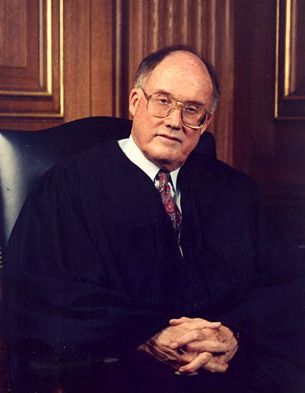
- William H. Rehnquist: Chief Justice who wrote for the majority
- Sandra Day O'Connor: Concurring justice who reserved the surrogate question
- William J. Brennan Jr.: Lead dissenter in his final term
- John Paul Stevens: Separate dissenter stressing the patient's best interests

Summary
On the night of 11 January 1983 Nancy Beth Cruzan, a young Missouri woman, lost control of her car on a county road in Jasper County. Paramedics restored her breathing and heartbeat, but she never regained consciousness, and the trial court later found her to be in a persistent vegetative state, kept alive by a surgically implanted feeding tube in a state hospital. When it became clear she would not recover, her parents and coguardians, Lester and Joyce Cruzan, asked hospital staff to end the artificial nutrition and hydration. A state trial court authorized the withdrawal on the strength of remarks Nancy had made to a housemate. The Supreme Court of Missouri reversed by a divided vote, holding that the state's interest in life required clear and convincing evidence of the patient's own wishes, which it found lacking. The question for the Court was whether the Constitution required Missouri to permit the withdrawal. The Cruzans' counsel, William Colby, argued that every person has a liberty interest in refusing unwanted medical treatment, that the interest does not vanish when a person becomes incompetent, and that loving parents should be allowed to exercise it on her behalf. Missouri answered that it may protect human life, guard against mistakes and abuse in decisions no one can undo, and insist on reliable proof of what the patient herself wanted. On 25 June 1990 the Court affirmed, five to four. Chief Justice Rehnquist surveyed the state-court decisions since In re Quinlan (1976), assumed that a competent person would have a constitutionally protected right to refuse lifesaving nutrition and hydration, and held that Missouri could nonetheless require clear and convincing evidence before a surrogate acted for an incompetent patient. Because the decision was irreversible, he wrote, the state could place the risk of error on those seeking withdrawal, and the Due Process Clause did not oblige it to accept the substituted judgment of family members, however devoted. Justice O'Connor concurred, stressing that artificial feeding is medical treatment and that the Court had not decided whether states must honor a duly appointed surrogate. Justice Scalia also concurred separately, arguing that the Constitution leaves such questions to the states; his opinion is not part of the library text. Justice Brennan, joined by Justices Marshall and Blackmun, dissented on the ground that the right to refuse treatment is fundamental and that Missouri's rule unduly burdened it. Justice Stevens, dissenting alone, argued that the state's abstract interest in life should not override Nancy Cruzan's own best interests as found by the trial court. The library text gives the Chief Justice's opinion, O'Connor's concurrence and portions of both dissents, with the official notes removed. Later in 1990 the family presented new testimony from former co-workers about Nancy's wishes; the state withdrew from the case, a Jasper County judge authorized the withdrawal in December, and Nancy Cruzan died on 26 December 1990. Congress passed the Patient Self-Determination Act that year.
Virtues in this work
- Prudence: The majority treats an irreversible decision as one demanding special caution and clear evidence before it is carried out.
- Charity: The Chief Justice acknowledges that Nancy Cruzan's parents are loving and caring, and the dissenters press their daughter's dignity and best interests.
- Fortitude: Lester and Joyce Cruzan pursued their daughter's case through years of litigation and public attention after her accident.
Plot or Argument
- The accident and the Missouri courts
Rehnquist recounts the 1983 crash, Nancy Cruzan's condition, the trial court's order permitting withdrawal and the Missouri Supreme Court's reversal for want of clear and convincing evidence of her wishes.
- From battery to informed consent
The opinion traces the common-law rule that unconsented touching is a battery, the doctrine of informed consent, and its corollary, the right to refuse treatment.
- Fourteen years of state decisions
A survey of Quinlan, Saikewicz, Storar and Eichner, Conroy, the New York O'Connor case, Drabick and Longeway shows state courts reaching varied answers to what Rehnquist calls a perplexing question with strong moral overtones.
- An assumed liberty interest
Citing Jacobson v. Massachusetts and Washington v. Harper, the Court assumes that a competent person has a protected right to refuse lifesaving nutrition and hydration, while noting that an incompetent person cannot make an informed choice and must act, if at all, through a surrogate.
- Missouri's interests and the standard of proof
Because the choice between life and death is final, Missouri may protect the personal character of the decision, guard against abuse, and decline to weigh quality of life; a clear-and-convincing standard fairly allocates the risk of an irreversible error, and the state need not defer to family members.
- O'Connor's concurrence
O'Connor locates the liberty interest in the body's freedom from state intrusion, treats artificial feeding as medical treatment, and reserves whether states must honor decisions of an appointed surrogate, leaving further approaches to the states.
- Brennan's dissent (excerpt)
Brennan argues that the right to be free of unwanted medical attention is fundamental, that artificial feeding is no different from other treatment, and that Missouri's general interest in life cannot outweigh the choice of the person living it.
- Stevens's dissent (excerpt)
Stevens contends that the Constitution requires the state to care for Nancy Cruzan's life with respect for her own best interests, relying heavily on the dissent of Judge Blackmar in the Missouri Supreme Court.
Characters
- Nancy Beth Cruzan, petitioner (through her coguardians)
Missouri woman left permanently unconscious by a 1983 car accident.
- Lester and Joyce Cruzan, copetitioners
Nancy's parents and coguardians, who sought to end her artificial nutrition and hydration.
- Chief Justice William H. Rehnquist, author of the opinion of the Court
Held that Missouri may require clear and convincing evidence of a patient's wishes.
- Justice Sandra Day O'Connor, concurring
Joined the Court but wrote to reserve the question of appointed surrogates.
- Justice William J. Brennan Jr., dissenting
Wrote for three dissenters that the right to refuse treatment is fundamental.
- Justice John Paul Stevens, dissenting
Argued that the state must respect the patient's own best interests.
- William H. Colby, counsel for the Cruzans
Kansas City lawyer who argued the case and later wrote a book about it.
Lessons
The right to refuse treatment
The Chief Justice traced a line from the old rule against unconsented touching to the modern doctrine of informed consent, and from there to a right to decline treatment. The Court was willing to assume that a competent adult holds such a right under the Constitution, while leaving its exact scope undefined.
- How does Rehnquist connect battery, informed consent and the right to refuse treatment?
- Why does the Court assume rather than decide that a competent person has this right?
- Should the law draw any distinction between refusing a treatment and withdrawing one already begun?
Who speaks for a person who cannot?
Nancy Cruzan could not tell anyone what she wanted. The majority held that Missouri could insist on clear proof of her own earlier wishes rather than accept her family's judgment; the dissenters answered that her best interests and the testimony of those who knew her should count.
- What does Rehnquist mean by saying the petitioners' claim begs the question?
- Why does the majority decline to give family members the final word, even while praising the Cruzans?
- What kinds of evidence of a person's wishes should a court find convincing?
The interest in life
Missouri claimed an interest in preserving life as such, apart from any judgment about its quality. The majority accepted that interest; Brennan and Stevens argued that a state has no interest in a person's life abstracted from the person. The opinions bring a long moral debate into the language of constitutional law.
- What two concerns does the Missouri Supreme Court say the state's interest in life includes?
- How does Stevens respond to the idea of an interest in the sanctity of life itself?
- Can a law protect the value of human life without making judgments about the quality of a particular life?
Leaving questions to the states
O'Connor emphasized that the decision left states free to develop their own approaches, including recognizing appointed surrogates. In the years that followed, states and Congress expanded the use of written directives and health-care proxies, partly in response to the case.
- What question does O'Connor say the Court has not decided?
- Why might a federal court prefer to let states experiment on such questions?
Context
Advances in resuscitation, respirators and tube feeding in the decades after World War II made it possible to sustain bodily life in patients who would never regain awareness. The 1976 Quinlan decision in New Jersey opened a series of state cases on withdrawing treatment, and ethicists, physicians and theologians debated whether nutrition and hydration differ from other medical care. Cruzan was the first such case to reach the Court.
Composition
After the Missouri Supreme Court's 1988 decision in Cruzan v. Harmon, the family sought review in Washington. The case was argued on 6 December 1989, with Missouri's attorney general defending the state's rule, and decided on 25 June 1990. The Court's opinions draw on state precedents, medical-society statements and earlier constitutional cases about bodily integrity.
Reception
The decision drew wide public attention and prompted interest in advance directives; Congress passed the Patient Self-Determination Act in November 1990, requiring many health-care institutions to inform patients of their rights under state law. Commentators divided over the case: some praised the majority's caution and its respect for the state's interest in life, while others thought the evidentiary rule placed too heavy a burden on families. The Court returned to related questions in Washington v. Glucksberg (1997).
Comparisons
- washington-v-glucksberg
Seven years later the Chief Justice again wrote for the Court, distinguishing the refusal of treatment assumed in Cruzan from a claimed right to assistance in ending one's life.
- jacobson-v-massachusetts
Rehnquist cites the 1905 vaccination case as an early instance of the Court weighing a person's liberty to decline medical intervention against a state interest.
- youngberg-v-romeo
Both the majority and Brennan's dissent rely on Youngberg's method of balancing an incompetent person's liberty interests against the state's.
- addington-v-texas
Rehnquist draws his account of standards of proof from Addington, which required clear and convincing evidence before civil commitment.
- the-death-of-ivan-ilyich
Tolstoy's story of a dying magistrate surrounded by evasive doctors and relatives explores, in fiction, the loneliness and family strain that the Cruzan opinions discuss in law.
Quotes
Frequently cited
“The choice between life and death is a deeply personal decision of obvious and overwhelming finality.”
“But we do not think the Due Process Clause requires the State to repose judgment on these matters with anyone but the patient herself.”
“Because our notions of liberty are inextricably entwined with our idea of physical freedom and self-determination, the Court has often deemed state incursions into the body repugnant to the interests protected by the Due Process Clause.”
“But the State has no legitimate general interest in someone's life, completely abstracted from the interest of the person living that life, that could outweigh the person's choice to avoid medical treatment.”
“In my view, the Constitution requires the State to care for Nancy Cruzan's life in a way that gives appropriate respect to her own best interests.”
“Because death is so profoundly personal, public reflection upon it is unusual.”
For Students
A reading companion for classical Christian high school students. See the student guide.
Reading Guide
Watch for
- The Chief Justice's survey of state court decisions and what it shows about disagreement among the states.
- The point at which the Court assumes, without deciding, a right to refuse nutrition and hydration.
- How the majority uses the idea of risk of error to justify a higher standard of proof.
- O'Connor's reservation about appointed surrogates.
- Stevens's reliance on a dissenting Missouri judge.
Key terms and names
- Informed consent
- The doctrine that a patient must be told the nature and risks of a treatment and agree to it before it is given.
- Persistent vegetative state
- A condition after severe brain injury in which a person shows reflex responses but no awareness of self or surroundings.
- Clear and convincing evidence
- A standard of proof higher than a preponderance of the evidence but lower than proof beyond a reasonable doubt.
- Substituted judgment
- A decision made by a surrogate on the basis of what the incompetent person would have chosen.
- Guardian ad litem
- A person appointed by a court to represent the interests of someone unable to represent himself in a lawsuit.
- Advance directive
- A written statement, such as a living will or health-care proxy, of a person's wishes about future medical treatment.
Seminar Questions
- Comprehension What did the Cruzans ask the hospital and the courts to do, and why did the Missouri Supreme Court refuse?
- Comprehension What standard of proof did Missouri require, and what did the Court decide about it?
- Interpretation Why does Rehnquist compare the decision to end treatment with the rules requiring wills and certain contracts to be in writing?
- Interpretation How do Brennan and Stevens differ in the way they argue against the majority?
- Interpretation Why does O'Connor emphasize that the Court decides only a narrow question?
- Big Question What do we owe to those who are dying, and who should decide how their final days are spent?
Faith Connections
- Psalm 139:13-16 (Scripture)
The psalmist's confession that God formed him and knew all his days is often cited in Christian reflection on the value of every human life.
- Ecclesiastes 3:1-2 (Scripture)
The Preacher's words that there is a time to be born and a time to die frame long Christian discussion of accepting death without hastening it.
- Pius XII, address to anesthesiologists (24 November 1957) (Great Conversation)
The pope's teaching that one need not always use extraordinary means to prolong life shaped the Catholic and wider ethical discussion that the state courts drew on.
Logic and Rhetoric
Central argument: Rehnquist reasons that even if a competent person may refuse lifesaving treatment, an incompetent person cannot choose, a surrogate's decision is irreversible, and the state's interest in life justifies demanding clear proof of the patient's own wishes; the dissenters reply that the right is fundamental and that the state's abstract interest cannot outweigh the patient's best interests.
Rhetorical device: analogy. Rehnquist compares Missouri's rule to the statute of frauds and the requirement that wills be in writing, arguing that the law already demands strong proof for far less final decisions.
Debate: Resolved: that a state may require clear and convincing evidence of a patient's own wishes before life-sustaining treatment is withdrawn.
Memory Work
The choice between life and death is a deeply personal decision of obvious and overwhelming finality.
Because death is so profoundly personal, public reflection upon it is unusual.
Writing Prompts
Essay: Explain why the majority allowed Missouri to require clear and convincing evidence, and evaluate the strongest objection raised by the dissenters.
Comparison with Washington v. Glucksberg: Compare the right assumed in Cruzan with the right the Court refused to recognize in Glucksberg, and explain how the Chief Justice distinguished them.
Medical Lens
The first Supreme Court case on withdrawing life-sustaining treatment, Cruzan connects the history of informed consent to the modern clinical setting of the persistent vegetative state, records the medical profession's view that artificial feeding is a form of treatment, and helped bring advance directives and health-care proxies into ordinary practice.
- Opinion of the Court, paragraph beginning The logical corollary of the doctrine of informed consent
Traces how the right to refuse treatment grew out of informed consent and how Quinlan in 1976 began the line of state end-of-life decisions.
- Concurrence of Justice O'Connor, paragraph beginning The State's artificial provision of nutrition and hydration
Relies on statements of the American Medical Association and the Hastings Center to treat artificial feeding as medical treatment rather than ordinary care.
- Dissent of Justice Brennan, section A, paragraph opening with a quotation on the timing of death
Cites a federal technology-assessment report on how often deaths in hospitals and long-term care follow a decision to forgo treatment.
Creative Prompts
- Classroom
Hold a moot court for December 1989 in which one team represents the Cruzans, another represents Missouri, and student justices must decide what standard of proof the Constitution permits.
- Essay
Write a short brief, in the voice of either the Chief Justice or Justice Stevens, explaining whose judgment should control when a patient cannot speak and left no written instructions.
- Dialogue
Write a respectful conversation between a pastor and a family member about what the Cruzan opinions say regarding the duties of families, physicians and the state.
Further Reading
- Long Goodbye: The Deaths of Nancy Cruzan, William H. Colby
Account of the litigation by the lawyer who argued for the Cruzan family.
- Life's Dominion: An Argument About Abortion, Euthanasia, and Individual Freedom, Ronald Dworkin
Philosopher's discussion of the sanctity of life in the cases of the period, including Cruzan.
Verification notes
Each of the six quotations (two from Rehnquist, one from O'Connor, one from Brennan, two from Stevens) was found by Grep as an exact substring of the stored text. The stored text has a few run-together or split words from the source transcription, and quotations were chosen to avoid them. Facts about the accident and the Missouri proceedings come from the opinions. Scalia's concurrence is described from general knowledge of the case and is not in the library text. The events after the decision (new testimony, the December 1990 order and Nancy Cruzan's death on 26 December 1990) come from standard accounts.
- Confirm the date of the Jasper County order authorizing withdrawal (14 December 1990 is commonly given).
- Confirm that William H. Colby argued for the petitioners and Robert L. Presson for Missouri.