Work record
Washington v. Glucksberg
1997 · Postwar Contemporary · Court Decision · English
Abstract
Question Presented. Does the liberty guaranteed by the Fourteenth Amendment include a right of mentally competent, terminally ill adults to obtain a physician's help in ending their lives, so that Washington's long-standing criminal prohibition must yield?
Arguments. The doctors contended that earlier rulings on abortion and refusal of treatment protect intimate choices about one's own body and death, and that a dying patient's request belongs in that sphere. The state answered that no American tradition supports such a right and that the ban guards life, the vulnerable, and the ethics of medicine.
Holding. Without a dissent, the justices upheld the statute. Rehnquist ruled that unwritten liberties must be precisely defined and anchored in the nation's past; precisely defined, aid in suicide had been condemned for centuries, and the law reasonably served legitimate ends. O'Connor, Souter and Breyer agreed in the result while reserving narrower claims or proposing another method.
Significance. The ruling left assisted dying to state legislatures and voters, several of which later chose differently from one another, and its test for unwritten rights became a fixture of constitutional argument, invoked prominently in the 2022 abortion decision.
Text. This edition offers the majority and O'Connor in full, Breyer in full, and a portion of Souter, with notes set aside.
Key figures
- Harold Glucksberg: Physician and lead respondent
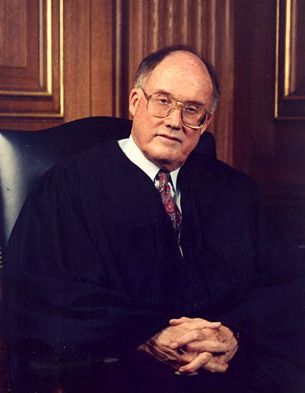
- William H. Rehnquist: Chief Justice who framed the history-and-tradition test
- Sandra Day O'Connor: Concurring justice who stressed palliative care
- David H. Souter: Concurred in the judgment with a reasoned-judgment method
- Stephen G. Breyer: Concurred in the judgments and floated a right to die with dignity

Summary
Washington had made it a crime to aid a suicide since its first territorial legislature acted in 1854. In January 1994 four physicians who treat terminally ill patients, led by Dr. Harold Glucksberg, joined three gravely ill patients (who died while the case was pending) and the nonprofit group Compassion in Dying in a suit in federal court. They challenged the statute as applied to physicians aiding competent, terminally ill adults at their request. The District Court agreed; a panel of the Ninth Circuit reversed; and the full Ninth Circuit, sitting en banc, held the law invalid as applied, reasoning that there is a liberty interest in determining the time and manner of one's death. The question was whether the Due Process Clause of the Fourteenth Amendment protects a right to assistance in committing suicide. The physicians argued that the Court's decisions in Planned Parenthood v. Casey (1992) and Cruzan (1990) recognized a sphere of personal autonomy over intimate decisions about one's body and the end of life, and that a dying patient's choice deserved the same protection. Washington answered that the asserted right had no root in the nation's legal traditions, and that the state had compelling reasons to keep the ban: preserving life, preventing suicide, protecting the ethics of medicine, shielding vulnerable people from pressure, and avoiding a slide toward euthanasia. On 26 June 1997 the Court reversed, with all nine justices concurring in the judgment. Chief Justice Rehnquist began with history from Bracton through Blackstone and the early state statutes, finding a consistent rejection of assisted suicide. Substantive due process, he wrote, protects only fundamental rights that are deeply rooted in the nation's history and tradition, and it requires a careful description of the right asserted. Described carefully, the claim was a right to commit suicide with another's assistance, which no tradition supported; and the right to refuse unwanted treatment assumed in Cruzan rested on the distinct common-law rule against forced medical touching. Because the ban was rationally related to legitimate state interests, it was valid. Justice O'Connor joined the Court but wrote that there was no need to decide whether a dying person might have an interest in relief from suffering, since palliative care was lawful in Washington. Justice Souter, concurring in the judgment, proposed a different method drawn from Justice Harlan's Poe v. Ullman dissent, weighing liberty against state interests through reasoned judgment. Justice Breyer, also concurring in the judgments, suggested that a right to die with dignity might deserve consideration in a case where the state barred relief from severe pain. Justice Stevens and Justice Ginsburg wrote separately as well; their opinions are not in the library text. The library text gives Rehnquist's and O'Connor's opinions, part of Souter's and all of Breyer's, without the reporter's notes. The Glucksberg history-and-tradition test was later central to the majority in Dobbs v. Jackson Women's Health Organization (2022).
Virtues in this work
- Prudence: The Court leaves a grave moral question to continued democratic deliberation rather than settling it for the whole nation.
- Charity: O'Connor and Breyer give sustained attention to the suffering of dying patients and to the importance of relieving their pain.
- Justice: The majority insists that the law protect the poor, the elderly and the disabled from pressure, treating all lives as equally under the law's protection.
Plot or Argument
- The parties and the decisions below
The Chief Justice sets out Washington's statute, the physicians' suit, and the reversals in the Ninth Circuit, which finally held the law unconstitutional as applied to competent, terminally ill adults.
- Seven centuries of law
Part I surveys Bracton, Blackstone, seventeenth-century laws of Rhode Island and Virginia, the abandonment of forfeiture penalties, the first explicit statute in New York in 1828, and recent reexaminations by state legislatures, voters in California and Oregon, and New York's Task Force on Life and the Law.
- The method of substantive due process
Part II describes the Court's established approach: protection for liberties deeply rooted in history and tradition, and a careful description of the asserted right. The Chief Justice explains why he declines Justice Souter's alternative, which he regards as inviting judges to substitute their own policy preferences.
- Cruzan and Casey distinguished
The right to refuse treatment assumed in Cruzan grew from the law of battery and informed consent, not from abstract autonomy; Casey's language about personal choices did not make every important decision a protected right.
- Washington's interests
The state's interests in life, suicide prevention, medical ethics, protection of the poor, elderly and disabled, and avoidance of a drift toward euthanasia are each legitimate, and the ban is reasonably related to them; the Court cites a Dutch government study in support of the last concern.
- The concurrences
O'Connor reserves the question of a dying person's interest in relief from suffering and trusts the states to strike the balance. Souter traces the history of unenumerated-rights review and proposes Harlan's reasoned-judgment approach. Breyer suggests that a right to die with dignity, centered on avoiding severe pain, might arise if a state forbade adequate palliative care.
Characters
- Dr. Harold Glucksberg, lead respondent
Seattle physician who joined three colleagues in challenging Washington's statute.
- Compassion in Dying, original plaintiff
Nonprofit organization that counseled people considering physician-assisted suicide.
- Chief Justice William H. Rehnquist, author of the opinion of the Court
Set out the history-and-tradition test for unenumerated rights.
- Justice Sandra Day O'Connor, concurring
Joined the Court while reserving the question of relief from suffering.
- Justice David H. Souter, concurring in the judgment
Proposed weighing liberty and state interests through reasoned judgment.
- Justice Stephen G. Breyer, concurring in the judgments
Suggested a narrower right to die with dignity might deserve consideration.
Lessons
History and tradition as a test
The Chief Justice held that unenumerated rights protected by the Due Process Clause must be objectively rooted in the nation's history and legal traditions. Supporters see this as a check that keeps judges from writing their own views into the Constitution; critics think it ties liberty too closely to the past.
- What two features does Rehnquist say mark the Court's established method?
- Why does the Chief Justice begin his opinion with Bracton and Blackstone?
- Should the meaning of liberty in the Constitution be fixed by past practice or allowed to develop?
Describing a right carefully
The Ninth Circuit asked whether there is a right to die; the Court asked whether there is a right to commit suicide with another's assistance. How broadly a right is described often determines whether a court will find it in the nation's traditions, and the justices disagreed over the right level of generality.
- How does the Court restate the question the Ninth Circuit asked?
- How does Breyer's formulation of a right to die with dignity differ from both?
- Why can the same claim look strong or weak depending on how it is described?
Refusing treatment and seeking aid in dying
Rehnquist distinguished the right to refuse unwanted medical treatment, assumed in Cruzan, from a right to assistance in ending one's life. He rested the first on the old law of battery; the respondents argued that both involve the same choice about the end of life.
- On what tradition does Rehnquist say the right assumed in Cruzan rests?
- Why do the respondents think Cruzan supports their claim?
- Is there a moral difference between declining treatment and seeking help to die?
The vulnerable and the law
Washington defended its ban partly as protection for the poor, the elderly, people with disabilities and those suffering from depression. The Court accepted these concerns as legitimate, while O'Connor stressed that palliative care remained lawful for those in pain.
- Which groups does the Court say the state may protect, and from what?
- Why does O'Connor emphasize the availability of palliative care?
Context
By the 1990s American law broadly allowed patients and surrogates to refuse life-sustaining treatment, and living wills and health-care proxies were common. Public debate turned to whether physicians should also be allowed to prescribe lethal medication for dying patients. Dr. Jack Kevorkian's highly publicized cases in Michigan, ballot initiatives in Washington, California and Oregon (the last, in 1994, succeeded), and the reports of New York's Task Force on Life and the Law all shaped the discussion.
Composition
The Washington case was argued on 8 January 1997 alongside Vacco v. Quill, in which the Second Circuit had struck down New York's ban on equal-protection grounds. Both were decided on 26 June 1997. The opinions draw heavily on legal history, medical-society statements, and reports on euthanasia practice in the Netherlands.
Reception
The decision returned the question to the states. Oregon's Death with Dignity Act took effect in 1997, and Washington voters approved a similar law by initiative in 2008; other states later followed, while many retained their bans. Among lawyers, the opinion's method for identifying unenumerated rights became one of the most debated passages in modern constitutional law, praised by some as a principled limit on judicial power and criticized by others as too narrow, and it was relied on by the majority in Dobbs (2022).
Comparisons
- cruzan-v-director-missouri-department-of-health
The Chief Justice reads his own 1990 opinion as resting on the common-law right to refuse medical touching, a tradition he finds absent for assisted suicide.
- dobbs-v-jackson-womens-health-organization
Twenty-five years later the Court's majority applied Glucksberg's history-and-tradition test in overruling Roe v. Wade, while the dissenters objected to that use of it.
- griswold-v-connecticut
Souter and Breyer both rely on Justice Harlan's Poe v. Ullman dissent, whose reasoning Harlan carried into his concurrence in Griswold.
- commentaries-on-the-laws-of-england
Rehnquist quotes Blackstone's treatment of self-murder as part of the common-law tradition that he finds unbroken into American law.
- hippocratic-writings
The Court's discussion of the integrity of the medical profession and the line between healing and harming echoes a commitment that physicians traced to the Hippocratic Oath.
Quotes
Frequently cited
“Second, we have required in substantive-due-process cases a "careful description" of the asserted fundamental liberty interest.”
Frequently cited
“Throughout the Nation, Americans are engaged in an earnest and profound debate about the morality, legality, and practicality of physician-assisted suicide. Our holding permits this debate to continue, as it should in a democratic society.”
“Attitudes toward suicide itself have changed since Bracton, but our laws have consistently condemned, and continue to prohibit, assisting suicide.”
“Death will be different for each of us.”
“Although this principle was unobjectionable, what followed for a season was, in the realm of economic legislation, the echo of Dred Scott.”
“That formulation would use words roughly like a "right to die with dignity."”
For Students
A reading companion for classical Christian high school students. See the student guide.
Reading Guide
Watch for
- The historical sources the Chief Justice assembles, from Bracton to New York's 1828 statute.
- The two features of the Court's method in Part II.
- How the Court restates the question the Ninth Circuit asked.
- The list of state interests and the groups the Court says the state may protect.
- O'Connor's emphasis on palliative care and Breyer's proposed formulation.
Key terms and names
- Substantive due process
- The doctrine that the Due Process Clause protects certain fundamental liberties from state interference regardless of the procedures used.
- Unenumerated rights
- Rights not listed in the text of the Constitution that courts have held to be protected.
- Rational basis review
- The deferential test under which a law is upheld if it is reasonably related to a legitimate government interest.
- Palliative care
- Medical care aimed at relieving pain and other symptoms rather than curing disease.
- Level of generality
- How broadly or narrowly a claimed right is described, which can affect whether it is found in tradition.
- As applied challenge
- A claim that a statute is unconstitutional in its application to particular persons or circumstances, rather than in every case.
Seminar Questions
- Comprehension What did the physicians ask the courts to declare, and what did the en banc Ninth Circuit decide?
- Comprehension What state interests does the Chief Justice list in support of Washington's ban?
- Interpretation Why does it matter so much whether the right is described as a right to die or a right to assistance in suicide?
- Interpretation How does Souter's method differ from the Chief Justice's, and why does Rehnquist reject it?
- Interpretation What circumstance does Breyer say might lead the Court to revisit its conclusion?
- Big Question What do physicians, families and the law owe to a person who is dying and in pain?
Faith Connections
- Deuteronomy 30:19 (Scripture)
Moses sets before Israel life and death and urges the people to choose life, a text often cited in Christian teaching on the value of life to its natural end.
- 2 Corinthians 4:16-18 (Scripture)
Paul writes that though the outward man perish, the inward man is renewed day by day, offering a Christian frame for suffering and decline.
- Hippocratic Oath (Great Conversation)
The ancient oath's pledge that the physician will give no deadly drug, even if asked, underlies the professional objections the Court records.
Logic and Rhetoric
Central argument: Rehnquist reasons that unenumerated rights must be carefully described and deeply rooted in history, that a carefully described right to assistance in suicide has been rejected by nearly every American jurisdiction, and that the ban is therefore valid if rationally related to legitimate interests, which it plainly is; the concurrences accept the result but question the method or reserve narrower claims.
Rhetorical device: historical survey. The Chief Justice builds his case through seven centuries of authorities, then compresses the survey into a single sentence about Bracton (quote 0) before stating the doctrine.
Debate: Resolved: that the meaning of liberty in the Due Process Clause should be limited to rights deeply rooted in the nation's history and tradition.
Memory Work
Throughout the Nation, Americans are engaged in an earnest and profound debate about the morality, legality, and practicality of physician-assisted suicide. Our holding permits this debate to continue, as it should in a democratic society.
Second, we have required in substantive-due-process cases a "careful description" of the asserted fundamental liberty interest.
Writing Prompts
Essay: Explain the Glucksberg test for unenumerated rights and evaluate whether it strikes the right balance between protecting liberty and restraining judges.
Comparison with Cruzan v. Director, Missouri Department of Health: Compare the right assumed in Cruzan with the right rejected in Glucksberg, and evaluate whether the Chief Justice's distinction between them is persuasive.
Medical Lens
Glucksberg sets the constitutional frame for physician-assisted dying in the United States, and its account of the state's interests draws directly on medical sources: the association of suicidal wishes with treatable depression, the American Medical Association's view that physician participation is incompatible with the healer's role, and the distinction between palliative care and assistance in ending life.
- Opinion of the Court, Part II, paragraph beginning Those who attempt suicide
Relies on the New York Task Force for the link between suicidal wishes and depression, and for the concern that depression in seriously ill patients is often missed.
- Opinion of the Court, Part II, paragraph beginning The State also has an interest in protecting the integrity and ethics of the medical profession
Sets the American Medical Association's opposition to physician-assisted suicide and testimony on patient trust against the Ninth Circuit's view that medicine's integrity was not at risk.
- Opinion of Justice Breyer, paragraph on pain-relieving drugs and hospice briefs
Considers the testimony of hospice and medical organizations that pain can nearly always be controlled, and treats lawful palliative care as decisive for the case.
Creative Prompts
- Classroom
Hold a moot court for January 1997 in which counsel for Washington and for the physicians each argue how the asserted right should be described, and student justices write short opinions modeled on Rehnquist, O'Connor and Souter.
- Essay
Write a brief history of the law of suicide and assisted suicide from Bracton to 1997, drawing only on the sources the Chief Justice cites, and assess whether the tradition is as consistent as he says.
- Dialogue
Write a conversation between a hospice nurse and a physician about the difference, as the justices describe it, between palliative care and assistance in dying.
Further Reading
- The Future of Assisted Suicide and Euthanasia, Neil M. Gorsuch
Legal and philosophical study, published in 2006, that examines Glucksberg and argues against legalization.
- When Death Is Sought: Assisted Suicide and Euthanasia in the Medical Context, New York State Task Force on Life and the Law
The 1994 report the Chief Justice cites repeatedly on depression, pain and vulnerable patients.
Verification notes
Each of the six quotations (three from Rehnquist, one each from O'Connor, Souter and Breyer) was found by Grep as an exact substring of the stored text; quotations avoid the line-break hyphens that remain in a few words of the source. Facts about the parties, the Washington statute and the decisions below come from the opinion. The concurrences of Justices Stevens and Ginsburg are mentioned from general knowledge of the case and are not in the library text. The note on Washington's 2008 initiative and Dobbs's reliance on the case reflects standard accounts. In keeping with the reading-level note, the record discusses the legal question without any description of methods.
- Confirm that Justice Ginsburg's separate opinion concurred in the judgments and joined O'Connor's concurrence in part.