Work record
Destruction and Creation and the OODA Loop Briefings
1976-1995 · Postwar Contemporary · Political Theory · English
Abstract
Background. Boyd, a fighter pilot who devised energy-maneuverability theory for aircraft design, turned in retirement to a general account of how minds and organizations adapt. He rarely published conventionally, spreading his ideas instead through hours-long presentations and photocopied charts.
Argument. The 1976 essay holds that every concept we build eventually drifts out of step with a changing world. By pulling apart skis, an outboard motor, handlebars and tractor treads and reassembling them as a snowmobile, Boyd illustrates the double movement he calls destructive deduction and creative induction. Gödel, Heisenberg and the second law of thermodynamics together warn that closed systems accumulate disorder.
Structure. Patterns of Conflict carries the argument through military history, blitzkrieg and guerrilla war; later briefings address command and control, moral conflict, and finally the OODA loop diagram.
Key Concepts. Observe, orient, decide, act, with orientation as the dominant element shaped by culture, heritage, experience and analysis; implicit guidance and control; tempo; and operating inside an adversary's cycle to break his cohesion.
Significance. Boyd shaped the lightweight fighter program that produced the F-16, the maneuver-warfare doctrine adopted by the Marine Corps in the late 1980s, and wide areas of business and emergency decision-making. Popular versions often reduce the loop to raw speed, a reading that Boyd's own emphasis on orientation and his feedback arrows plainly resist.
Key figures
- Kurt Gödel: His incompleteness theorems support Boyd's case against closed conceptual systems
- Werner Heisenberg: Uncertainty principle invoked to show limits on an observer's knowledge
- Sun Tzu: Model for deception, ambiguity and defeating an enemy without battle
- Carl von Clausewitz: Theorist of friction whom Boyd both uses and argues against
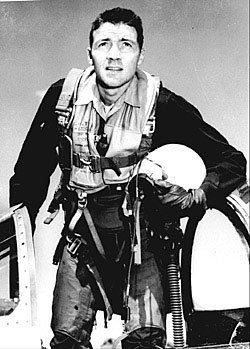

Summary
Destruction and Creation and the OODA Loop Briefings gather John Boyd's strategic thought from thermodynamics and epistemology to conflict, command, and adaptation. Destruction and Creation argues that organisms and organizations must break apart old mental concepts and rebuild new ones in order to cope with a changing reality. Boyd draws on Godel, Heisenberg, entropy, and the second law of thermodynamics to attack closed conceptual systems that become detached from the world. His later briefings, including Patterns of Conflict, Organic Design for Command and Control, The Strategic Game of ? and ?, and The Essence of Winning and Losing, translate this epistemological concern into strategy. The famous OODA loop, observe, orient, decide, act, is not merely a fast decision cycle. Orientation is the center: culture, genetic heritage, analysis, synthesis, previous experience, and new information shape what actors perceive and can do. In conflict, the aim is to operate inside an opponent's tempo, generate ambiguity, shatter cohesion, and adapt faster than rigid systems can recover. The medical lens is medium to high because Boyd is fundamentally a theorist of cognition under stress, adaptation, overload, and decision. His work speaks to trauma, emergency medicine, psychiatry, and leadership wherever perception and action must be reorganized under pressure. Historically, Boyd's influence runs from fighter aircraft debates and energy-maneuverability theory to Marine maneuver warfare and interpretations of Desert Storm. His works are widely treated as public-domain government-related materials, but exact source status should be checked before attaching full text. Read beside Sun Tzu, Clausewitz, Shannon, Wiener, Godel, and Turing, Boyd connects war to information, uncertainty, and mental models. His enduring value lies in making strategy a living cognitive ecology: survival depends on destroying stale concepts and creating better fits with reality. That makes the work useful far beyond combat, wherever uncertainty punishes rigid perception and action.
Plot or Argument
- Concepts must be broken and rebuilt
Destruction and Creation argues that closed mental systems decay unless they are disrupted and recomposed.
- Orientation governs action
The OODA loop centers orientation as the interpretive process that shapes observation, decision, and action.
- Conflict attacks cohesion
Boyd's briefings emphasize tempo, ambiguity, deception, and adaptability as ways to collapse an opponent's system.
Key claims
The main steps of the argument, in order, and how they fit together.
- People and organizations act on mental concepts of a world that never stops changing.How it is supported: Reasoning from how organisms must cope with an environment that keeps shifting around them.
- No concept can be shown to be complete or consistent from within itself, so every closed system of ideas has limits.How it is supported: Appeals to Gödel's incompleteness theorems, Heisenberg's uncertainty principle and the second law of thermodynamics.
- A concept closed off from new observation drifts out of step with reality and gathers confusion and disorder.How it is supported: Analogy to entropy increasing in closed physical systems.
- To adapt, one must break old concepts into pieces and recombine those pieces into new concepts that fit reality better.How it is supported: The snowmobile example, built from skis, an outboard motor, handlebars and tractor treads, illustrating destructive deduction and creative induction.
- Orientation, shaped by culture, heritage, experience, analysis and new information, governs how a person observes, decides and acts.How it is supported: The OODA loop diagram, with orientation at its center and feedback arrows running throughout.
- Organizations that share an implicit orientation can adapt faster than rigid systems run by explicit central control.How it is supported: The briefing on organic design for command and control and its idea of implicit guidance and control.
- In conflict, the side that works inside its opponent's cycle through tempo, ambiguity and deception can break the opponent's cohesion.How it is supported: Examples from military history, including blitzkrieg and guerrilla warfare, in Patterns of Conflict.
Argument map
Supported by
- 3A concept closed off from new observation drifts out of step with reality and gathers confusion and disorder.
which rests on
- 1People and organizations act on mental concepts of a world that never stops changing.
- 2No concept can be shown to be complete or consistent from within itself, so every closed system of ideas has limits.
- 4To adapt, one must break old concepts into pieces and recombine those pieces into new concepts that fit reality better.
- 7In conflict, the side that works inside its opponent's cycle through tempo, ambiguity and deception can break the opponent's cohesion.
which rests on
- 5Orientation, shaped by culture, heritage, experience, analysis and new information, governs how a person observes, decides and acts.
- 6Organizations that share an implicit orientation can adapt faster than rigid systems run by explicit central control.
Therefore
Plain-language summaries of the author's argument, not quotations.
Lessons
Orientation is the hidden center
Boyd's loop is often reduced to speed, but orientation is the crucial interpretive layer. What actors notice and imagine determines what choices exist.
- Why is orientation more important than mere speed?
- How do culture and experience shape perception?
Adaptation requires destruction
Old models must sometimes be broken before better models can form. Boyd makes learning a cycle of disassembly and creative recombination.
- When does an old concept become dangerous?
- How can organizations destroy assumptions without losing coherence?
Stress reveals system design
Conflict exposes whether a person or institution can process ambiguity. Under pressure, rigid systems fail faster than adaptive ones.
- What does stress reveal about decision systems?
- How might this apply to clinical emergencies?
Context
Boyd's work emerged from Cold War air combat, fighter design debates, military reform movements, and later maneuver warfare doctrine.
Composition
Destruction and Creation dates to 1976; the briefings evolved over years and circulated through presentations, photocopies, and military networks.
Reception
Boyd influenced the F-16 debate, Marine Corps doctrine, maneuver warfare, business strategy, and popular decision-making language, though many popular quotations are paraphrases.
Comparisons
- on-war
Clausewitz analyzes friction and moral forces; Boyd reframes conflict through tempo, orientation, and adaptive disruption.
- the-art-of-war
Sun Tzu's deception and formlessness anticipate Boyd's emphasis on ambiguity, tempo, and collapsing enemy cohesion.
- cybernetics
Wiener's feedback systems and Boyd's OODA loop both treat action as circular adaptation to changing environments.
- formally-undecidable-propositions
Boyd invokes Godel as part of a broader argument against closed systems that claim complete internal adequacy.
Quotes
For Students
A reading companion for classical Christian high school students. See the student guide.
Reading Guide
Watch for
- The snowmobile thought experiment in Destruction and Creation. Boyd takes skis, an outboard motorboat, a bicycle's handlebars, and a tractor's treads, breaks each down into parts, and recombines the parts into something new. It is his whole theory in a single picture.
- The three borrowed ideas Boyd lines up near the end of the paper: Godel's incompleteness theorems, Heisenberg's uncertainty principle, and the second law of thermodynamics. Ask what single conclusion he draws from all three.
- The OODA loop diagram in the later briefings. Notice that orientation is drawn as the largest box, fed by cultural traditions, genetic heritage, previous experience, new information, and analysis and synthesis, with arrows of implicit guidance running straight to action.
- The historical survey in Patterns of Conflict, which moves from ancient battles through blitzkrieg and guerrilla war to show what successful commanders did to an opponent's cohesion.
- Boyd's moral side of conflict, where he names menace, uncertainty, and mistrust as what an attacker seeks to create, and initiative, adaptability, and harmony as what a sound organization must keep.
Key terms and names
- Destructive deduction
- Boyd's term for breaking an existing concept apart into its constituent pieces, unhitching them from the whole that once held them together. It is the first half of building any new understanding.
- Creative induction
- The second half of Boyd's cycle: finding common threads among scattered pieces from many domains and synthesizing them into a new concept that fits reality better than the old one.
- Entropy
- In Boyd's use, the growing disorder and mismatch that arises when a mental system is closed off from the world and keeps reasoning only within itself. He borrows the idea from the second law of thermodynamics.
- OODA loop
- Observe, orient, decide, act: Boyd's model of how an individual or organization interacts with a changing environment. Its point is not merely speed but continual reorientation through feedback.
- Orientation
- The central element of the OODA loop, the inherited and learned framework through which observations are interpreted. Boyd holds that it shapes what we see, how we decide, and what actions we are even able to imagine.
- Implicit guidance and control
- Boyd's term for action that flows directly from a well-formed orientation without an explicit deliberate decision. Trained units with shared understanding can act this way and so move faster than rigidly commanded ones.
- Getting inside the opponent's loop
- Operating at a tempo and with an ambiguity that an adversary cannot match, so that his orientation falls out of step with reality and his organization loses cohesion.
Seminar Questions
- Comprehension What are the four parts of the snowmobile in Boyd's thought experiment, and what does he do with them to make a new concept?
- Comprehension What do Godel's theorems, Heisenberg's principle, and the second law of thermodynamics each contribute to Boyd's argument in Destruction and Creation?
- Comprehension What feeds into orientation in Boyd's OODA diagram, and where do the feedback arrows run?
- Interpretation Boyd claims that any closed system of concepts will eventually fall out of step with reality. Is he right that we must periodically destroy our own concepts to keep them true, and what would that discipline look like in a student's own thinking?
- Interpretation Why does Boyd make orientation, rather than speed of decision, the heart of the loop? What is lost when readers reduce the OODA loop to deciding faster than an opponent?
- Interpretation In Patterns of Conflict Boyd aims to shatter an opponent's cohesion rather than destroy his forces. What does this suggest about where the real strength of an army or an organization lies?
- Big Question If every framework of understanding is incomplete, can a person still hold some truths as certain and lasting? How should a person of firm convictions practice Boyd's discipline of destruction and creation?
Faith Connections
- Ecclesiastes 3:1-3 (Scripture)
The Preacher says there is a time to break down and a time to build up. Boyd's cycle of destructive deduction and creative induction is a rigorous account of the same rhythm applied to concepts and plans.
- Romans 12:2 (Scripture)
Paul calls believers to be transformed by the renewing of the mind rather than conformed to the pattern of the age. Boyd's warning against closed, self-confirming orientations gives an analogous call in the intellectual and strategic realm, though Paul's renewal has God as its source.
- 1 Corinthians 13:12 (Scripture)
Paul says that now we see through a glass darkly and know in part. Boyd's use of incompleteness and uncertainty arrives at a similar humility about every human model of the world, while Paul adds the hope of being fully known.
- Aquinas, Summa Theologiae II-II, q.49 (Church Fathers)
Aquinas lists the parts of prudence, including memory, docility, shrewdness, foresight, circumspection, and caution. Boyd's orientation, built from experience, new information, and analysis, and tested against a changing situation, is in effect a modern study of prudence under pressure.
Logic and Rhetoric
Central argument: We act on mental concepts of the world, but the world keeps changing, and no concept can be proven complete or consistent from within itself. A concept closed off from new observation therefore drifts into mismatch and disorder. To survive, an individual or organization must repeatedly break concepts apart and recombine their pieces into new ones that fit reality better. In conflict, the side that does this faster and with better orientation can operate inside its opponent's cycle, generating confusion and destroying cohesion. Therefore the decisive capacity in war and in life is adaptable orientation.
Rhetorical device: analogy (thought experiment). In Destruction and Creation Boyd asks the reader to imagine skiing, motorboating, riding a bicycle, and driving a tractor, then to pull out the skis, the outboard motor, the handlebars, and the treads and recombine them. The snowmobile that results makes an abstract account of concept formation concrete and memorable.
Debate: Resolved: In any contest, accurate orientation matters more than speed of decision.
Writing Prompts
Essay: Boyd draws a single conclusion from Godel, Heisenberg, and the second law of thermodynamics. Explain how he uses each, and argue whether these results from mathematics and physics can legitimately support a claim about how human beings and organizations should think.
Comparison with On War: Clausewitz emphasizes friction and the fog of uncertainty in war; Boyd seeks to multiply that friction and uncertainty for the enemy while reducing it for his own side. Compare their accounts of uncertainty and of the commander's mind, and argue whether Boyd's OODA loop completes Clausewitz or departs from him.
Medical Lens
Boyd is highly useful for cognition under stress, decision-making, adaptation, overload, and leadership in emergencies. Medical readers should avoid simplistic OODA slogans and attend to orientation, ambiguity, and system resilience.
- Destruction and Creation
The argument about breaking and rebuilding concepts is relevant to cognitive flexibility under uncertainty.
- OODA loop briefings
Observation, orientation, decision, and action model adaptive response under pressure and conflict.
Creative Prompts
- Essay
Apply Boyd's orientation concept to clinical decision-making under uncertainty without reducing it to speed.
- Dialogue
Let Boyd and Wiener debate feedback, command, and the nervous system under stress.
Further Reading
Verification notes
The essay date, briefing titles, OODA interpretation, and influence are secure. Public-domain status is widely asserted for government-origin materials but should be verified before attaching full text.
- Verify public-domain source copies before adding full text.
- Check all popular Boyd quotations against his own briefings before quoting.