Work record
Engel v. Vitale
1962 · Postwar Contemporary · Court Decision · English
Abstract
Question Presented. Does a state violate the First Amendment's ban on laws respecting an establishment of religion when its schools begin each day with a short prayer written by the Regents, if pupils who object may remain silent or leave?
Arguments. The objecting families said that an exercise of worship authored by public officials is official religion however mild. The board and parents who joined to defend it replied that nobody was forced, that the words named no church, and that Americans had always invoked God in their public institutions.
Holding. Six Justices voted to reverse, with one dissent and two not participating. Black reasoned that writing prayers is not a civil function, that the clause applies without proof of coercion, and that English and Virginian experience taught the Founders to keep worship free of state direction.
Dissent. Stewart saw no burden on anyone's conscience and no established church, only children permitted to pray. He pointed to chaplains, oaths, the anthem, the Pledge and coin mottoes as accepted acknowledgments of God.
Significance. Engel began the modern line of school prayer rulings, followed in 1963 by the Bible-reading case and later by decisions on graduation and stadium prayers. Congress debated but did not approve amendments to reverse it, and how to read the clause historically remains disputed.
Key figures
- Steven I. Engel: Parent among those challenging the daily classroom prayer
- William J. Vitale Jr.: Head of the local school board defending it
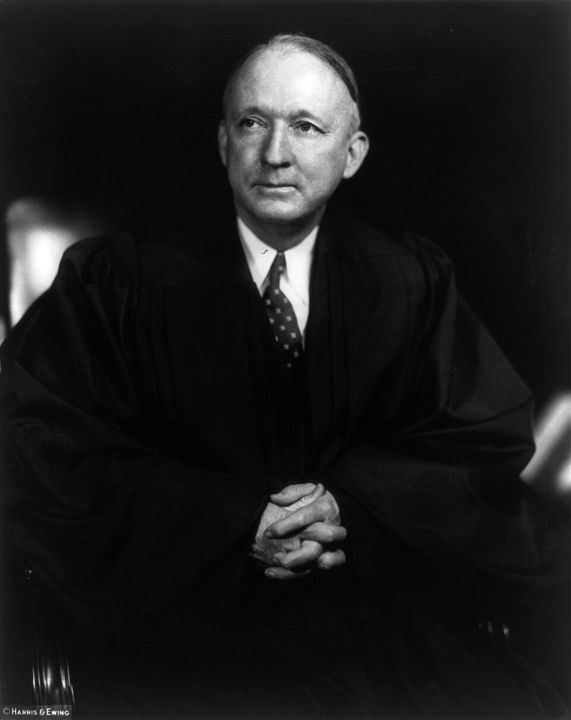
- Hugo L. Black: Justice who wrote for the majority of six
- Potter Stewart: Sole dissenting Justice

Summary
In 1951 the New York State Board of Regents, which supervises the state's public schools, published a Statement on Moral and Spiritual Training that included a short prayer of twenty-two words: Almighty God, we acknowledge our dependence upon Thee, and we beg Thy blessings upon us, our parents, our teachers and our Country. The Regents recommended it for daily use. In 1958 the board of Union Free School District No. 9 in New Hyde Park, on Long Island, directed that each class say it aloud with a teacher present at the start of the day. The parents of ten pupils, among them Steven Engel, sued the board's president, William J. Vitale Jr., and its members, arguing that a prayer composed by state officials violated the Establishment Clause of the First Amendment. The New York courts upheld the practice so long as no child was compelled to take part, and the Court of Appeals of New York affirmed. The parents argued that whatever its brevity, the Regents' prayer was an official religious exercise written by the government. The school board, the Regents and a group of parents who intervened to support the prayer answered that participation was voluntary, that the words favoured no denomination, and that the prayer simply continued the country's long tradition of acknowledging God in public life. By a vote of 6 to 1 the Court reversed. Justice Hugo L. Black held that the Establishment Clause means at least that it is no business of government to compose official prayers for the people to recite. He recounted the history of the Book of Common Prayer and the Act of Uniformity in England, the persecution of dissenters such as John Bunyan, and the struggle in Virginia that produced Madison's Memorial and Remonstrance and Jefferson's Statute for Religious Freedom. The clause, Black wrote, does not depend on showing compulsion, since government support of a particular religious practice places indirect pressure on minorities, and a union of government and religion tends to destroy government and degrade religion. He denied that the ruling showed hostility to prayer, observing that many settlers came to America precisely to pray as they chose. Justice Potter Stewart dissented. He argued that no one's free exercise had been infringed, that letting willing children say a prayer establishes no official religion, and that denying their wish withholds from them the spiritual heritage of the nation. He listed the Court's own opening cry of God save the United States and this Honorable Court, congressional chaplains, presidential oaths, the anthem, the Pledge of Allegiance and the coinage motto, and he objected to reliance on the metaphor of a wall of separation, a phrase not found in the Constitution. The library text gives Black's opinion and Stewart's dissent in full; Douglas's concurrence is not printed and footnotes are dropped. Abington School District v. Schempp (1963) extended the ruling to devotional Bible reading, and proposals in Congress in 1964 and 1966 to amend the Constitution to permit school prayer did not pass.
Virtues in this work
- Piety: Both opinions honour prayer: Black calls it a solemn avowal of divine faith, and Stewart defends children's wish to join in it.
- Justice: Black seeks to protect religious minorities from the indirect pressure of a prayer backed by the power and prestige of the state.
- Fortitude: Stewart dissented alone, setting out his reading of the nation's traditions against six colleagues.
Plot or Argument
- The Regents' prayer and the New Hyde Park board
Black quotes the prayer, explains that the State Board of Regents composed and recommended it, describes the school board's order that each class recite it, and sets out the parents' challenge and the New York courts' approval of the practice.
- A religious activity composed by government
The Court finds that daily invocation of God's blessing is plainly religious, as all parties concede, and holds that it is no part of the business of government to compose official prayers for any group of Americans to recite.
- The lesson of the Book of Common Prayer
Black recounts how Parliament approved the Book of Common Prayer in 1548 and 1549, how its revision divided English Protestants, and how established churches in several American colonies taxed and penalized dissenters until the Virginia struggle of the 1780s.
- Why voluntariness and neutrality do not save the prayer
The Establishment Clause, unlike the Free Exercise Clause, requires no showing of direct coercion. Government support for an official prayer places indirect pressure on religious minorities, and the Founders believed a union of government and religion degraded both.
- Not hostility but respect
Black denies that the ruling shows hostility to religion, quotes Tennyson on the power of prayer, and closes with Madison's warning to take alarm at the first experiment on our liberties.
- Stewart's dissent: the spiritual heritage of the Nation
Stewart argues that no one is compelled, that the Court's English history is beside the point, and that the wall of separation is a misleading metaphor. He catalogues national practices acknowledging God, from the Court's own crier to the Pledge and the coinage, and concludes with the Declaration's reliance on divine Providence.
Characters
- Steven I. Engel, petitioner
One of the New Hyde Park parents who brought the suit on behalf of their children.
- William J. Vitale Jr., respondent
President of the board of Union Free School District No. 9, sued with the other board members.
- Justice Hugo L. Black, author of the opinion of the Court
Wrote the majority opinion grounding the holding in the English and Virginian history of established churches.
- Justice Potter Stewart, dissenter
Argued that a voluntary prayer establishes no religion and that the nation's traditions support it.
- William J. Butler, counsel for the petitioners
New York lawyer who argued for the parents.
- Bertram B. Daiker, counsel for the school board
Argued for the respondents, with Porter R. Chandler appearing for the parents who intervened in support of the prayer.
Lessons
Who writes the prayer?
Black's opinion turns on the fact that state officials composed the words. He drew on English history, where Parliament fixed the form of public worship, to argue that the authors of the First Amendment meant to keep government out of that business entirely.
- Who composed the Regents' prayer, and who recommended its use?
- Why does Black think the authorship of the prayer matters so much?
- Would the case be different if each teacher or each class chose its own prayer?
Establishment and free exercise
The First Amendment contains two religion clauses. Black held that an establishment can occur without anyone being forced, while Stewart emphasized that no child's free exercise was burdened and asked how willing prayer could establish anything.
- What is the difference between the Establishment Clause and the Free Exercise Clause?
- Why does Black say the Establishment Clause does not require proof of compulsion?
- Can a practice be voluntary and still carry pressure to conform?
History as argument
Both Justices appeal to history. Black looks to the Book of Common Prayer, the Act of Uniformity and Virginia's disestablishment; Stewart looks to the Court's crier, legislative chaplains, the anthem and the Pledge. Students can weigh which history better illuminates the question.
- Why does Black begin with sixteenth-century England?
- Why does Stewart think that history throws no light on the case?
- Which traditions of public prayer does Stewart list, and how might Black answer them?
Protecting religion from government
Black insisted the decision protected religion rather than opposing it, arguing that state sponsorship degrades faith. Stewart answered that removing the prayer denied children a share in their spiritual heritage. Both Justices claimed to honour religious liberty.
- According to Black, how can government support damage religion?
- What does Stewart mean by the spiritual heritage of our Nation?
Context
Prayer and Bible reading had long been common in American public schools. After the Court held in Everson v. Board of Education (1947) that the Establishment Clause binds the states, challenges to religious exercises in schools multiplied. The Regents introduced their prayer in 1951 during a period of renewed public religious expression, which also saw under God added to the Pledge in 1954 and In God We Trust adopted as the national motto in 1956.
Composition
The case was argued on 3 April 1962, with William J. Butler for the parents, Bertram B. Daiker for the school board and Porter R. Chandler for the intervening parents who supported the prayer. The decision was announced on 25 June 1962. The library text, from Wikisource, prints Black's opinion and Stewart's dissent.
Reception
The decision drew strong public reaction, and members of Congress proposed constitutional amendments to permit school prayer; the Becker Amendment of 1964 and Senator Dirksen's amendment of 1966 both failed. A year later Abington School District v. Schempp (1963) applied the reasoning to Bible reading and the Lord's Prayer. Later decisions on graduation prayer (Lee v. Weisman, 1992) and student-led prayer at football games (Santa Fe Independent School District v. Doe, 2000) built on Engel, while Kennedy v. Bremerton School District (2022) emphasized history and tradition in reading the Establishment Clause. Scholars disagree about how closely Black's history matches the Founders' understanding.
Comparisons
- virginia-statute-for-religious-freedom
Black presents Jefferson's Virginia statute of 1786 as the fruit of the struggle against a tax-supported church that shaped the First Amendment.
- madison-selected-writings
Black closes with Madison's Memorial and Remonstrance of 1785, warning that the authority to establish Christianity could establish any sect.
- jefferson-selected-writings
Jefferson's 1802 letter to the Danbury Baptists is the source of the wall of separation metaphor that the petitioners invoked and Stewart criticized.
- the-founding-documents
Stewart ends with the Declaration of Independence's firm reliance on divine Providence, and both opinions interpret the First Amendment's two religion clauses.
- west-virginia-v-barnette
Stewart cites Barnette's protection of students from compelled expression and argues that New York's voluntary prayer respected it.
- reynolds-v-united-states
The 1879 decision first quoted Jefferson's wall of separation in a Supreme Court opinion, under the Free Exercise Clause rather than the Establishment Clause.
Quotes
Frequently cited
“it is no part of the business of government to compose official prayers for any group of the American people to recite as a part of a religious program carried on by government.”
Frequently cited
“Its first and most immediate purpose rested on the belief that a union of government and religion tends to destroy government and to degrade religion.”
Frequently cited
“I cannot see how an "official religion" is established by letting those who want to say a prayer say it.”
“When the power, prestige and financial support of government is placed behind a particular religious belief, the indirect coercive pressure upon religious minorities to conform to the prevailing officially approved religion is plain.”
“The history of man is inseparable from the history of religion.”
“On the contrary, I think that to deny the wish of these school children to join in reciting this prayer is to deny them the opportunity of sharing in the spiritual heritage of our Nation.”
For Students
A reading companion for classical Christian high school students. See the student guide.
Reading Guide
Watch for
- The exact words of the Regents' prayer and who composed them.
- Black's account of the Book of Common Prayer and the Act of Uniformity.
- The distinction Black draws between the Establishment Clause and the Free Exercise Clause.
- Black's insistence that the ruling is not hostile to religion.
- Stewart's list of national practices, from the Court's crier to the coinage.
Key terms and names
- Establishment Clause
- The First Amendment's command that Congress make no law respecting an establishment of religion, applied to the states through the Fourteenth Amendment.
- Free Exercise Clause
- The First Amendment's protection of the free exercise of religion, which Stewart says was not violated.
- Board of Regents
- The New York state agency with broad authority over the public schools, which composed and recommended the prayer.
- Book of Common Prayer
- The order of worship for the Church of England, first approved by Parliament in 1549, which Black uses as an example of government-composed prayer.
- Act of Uniformity
- English laws requiring use of the Book of Common Prayer and penalizing other forms of worship.
- Nondenominational
- Not belonging to or favouring any particular church; Stewart describes the prayer this way.
Seminar Questions
- Comprehension What were the words of the Regents' prayer, and how was it used in the New Hyde Park schools?
- Comprehension Which two Justices did not take part in the decision, and what was the final vote?
- Comprehension Name three national practices Stewart lists to show that acknowledging God is part of American tradition.
- Interpretation Why does Black think a prayer can violate the Establishment Clause even if no child is required to say it?
- Interpretation Why does Stewart object to the phrase wall of separation?
- Interpretation How does Black use the story of the Book of Common Prayer to interpret the First Amendment?
- Big Question What is the proper relationship between a government and the religious life of its people?
Faith Connections
- Matthew 6:5-6 (Scripture)
Jesus teaches his disciples to pray in secret rather than to be seen; Christians have drawn on this passage on both sides of the school prayer debate.
- 1 Timothy 2:1-2 (Scripture)
Paul urges prayers for kings and all in authority, a text often cited for the place of prayer in public life.
- John Bunyan, The Pilgrim's Progress (Great Conversation)
Black mentions Bunyan, imprisoned for preaching outside the established church, whose allegory was written partly during that imprisonment.
Logic and Rhetoric
Central argument: Because the Establishment Clause forbids government to set the form of public worship, and because a prayer composed by state officials and used in state schools is such a form, New York's program is unconstitutional even though it is brief, nondenominational and voluntary.
Rhetorical device: argument from history. Black traces the Book of Common Prayer and the Act of Uniformity to show what the Founders feared, concluding that a union of government and religion tends to destroy government and to degrade religion (quote 2).
Debate: Resolved: that a voluntary, nondenominational prayer composed by state officials may be recited in public schools.
Memory Work
Its first and most immediate purpose rested on the belief that a union of government and religion tends to destroy government and to degrade religion.
I cannot see how an "official religion" is established by letting those who want to say a prayer say it.
Writing Prompts
Essay: Compare the history Black uses with the history Stewart uses, and explain which better illuminates the meaning of the Establishment Clause in the setting of a public school.
Comparison with The Virginia Statute for Religious Freedom: Compare Jefferson's arguments in the Virginia Statute for Religious Freedom with Black's reasoning in Engel, noting what each says about government and religious belief.
Medical Lens
The case concerns a classroom prayer and the religion clauses of the First Amendment; it has no medical content.
Creative Prompts
- Classroom
Hold a moot court with one bench following Black's history of established churches and another following Stewart's catalogue of national traditions, then compare the reasoning of each bench.
- Essay
Write a brief for the New Hyde Park school board explaining why a voluntary, nondenominational prayer is consistent with the First Amendment, and then a short reply for the parents.
- Dialogue
Write a conversation in 1962 between two New Hyde Park parents, one who brought the suit and one who intervened to defend the prayer, in which each states his reasons respectfully.
- Classroom
Make a two-column chart of the historical examples each Justice uses, from the Book of Common Prayer to the Pledge of Allegiance, and note what each example is meant to prove.
Further Reading
- The Battle over School Prayer: How Engel v. Vitale Changed America, Bruce J. Dierenfield
Account of the New Hyde Park dispute, the litigation and the national reaction, in the Landmark Law Cases series.
- Thomas Jefferson and the Wall of Separation between Church and State, Daniel L. Dreisbach
Study of Jefferson's Danbury letter and how the metaphor entered American law.
- Separation of Church and State, Philip Hamburger
Legal historian's account of how the idea of separation developed in American thought.
Verification notes
All six quotations were found by Grep in content/texts/engel-v-vitale.txt. The vote (6 to 1, Frankfurter and White not participating) is recorded in the opinion text. The year the Regents published their statement (1951), the school board's adoption (1958), and the names of counsel follow standard references on the case. The library text includes the full opinion and dissent; Douglas's concurrence is not printed.
- Confirm the names of counsel at argument (William J. Butler, Bertram B. Daiker, Porter R. Chandler).
- Confirm that the New Hyde Park board adopted the prayer in 1958.
- Confirm the years of the Becker (1964) and Dirksen (1966) prayer amendment efforts.