Work record
Gideon v. Wainwright
1963 · Postwar Contemporary · Court Decision · English
Abstract
Question Presented. Must a state provide a lawyer at public expense to a defendant facing a felony charge who cannot pay for one, or may it follow the 1942 rule of Betts v. Brady, requiring appointment only under special circumstances?
Arguments. Gideon's counsel maintained that an untrained person cannot match a professional prosecutor and that judging special circumstances case by case had bred confusion. Florida answered that the Sixth Amendment's wording governed federal trials, that states deserved room to shape their own procedures, and that a broad holding would reopen many final convictions.
Holding. All nine members agreed to reverse. Black treated the two cases as indistinguishable, overruled Betts, and grounded the result in Powell and related rulings and in how adversary trials work: the state always employs an attorney, and anyone with means retains one.
Text. Only Black's opinion appears in the library file. It quotes the courtroom exchange in which Gideon asked for help and Sutherland's 1932 passage on what a layman cannot do alone.
Significance. At a second trial with a local attorney Gideon won acquittal. Florida set up public defenders in 1963, Congress funded federal appointed counsel in 1964, and the Court extended the guarantee in 1972 to any prosecution ending in jail.
Key figures
- Clarence Earl Gideon: Florida prisoner whose pencilled petition reached the Court
- Abe Fortas: Washington attorney appointed to argue for him
- Bruce R. Jacob: Florida assistant attorney general who defended Betts
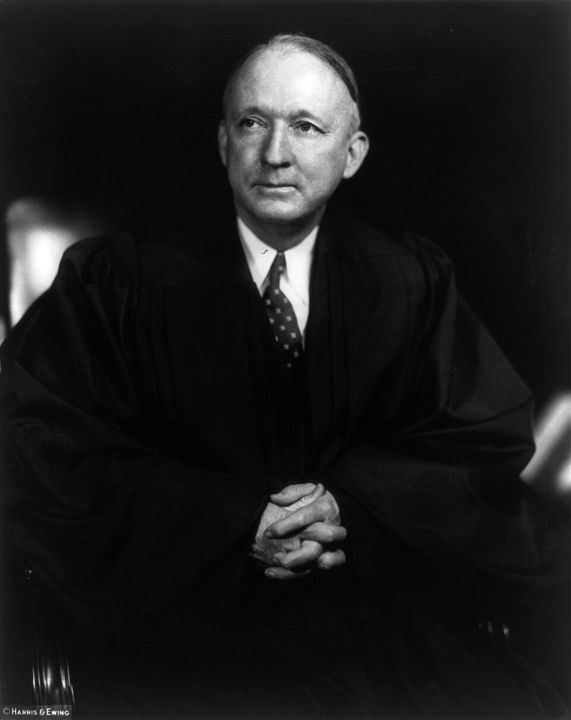
- Hugo L. Black: Justice who wrote for a unanimous bench

Summary
In June 1961 someone broke into the Bay Harbor Poolroom in Panama City, Florida, and took coins from a cigarette machine and a jukebox. Clarence Earl Gideon, a fifty-one-year-old drifter with a record of earlier convictions, was charged with breaking and entering with intent to commit a misdemeanor, a felony under Florida law. At trial he asked the judge to appoint a lawyer, and the judge replied that Florida provided counsel only in capital cases. Gideon answered that the United States Supreme Court said he was entitled to counsel. He defended himself, making an opening statement, cross-examining witnesses and arguing his innocence, but the jury convicted him and he was sentenced to five years. From his prison cell he wrote, in pencil, a petition to the Supreme Court. The obstacle was Betts v. Brady (1942), in which the Court had held that the Fourteenth Amendment did not require states to appoint counsel in every felony case, only where special circumstances such as youth, illiteracy or a complicated charge made a fair trial impossible without one. The Court agreed to reconsider Betts and appointed Abe Fortas, a prominent Washington lawyer, to argue for Gideon. Fortas contended that no layman could have a fair trial against a trained prosecutor and that the special-circumstances rule had proved unworkable. Florida, represented by assistant attorney general Bruce R. Jacob and supported by two other states, defended Betts on grounds of federalism: the states should be free to design their own systems, the Sixth Amendment's text bound only federal courts, and a sweeping ruling would unsettle thousands of convictions. Twenty-two states filed a brief urging that Betts be overruled. The Court was unanimous. Justice Hugo L. Black's opinion found Betts's facts nearly identical to Gideon's and overruled it. Black argued that Betts itself accepted that fundamental guarantees of the Bill of Rights bind the states, but erred in deciding that counsel was not one of them. He pointed to Powell v. Alabama (1932) and other decisions recognizing the right as fundamental, and called Betts an abrupt break with those precedents. Reason and reflection, he wrote, show that in an adversary system a poor defendant cannot be assured a fair trial without a lawyer, since governments hire prosecutors and defendants with money hire the best lawyers they can. He closed with Justice Sutherland's words from Powell about the guiding hand of counsel. The library text gives Black's opinion of the Court; the concurrences of Douglas, Clark and Harlan are not reprinted, and the footnotes were left out. Florida retried Gideon in August 1963. With a local lawyer, W. Fred Turner, to cross-examine the prosecution's chief witness, the jury acquitted him. Florida created a statewide public defender system that year, Congress passed the Criminal Justice Act of 1964 for federal courts, and Argersinger v. Hamlin (1972) extended the right to any case resulting in imprisonment. Anthony Lewis told the story in Gideon's Trumpet (1964).
Virtues in this work
- Justice: The Court holds that every defendant must stand equal before the law, whatever his means.
- Fortitude: Gideon pressed his claim from a prison cell in his own handwriting, against a precedent that seemed to settle the question against him.
- Charity: Abe Fortas and his firm served without fee to argue the case of a stranger the Court had assigned to them.
Plot or Argument
- The trial without a lawyer
Black opens with the charge, the exchange in which the Florida judge refuses to appoint counsel and Gideon insists the Supreme Court says he is entitled to one, Gideon's own conduct of his defence, the guilty verdict and five-year sentence, and the habeas corpus petition that brought the case to the Court.
- Part I: Betts and Gideon side by side
The Court compares Smith Betts's 1942 robbery trial in Maryland with Gideon's trial, finds the facts strikingly alike, explains the Betts rule that due process depends on the totality of facts in each case, and concludes that Betts must be overruled.
- Part II: fundamental rights and the states
Black accepts Betts's premise that a provision of the Bill of Rights fundamental and essential to a fair trial binds the states through the Fourteenth Amendment, but shows from Powell v. Alabama, Grosjean, Johnson v. Zerbst and other cases that the Court had already treated the right to counsel as fundamental.
- Reason and reflection: an obvious truth
Beyond precedent, Black argues from the nature of the adversary system: governments spend heavily on prosecutors, defendants who can afford lawyers hire the best, and so lawyers in criminal courts are necessities, not luxuries. Equality before the law cannot exist if the poor man faces his accusers alone.
- The guiding hand of counsel
Black quotes Justice Sutherland's description in Powell of the layman who cannot tell whether a charge is properly drawn or understand the rules of evidence, notes that twenty-two states asked the Court to overrule Betts, and reverses the judgment.
Characters
- Clarence Earl Gideon, petitioner
Florida prisoner who asked for appointed counsel, conducted his own defence, and petitioned the Court in his own handwriting.
- Louie L. Wainwright, respondent
Director of the Florida Division of Corrections, named as the official holding Gideon in custody.
- Justice Hugo L. Black, author of the opinion of the Court
Former Alabama senator who had dissented in Betts v. Brady and now wrote the opinion overruling it.
- Abe Fortas, appointed counsel for Gideon
Washington lawyer assigned by the Court to argue Gideon's case; appointed to the Court himself in 1965.
- Bruce R. Jacob, counsel for Florida
Assistant attorney general of Florida who defended the Betts rule.
- Smith Betts, earlier petitioner
Maryland defendant whose 1942 case established the special-circumstances rule that Gideon overturned.
Lessons
Equal before the law
Black's argument rests on a simple observation: the state always has a lawyer, and defendants with money hire one. A poor man without counsel faces trained opponents alone, and Black concluded that equal justice requires that the state supply a lawyer.
- Why does Black think the way governments and wealthy defendants behave proves that lawyers are necessities?
- What could Gideon do for himself at trial, and what could he not do?
- Is justice equal if the rules are the same for everyone but the means to use them are not?
One prisoner's petition
Gideon wrote his petition in pencil on prison paper. The Court accepted it, appointed one of the best lawyers in Washington for him, and changed the law of every state. The case shows how the ordinary process of petition can bring a large question before the highest court.
- How did Gideon's case reach the Supreme Court?
- Why do you think the Court appointed a distinguished lawyer to argue for him?
- What does Gideon's story suggest about the right to petition?
Case-by-case or a clear rule?
Betts asked judges to decide in each case whether special circumstances made counsel necessary. Florida valued that flexibility and the states' freedom to decide; Gideon's lawyers argued it produced confusion and unfairness. The choice between flexible standards and bright-line rules runs throughout law.
- What were the special circumstances under Betts that could require a lawyer?
- What are the advantages of a flexible rule, and what are its dangers?
The guiding hand
Justice Sutherland's words in Powell, quoted by Black, describe how even an intelligent layman may be convicted though innocent because he does not know how to establish his innocence. Gideon's acquittal at his second trial, with a lawyer, gave that warning a concrete illustration.
- According to Sutherland, what does a layman lack in a criminal trial?
- What happened when Gideon was retried with a lawyer?
Context
The Sixth Amendment guarantees the accused the assistance of counsel, and federal courts had appointed lawyers for poor defendants since Johnson v. Zerbst (1938). In Powell v. Alabama (1932), the Scottsboro case, the Court required counsel in a capital case where the defendants were young, unfamiliar with the law and far from home. Betts v. Brady (1942) declined to extend that requirement to every state felony, and by 1963 most states appointed counsel anyway, while Florida and a few others did not.
Composition
Gideon's petition reached the Court in January 1962, and certiorari was granted in June. Abe Fortas argued for Gideon on 15 January 1963, Bruce R. Jacob for Florida, George D. Mentz for Alabama as amicus supporting Florida, and J. Lee Rankin for the American Civil Liberties Union. The amicus brief of twenty-two states urging that Betts be overruled was organized by Minnesota's attorney general, Walter F. Mondale. The decision came on 18 March 1963. The library text, from Wikisource, contains Black's opinion of the Court.
Reception
Gideon was retried in Panama City in August 1963 and acquitted. Florida's legislature created public defender offices the same year, and thousands of prisoners convicted without counsel sought new trials. Congress enacted the Criminal Justice Act of 1964 to pay appointed counsel in federal cases, and later decisions extended the right to misdemeanours carrying jail time (Argersinger v. Hamlin, 1972). Anthony Lewis's book Gideon's Trumpet (1964) and a 1980 television film made the case widely known. Debate continues over how well states fund the defence systems the decision requires.
Comparisons
- the-founding-documents
The Sixth Amendment's promise of the assistance of counsel for his defence is the text Black interprets, applied to the states through the Fourteenth Amendment's Due Process Clause.
- magna-carta
Magna Carta's promise that justice will not be sold, denied or delayed stands behind Black's insistence that a poor man should not face his accusers without a lawyer.
- commentaries-on-the-laws-of-england
Blackstone notes that English law of his day denied counsel to felony defendants on matters of fact, a rule American states began rejecting even before the Sixth Amendment.
- mapp-v-ohio
Like Mapp two years earlier, Gideon overruled a recent precedent to apply a federal criminal-procedure guarantee to state courts.
- miranda-v-arizona
Miranda relied on Gideon to require that a suspect who cannot afford a lawyer be told one will be appointed before police questioning.
- the-federalist-papers
Hamilton's Federalist No. 84 argued that a bill of rights was unnecessary; Gideon shows the later Court treating one of those rights as fundamental against the states as well.
Quotes
Frequently cited
“The United States Supreme Court says I am entitled to be represented by Counsel.”
Frequently cited
“any person haled into court, who is too poor to hire a lawyer, cannot be assured a fair trial unless counsel is provided for him.”
Frequently cited
“That government hires lawyers to prosecute and defendants who have the money hire lawyers to defend are the strongest indications of the widespread belief that lawyers in criminal courts are necessities, not luxuries.”
“Upon full reconsideration, we conclude that Betts v. Brady should be overruled.”
“This noble ideal cannot be realized if the poor man charged with crime has to face his accusers without a lawyer to assist him.”
“He requires the guiding hand of counsel at every step in the proceedings against him.”
For Students
A reading companion for classical Christian high school students. See the student guide.
Reading Guide
Watch for
- The exchange between the Florida judge and Gideon about appointing counsel.
- How Gideon conducted his own defence, and the result.
- Black's comparison of the facts in Betts with the facts in Gideon.
- The phrase necessities, not luxuries and the reasoning behind it.
- Justice Sutherland's words about the guiding hand of counsel.
Key terms and names
- Indigent
- Too poor to pay for something, here a lawyer.
- Habeas corpus
- A petition asking a court to order the release of someone held unlawfully; Gideon used it to challenge his conviction.
- In forma pauperis
- Latin for in the manner of a pauper; permission to bring a case without paying court fees.
- Special circumstances rule
- The Betts v. Brady approach requiring appointed counsel in state cases only when factors such as youth or illiteracy made a fair trial impossible without one.
- Adversary system
- A method of trial in which opposing sides present their cases before a neutral judge and jury.
- Overrule
- To declare that an earlier decision of the same court is no longer good law.
Seminar Questions
- Comprehension What crime was Gideon charged with, and why did the Florida judge refuse to appoint him a lawyer?
- Comprehension What did Betts v. Brady decide, and how were its facts similar to Gideon's?
- Comprehension Which earlier case does Black say Betts departed from?
- Interpretation Why does Black call the need for counsel an obvious truth, and what evidence does he give?
- Interpretation How does Black use Betts's own premise about fundamental rights to argue against Betts's conclusion?
- Interpretation Why might Florida have argued that each state should decide when to appoint counsel?
- Big Question What does a just society owe to a person accused of a crime who cannot afford to defend himself?
Faith Connections
- Proverbs 31:8-9 (Scripture)
Open thy mouth for the dumb in the cause of all such as are appointed to destruction; plead the cause of the poor and needy, a charge to speak for those who cannot speak for themselves.
- Leviticus 19:15 (Scripture)
Judges are told not to respect the person of the poor nor honour the person of the mighty, but to judge in righteousness, the ideal of equality before the law that Black invokes.
- 1 John 2:1 (Scripture)
The New Testament calls Christ our advocate with the Father, using the word for one who stands beside the accused, the role Sutherland describes as the guiding hand of counsel.
Logic and Rhetoric
Central argument: Since Betts itself held that fundamental guarantees of the Bill of Rights bind the states, and since both precedent and the plain workings of the adversary system show that counsel is fundamental to a fair trial, the Fourteenth Amendment requires states to appoint lawyers for felony defendants who cannot afford them.
Rhetorical device: argument from common practice. Black points out that governments hire prosecutors and those who can pay hire defenders, concluding that lawyers in criminal courts are necessities, not luxuries (quote 3).
Debate: Resolved: that each state, not the federal courts, should decide when appointed counsel is necessary for a fair trial.
Memory Work
The United States Supreme Court says I am entitled to be represented by Counsel.
That government hires lawyers to prosecute and defendants who have the money hire lawyers to defend are the strongest indications of the widespread belief that lawyers in criminal courts are necessities, not luxuries.
Writing Prompts
Essay: Explain why Gideon was convicted at his first trial and acquitted at his second, and what that difference suggests about Black's reasoning.
Comparison with Magna Carta: Compare Magna Carta's promise that the king will not sell, deny or delay justice with the Court's reasoning in Gideon that a fair trial requires a lawyer for the poor.
Medical Lens
The opinion concerns the right to counsel and the incorporation of the Sixth Amendment, with nothing touching medicine or health.
Creative Prompts
- Classroom
Reenact Gideon's 1961 trial twice, once with Gideon defending himself and once with a trained lawyer, and discuss what changed.
- Essay
Write the handwritten petition Gideon might have sent to the Supreme Court, in plain language, explaining why he believes he was denied a fair trial.
- Classroom
Prepare short briefs for both sides on whether Betts v. Brady should be overruled, with Florida's side stressing federalism and the burden of retrials.
- Dialogue
Write a conversation between Abe Fortas and Bruce Jacob after the argument, each explaining what he thinks the Court ought to do and why.
Further Reading
- Gideon's Trumpet, Anthony Lewis
Classic 1964 account of Gideon's petition, the argument and the retrial, by a reporter who covered the Court.
- Gideon's Trumpet (1980 television film), Fielder Cook (director), starring Henry Fonda
Dramatization of Lewis's book, with Henry Fonda as Gideon and José Ferrer as Abe Fortas.
- Hugo Black: A Biography, Roger K. Newman
Life of the Justice who dissented in Betts and wrote the opinion in Gideon.
Verification notes
All six quotations were found by Grep in content/texts/gideon-v-wainwright.txt; quote 5 is Justice Sutherland's language from Powell v. Alabama as quoted in Black's opinion. The judgment was unanimous (9 to 0). Details of the poolroom break-in, the retrial and acquittal, the counsel who argued, and Mondale's role in the states' brief come from Anthony Lewis's Gideon's Trumpet and standard references rather than from the opinion text.
- Confirm the date of the poolroom break-in (3 June 1961) and Gideon's age at trial.
- Confirm the names of amicus counsel (George D. Mentz for Alabama, J. Lee Rankin for the ACLU).
- Confirm the director and principal cast of the 1980 television film.