Work record
A Mathematician's Apology
1940 · Early 20th Century · Essays · English
Abstract
Background. Past sixty, recovering from illness and convinced his best work lay behind him, Hardy wrote in the first year of the war, when science was being judged by what it could do for the nation. The title echoes Plato's Apology: it is a defence, not an excuse.
Thesis. Pure mathematics needs no practical excuse. Its theorems are patterns of ideas whose worth lies in their beauty and seriousness, and they last longer than any other human work.
Structure. Hardy moves from the problem of age, through ambition and permanence, to two worked Greek proofs that illustrate mathematical beauty, then to the question of usefulness and a closing verdict on his own career. The proofs are set out in full, so a reader with school algebra can follow the very arguments Hardy praises.
Key Concepts. Real versus trivial mathematics; beauty; seriousness, depth and generality; mathematical reality as discovered; the youthfulness of mathematical genius; the harmlessness of pure mathematics in war.
Availability. Under copyright in the United States; the library holds no full text and gives two short quotations.
Significance. Widely regarded as the classic account of the mathematician's outlook, it has drawn readers into mathematics for over eighty years. Its forecast that number theory would stay useless was overturned by modern cryptography, and its claims about age and creativity remain debated.
Key figures
- G. H. Hardy: Cambridge mathematician defending his life's work
- J. E. Littlewood: Hardy's longtime collaborator
- Srinivasa Ramanujan: Indian genius whom Hardy brought to Cambridge in 1914
- Euclid: Greek geometer whose proof on the primes Hardy presents
- Archimedes: Hardy's example of lasting mathematical fame
- C. P. Snow: Critic in the Note and author of the 1967 foreword
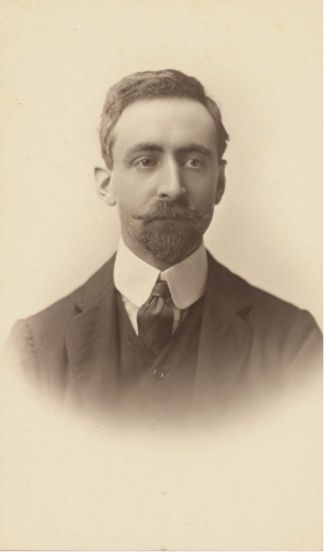

Summary
A Mathematician's Apology is a short book of twenty-nine numbered sections in which the Cambridge mathematician G. H. Hardy, at sixty-two and conscious that his creative powers had faded, sets out to justify a life spent on pure mathematics. Cambridge University Press published it in 1940. The word apology is used in its old sense of a defence, as in Plato's Apology of Socrates. Hardy opens by calling it a melancholy experience for a working mathematician to write about mathematics rather than do it; exposition and criticism are for second-rate minds, and he writes only because he can no longer do better. He then insists that mathematics is a young man's game. Galois died at twenty-one, Abel at twenty-seven, Ramanujan at thirty-three, Riemann at forty, and he knows of no major advance begun by a man past fifty. The defence proper begins with the question of why anyone should do mathematics. Most people, Hardy says, do what they do because it is the one thing they can do well, and ambition, the desire to leave something of permanent value, is a noble passion. Mathematics offers the most lasting fame of all. Greek mathematics is still read as the work of colleagues, and Archimedes, he says, will be remembered when Aeschylus is forgotten, because languages die and mathematical ideas do not. In the central sections Hardy describes the mathematician as a maker of patterns made of ideas. Such patterns must be beautiful, and he argues that real mathematics is judged by beauty and by seriousness, meaning the significance of its ideas and their connection with other ideas. To show what he means he gives two proofs from Greek mathematics that any patient reader can follow: Euclid's proof that the prime numbers never come to an end, and the proof attributed to the Pythagoreans that the square root of two is irrational. He contrasts these with chess problems, which are genuine mathematics but trivial, because nothing important follows from them. Hardy then asks whether mathematics is useful. He distinguishes real mathematics from the trivial elementary parts that serve engineers and accountants, and argues that the real mathematics of Fermat, Euler, Gauss and Riemann is almost wholly useless in practice. He finds comfort in this: real mathematics, he claims, has no effects on war. In the final sections he judges his own life. He has never done anything useful, but he has added something to knowledge, and his collaboration with Littlewood and Ramanujan was the decisive event of his life. A short note at the end acknowledges criticisms from C. D. Broad and C. P. Snow. Snow's long foreword, added to the 1967 edition, gives a portrait of Hardy that many readers now take as part of the book. Because the work is still under copyright in the United States, the library offers summary and guide only, with two short quotations.
Virtues in this work
- Humility: In section 29 Hardy ranks his own achievement honestly below the greatest mathematicians and credits Littlewood and Ramanujan for his best work.
- Friendship: Hardy calls his collaborations with Littlewood and Ramanujan the decisive event of his life.
- Magnanimity: Hardy defends the noble ambition of leaving behind something of permanent value, which he finds supremely in mathematics.
Plot or Argument
- Preface and sections 1-2: an apology in old age
Hardy explains that writing about mathematics is a sign that one can no longer do it, and announces a defence of mathematics and of his own career.
- Sections 3-5: mathematics as a young man's game
Examples from Galois, Abel, Ramanujan, Riemann and Newton support the claim that mathematical creativity peaks early, and Hardy considers what an ageing mathematician can still do.
- Sections 6-9: ambition and permanence
People work at what they do best; ambition for lasting achievement is honourable. Mathematics outlasts other fame, as Greek mathematics shows, and Archimedes will outlive Aeschylus.
- Sections 10-11: patterns of ideas
The mathematician makes patterns of ideas, which must be beautiful and serious. Hardy distinguishes real mathematics from chess problems, which are mathematical but trivial.
- Sections 12-18: two Greek theorems and the marks of seriousness
Hardy presents Euclid's proof of infinitely many primes and the irrationality of the square root of two, then analyses what makes them beautiful: generality, depth, unexpectedness, inevitability and economy.
- Sections 19-28: the use of mathematics
He argues that the mathematics useful in daily life and engineering is mostly elementary and dull, while real mathematics is useless in practice, harmless in war, and closer than physics to reality as he understands it.
- Section 29 and Note: judging a life
Hardy concludes that he has done nothing useful but has added to knowledge, and values his partnerships with Littlewood and Ramanujan above all; a closing note records objections by Broad and Snow.
Lessons
Beauty as a test of truth's worth
Hardy holds that mathematical ideas must fit together harmoniously and that ugly mathematics does not last. He shows rather than asserts this by walking the reader through Euclid's proof about the primes. The lesson is that beauty in an argument can be described with precision: depth, surprise, inevitability and economy.
- What makes Euclid's proof of infinitely many primes beautiful, in Hardy's terms?
- Is beauty a sign that a proof is true, or only that it is worth having?
- Can you name an argument outside mathematics that has Hardy's qualities?
Usefulness is not the only measure
Hardy defends knowledge pursued for its own sake and even takes pride in its uselessness. His claim that number theory would never serve war was overturned within a generation by cryptography and nuclear physics, a fact that sharpens rather than settles his question about why such knowledge matters.
- Why does Hardy take comfort in the uselessness of real mathematics?
- How should a reader weigh his prediction about number theory and war in light of later history?
An honest accounting of a life
In his last sections Hardy assesses his own work without false modesty or boasting. He ranks himself below the greatest mathematicians, names the collaborations that made his best work possible, and asks whether his life was futile. The book models a sober self-examination near the end of a career.
- How does Hardy measure the worth of his own life?
- Why does he count his partnership with Littlewood and Ramanujan as the decisive event of his life?
Context
Hardy wrote the Apology in 1940, in the first year of the Second World War, after a heart attack in 1939 had weakened him and after he had come to believe his own mathematical creativity was over. British debate at the time often weighed science by its practical and military uses, and Hardy wrote against that grain. He was the leading English pure mathematician of his generation, known for raising the standard of rigorous analysis in Britain.
Composition
The essay was finished in the summer of 1940; the preface is dated 18 July 1940. Cambridge University Press published it that year. A reprint added a short note responding to criticisms by the philosopher C. D. Broad and the novelist and physicist C. P. Snow. In 1967 Cambridge issued a new edition with a long foreword by Snow, a personal memoir of Hardy that has accompanied most later printings.
Reception
The book has been read for generations as one of the best accounts of what mathematicians value, and it has drawn many students to the subject. Graham Greene praised it, and it is frequently cited in discussions of beauty in mathematics. Critics and later mathematicians have questioned its claim that mathematics is a young man's game, its sharp division of pure from applied mathematics, and its prediction that number theory would have no practical use, a prediction overtaken by public-key cryptography. Snow's foreword shaped the popular image of Hardy and of his friendship with Ramanujan.
Comparisons
- euclid-elements-book-i
Hardy's first model of a beautiful theorem is Euclid's proof that the primes are infinite, from Book IX of the Elements; Book I shows the axiomatic method and economy of proof Hardy admired.
- archimedes-the-method
Hardy names Archimedes as the example of mathematical permanence; The Method, recovered only in 1906, shows that an ancient mathematical idea can return to life two thousand years later.
- plato-meno
Socrates leads a slave boy to the square on the diagonal, the geometry behind the irrationality of the square root of two that Hardy proves; both texts treat mathematics as knowledge of something unchanging.
- poincare-science-and-hypothesis
Poincare, whom Hardy respected, also wrote for general readers on the nature of mathematics, but stressed convention and the mind's role where Hardy argued for a mathematical reality the mathematician discovers.
- russell-problems-of-philosophy
Hardy's Cambridge colleague Russell, who appears in the Apology recounting a dream about the future of books, wrote in the same years on how a priori knowledge of numbers is possible.
Quotes
Frequently cited
“No mathematician should ever allow himself to forget that mathematics, more than any other art or science, is a young man's game.”
Frequently cited
“A mathematician, like a painter or a poet, is a maker of patterns.”
For Students
A reading companion for classical Christian high school students. See the student guide.
Reading Guide
Watch for
- The opening admission that writing about mathematics is a melancholy task for a mathematician, and why Hardy does it anyway.
- The list of mathematicians who did great work young in section 4.
- The claim that Archimedes will be remembered when Aeschylus is forgotten, and Snow's later objection to it in the Note.
- The two proofs in sections 12-14, Euclid's on the primes and the Pythagorean proof about the square root of two.
- Hardy's distinction between real and trivial mathematics, and his comparison with chess problems.
Key terms and names
- Apology
- A formal defence, as in Plato's Apology of Socrates; Hardy defends pure mathematics and his own life spent on it.
- Real mathematics
- Hardy's name for the serious mathematics of the great mathematicians, valued for beauty and significance rather than use.
- Trivial mathematics
- Elementary or practical mathematics, and also clever puzzles like chess problems, which are correct but connect to few important ideas.
- Prime number
- A whole number greater than one with no divisors except one and itself; Euclid's proof shows there is no largest one.
- Irrational number
- A number that cannot be written as a fraction of whole numbers; Hardy proves that the square root of two is one.
- Reductio ad absurdum
- Proof by assuming the opposite of what is to be proved and deriving a contradiction; both of Hardy's model proofs use it.
- Seriousness
- Hardy's criterion for a theorem's importance: its ideas are general, deep and connected with many other mathematical ideas.
Seminar Questions
- Comprehension Why does Hardy say it is a melancholy experience for a mathematician to write about mathematics?
- Comprehension Explain in your own words Euclid's proof that there are infinitely many primes, as Hardy presents it.
- Comprehension What is the difference between real and trivial mathematics, and why is a chess problem trivial?
- Interpretation Why does Hardy think mathematical fame is more permanent than literary fame, and is Snow's objection in the Note persuasive?
- Interpretation Hardy finds comfort in the uselessness of real mathematics. What does he fear from useful knowledge?
- Interpretation How does Hardy judge whether his own life was worthwhile, and what standard does he use?
- Big Question Is knowledge worth having for its own sake, even if it never helps anyone, and what would make it so?
Faith Connections
- Philippians 4:8 (Scripture)
Paul tells believers to think on whatever is true and lovely. Hardy, who did not share Paul's faith, gave his life to contemplating truths he found beautiful, and the verse offers a Christian frame for valuing such contemplation.
- Ecclesiastes 2:12-17 (Scripture)
The Preacher laments that the wise man is forgotten like the fool. Hardy's hope that a mathematician's work outlasts him answers this lament in one way; the Preacher's turn to God in his conclusion answers it in another.
- Augustine, On Free Choice of the Will, Book II (Church Fathers)
Augustine argues that the truths of number are unchangeable and common to all minds, and that this points beyond the mind to an eternal Truth. Hardy shared the conviction that mathematical truths are discovered, not invented, without drawing Augustine's conclusion.
Logic and Rhetoric
Central argument: A life is justified by adding something of permanent value to the world. Real mathematics is the most permanent of human achievements, because its ideas do not decay as languages do, and its value lies in beauty and seriousness rather than use. Hardy has added something to real mathematics, however small. Therefore his life, though useless in the practical sense, was not futile.
Rhetorical device: argument by example (exemplum). Rather than defining mathematical beauty abstractly, Hardy sets out two complete Greek proofs in sections 12-14 and lets the reader feel their force before naming the qualities that make them beautiful.
Debate: Resolved: Pure research should be valued even when it has no foreseeable practical use.
Writing Prompts
Essay: Hardy says a mathematician is a maker of patterns of ideas. Using his two Greek proofs, explain what he means and argue whether mathematics is better described as an art or a science.
Comparison with Elements, Book I: Read the opening propositions of Euclid's Elements, Book I, alongside Hardy's discussion of Euclid's proof on the primes. Using Hardy's criteria of depth, unexpectedness, inevitability and economy, compare one of Euclid's propositions with the proof Hardy chose.
Medical Lens
The Apology is an essay on mathematics, but it is also a document of ageing and lost creative power. Hardy begins by calling it a melancholy experience to write about mathematics, insists that mathematical creativity belongs to youth, and in section 29 mentions what he says to himself when depressed. He wrote after a heart attack in 1939. C. P. Snow's later foreword describes Hardy's decline in his last years and reports a suicide attempt in 1947, shortly before his death; those details belong to Snow's memoir, not to Hardy's text. The claim that mathematical ability peaks early has been debated by later researchers on age and creativity. Separately, the one applied result bearing Hardy's name, the Hardy-Weinberg principle of 1908, became basic to medical and population genetics, an irony given his praise of useless mathematics.
- Sections 1-5
Hardy treats writing about mathematics as a sign of exhausted creative power and argues that mathematics is a young man's game.
- Section 29
Hardy's final self-assessment, including what he tells himself when depressed and his sense of steady deterioration since his forties.
Creative Prompts
- Classroom
Work through Euclid's proof that the primes never end, as Hardy presents it, then have students rate it on his criteria of generality, depth, unexpectedness, inevitability and economy.
- Essay
Hardy said no warlike purpose had been found for number theory. Research public-key cryptography and write an essay on what his prediction teaches about the uses of pure knowledge.
- Dialogue
Write a conversation between Hardy and an engineer about whether a proof is more like a poem or a bridge.
Further Reading
- Ramanujan: Twelve Lectures on Subjects Suggested by His Life and Work, G. H. Hardy
- Littlewood's Miscellany, J. E. Littlewood
- The Man Who Knew Infinity, Robert Kanigel
- What Is Mathematics?, Richard Courant and Herbert Robbins
Verification notes
Copyrighted work in the United States: summary and guide only. Publication facts (Cambridge University Press, 1940; preface dated 18 July 1940; Snow's foreword in the 1967 edition) are standard. Both quotations were checked word for word against the University of Alberta Mathematical Sciences Society electronic edition (2005) at https://archive.org/stream/AMathematiciansApology-G.h.Hardy/mathsapology-hardy_djvu.txt, consistent with the MacTutor quotations page https://mathshistory.st-andrews.ac.uk/Biographies/Hardy/quotations/ ; they are marked unverified because no library text exists. The famous line on ugly mathematics is paraphrased because sources disagree between the world and this world. Snow's account of Hardy's last years is attributed to Snow.
- Text is under copyright; check quotations against an authorized edition before publication.
- Section numbers for the two quotations and for the account of Euclid's and Pythagoras's proofs (sections 12-14).
- Date and nature of Hardy's 1939 heart attack, and Graham Greene's praise of the book.