Work record
Hepburn v. Griswold
1870 · 19th Century · Court Decision · English
Abstract
Question Presented. May Congress require a lender to take Civil War paper notes at their face amount in settlement of an obligation that arose before the 1862 statute declaring those notes lawful tender?
Arguments. Defenders of the statute said a nation fighting for its life could choose any fitting means to borrow, pay soldiers and keep trade moving, and that Marshall had trusted such choices to the legislature. The creditor replied that the founders had refused to grant a paper-tender power, and that compelling acceptance of depreciated notes stripped lenders of value they had bargained for.
Holding. By a margin generally reported as four to three, the justices affirmed the Kentucky judgment for Griswold. Chase concluded that the tender quality was not a genuinely fitted means to any granted power, offended the spirit behind the ban on impairing contracts, and amounted to taking property without due process. Miller, with Swayne and Davis, insisted that wartime necessity justified the measure.
Significance. The ruling lasted barely more than a year. Two justices appointed by Grant joined a new majority that reversed course in 1871, making this an often-cited instance of a shift in personnel changing constitutional doctrine. Historians still weigh Chase's account of monetary limits against Miller's view of national emergency powers.
Text. The reader holds Chase's complete opinion and the first part of Miller's.
Key figures
- Mrs. Hepburn: Debtor who tendered greenbacks for an 1860 note
- Henry Griswold: Creditor who demanded coin
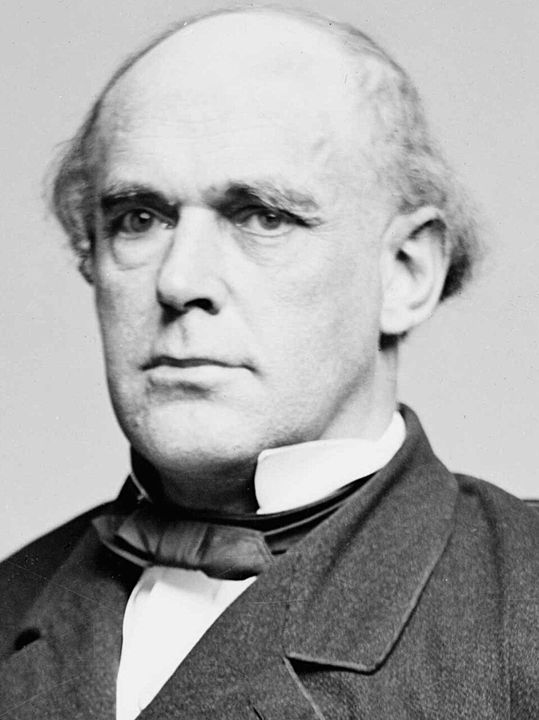
- Salmon P. Chase: Chief Justice and former Treasury Secretary who wrote for the Court
- Samuel F. Miller: Dissenter for three justices
- Robert C. Grier: Justice who agreed in conference and then resigned

Summary
To pay for the Civil War, Congress passed the Legal Tender Act of 25 February 1862, which authorized paper United States notes, soon called greenbacks, and declared them lawful money and a legal tender for all debts public and private. The notes were not redeemable in gold on demand, and they quickly traded below coin. In June 1860 Mrs. Hepburn of Louisville had given Henry Griswold a promissory note for $11,250, due in February 1862, days before the act passed. When Griswold sued, she offered payment in greenbacks. A Louisville chancery court accepted that tender, but the Court of Appeals of Kentucky reversed, and Hepburn's side brought the dispute to Washington. The question was whether Congress could compel a creditor to accept the paper notes, at face value, for a debt contracted before the statute was enacted. Those defending the act argued that it was a necessary and proper means of carrying on a war for national survival, of borrowing money and of regulating commerce, and that McCulloch v. Maryland left the choice of means to Congress. Griswold's side answered that no clause of the Constitution grants a power to make paper a legal tender, that the framers had deliberately withheld it, and that forcing a creditor to take depreciated paper took his property without due process of law. On 7 February 1870 Chief Justice Chase, who as Treasury Secretary had administered the very notes in question, announced the judgment, usually counted as four to three. Chase accepted Marshall's test for implied powers but held that making notes a legal tender for earlier debts was not an appropriate or plainly adapted means to any express power, since the notes would have circulated without that quality and the compulsion debased the currency. He added that the provision ran against the spirit of the Constitution, which forbids states to impair contracts, and against the Fifth Amendment's protection of property. Justice Miller, joined by Justices Swayne and Davis, dissented: the war had exhausted ordinary credit, Congress had judged the tender quality indispensable, and Marshall's broad reading of necessary and proper left that judgment to the legislature. The library text contains Chase's opinion, including his note that Justice Grier concurred in the conference before leaving the bench, and the opening portion of Miller's dissent; the reporter's notes are left out. On the day the decision came down, President Grant sent the Senate the nominations of William Strong and Joseph P. Bradley. With both seated, the reconstituted Court reheard the question and in the Legal Tender Cases of May 1871 upheld the act by five to four, expressly overruling Hepburn.
Virtues in this work
- Justice: Chase insists that creditors who lent in good faith should receive the value they were promised, not a lesser sum fixed by statute.
- Humility: Chase acknowledges that judgments formed amid the tumult of war, his own among them, deserved reconsideration in calmer times.
- Prudence: Miller asks judges to weigh the actual financial peril of 1862 before second-guessing the means Congress chose to meet it.
Plot or Argument
- The note and the question
Chase states the issue as whether the holder of a note made before 25 February 1862 must accept United States notes in payment, and first construes the act as applying to such debts, since its words reach all debts public and private.
- Coin, paper and the law of currency
The opinion contrasts gold and silver, which carry intrinsic value, with paper promises whose value depends on quantity and the prospect of redemption, and observes that inconvertible notes cannot stay at par with coin.
- Marshall's test applied
Accepting the McCulloch standard of appropriate, plainly adapted means, Chase asks in turn whether the tender clause serves the war power, the commerce power or the borrowing power, and concludes that the notes would have served the government as currency without it while the compulsion injured the currency itself.
- The spirit of the Constitution and due process
Because the framers forbade states to impair contracts and the Fifth Amendment protects property, a law that forces creditors to take less than the value bargained for is held inconsistent with the letter and spirit of the Constitution.
- Wartime judgment reconsidered
Chase closes by acknowledging that the measure was adopted amid the tumult of war, that many who once urged it have since reconsidered, and that Justice Grier agreed with the result in conference.
- Miller's dissent (excerpt)
Miller classifies the legislative powers, notes that legal tender is forbidden to the states but not to Congress, quotes Marshall at length on the word necessary, and describes the financial crisis of 1861-62 to argue that the tender quality alone kept the notes from sinking to worthless paper.
Characters
- Mrs. Hepburn, maker of the note; plaintiff in error
Kentucky debtor who offered greenbacks to pay a note made in 1860.
- Henry Griswold, payee of the note; defendant in error
Creditor who insisted on payment in coin and won in the Kentucky Court of Appeals.
- Chief Justice Salmon P. Chase, author of the opinion of the Court
Former Treasury Secretary who had issued the greenbacks and now held the tender clause invalid as to earlier debts.
- Justice Samuel F. Miller, dissenter
Iowa lawyer and physician by early training who wrote for three dissenters that Congress had judged the tender clause necessary to win the war.
- Justice Robert C. Grier, member of the conference majority
Pennsylvania justice who agreed in conference but resigned before the opinion was announced.
Lessons
Implied powers and the limits of necessity
Both Chase and Miller claim Marshall's McCulloch opinion. Chase reads its test as requiring a real fit between means and an express power, plus consistency with the spirit of the Constitution; Miller reads it as leaving the degree of necessity to Congress. The case shows how one precedent can support opposite conclusions.
- Which words from Marshall's test does Chase emphasize, and which does Miller emphasize?
- Why does Chase think the notes would have circulated even without the tender clause?
- Who should decide whether a means is necessary, Congress or the courts?
What is money?
Chase's opinion contains a short lesson in monetary theory: coin has value in itself, while paper promises depend on confidence and the prospect of redemption. Miller answers that legal tender status gave the notes a steady use in paying debts that kept them from collapse.
- According to Chase, why do inconvertible notes fall below the value of coin?
- How does Miller explain the continuing value of notes that were never redeemed?
- Can a government give money value simply by declaring it so?
Contracts, creditors and the meaning of property
Chase treats a debt payable in dollars as property whose value Congress cannot cut by statute, comparing the act to forcing a buyer of a hundred acres to accept fifty. The argument links the Contract Clause, which binds only the states, to the Fifth Amendment's due process guarantee against Congress.
- What comparison does Chase use to show that the act takes property?
- Why can the Contract Clause not be applied directly to Congress, and how does Chase work around that?
Judging in calmer times
Chase admits that the act was passed in a season of emergency and that many, perhaps including himself, have since changed their minds. Miller replies that the history of that gloomy time vindicates Congress. The opinions invite reflection on how emergencies should affect constitutional judgment.
- What does Chase say about the atmosphere in which the act was passed?
- Should a court defer more to Congress in wartime, or less?
- Is it a strength or a weakness for a judge to rule against a policy he once carried out?
Context
By the end of 1861 the Union treasury was nearly empty, banks had suspended specie payments and the war cost more than a million dollars a day. Congress responded with the Legal Tender Act of February 1862 and two later acts, issuing about $450 million in greenbacks. Debtors could then discharge old obligations in paper worth well below gold, while creditors who had lent in coin received less. After the war a long national argument began over whether to retire the greenbacks and resume payment in gold.
Composition
The case was first argued in the 1867 term and reargued in December 1869. The justices voted in conference in late November 1869, with Grier in the majority; Grier's resignation took effect at the start of February 1870, and Chase read the opinion on 7 February. Miller's dissent, joined by Swayne and Davis, was delivered the same day. Chase had reluctantly accepted the tender clause in 1862 as Treasury Secretary, and the opinion's closing paragraph alludes to such changes of mind.
Reception
The decision unsettled contracts made during the war and alarmed railroads and other debtors. Grant's nominations of Strong and Bradley the same day led to charges, long debated by historians, that the Court had been packed to reverse the ruling, and the reconstituted bench did so in 1871. Later scholars have treated Hepburn as a careful statement of limited federal power over money, while others regard Miller's dissent as the more faithful reading of McCulloch. The episode remains a standard example of a precedent overturned after a change in the Court's membership.
Comparisons
- legal-tender-cases
Fifteen months later, after two new appointments, the Court overruled Hepburn and adopted reasoning close to Miller's dissent, with Chase now in dissent.
- mcculloch-v-maryland
Both Chase and Miller build on Marshall's 1819 test for necessary and proper means, drawing opposite conclusions about paper money.
- veazie-bank-v-fenno
Decided by Chase a year earlier, Veazie upheld Congress's power to secure a uniform national currency, a breadth of monetary authority that Hepburn did not extend to compelling acceptance of notes for old debts.
- hamiltons-reports-and-opinion-on-the-bank
Hamilton's 1791 opinion on the bank first set out the broad reading of implied powers that Miller invokes and Chase qualifies.
- the-federalist-papers
Federalist No. 44 defends the ban on state bills of credit and paper tender, evidence Chase uses for the framers' distrust of paper money.
Quotes
Frequently cited
“We are obliged to conclude that an act making mere promises to pay dollars a legal tender in payment of debts previously contracted, is not a means appropriate, plainly adapted, really calculated to carry into effect any express power vested in Congress; that such an act is inconsistent with the spirit of the Constitution; and that it is prohibited by the Constitution.”
“There is a well-known law of currency, that notes or promises to pay, unless made conveniently and promptly convertible into coin at the will of the holder, can never, except under unusual and abnormal conditions, be at par in circulation with coin.”
“It is difficult to conceive what act would take private property without process of law if such an act would not.”
“The time was not favorable to considerate reflection upon the constitutional limits of legislative or executive authority.”
“That the legal tender act prevented these disastrous results, and that the tender clause was necessary to prevent them, I entertain no doubt.”
“But what was needed was something more than the credit of the government.”
For Students
A reading companion for classical Christian high school students. See the student guide.
Reading Guide
Watch for
- Chase's distinction between coin with intrinsic value and paper with only a purchasing value.
- The repeated phrase appropriate, plainly adapted, really calculated and where it comes from.
- Chase's comparison of the act to forcing acceptance of fifty acres for a hundred.
- Chase's remarks about wartime judgments later reconsidered.
- Miller's description of an empty treasury and unpaid armies.
Key terms and names
- Legal tender
- Money that a creditor is required by law to accept in payment of a debt.
- Greenbacks
- The popular name for the United States notes issued under the 1862 act, printed in green ink on the back.
- Specie
- Money in the form of gold or silver coin.
- Bills of credit
- Paper notes issued by a government on its credit and intended to circulate as money.
- Necessary and Proper Clause
- The final clause of Article I, Section 8, giving Congress power to make laws needed to carry out its other powers.
- Plaintiff in error
- In nineteenth-century practice, the party who brought a case to the Supreme Court on a writ of error, here Hepburn.
Seminar Questions
- Comprehension What did Mrs. Hepburn try to pay Griswold with, and why did he refuse it?
- Comprehension Which three express powers of Congress does Chase examine as possible supports for the tender clause?
- Interpretation How can Chase and Miller both rely on McCulloch v. Maryland and yet reach opposite results?
- Interpretation Why does Chase discuss the Contract Clause, which applies only to the states, in a case about an act of Congress?
- Interpretation What does Chase's closing paragraph about patriotic motives and calmer times suggest about his own earlier role at the Treasury?
- Big Question When a nation's survival seems to be at stake, how much should ordinary constitutional limits bend?
Faith Connections
- Proverbs 11:1 (Scripture)
A false balance is called an abomination and a just weight a delight, a standard often invoked in arguments that money should hold its value.
- Psalm 15:4 (Scripture)
The psalmist praises the one who swears to his own hurt and changes not, a picture of keeping promises even when circumstances change.
- Nicole Oresme, De moneta (c. 1360) (Great Conversation)
The medieval bishop argued that a prince who debases coinage takes what belongs to the community, an early form of Chase's concern that altering money injures holders of contracts.
Logic and Rhetoric
Central argument: Chase argues that an implied power must be an appropriate, plainly adapted means to an express power and consistent with the Constitution's spirit; since the notes would have circulated without the tender quality, and since compulsion impairs contracts and takes property, the clause fails as to earlier debts. Miller replies that Congress reasonably found the tender quality necessary to borrow and to fight, and that Marshall left such judgments to the legislature.
Rhetorical device: analogy. Chase compares the act to a law forcing a buyer owed a hundred acres to accept fifty, then concludes in quote 2 that it is difficult to imagine a clearer taking of property.
Debate: Resolved: that Congress may make paper notes a legal tender for debts contracted before the law was passed.
Memory Work
It is difficult to conceive what act would take private property without process of law if such an act would not.
That the legal tender act prevented these disastrous results, and that the tender clause was necessary to prevent them, I entertain no doubt.
Writing Prompts
Essay: Explain why Chase holds that the tender clause is not a necessary and proper means, and evaluate whether his reading of Marshall's test is persuasive.
Comparison with Legal Tender Cases: Compare Chase's 1870 opinion with Justice Strong's 1871 opinion overruling it, and explain which arguments changed and which simply received different weight.
Medical Lens
A dispute over paper currency, contracts and implied powers; the opinions contain no discussion of health, medicine or the mind.
Creative Prompts
- Classroom
Stage the December 1869 reargument: one team argues for Mrs. Hepburn that greenbacks discharged her note, another for Griswold that he was owed coin, and a bench of seven students votes and gives reasons.
- Essay
Write a one-page brief applying Marshall's McCulloch test to the tender clause, first as Chase would and then as Miller would.
- Dialogue
Imagine Salmon Chase in 1862, as Treasury Secretary, debating Salmon Chase in 1870, as Chief Justice, about whether the greenbacks needed to be legal tender.
- Essay
Using a simple example of a loan made in gold in 1860 and repaid in greenbacks in 1864, calculate and explain what the creditor gained or lost, and connect your figures to Chase's property argument.
Further Reading
- Salmon P. Chase: A Biography, John Niven
Life of Chase covering both his Treasury years and his tenure as Chief Justice.
- The Greenback Era: A Social and Political History of American Finance, 1865-1879, Irwin Unger
Study of the postwar politics of paper money in which the legal tender decisions played a part.
- A Monetary History of the United States, 1867-1960, Milton Friedman and Anna Jacobson Schwartz
Classic economic history that begins with the greenback period and its return to gold.
Verification notes
All six quotations, four from Chase and two from Miller, were confirmed by Grep as exact substrings of content/texts/hepburn-v-griswold.txt. The stored dissent stops partway through Miller's account of the wartime debates. The 4-3 count follows the task file; Grier's concurrence is noted in Chase's own opinion. The facts of the note (date, amount, Louisville chancery court) are not in the stored opinion and come from standard accounts of the case.
- Confirm the note's date (June 1860) and amount ($11,250) and the role of the Louisville chancery court.
- Confirm that the case was first argued in the 1867 term and the date of the November 1869 conference vote.
- Confirm the effective date of Justice Grier's resignation (generally given as 31 January or 1 February 1870).