Work record
Essays, Moral and Political (selection)
1741-1752 · 18th Century · Essays · English
Abstract
Background. Disappointed by the cool reception of his Treatise, the young Scot turned to the short periodical essay to reach the coffee-house and drawing-room readers of Edinburgh and London and to calm the passions of Whig and Tory.
Scope. This reprint gathers pieces on taste, the press, constitutional science, the foundations and beginnings of rule, Parliament's independence, the future of the British constitution, parties, religious temperaments, human nature, liberty and oratory. It is not the whole corpus; such essays as the one on the original contract are absent.
Argument. Belief, not force, sustains every regime. Because institutions shape conduct with near-regularity, a science of politics is possible, built on the assumption of self-interest. Faction, especially over doctrine, threatens law, while religious excess flows from fearful or exalted moods.
Method. Hume argues from history and observation, setting Rome against Venice, Britain against France and Athens against Westminster, and he gives each party its due before qualifying both. The essays move from a striking question to a general maxim, then to cases and exceptions, in an easy conversational prose.
Significance. These pieces won Hume his first wide readership, shaped Scottish Enlightenment political economy and were read by American founders; scholars still debate how far Madison borrowed from them when he wrote on faction.
Key figures
- David Hume: Scottish philosopher speaking as a moderate observer of party
- Hannaford Bennett: Introducer of this John Long reprint
- Niccolò Machiavelli: Florentine theorist whose maxims Hume tests against later history
- Demosthenes: Athenian orator held up as a pattern modern speakers lack
- Cicero: Roman orator paired with Demosthenes in the essay on eloquence
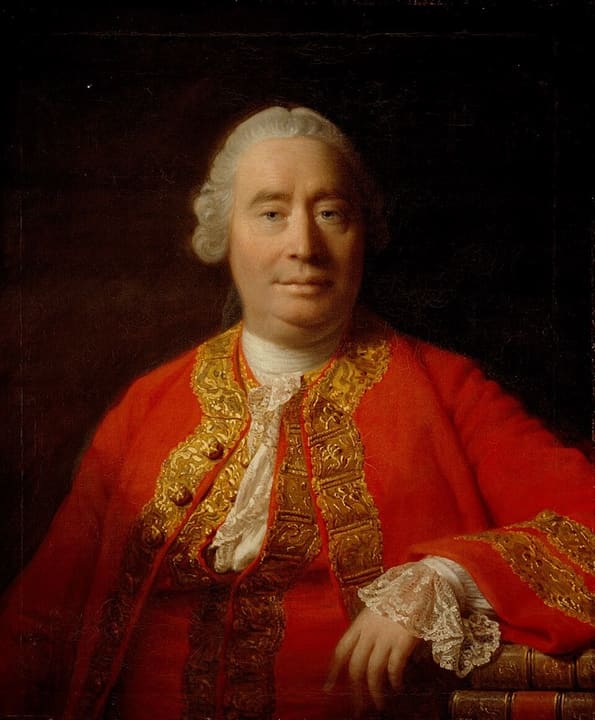

Summary
David Hume's Essays, Moral and Political first appeared anonymously in Edinburgh in two volumes in 1741 and 1742, after his Treatise of Human Nature had, in his own phrase, fallen dead-born from the press. Written in the manner of Addison's Spectator for a polite reading public, they brought the philosophy of the Treatise to bear on British politics, religion, taste and manners. Hume revised and expanded them in many later editions, joined them to the Political Discourses of 1752, and added new essays until his death. The library text is not the complete collection but a selection of thirteen essays published in London by John Long in the early 20th century, with a biographical introduction by Hannaford Bennett drawing on Hume's autobiography, My Own Life. The selection opens with Of the Delicacy of Taste and Passion, which advises readers to cultivate a refined taste in the arts as a remedy for an excessive sensitivity to good and bad fortune. Of the Liberty of the Press explains why Britain alone enjoys a free press: its mixed government, with a strong republican element, makes the people jealous of the crown, and a free press keeps that jealousy awake. That Politics May Be Reduced to a Science argues that forms of government matter more than the characters of rulers, so that general maxims about constitutions can be drawn almost with mathematical certainty. Of the First Principles of Government finds that the many obey the few because government rests on opinion, both opinion of public interest and opinion of right to power and property. Of the Origin of Government, added in the posthumous edition of 1777, traces political society to the need to administer justice. Of the Independency of Parliament defends the crown's influence in the Commons as a needed balance, beginning from the maxim that in designing a constitution every man should be supposed a knave. In Whether the British Government Inclines More to Absolute Monarchy or to a Republic, Hume weighs the drift of the constitution and concludes that a peaceful absolute monarchy would be a gentler end than a republic reached through civil war. Of Parties in General honours lawgivers and blames the founders of factions, distinguishing factions of interest, principle and affection, and Of the Parties of Great Britain analyses Whigs and Tories, Court and Country. Of Superstition and Enthusiasm traces two corruptions of religion to opposite states of mind: superstition to weakness, fear and melancholy, enthusiasm to presumption and strong spirits. Hume argues that superstition favours priestly power while enthusiasm, after its first fury, becomes mild and friendly to liberty. Of the Dignity or Meanness of Human Nature argues against the selfish theory of morals. Of Civil Liberty compares free governments and civilized monarchies in their effect on commerce and the arts, and Of Eloquence asks why modern oratory falls short of Demosthenes and Cicero.
Virtues in this work
- Temperance: Of the Delicacy of Taste and Passion recommends cooling an excessive sensitivity to fortune by cultivating a calm, refined taste.
- Prudence: Of the Independency of Parliament designs institutions on the cautious assumption that every officeholder will follow his own interest.
- Justice: Of the Origin of Government makes the support of the judges the end of the whole apparatus of the state.
- Friendship: Of Parties in General condemns factions for setting against each other fellow citizens who ought to protect one another.
Plot or Argument
- Biographical introduction (Hannaford Bennett)
A short life drawn largely from My Own Life: Hume's family at Ninewells, his studies in Edinburgh, the years in France writing the Treatise, the disappointment of its reception, the success of the essays and the History of England, his posts in Paris and London, and his calm death in 1776.
- Of the Delicacy of Taste and Passion
Some people feel every turn of fortune with piercing joy or grief. Hume grants that such sensibility brings livelier pleasures but more pungent sorrows, and recommends cultivating delicacy of taste in poetry, painting and music instead, since taste makes our happiness depend on objects within our choice, improves our judgment and draws us to a few select friends.
- Of the Liberty of the Press; That Politics May Be Reduced to a Science
Britain's mixture of monarchy and republic explains why it allows a liberty of the press found neither in pure republics nor in absolute monarchies; that liberty keeps the people watchful of the crown and, if lost, will be lost at once. In the second essay Hume argues that the force of laws and forms of government is so great that political maxims can be nearly as certain as mathematics: a hereditary prince with a nobility and no representatives, for instance, makes the best monarchy, and free governments are the most happy for those who share in power but the most ruinous for their provinces. Rome, Venice and Britain supply examples.
- Of the First Principles of Government; Of the Origin of Government
Since force is always on the side of the governed, governments rest on opinion: opinion of public interest and opinion of right, including the right to power and to property, supported by self-interest, fear and affection. The later essay on origins finds that men, born in families, form political society to administer justice; all the apparatus of state exists finally to support the judges. Habit and consent establish authority, and liberty and authority remain in perpetual contest.
- Of the Independency of Parliament; Whether the British Government Inclines to Absolute Monarchy or to a Republic
Constitutions must be built on the supposition that every man is a knave governed by interest. The House of Commons could swallow the other powers, and only the crown's influence through offices restrains it, an influence Hume calls necessary in moderation. The second essay weighs the growing wealth of the people against the crown's patronage and concludes that, of the two possible ends of the British constitution, absolute monarchy would be the quieter death.
- Of Parties in General; Of the Parties of Great Britain
Lawgivers deserve the highest honour and founders of factions the reverse. Hume classifies factions as personal or real, and real factions as from interest, principle or affection, noting that factions from abstract speculative principle, especially in religion, are peculiar to modern times and the fiercest. He then describes the British parties: Court and Country, Whig and Tory, and their relation to the Revolution of 1688 and the Stuart claim.
- Of Superstition and Enthusiasm
Two corruptions of true religion arise from opposite moods. Weakness, fear and melancholy produce superstition, which looks for mediators and so favours priests; presumption, strong spirits and ignorance produce enthusiasm, which claims direct inspiration and rejects priests. Enthusiasm is more furious at first but grows mild; superstition creeps in gently and becomes tyrannical. Hume illustrates with the Independents, Quakers, Jansenists and Jesuits, and concludes that superstition is an enemy and enthusiasm a friend to civil liberty.
- Of the Dignity or Meanness of Human Nature
Disputes over whether human nature is noble or base often turn on comparisons and on words. Hume argues against those who reduce all virtue to self-love, holding that benevolence is a real part of human nature even if vanity often accompanies it.
- Of Civil Liberty; Of Eloquence
Hume compares free governments and absolute monarchies. The ancients thought the arts flourished only under liberty, yet France shows a civilized monarchy can foster them; commerce, however, thrives best in free states. Modern monarchies, he says, have become governments of laws. Of Eloquence asks why moderns have not equalled Demosthenes and Cicero, tracing the difference to the forms of ancient assemblies and modern law, and hopes that a British orator of genius may yet arise.
Characters
- David Hume, essayist
Writes in his own person as a moderate, sceptical observer of party, religion and taste, addressing the polite reader.
- Hannaford Bennett, editor
Author of the biographical introduction to the John Long selection used in the library text.
- Niccolò Machiavelli, authority discussed
Cited in the essays on politics as a science and on civil liberty, where Hume tests his maxims against later experience.
- James Harrington, authority discussed
Author of Oceana, whose confident forecast about the British constitution Hume cites as a warning against political prophecy in the essay on whether Britain inclines to monarchy or republic.
- Demosthenes and Cicero, models of eloquence
The ancient orators whose force and passion Of Eloquence holds up against the cooler oratory of modern Britain.
- Whigs and Tories, parties analysed
The British parties whose principles and histories Hume dissects in Of the Parties of Great Britain.
Lessons
All government rests on opinion
Hume notices that the governed always have more force than their rulers, so obedience must rest on what people believe: that a government serves the common interest and that it holds power and property by right. Even despots must lead their guards by opinion. This makes custom, history and belief central to politics.
- What are the three kinds of opinion Hume names in Of the First Principles of Government?
- Why does Hume say this maxim applies to the most military governments as well as the most free?
- If government rests on opinion, what happens when opinion changes quickly?
Design institutions for knaves
In Of the Independency of Parliament Hume repeats the maxim that a constitution should assume every man is a knave governed by private interest, and then use that interest to serve the public good. Good institutions do not rely on good men, though Hume adds that the maxim is true in politics even if false in fact of individuals.
- Why does Hume find it strange that a maxim false of individuals should be true in politics?
- How does he use this maxim to defend the crown's influence in the House of Commons?
- Where else in political thought do you find the same idea of setting interest against interest?
Faction is the enemy of law
Hume honours lawgivers as the greatest of men and blames founders of factions, whose quarrels set fellow citizens against each other. He finds factions based on speculative principles, especially religious ones, the most violent, since each side cannot bear to see others think differently.
- What are Hume's three kinds of real faction, and which does he think most dangerous?
- Why does Hume think religious disputes produced fiercer parties among Christians than among the ancients?
- Can a free state exist without parties, according to Hume's analysis of Britain?
Temper shapes belief and happiness
Two essays trace beliefs and moods to the condition of the mind: superstition to fear and melancholy, enthusiasm to bold and elevated spirits, and unhappiness to an uncontrolled delicacy of passion. Hume's remedy in each case is a calmer, cultivated temper.
- How does delicacy of taste help a person with delicacy of passion, according to Hume?
- Why does Hume think enthusiasm, though more violent at first, becomes friendlier to liberty than superstition?
- What would a Christian reader want to add to Hume's account of where religious feeling comes from?
Context
The essays belong to the Britain of Sir Robert Walpole's long ministry (1721–1742) and the decades after, when Court and Country, Whig and Tory, and the Jacobite cause still divided politics, and when Addison and Steele's periodical essays had created a taste for polite, short pieces on manners and opinion. Hume, a Scot writing soon after his Treatise, aimed to moderate party zeal by showing each side the partial truth in the other's principles. He also took part in the Scottish Enlightenment's new science of man, which sought general laws in human conduct and society.
Composition
Volume I of Essays, Moral and Political was published anonymously by Alexander Kincaid in Edinburgh in 1741, and Volume II in 1742. Hume revised the essays repeatedly, withdrew some, added the Political Discourses (1752), and gathered them in later collections; Of the Origin of Government first appeared in the posthumous 1777 edition. Of Civil Liberty was first titled Of Liberty and Despotism. The library text is a 20th-century selection published by John Long in London, introduced by Hannaford Bennett; it contains thirteen essays and omits many others, including Idea of a Perfect Commonwealth and Of the Original Contract.
Reception
The essays sold well and made Hume known in Britain and France before his History did. American readers knew them; the historian Douglass Adair argued in 1957 that Madison's Federalist No. 10, on the control of faction in a large republic, drew on Hume's essays on parties and on a perfect commonwealth, a claim later scholars have discussed and qualified. Hume's analysis of opinion as the basis of government and of interest as the material of constitutions remained central to later political science.
Comparisons
- a-treatise-of-human-nature
Book III of the Treatise derives justice and allegiance from convention and interest; the essays on the origin and first principles of government restate that account for a general reader without the technical apparatus.
- an-enquiry-concerning-human-understanding
The Enquiry's section on miracles and its sceptical method are the philosophical background to Of Superstition and Enthusiasm, which explains religious corruption by the passions and temper of believers.
- the-federalist-papers
Hume's classification of factions in Of Parties in General and his maxim that constitutions should be designed for knaves bear on Madison's Federalist 10 and 51, which control faction and set ambition against ambition.
- second-treatise-of-government
Locke founds government on consent; Hume, in the essays on origins and first principles, finds it in necessity, habit and opinion, and doubts that most governments began in any contract.
- the-spirit-of-the-laws
Montesquieu and Hume both studied how forms of government shape manners and commerce; Hume's comparison of free states and civilized monarchies in Of Civil Liberty runs parallel to Montesquieu's analysis of monarchy and republic in the 1740s.
- essays-bacon
Bacon's short counsels on faction, superstition and seditions are an earlier English model of the political essay that Hume's more argumentative pieces develop.
Quotes
“as Force is always on the side of the governed, the governors have nothing to support them but opinion. It is, therefore, on opinion only that government is founded”
“So great is the force of laws, and of particular forms of government, and so little dependence have they on the humours and tempers of men, that consequences almost as general and certain may sometimes be deduced from them, as any which the mathematical sciences afford us.”
“It is seldom that liberty of any kind is lost all at once.”
“We are, therefore, to look upon all the vast apparatus of our government, as having ultimately no other object or purpose but the distribution of justice, or, in other words, the support of the twelve judges.”
“Factions subvert government, render laws impotent, and beget the fiercest animosities among men of the same nation, who ought to give mutual assistance and protection to each other.”
“Weakness, fear, melancholy, together with ignorance, are, therefore, the true sources of Superstition.”
For Students
A reading companion for classical Christian high school students. See the student guide.
Reading Guide
Watch for
- The opening question of Of the First Principles of Government, about how the many are so easily governed by the few.
- The maxim about knaves at the start of Of the Independency of Parliament, and Hume's own hesitation over it.
- The contrast between legislators and founders of factions in Of Parties in General.
- The paired portraits of superstition and enthusiasm, each traced to a state of mind, and the three reflections that follow.
- Hume's claim in Of Civil Liberty that civilized monarchies, too, have become governments of laws.
Key terms and names
- Opinion
- In Of the First Principles of Government, the beliefs about public interest and about rightful power and property on which every government finally rests.
- Faction
- A party that divides citizens; Hume sorts real factions into those of interest, of principle and of affection.
- Superstition
- In Hume's essay, a corruption of religion arising from fear and melancholy, which seeks mediators and favours the power of priests.
- Enthusiasm
- In Hume's essay, a corruption of religion arising from elated spirits and presumption, which claims direct inspiration and rejects priests.
- Court and Country
- The parties of those who supported the crown's ministry and those who opposed its influence, which Hume treats as the basic division of British politics.
- Delicacy of passion
- An excessive sensitivity to good and ill fortune, which Hume thinks makes a person less happy and recommends correcting by delicacy of taste.
Seminar Questions
- Comprehension According to Of the First Principles of Government, on what does all government finally rest, and what kinds of opinion does Hume name?
- Comprehension Why does Hume say Britain enjoys a liberty of the press that other nations lack?
- Comprehension What states of mind does Hume say produce superstition and enthusiasm?
- Interpretation Hume says every man should be supposed a knave in politics, though this is not true of individuals. How can a maxim be false in fact but true in politics?
- Interpretation Why does Hume think factions of abstract principle, especially religious ones, are fiercer than factions of interest?
- Interpretation In Of Civil Liberty Hume says civilized monarchies have become governments of laws. What changed his view from that of the ancients?
- Big Question Can good institutions make a people free if their opinions do not support those institutions?
- Big Question Is moderation in politics a virtue, or can it become indifference to truth?
Faith Connections
- Romans 13:1-7 (Scripture)
Paul grounds obedience to rulers in God's ordinance and in conscience; Hume, writing as a philosopher, grounds it in opinion, habit and interest, a contrast worth setting side by side.
- 1 John 4:1 (Scripture)
John's warning to test the spirits addresses the same danger Hume describes as enthusiasm, the claim to direct inspiration, though from within faith rather than from a sceptic's distance.
- Jonathan Edwards, A Treatise Concerning Religious Affections (1746) (Great Conversation)
Writing in the same decade, Edwards sought to distinguish true religious affections from enthusiasm and mere excitement of the spirits, a theologian's answer to the question Hume raises about the sources of religious feeling.
- Augustine, City of God XIX.17 (Church Fathers)
Augustine teaches that the heavenly city makes use of the earthly peace and its laws while on pilgrimage; Hume's essays on government describe that earthly peace and its foundations without reference to the city beyond it.
Logic and Rhetoric
Central argument: Since force is always on the side of the governed, every government rests on opinion. Opinions are shaped by interest, custom and the passions, and the forms of government channel these with nearly predictable effects. Therefore politics can become a science of institutions, which should assume that men act from interest, restrain factions, and keep a balance between liberty and authority, while religion and party are best kept moderate by understanding the tempers from which their excesses arise.
Rhetorical device: antithesis. Of Superstition and Enthusiasm is built on paired opposites: weakness and fear against presumption and strong spirits, priestly power against its rejection, gentle beginnings against furious ones, ending in the claim that superstition is the enemy and enthusiasm the friend of civil liberty (see quote 5).
Debate: Resolved: That in designing a constitution every man ought to be supposed a knave.
Memory Work
It is seldom that liberty of any kind is lost all at once.
as Force is always on the side of the governed, the governors have nothing to support them but opinion. It is, therefore, on opinion only that government is founded
Writing Prompts
Essay: Hume says government rests on opinion and that constitutions should be designed for knaves. Explain both claims and argue whether they fit together or pull in different directions.
Comparison with The Federalist Papers: Compare Hume's Of Parties in General with Madison's Federalist 10. How do the two writers classify factions, and how do their remedies differ?
Medical Lens
Hume had personal experience of what his age called the disease of the learned: from about 1729 to 1734 he suffered low spirits, loss of appetite and other symptoms, consulted physicians, and described the illness in a long letter of 1734 to an unnamed physician (often thought to be George Cheyne). The essays reflect the 18th-century medicine of temperament. Of Superstition and Enthusiasm explains two religious dispositions by mood: weakness, fear and melancholy breed superstition, while luxuriant health, strong spirits and a bold temper breed enthusiasm, the claim to direct inspiration that physicians and divines of the period often treated as close to madness. Of the Delicacy of Taste and Passion describes an over-sensitive temper and proposes a cultivated taste as a kind of regimen for it. In Whether the British Government Inclines More to Absolute Monarchy or to a Republic, Hume uses the word euthanasia in its older sense of an easy death, calling absolute monarchy the easiest death of the British constitution. Any modern clinical reading of these passages is interpretation.
- Of Superstition and Enthusiasm
Superstition traced to weakness, fear and melancholy; enthusiasm to presumption, luxuriant health and strong spirits.
- Of the Delicacy of Taste and Passion
An excessive sensibility to fortune, with its piercing griefs, and the cultivation of taste as its remedy.
- Whether the British Government Inclines More to Absolute Monarchy or to a Republic
Absolute monarchy called the easiest death, the euthanasia, of the British constitution.
- Whether the British Government Inclines More to Absolute Monarchy or to a Republic
A physician will not venture to predict a patient's condition a month ahead; still less can a politician foretell public affairs, as Harrington's failed prophecy shows.
Creative Prompts
- Classroom
Give students Hume's three kinds of real faction (interest, principle, affection). Have them sort a list of historical parties and movements into the categories and defend each placement.
- Essay
Hume says government rests on opinion. Choose a historical regime that collapsed suddenly and explain its fall in Hume's terms.
- Dialogue
Write a conversation between a Whig and a Tory of 1742 who have both just read Of the Parties of Great Britain, each objecting to what Hume says about his own side.
Further Reading
- Essays, Moral, Political, and Literary (ed. Eugene F. Miller), David Hume
The complete essays, with withdrawn and unpublished pieces and variant readings.
- Hume's Philosophical Politics, Duncan Forbes
- The Life of David Hume, Ernest Campbell Mossner
- A Treatise of Human Nature, David Hume
Book III gives the theory of justice and government behind the essays.
Verification notes
Publication dates (1741 and 1742, Edinburgh, Kincaid), the posthumous first appearance of Of the Origin of Government (1777), and the earlier title of Of Civil Liberty are standard. The library text is a selection of thirteen essays (the Gutenberg file lists them in its contents); Hume's later revisions mean wording can differ from the first editions. All six quotations were found by search in content/texts/hume-political-essays.txt and copied exactly; passages with italic markup in the stored text were avoided. Hume's 1734 letter to a physician and the suggestion that it was meant for George Cheyne are standard in the biographies. Douglass Adair's 1957 article on Hume and Federalist 10 is a well-known piece of scholarship; its thesis has been debated.
- Which edition of the essays the John Long selection follows (likely a late edition with Hume's final revisions).
- The date of the John Long printing, given only as early 20th century in the source metadata.