Work record
Incidents in the Life of a Slave Girl
1861 · 19th Century · Memoir · English
Abstract
Background. Composed in snatched hours by a fugitive employed as a children's nurse in New York, and urged on by a Quaker friend in Rochester, the manuscript was arranged by a well-known antislavery writer and issued privately on the eve of the Civil War.
Content. Under a pen name, a woman recounts girlhood bondage in a Carolina town, years of harassment by the man who held her, the birth of two children, flight, a long concealment beneath a relative's roof, escape by sea, service with a New York family, renewed pursuit under federal law, and liberty purchased by a benefactor.
Form. The narrator uses novelistic dialogue and suspense, but interrupts it with appeals to the Reader and with argument, aimed especially at Northern women whose sympathy and influence she hopes to win for the cause of abolition.
Themes. The wrongs particular to enslaved women, the strength of a grandmother's faith, a mother's sacrifice, the gap the author sees between the Gospel and churches that defended slaveholding, the reach of the 1850 law into free states, the kindness of friends who risk their own safety, and the longing for a home.
Significance. Long doubted as fiction, its authorship was documented in the 1980s by Jean Fagan Yellin, and it now ranks among the foremost slave narratives and American women's autobiographies.
Key figures
- Linda Brent (Harriet Jacobs): Narrator, enslaved woman who hides seven years and escapes North
- Aunt Martha: Her free grandmother, baker and pillar of faith
- Dr. Flint: Physician who claims her and pursues her
- Mr. Sands: White lawyer and father of her two children
- Benny and Ellen: Her son and daughter
- William: Her brother, who escapes in the North
- Mrs. Bruce: New York employer and friend who buys her freedom
- Lydia Maria Child: Abolitionist author who edited and introduced the book
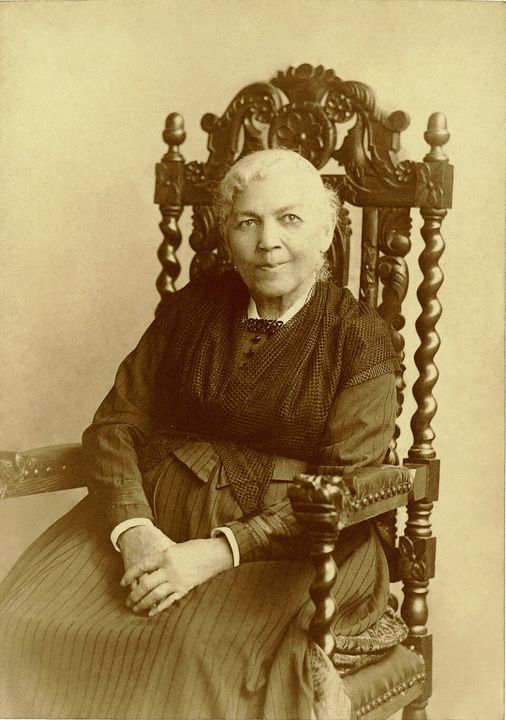

Summary
Incidents in the Life of a Slave Girl is Harriet Jacobs's account of her life in slavery and escape, told under the name Linda Brent with the names of people and places changed. Linda grows up in a North Carolina town believing herself free until, at six, her mother dies and she learns she is a slave. Her first mistress teaches her to read and spell, but at her death in 1825 bequeaths Linda, then about twelve, to a young niece, so that Linda comes under the control of the girl's father, the town physician Dr. Flint. Her grandmother, Aunt Martha, a freed woman respected in the town for her bakery and her faith, is the moral center of the book. As Linda enters her teens Dr. Flint pursues her with unwanted advances, and his jealous wife turns her anger on the girl. Forbidden to marry a free man she loves, and seeking some protection, Linda enters a relationship with Mr. Sands, an unmarried white lawyer, and bears two children, Benny and Ellen; she writes of this with deep shame and asks the reader not to judge her by the standards of the free. Dr. Flint sends her to his son's plantation to break her and threatens to bring the children there too, and in June 1835 she runs away. Friends, including a sympathetic white woman, hide her; then she is taken to a crawlspace above a shed at her grandmother's house, nine feet long and seven wide, three feet high at its peak. There she stays for nearly seven years, reading, sewing, and watching her children through a small hole she bores in the wall, while Dr. Flint searches for her in the North. Mr. Sands buys the children through a trader, and her brother William escapes to the North. Linda suffers cramps, cold and illness in the garret. In 1842 she escapes by boat to Philadelphia and New York, recovers her daughter, and finds work as a nurse with the kind Mrs. Bruce. The Fugitive Slave Law of 1850 puts her in danger again, and she spends periods in hiding and a year in England, where she finds a welcome she has not known at home. In 1852 the second Mrs. Bruce buys her freedom from Dr. Flint's son-in-law over her objections, and Linda declares that her story ends with freedom, not with marriage, though she still longs for a home of her own. The book was published in Boston in 1861, printed for the author, with an introduction by Lydia Maria Child, who edited it, and an appendix of testimonials from Amy Post and George W. Lowther.
Virtues in this work
- Fortitude: Linda endures nearly seven years in a garret too low to stand in, through frostbite and illness, to remain near her children.
- Faith: Aunt Martha meets the sale of her children and the dangers to her granddaughter with steady trust in God.
- Charity: Mrs. Bruce buys Linda's freedom and tells her she did it not for her services but so she would be a free woman.
- Prudence: From the garret Linda writes letters dated from New York that draw Dr. Flint's search away from her hiding place.
Plot or Argument
- Chapters I-IV: Childhood and family
Linda learns at six that she is a slave, loses her mother and her kind first mistress, and comes under Dr. Flint. Her grandmother's earnings, faith and position in the town, and her brother William's spirit, shape her early life.
- Chapters V-IX: The trials of girlhood
Dr. Flint's persecution begins when she is fifteen; Mrs. Flint's jealousy follows. Linda is forbidden to marry the free man she loves, and describes the cruelty of neighboring slaveholders and what enslaved people are told about the North.
- Chapters X-XVI: Children and the plantation
Seeking protection, she enters a relationship with Mr. Sands and bears Benny and Ellen. She describes the fear after Nat Turner's revolt and her judgment of churches that defended slaveholding, then is sent to the plantation as punishment and resolves to flee for her children's sake.
- Chapters XVII-XX: Flight and hiding
Linda escapes in 1835 and is hidden by a slaveholding woman and in a swamp, while Dr. Flint jails her family. Mr. Sands buys the children and her brother through a trader.
- Chapters XXI-XXVIII: The loophole of retreat
For nearly seven years she lives in a garret too low to stand in, watching her children through a peephole, writing letters dated from New York to mislead Dr. Flint, and suffering in the cold. William escapes in the North, the children are taken North, and her aunt Nancy dies worn out by service.
- Chapters XXIX-XXXIII: Northward bound
In 1842 she escapes by ship to Philadelphia, meets her daughter in Brooklyn, and is hired by Mrs. Bruce, while encountering prejudice in the North.
- Chapters XXXIV-XLI: The old enemy and freedom
Dr. Flint and his heirs pursue her in New York; she visits England; the Fugitive Slave Law heightens the danger; and in 1852 the second Mrs. Bruce purchases her freedom. Her grandmother dies soon after.
- Appendix
Letters by Amy Post, the Quaker abolitionist of Rochester, and George W. Lowther vouch for the author's character and the truth of her story.
Characters
- Linda Brent (Harriet Jacobs), author and narrator
Enslaved young woman who resists her master, hides for seven years, and wins freedom for herself and her children.
- Aunt Martha, grandmother
Free baker of great faith and dignity who shelters Linda in her garret.
- Dr. Flint, master and persecutor
Town physician who controls Linda through his daughter's legal claim and pursues her for years.
- Mrs. Flint, mistress
His jealous wife, who blames Linda for her husband's conduct.
- Mr. Sands, father of her children
White lawyer, later a congressman, who buys the children but is slow to free them.
- Benny and Ellen, her children
Whose welfare is the reason for her flight, her hiding, and her endurance.
- William, brother
Spirited brother who escapes to freedom while traveling North with Mr. Sands.
- Uncle Phillip and Aunt Nancy, uncle and aunt
Phillip, a carpenter, builds the trapdoor to her hiding place; Nancy, worn out by service to the Flints, is her refuge in girlhood.
- Mrs. Bruce, employer and friend
The name given to two successive wives in the New York household where Linda works; the second buys her freedom.
Lessons
A mother's endurance
Linda's flight and her seven years in the garret are undertaken for Benny and Ellen. She chooses darkness, cold and cramped limbs over a life in which her children would be raised in slavery, and she watches them through a hole bored in the wall. The book honors the self-sacrifice of mothers and the strength of family bonds that slavery could not break.
- Why does Linda decide to run away in 1835?
- How does she stay connected to her children while in hiding?
- What does her choice show about the nature of a parent's love?
Faith tested and kept
Aunt Martha's trust in God steadies the family through every loss. Linda distinguishes true Christianity from the religion of slaveholding churches, and she records her own struggles to pray and to forgive. Faith in the book is not easy comfort; it is held through sorrow and doubt.
- How does Aunt Martha express her faith in times of trouble?
- What difference does Linda see between Christianity and religion at the South in Chapter XIII?
- Why is forgiving Dr. Flint so hard for Linda, and does she claim to have done it?
Telling the truth with restraint
Jacobs changed names to protect others and wrote of her most painful choices with shame and honesty, asking her readers, especially Northern women, to understand rather than condemn. Her reticence is itself a form of dignity, and her frankness was a moral act meant to move readers to oppose slavery and the return of fugitives.
- Why does the author say in the Preface that she concealed the names of people and places?
- Whom does she address as Reader, and what does she ask of them?
- Why might telling a painful story be an act of courage?
Freedom and home
Linda's freedom is bought by a friend, and she is grateful yet grieved that a human being should be sold in New York. She ends by saying her story ends with freedom, not marriage, and that she still longs for a hearth of her own. Freedom is the beginning, not the end, of a life rebuilt.
- Why does Linda object to having her freedom bought?
- What does she mean when she says the word friend is sacred when she speaks of Mrs. Bruce?
- What does she still long for at the end of the book?
Context
Jacobs's life spans the decades when slavery expanded in the American South and the conflict over it deepened. In North Carolina, after Nat Turner's revolt in Virginia in 1831, laws tightened and patrols searched the homes of enslaved and free Black people, as Jacobs describes. Enslaved women had no legal protection against their owners, and enslaved marriages had no legal force. The Fugitive Slave Act of 1850 required citizens of free states to assist in returning escapees and denied accused fugitives a jury trial, so that even in New York Jacobs was not safe. Her narrative belongs to the tradition of slave narratives, including Frederick Douglass's of 1845, but it is among the first by a woman to address the particular wrongs suffered by enslaved women.
Composition
Jacobs wrote the book over several years in the late 1850s, at night after her work as a nurse, with encouragement from Amy Post. Lydia Maria Child, the abolitionist author, agreed to edit it, and states in her introduction that she condensed and arranged but added nothing to the incidents. The Boston firm that was to publish it failed, and Jacobs bought the plates and had the book printed for the author in 1861; a London edition, The Deeper Wrong, followed in 1862.
Reception
The book received friendly notices in the antislavery press, but the outbreak of the Civil War overshadowed it, and for much of the following century many readers assumed it was a novel written by Child. In 1981 and in her 1987 edition, the historian Jean Fagan Yellin documented Jacobs's authorship from her letters and identified the real people behind the pseudonyms. Since then it has been widely read and taught as a central American autobiography and a classic of the slave narrative.
Comparisons
- narrative-and-fourth-of-july
Douglass's 1845 narrative is the best-known male slave narrative, centered on literacy and a fight with the overseer Covey; Jacobs adds the perspective of a woman and mother, and of years spent in hiding rather than in open resistance.
- up-from-slavery
Washington, born a generation later, remembers slavery only as a child and writes of building after freedom; Jacobs writes from within the long struggle to reach it.
- uncle-toms-cabin
Stowe's novel of 1852 aimed at the same Northern readers; Jacobs, who declined to have her story folded into Stowe's work, tells hers in her own words, and both use a mother's flight for her child as a central image.
- twelve-years-a-slave
Northup, a free man kidnapped into slavery, and Jacobs, born in it, both wrote for Northern readers in the 1850s to show slavery from within.
- rowlandson-narrative-of-the-captivity
Mary Rowlandson's 1682 narrative is an earlier American woman's account of captivity and of faith tested by separation from her children.
Quotes
Frequently cited
“Reader, be assured this narrative is no fiction.”
Frequently cited
“I was born a slave; but I never knew it till six years of happy childhood had passed away.”
Frequently cited
“There is a great difference between Christianity and religion at the south.”
Frequently cited
“Slavery is terrible for men; but it is far more terrible for women.”
Frequently cited
“Reader, my story ends with freedom; not in the usual way, with marriage.”
“Yet I would have chosen this, rather than my lot as a slave”
“when I speak of Mrs. Bruce as my friend, the word is sacred.”
“The dream of my life is not yet realized. I do not sit with my children in a home of my own.”
For Students
A reading companion for classical Christian high school students. See the student guide.
Reading Guide
Watch for
- How Aunt Martha's house, faith and reputation make her a refuge throughout the book.
- The places where Jacobs speaks directly to the Reader, and what she asks of them.
- Chapter XIII on the churches, and the difference she draws between Christianity and the religion of slaveholders.
- The garret in Chapter XXI: how she endures it, and what the peephole means to her.
- The ending in Chapter XLI and her reasons for both gratitude and sorrow at being purchased.
Key terms and names
- Slave narrative
- An autobiography by a person who escaped or was freed from slavery, written to testify to its reality.
- Pseudonym
- A false name; Jacobs wrote as Linda Brent and changed other names to protect the living.
- Loophole of Retreat
- Jacobs's chapter title for her hiding place, borrowed from a line of William Cowper's poem The Task.
- Fugitive Slave Law
- The federal law of 1850 that required Northern officials and citizens to help return escapees to their owners.
- Nat Turner's rebellion
- The 1831 revolt in Virginia after which Southern patrols and laws became harsher, as Chapter XII describes.
- Abolitionist
- A person working to end slavery, such as Lydia Maria Child and Amy Post.
Seminar Questions
- Comprehension Why does Linda's first mistress matter so much to her, and what happens at her death?
- Comprehension Describe the hiding place where Linda lives for nearly seven years.
- Comprehension How does Linda finally become legally free?
- Interpretation Why does Jacobs repeatedly address the Reader, and how does that shape the way we hear her story?
- Interpretation What does Aunt Martha represent in the book?
- Interpretation Why does Jacobs say her story ends with freedom, not marriage?
- Big Question How should we judge choices made under conditions where no good choice is available?
- Big Question What makes a place a home?
Faith Connections
- Isaiah 32:9 (Scripture)
Jacobs places this verse on her title page: Rise up, ye women that are at ease. It frames the book as a call to the comfortable to hear the suffering.
- Job 3:17 (Scripture)
Jacobs closes her account of her grandmother's death with words from this verse, which pictures the grave as a place where the weary are at rest; after a lifetime of labor and loss, the old woman's faith is answered with rest.
- Galatians 3:28 (Scripture)
Paul writes that in Christ there is neither bond nor free. Jacobs's contrast between Christianity and slaveholding religion appeals to this kind of teaching.
- Frederick Douglass, Narrative (Appendix) (Great Conversation)
Douglass likewise distinguished the Christianity of Christ from the Christianity of the land, a parallel to Jacobs's Chapter XIII.
Logic and Rhetoric
Central argument: Northern readers think of slavery as perpetual labor only. But Jacobs's own life shows that it gave masters power over women's bodies, broke families, and corrupted churches and law. Therefore she argues that Northern women must recognize slavery's particular wrongs and refuse any part in sending fugitives back.
Rhetorical device: direct address (apostrophe to the reader). In the Preface and again at the close, Jacobs speaks to the Reader directly, as in Chapter XLI: Reader, my story ends with freedom; not in the usual way, with marriage.
Debate: Resolved: that Jacobs's choice to remain hidden near her children for seven years, rather than flee North at once, was the wiser course.
Memory Work
Reader, my story ends with freedom; not in the usual way, with marriage.
Slavery is terrible for men; but it is far more terrible for women.
Writing Prompts
Essay: Jacobs calls her hiding place a loophole of retreat. Argue whether her years in the garret were a defeat, a strategy, or a victory, using Chapters XXI-XXIX.
Comparison with Narrative of the Life and What to the Slave Is the Fourth of July?: Compare how Douglass and Jacobs describe the moment or means of resisting their masters, and how each uses religion to judge slavery.
Medical Lens
The narrative's persecutor is a physician, a fact Jacobs uses pointedly: Dr. Flint's medical authority and household access are part of his power over her, and he attends Mrs. Flint and the household while his enslaved servants have no recourse against him. It is therefore a source for the history of medical ethics and of physicians' place in a slaveholding society. The seven years in the garret are described physically: cramp, numbness and swelling of the limbs from inaction, frostbite, a winter episode in which her face and tongue stiffened and she lost consciousness and the power of speech, and lasting trouble with her limbs after escape, for which an employer later engaged a physician. Aunt Nancy's sleep deprivation as a night nurse and her repeated pregnancy losses are recorded with restraint. Linda's chronic fear of discovery, sleeplessness and dread at every newspaper list of arrivals are often read in light of later understandings of traumatic stress, but these are interpretations; Jacobs describes them in the language of her time.
- Chapter XXI, The Loophole of Retreat
Dimensions of the garret, the absence of light and air, and the frostbite of her shoulders and feet in the first winter.
- Chapter XXIII, Still in Prison
The second winter: cramps, cold in the head, stiffening of face and tongue, loss of speech and consciousness, and revival by her brother.
- Chapter XXVIII, Aunt Nancy
Her aunt's broken health from night nursing on the floor of the entry, and the deaths of her infants.
- Chapter XXXIII, A Home Found
Swelling of her limbs after escape and the physician Mrs. Bruce engages for her.
- Chapter XLI, Free at Last
Her constant watch of the newspaper lists of arrivals and the fear of recapture.
Creative Prompts
- Essay
Jacobs addresses her book to the women of the North. Analyze how she appeals to them, citing the Preface and her addresses to the Reader.
- Classroom
Measure out nine feet by seven on the classroom floor and mark a height of three feet. Discuss what seven years in such a space would require of body and spirit.
- Poetry
Write a poem in Aunt Martha's voice as she sits in her house knowing her granddaughter is hidden above.
- Dialogue
Write the conversation between Linda and the second Mrs. Bruce after her freedom is bought, drawing on Chapter XLI.
Further Reading
- Harriet Jacobs: A Life, Jean Fagan Yellin
- Incidents in the Life of a Slave Girl, Written by Herself (Harvard University Press edition), Harriet A. Jacobs, ed. Jean Fagan Yellin
The annotated edition that documented the identities behind the pseudonyms.
- Narrative of the Life of Frederick Douglass, Frederick Douglass
- The Harriet Jacobs Family Papers, Jean Fagan Yellin (ed.)
Verification notes
Contents, chapter titles, the garret dimensions, the seven years of hiding and the purchase of her freedom were checked against the attached Gutenberg text, which reproduces the 1861 Boston edition with Child's introduction and the appendix by Amy Post and George W. Lowther. Identifications of Dr. Flint with James Norcom, Mr. Sands with Samuel Tredwell Sawyer, Mrs. Bruce with Mary Stace Willis and Cornelia Grinnell Willis, and the place with Edenton follow Jean Fagan Yellin's research, as do the calendar years given in the summary (the first mistress's death in 1825, the flight in 1835, the escape in 1842, the purchase in 1852), since the narrative itself gives almost no dates and are given in the author bio only in general terms. The London title The Deeper Wrong (1862) and Jacobs's postwar relief work are standard facts from Yellin's biography. The text calls Aunt Nancy both a great-aunt and her mother's twin sister; the record says aunt. Quotes were checked against the attached text.
- Whether Jacobs's freedom was purchased in 1852 (the date usually given) and the exact sum paid (the text names three hundred dollars).
- The identification of uncle Phillip and Aunt Nancy with specific members of the Jacobs family.