Work record
Popular Scientific Lectures
1894 · 19th Century · Essays · German
Abstract
Background. A leading experimental physicist of the Habsburg lands, Mach also studied the senses and the history of mechanics. His American publisher, Open Court, gathered his public talks into an English volume before any German collection existed.
Content. Early talks demonstrate the shapes of floating oil drops, the ear's analysis of tones, the measurement of light's speed, depth perception and the appeal of symmetry. Later ones treat electrical measurement, the origins of the energy principle, the role of chance in invention, the inner ear's sense of turning, and photographs of bullets outrunning their own sound.
Key Concepts. The 1882 Academy address argues that every science is a labour-saving summary of observations; laws, causes and atoms are instruments of description. A companion essay treats concepts as evolving under pressure from new facts and describes reasoning by imagined variation of circumstances.
Significance. These essays carried Mach's antimetaphysical outlook to English readers and to later logical empiricists. His questioning of absolute motion, developed in the Mechanics, was acknowledged by Einstein, while his reserve about atoms set him against Boltzmann. His reports on the inner ear and on supersonic flight record genuine discoveries made by the lecturer himself. The closing address on Latin, Greek and science remains a thoughtful contribution to debates over the school curriculum.
Key figures
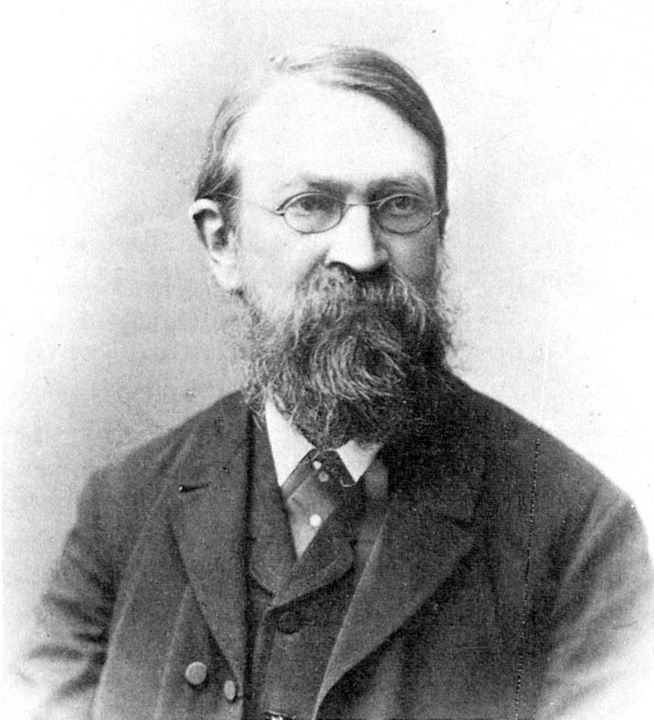
- Ernst Mach: Physicist, psychologist and philosopher of science, lecturing in Prague and Vienna
- Thomas J. McCormack: American translator for the Open Court Publishing Company of Chicago
- Hermann von Helmholtz: German physiologist and physicist whose theory of hearing Mach expounds
- Josef Breuer: Viennese physician credited alongside Mach for the theory of the semicircular canals
- Socrates: Invoked in the first lecture as the model of critical questioning

Summary
Popular Scientific Lectures gathers fifteen lectures and addresses that the Austrian physicist Ernst Mach gave between the 1860s and 1897 to general audiences, learned societies and university gatherings. They were first collected in English, translated by Thomas J. McCormack for the Open Court Publishing Company of Chicago in 1894–95; the library text is the enlarged third edition of 1898, whose proofs Mach read himself. The early lectures are demonstrations. 'The Forms of Liquids' opens with Socrates as the father of scientific criticism and shows how oil drops in a liquid of equal density take spherical and other shapes of least surface. 'The Fibres of Corti' and 'On the Causes of Harmony' explain Helmholtz's theory that the inner ear analyses sound into partial tones. 'The Velocity of Light' tells how Römer and Fizeau measured it. 'Why Has Man Two Eyes?' treats binocular vision and the stereoscope, and 'On Symmetry' asks why mirror symmetry pleases the eye. The middle group is historical and philosophical. A lecture on electrostatics (Vienna, 1883) defines its concepts by measurement; the long essay on the conservation of energy argues that the principle grew from the old conviction that perpetual motion is impossible. 'The Economical Nature of Physical Inquiry' (1882) gives Mach's best-known thesis: science is the economical ordering of experience, a way of saving thought by compact description, and concepts such as cause, force and the atom are tools for representing phenomena rather than realities behind them. 'On Transformation and Adaptation in Scientific Thought' (Prague, 1883) applies Darwin's idea of adaptation to ideas, which adjust to facts and to one another, and describes how scientists and others 'experiment in their thoughts'. Later addresses compare analogies in physics, weigh the part of accident in invention while insisting the inventor must notice and use what chance reveals, and report Mach's experiments on the sense of rotation, in which he spun himself on an apparatus and modelled the semicircular canals of the ear. 'On Some Phenomena Attending the Flight of Projectiles' (1897) describes his spark photographs of the shock wave around a bullet moving faster than sound. The final address, given at Dortmund in 1886, weighs instruction in Latin and Greek against mathematics and science, granting the classics real value but urging less systematic cramming and more science. Two appendixes treat the history of acoustics and spatial vision. Einstein later credited Mach's criticism of absolute space with helping prepare the way for general relativity.
Virtues in this work
- Humility: Mach describes scientific knowledge as the pooled experience of thousands of co-workers, gathered because no single finite mind could amass it alone.
- Prudence: In the conservation-of-energy lecture he warns that a successful theory like caloric must be re-examined lest it blind us to facts that do not fit.
- Industry: The orientation lecture reports repeated experiments on his own person on a rotating apparatus to test his model of the semicircular canals.
Plot or Argument
- Liquids, hearing and harmony
The opening lectures use soap films and oil drops to show that liquids take forms of least surface, and present Helmholtz's account of the fibres of Corti as resonators that let the ear analyse sound, explaining consonance by coinciding partial tones.
- Light, two eyes and symmetry
Mach recounts the measurement of the velocity of light from Römer to Foucault, explains depth perception through the two slightly different pictures of the eyes, and asks why symmetrical figures please us.
- Electrostatics and energy
Electrical quantities are defined by the operations that measure them. The essay on conservation of energy traces the principle to the conviction that perpetual motion is impossible and warns that even successful theories, such as caloric, can later block progress.
- The economy of science
In the 1882 Academy address Mach argues that science orders experience economically, saving labour of thought; cause and effect, laws and atoms are compact tools for describing and predicting, and the aim of science is the simplest abstract expression of facts.
- Adaptation and comparison
Ideas adapt to facts and to one another, as organisms adapt to surroundings; wonder gives way to understanding as thought adjusts. Comparison and analogy, which link remote domains, are among physics' chief instruments.
- Accident in discovery
Mach's Vienna inaugural lecture of 1895 shows how chance put fire, pottery, the telescope and many experimental discoveries in human hands, and argues that only a prepared and attentive mind can notice and exploit them.
- Orientation and projectiles
Mach describes experiments on his own sense of rotation and a mechanical model of the semicircular canals, then his photographs of the air waves around bullets travelling faster than sound.
- Classics and the sciences
The 1886 Dortmund address weighs the case for Latin and Greek in secondary schools, grants their value in opening the literature of antiquity, and urges reduced workloads and more mathematics and natural science.
Lessons
Science as economy of thought
Mach holds that a law of nature compresses many observations into one rule, so that what seems like sorcery is really good housekeeping of experience. The view explains the power of mathematics and also its limits, since every description sacrifices some completeness to usefulness.
- What does Mach mean by calling physics 'experience, arranged in economical order'?
- If a scientific law is a summary, can it ever tell us why things happen, or only how?
- What does Mach think is the weakness that comes with this strength?
Ideas grow and adapt
Writing after Darwin, Mach treats concepts as adapting to new facts and to one another. Wonder arises when a fact does not fit our habits of thought; understanding comes when thought adjusts. Experimenting in thought, which Mach finds in historians and artists as well as physicists, is the mind rehearsing such adjustments.
- Why does Mach say wonder lies in the observer rather than in the thing observed?
- Can you give an example from history or your own study where an idea had to be adjusted to fit new facts?
Chance favours the attentive
Mach gathers many examples of discoveries made by accident, yet he insists that the inventor must notice the new fact, grasp its use and turn it to account. Accident supplies opportunity, but attention, preparation and judgment supply discovery.
- Which of Mach's examples of accidental discovery do you find most convincing?
- What qualities does Mach think make a person able to profit from accidents?
Criticism of one's own concepts
Mach begins the collection with Socrates' questions and repeatedly asks scientists to examine the origins of their concepts, lest a useful idea become an obstacle. His critique of atoms and absolute space was itself much debated: Boltzmann defended atoms, and the atomic hypothesis was soon strongly confirmed, while Einstein found Mach's criticism of absolute space fruitful.
- Why does Mach call scientific criticism our 'inheritance' from Socrates?
- How can a once-successful theory, such as caloric, become an obstacle?
- Is it possible to be too critical of one's concepts?
Context
Mach worked in the German-speaking universities of the Habsburg Empire during a period of rapid advance in physics and physiology, when Helmholtz, Maxwell and Boltzmann were extending mechanics, thermodynamics and electromagnetism. Popular lectures were a regular part of scientific life in Vienna, Prague and Graz, and Mach took part in public debates on education and on the philosophical foundations of science.
Composition
The pieces span more than three decades: the acoustical and optical lectures date from the Graz period of the 1860s, 'Forms of Liquids' from 1868, the electrostatics lecture from the Vienna electrical exhibition of 1883, the economy address from the Vienna Academy in 1882, the adaptation essay from Mach's Prague rectorial address of 1883, the accident lecture from his Vienna inaugural of 1895, and the projectile lecture from 1897. McCormack translated them for Open Court, whose publisher Paul Carus championed Mach in America; the English collection appeared before any German edition, and later editions added lectures.
Reception
The lectures spread Mach's philosophy of science in the English-speaking world, where William James admired his work. His doctrine of economy and his insistence that concepts be traced to experience influenced the Vienna Circle, whose public society (1928) took his name. Physicists divided over his scepticism about atoms, which Boltzmann opposed. Einstein named 'Mach's principle' in 1918 and acknowledged the influence of Mach's critique of absolute motion, while a preface published after Mach's death distanced him from relativity; some historians have argued that it was written or altered by his son Ludwig.
Comparisons
- einstein-relativity
Einstein acknowledged that Mach's criticism of absolute space and time in The Science of Mechanics helped prepare his own thinking; the lectures give Mach's broader view that physical concepts must be grounded in observation and measurement.
- principia
Newton defined absolute space and time in the Principia's Scholium; Mach's economy lecture and his Science of Mechanics treat those notions as unnecessary metaphysics that experience cannot measure.
- poincare-science-and-hypothesis
Poincaré, writing a few years later, also treats many scientific principles as convenient conventions, but he gives hypotheses a more positive role than Mach's emphasis on economical description.
- on-the-origin-of-species
Mach's lecture on transformation and adaptation applies Darwin's language of variation and adaptation to the growth of ideas.
- studies-on-hysteria
Josef Breuer, whom Mach names as a fellow discoverer of the function of the semicircular canals, later wrote Studies on Hysteria with Freud; the two books show the same Viennese physiologist at work in two very different fields.
- novum-organum
Bacon sought to order experience through method and tables of instances; Mach shares the aim of compact, useful knowledge but explains it by economy of thought rather than by uncovering the forms of nature.
Quotes
Frequently cited
“Physics is experience, arranged in economical order.”
Frequently cited
“The atom must remain a tool for representing phenomena, like the functions of mathematics.”
“What we have learned from Socrates, however,--our inheritance from him,--is scientific criticism.”
“What strikes us here as the fruits of sorcery are simply the rewards of excellent housekeeping, as are the like results in civil life.”
“In the economical schematism of science lie both its strength and its weakness.”
“But the element of wonder never lies in the phenomenon or event observed; its place is in the person observing.”
“No one disturbs his fellow-men with a new view unpunished.”
“A person who has read and understood the Greek and Roman authors has felt and experienced more than one who is restricted to the impressions of the present.”
For Students
A reading companion for classical Christian high school students. See the student guide.
Reading Guide
Watch for
- The opening of 'The Forms of Liquids', where Mach presents Socrates as the founder of scientific criticism.
- The comparison in 'The Economical Nature of Physical Inquiry' between scientific knowledge and wealth gathered by careful housekeeping.
- Mach's claim that wonder belongs to the observer, and how it leads to the 'adaptation of thoughts to facts'.
- His examples of accidental discovery and the qualities he says an inventor must bring to an accident.
- The final address on classical and scientific education, where Mach weighs the value of Greek and Latin.
Key terms and names
- Economy of thought
- Mach's principle that science seeks the most compact description of the greatest number of facts, saving mental labour.
- Adaptation of thoughts
- The adjustment of ideas to new facts (and to other ideas), which Mach models on Darwin's account of biological adaptation.
- Experimenting in thought
- Varying circumstances in the imagination to test an idea; Mach describes the practice in the adaptation lecture, and it later became known as the thought-experiment.
- Conservation of energy
- The principle that energy is neither created nor destroyed but changes form; Mach traces its roots to the impossibility of perpetual motion.
- Semicircular canals
- Three curved fluid-filled tubes in the inner ear that sense rotation of the head; Mach studied them by experiment and model.
- Absolute space
- Newton's idea of a fixed space independent of all bodies, which Mach criticized as beyond experience.
- Positivism
- The view that knowledge should be limited to what can be observed and described; Mach's antimetaphysical stance is often classed with it.
Seminar Questions
- Comprehension According to 'The Economical Nature of Physical Inquiry', why does the human mind need to proceed economically in studying nature?
- Comprehension How does Mach explain the part that accident plays in discovery, and what must the discoverer add?
- Comprehension What did Mach's rotating-board experiment show about our sense of rotation?
- Interpretation Mach says atoms must remain tools for representing phenomena. What would it mean for a scientific concept to be a tool rather than a description of reality?
- Interpretation Why does Mach think wonder belongs to the observer rather than to the event? Does his account leave room for the wonder that leads to praise?
- Interpretation In the address on classical education, which benefits of Greek and Latin does Mach grant, and why does he still argue for more science?
- Big Question Is the goal of science only to describe and predict economically, or also to understand the true natures and causes of things?
Faith Connections
- Psalm 111:2 (Scripture)
'The works of the LORD are great, sought out of all them that have pleasure therein.' Mach describes science as patient seeking and ordering of experience; the psalm adds the conviction that what is sought is the work of a Maker.
- Ecclesiastes 1:9-10 (Scripture)
The Preacher observes that what seems new has often been before. Mach's histories of discovery show how much of science is the gradual adaptation of older ideas, a humbling reminder of the debt each generation owes.
- Augustine, Confessions X.35 (Church Fathers)
Augustine warns against curiosity that seeks knowledge for its own sake without reference to God. Mach's view that science serves the economy of life invites comparison with Augustine's question of what knowledge is for.
- Aristotle, Metaphysics I.1 (Great Conversation)
Aristotle says all men by nature desire to know and that philosophy begins in wonder. Mach quotes Aristotle on the sweetness of knowledge but locates wonder in the observer's unsettled habits.
Logic and Rhetoric
Central argument: The human mind is finite and the world is rich, so knowledge must be gathered economically; scientific laws, concepts and mathematical methods are compact means of describing and reproducing many facts with little labour; therefore notions such as cause, force, atom and absolute space are tools to be judged by their usefulness in representing experience, and science advances as ideas adapt to facts and to one another.
Rhetorical device: extended analogy. Mach compares science to a well-kept household and to accumulated wealth: knowledge gathered from thousands of co-workers looks like sorcery but is 'the rewards of excellent housekeeping', with the difference that no one is made poorer by it.
Debate: Resolved: Scientific theories describe how things behave, not what they really are.
Memory Work
Physics is experience, arranged in economical order.
A person who has read and understood the Greek and Roman authors has felt and experienced more than one who is restricted to the impressions of the present.
Writing Prompts
Essay: Using 'The Economical Nature of Physical Inquiry' and 'On Transformation and Adaptation in Scientific Thought', explain Mach's view of what science is and how it grows, and argue whether his view accounts for the scientist's desire to understand the real causes of things.
Comparison with Relativity: The Special and General Theory: Einstein credited Mach with helping him question absolute space and time. Compare Mach's insistence that concepts be grounded in measurement with Einstein's treatment of simultaneity in Relativity, and argue how far Einstein follows Mach's method.
Medical Lens
Several lectures belong to the history of sensory physiology. 'The Fibres of Corti' presents Helmholtz's resonance theory of hearing, in which structures of the cochlea respond to different pitches; Mach notes in a footnote that later work modified it. 'Why Has Man Two Eyes?' explains stereoscopic depth from the disparity between retinal images. 'On Sensations of Orientation' reports Mach's own experiments in the 1870s on a rotating chair, the illusions of rotation and inclination, and a mechanical model of the semicircular canals; Mach, Josef Breuer and Alexander Crum Brown reached the hydrodynamic theory of the vestibular organ independently, and Breuer later co-wrote Studies on Hysteria with Freud. Mach's broader claim that physics and psychology study the same elements of sensation from different sides influenced early psychology and the philosophy of mind. The projectile lecture, which opens with the irony of nations both inflicting gunshot wounds and trying to keep them small, concerns ballistics more than wound medicine. Mach also rejects Lombroso's view that genius is a disease.
- The Fibres of Corti
Helmholtz's account of the cochlea as a set of resonators analysing sound, with the illustration of a deaf person 'hearing' through a piano.
- On Sensations of Orientation
Self-experiments on a rotating apparatus, a disc model of the semicircular canals, and credit to Goltz, Breuer and Crum Brown for the theory of the sense of balance.
- The Part Played by Accident in Invention and Discovery, near the end
Mach declines Lombroso's view that genius is a disease while noting that sensitive constitutions succumb readily to illness.
- On Some Phenomena Attending the Flight of Projectiles, opening
Ironic opening on the duty both to inflict bullet wounds and to make and stop them as small as possible, before the physics of supersonic flight.
Creative Prompts
- Essay
Mach says physics is 'experience, arranged in economical order'. Choose one law you have studied (for example, the law of falling bodies) and explain how many separate observations it compresses, and what it leaves out.
- Classroom
Repeat a safe version of Mach's rotation experiment: spin slowly on a desk chair with eyes closed, stop, and record the sensations, then compare them with his model of the semicircular canals.
- Dialogue
Write a dialogue between Mach and Ludwig Boltzmann on whether atoms are real or only useful tools for describing phenomena.
Further Reading
- The Science of Mechanics (trans. Thomas J. McCormack), Ernst Mach
- The Analysis of Sensations, Ernst Mach
- Ernst Mach: His Work, Life, and Influence, John T. Blackmore
- Boltzmann's Atom: The Great Debate That Launched a Revolution in Physics, David Lindley
Verification notes
Contents, dates and quotations come from the stored Project Gutenberg text, which is the enlarged third edition (Open Court, 1898) of McCormack's translation, first published 1894–95; the library manifest dates the work 1894 and the meta file 1895. The translator's note supplies dates for the early lectures; footnotes date the others. The library text was chosen in place of The Science of Mechanics, whose available scans run marginal notes into the text; the economy-of-science thesis is stated in these lectures. Biographical details, the independent discovery of the vestibular mechanism by Mach, Breuer and Crum Brown, Einstein's 1918 naming of 'Mach's principle', and the dispute over the authorship of the 1921 preface to Mach's Optics follow standard accounts. Quotations are copied exactly, including the double hyphens used for dashes.
- Years of Mach's rectorship at Prague (often given as 1879–80 and 1883–84; the stored text dates his rectorial address 18 October 1883).
- Date of Mach's appointment to the Austrian Herrenhaus (usually 1901).