Work record
NLRB v. Jones & Laughlin Steel Corp.
1937 · Early 20th Century · Court Decision · English
Abstract
Question Presented. Can Congress, under its authority over trade among the states, forbid a steel manufacturer to dismiss workers for union activity and require it to reinstate them with lost wages?
Arguments. The corporation maintained that making steel is production, not trade, that its relations with mill hands were a local affair, and that the agency's remedy deprived it of due process and a jury. The government stressed that the firm's mines, railroads and ships formed one interstate network that a walkout would halt.
Holding. Five justices upheld the statute as applied. Hughes wrote that national authority extends to local conduct whose bearing on interstate traffic is close and substantial, that the bearing here was obvious, and that the statute obliges no one to sign a contract. Four colleagues, through McReynolds, disagreed in an opinion this edition leaves out.
Significance. The ruling replaced a formal boundary between manufacturing and trade with a practical inquiry into degree, gave the labor board authority across most industries, and supplied language that both expansive and restrained readings of federal power have cited ever since. Unions in steel, autos and rubber grew quickly once employers could no longer count on the courts to set the law aside.
Text. Only the Chief Justice's opinion is reproduced, its notes dropped. Readers wanting the minority position should consult McReynolds's dissent in the official reports, where he answers this case together with suits against a trailer builder and a clothing maker.
Key figures
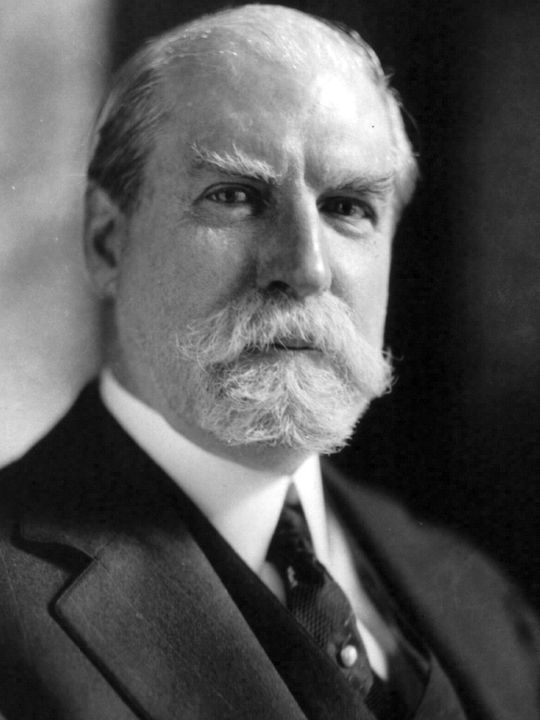
- Charles Evans Hughes: Chief Justice who wrote the opinion sustaining the Wagner Act
- James C. McReynolds: Senior dissenter for four, whose opinion is not reproduced here
- Jones & Laughlin Steel Corporation: Integrated Pittsburgh steelmaker charged with firing union men
- National Labor Relations Board: New federal agency seeking enforcement of its reinstatement order

Summary
The National Labor Relations Act of 1935, often called the Wagner Act after Senator Robert F. Wagner of New York, guaranteed employees the right to organize and bargain collectively through representatives of their own choosing, defined unfair labor practices by employers, and created a National Labor Relations Board to enforce it. Congress grounded the act in its power over interstate commerce, finding that refusals to bargain led to strikes that obstructed the flow of goods. The Beaver Valley Lodge No. 200 of the Amalgamated Association of Iron, Steel and Tin Workers charged that the Jones & Laughlin Steel Corporation, the fourth largest steel producer in the country, had fired union members at its Aliquippa, Pennsylvania, works to discourage organizing. The Board ordered ten men reinstated with back pay, and when the company refused, it asked a federal court of appeals to enforce the order. That court declined, holding that the act lay beyond federal power as applied to manufacturing. The company argued that the act regulated labor relations rather than commerce, that steelmaking was a local activity outside federal control, and that the reinstatement and back-pay order denied due process and jury trial. The Board answered that Jones & Laughlin was a vast integrated enterprise, owning mines, railroads and steamships and shipping most of its product across state lines, so that a strike at Aliquippa would choke a national flow of commerce. On 12 April 1937 the Court reversed by five votes to four. Chief Justice Hughes held that Congress may regulate intrastate activities that have a close and substantial relation to interstate commerce, and that the question is one of degree, not of formal categories such as production versus commerce. He cautioned that the power must be read in light of the dual system of government and may not reach effects so remote that it would erase the line between national and local. Applied to an industry organized on a national scale, however, the effect of labor strife was immediate and could be catastrophic. He described the right of employees to organize as fundamental, noted that the act compels no agreement and leaves employers free to hire and fire for other reasons, and rejected the due process and Seventh Amendment objections. Justice McReynolds, joined by Justices Van Devanter, Sutherland and Butler, dissented in this case and its two companion cases, relying on Schechter Poultry and Carter v. Carter Coal Co. to argue that the effect of a manufacturer's labor relations on commerce was indirect. The library text contains only the Chief Justice's opinion, with notes left out; McReynolds's dissent must be read elsewhere. The decision opened the way for federal labor law in nearly every industry. Congress revised the act in the Taft-Hartley Act of 1947, and the Court relied on the close-and-substantial-relation standard in Wickard v. Filburn (1942), while United States v. Lopez (1995) recalled Hughes's warning about obliterating the distinction between what is national and what is local.
Virtues in this work
- Prudence: Hughes weighs the practical facts of an integrated industry rather than relying on abstract categories, while marking a limit to protect the federal structure.
- Justice: The opinion holds that workers may choose their representatives as freely as the company chooses its officers.
- Temperance: Hughes stresses that the act compels no agreement and leaves employers free to discharge for proper reasons, keeping the holding within measured bounds.
Plot or Argument
- The Board's order and the company's objections
Hughes summarizes the charge of discriminatory discharges at Aliquippa, the Board's order of reinstatement, the court of appeals' refusal to enforce it, and the three contentions of the respondent: that the act regulates labor rather than commerce, that production workers lie outside federal reach, and that the remedy violates due process and jury trial.
- An integrated national enterprise
The opinion describes the corporation's ore mines, coal and limestone properties, railroads, lake steamships and warehouses, and quotes the Board's image of the Pittsburgh and Aliquippa works as the heart of a self-contained body drawing raw materials in and pumping products out.
- The scope of the act and the right to organize
Hughes reads the statute as reaching only practices that affect commerce, then defends the right of employees to self-organization as fundamental, citing the 1921 recognition that a single worker is helpless in dealing with a large employer.
- Close and substantial relation to commerce
Setting aside the stream of commerce theory, Hughes holds that Congress may protect commerce from burdens arising in intrastate activities when the relation is close and substantial, limits that power by the federal structure, and distinguishes Schechter and Carter Coal as involving effects too remote.
- Due process and the remedy
The act compels no agreement and does not prevent discharge for proper reasons; it forbids only intimidation and coercion of the right to organize. Reinstatement with back pay is a statutory remedy unknown to the common law, so the Seventh Amendment does not apply.
Characters
- National Labor Relations Board, petitioner
Federal agency created by the 1935 act, which found the company guilty of unfair labor practices and sought enforcement of its order.
- Jones & Laughlin Steel Corporation, respondent
Pittsburgh steelmaker that argued its labor relations at Aliquippa were a local matter beyond the reach of Congress.
- Chief Justice Charles Evans Hughes, author of the majority opinion
Wrote that Congress may protect commerce from industrial strife in nationally organized industries.
- Justice James C. McReynolds, dissenter
Wrote for four justices that manufacturing labor relations affect commerce only indirectly; his dissent is not in the library text.
- Senator Robert F. Wagner, sponsor of the statute
New York senator whose name became attached to the National Labor Relations Act.
Lessons
Direct and indirect effects on commerce
Earlier decisions such as Schechter and Carter Coal had held that Congress could regulate only activities with a direct effect on interstate commerce. Hughes replaced the formal line between production and commerce with a practical question of degree, asking whether an activity's relation to commerce is close and substantial.
- Why does Hughes refuse to decide the case in an intellectual vacuum?
- How does he distinguish the steel company from the poultry dealers in Schechter?
- Is a practical test of degree easier or harder for courts to apply than a formal category?
Federalism as a limit
Even while upholding the act, Hughes wrote that the commerce power must be considered in light of the dual system of government and must not create a completely centralized government. Later courts have quoted that sentence both to expand and to restrain federal power, which makes it a useful study in how a single opinion can serve different purposes.
- What limit on the commerce power does Hughes state?
- Why might a judge who upholds a federal law still take care to describe its limits?
- What would it mean to obliterate the distinction between what is national and what is local?
The right to organize and the employer's rights
Hughes treats workers' freedom to choose representatives as parallel to the company's freedom to choose its officers, and he stresses that the act compels no agreement. The company's side regarded the act as one-sided, regulating employers while leaving unions unrestrained, a criticism Hughes acknowledges but leaves to Congress.
- What comparison does Hughes draw between employees and the corporation?
- Which employer rights does the opinion say the act leaves untouched?
- Should a law that protects one party in a bargaining relationship also impose duties on that party?
Context
Steel was among the largest industries in the country and had resisted unions since the Homestead strike of 1892 and the failed national steel strike of 1919. The National Industrial Recovery Act of 1933 had promised collective bargaining, but Schechter Poultry struck down its code system in 1935, and Congress responded with the Wagner Act. Many employers, advised by prominent lawyers that the act was unconstitutional, declined to comply while the litigation proceeded.
Composition
The Board brought its complaint in 1936 after the discharges at Aliquippa. The Court heard Jones & Laughlin together with four other Wagner Act cases in February 1937 and announced its decisions on 12 April, two weeks after West Coast Hotel Co. v. Parrish. McReynolds delivered one dissent covering Jones & Laughlin and two companion cases involving a trailer maker and a clothing manufacturer.
Reception
Supporters of the President's Court plan lost much of their argument once the Court upheld the act, and union membership grew rapidly in the following years. Critics of the decision, then and later, regarded it as abandoning limits on federal power that the framers had intended; defenders saw it as recognizing the realities of an integrated national economy. The opinion remains a standard reference point in Commerce Clause cases.
Comparisons
- schechter-poultry-v-united-states
Two years earlier the same Chief Justice had held that a Brooklyn poultry business affected interstate commerce too indirectly for federal wage and hour codes.
- wickard-v-filburn
Jackson's 1942 opinion built on the close-and-substantial-relation test, reaching wheat a farmer grew for his own use.
- west-coast-hotel-v-parrish
The same five-justice majority had upheld a state minimum wage two weeks before, completing the shift in both state and federal economic regulation.
- gibbons-v-ogden
Marshall's definition of commerce as intercourse among the states supplied the starting point that Hughes extended to industrial relations.
- the-federalist-papers
Madison's account in Federalist No. 45 of federal powers as few and defined bears on Hughes's caution against a completely centralized government.
Quotes
Frequently cited
“That is a fundamental right. Employees have as clear a right to organize and select their representatives for lawful purposes as the respondent has to organize its business and select its own officers and agents.”
Frequently cited
“Although activities may be intrastate in character when separately considered, if they have such a close and substantial relation to interstate commerce that their control is essential or appropriate to protect that commerce from burdens and obstructions, Congress cannot be denied the power to exercise that control.”
Frequently cited
“We are asked to shut our eyes to the plainest facts of our national life and to deal with the question of direct and indirect effects in an intellectual vacuum.”
“Undoubtedly the scope of this power must be considered in the light of our dual system of government and may not be extended so as to embrace effects upon interstate commerce so indirect and remote that to embrace them, in view of our complex society, would effectually obliterate the distinction between what is national and what is local and create a completely centralized government.”
“When industries organize themselves on a national scale, making their relation to interstate commerce the dominant factor in their activities, how can it be maintained that their industrial labor relations constitute a forbidden field into which Congress may not enter when it is necessary to protect interstate commerce from the paralyzing consequences of industrial war?”
“The act does not compel agreements between employers and employees. It does not compel any agreement whatever.”
For Students
A reading companion for classical Christian high school students. See the student guide.
Reading Guide
Watch for
- The three contentions of the respondent that Hughes lists near the start.
- The Board's image of the Aliquippa and Pittsburgh works as the heart of a body.
- Hughes's quotation from an earlier case that a single employee was helpless in dealing with an employer.
- The sentence on the dual system of government and the limit it places on federal power.
- The list of things the act does not require of employers.
Key terms and names
- Collective bargaining
- Negotiation of wages and conditions between an employer and representatives chosen by its employees.
- Unfair labor practice
- Conduct the Wagner Act forbids, such as firing workers for joining a union.
- Commerce Clause
- Article I, Section 8 power of Congress to regulate commerce among the several states.
- Stream of commerce
- An earlier doctrine treating local activities as part of a continuous interstate flow of goods; Hughes found it unnecessary to rely on it.
- Cease and desist order
- An administrative command to stop a specified practice.
Seminar Questions
- Comprehension What did the National Labor Relations Board order Jones & Laughlin to do, and why?
- Comprehension What properties outside Pennsylvania did the corporation own or control, according to the opinion?
- Comprehension Why does Hughes say the Seventh Amendment does not apply to the Board's back-pay order?
- Interpretation How does Hughes reconcile his holding with the Court's decisions in Schechter and Carter Coal?
- Interpretation Why might Hughes have included a warning about centralized government in an opinion that expanded federal power?
- Big Question If nearly every economic activity affects the national economy in some way, what limits on federal power remain, and who should enforce them?
Faith Connections
- Ecclesiastes 4:9-12 (Scripture)
The Preacher observes that two are better than one and that a threefold cord is not quickly broken, an image often applied to the strength of workers who stand together.
- Colossians 4:1 (Scripture)
Paul tells masters to give their servants what is just and equal, knowing that they also have a Master in heaven.
- Leo XIII, Rerum Novarum (1891), on workingmen's associations (Great Conversation)
The encyclical defended the natural right of workers to form associations, while warning against associations that serve unjust ends.
Logic and Rhetoric
Central argument: Hughes reasons that Congress may protect interstate commerce from burdens wherever they arise, that a strike in a nationally integrated steel enterprise would gravely burden commerce, and that protecting the right to organize is therefore a valid means of preventing such strikes, so long as the power is not stretched to effects too remote to preserve the federal structure.
Rhetorical device: metaphor. The opinion adopts the Board's picture of the steel works as the heart of a self-contained, highly integrated body, and Hughes speaks of the paralyzing consequences of industrial war (quote 3), language that makes a corporate organization chart feel like a living system.
Debate: Resolved: that the Commerce Clause authorizes Congress to regulate labor relations in manufacturing.
Memory Work
Although activities may be intrastate in character when separately considered, if they have such a close and substantial relation to interstate commerce that their control is essential or appropriate to protect that commerce from burdens and obstructions, Congress cannot be denied the power to exercise that control.
We are asked to shut our eyes to the plainest facts of our national life and to deal with the question of direct and indirect effects in an intellectual vacuum.
Writing Prompts
Essay: Explain the test Hughes sets out for the reach of the commerce power, and evaluate whether his limiting sentence about the dual system of government gives that test real boundaries.
Comparison with A.L.A. Schechter Poultry Corp. v. United States: Compare Hughes's treatment of the Brooklyn poultry dealers in 1935 with his treatment of the Pittsburgh steel company in 1937, and explain whether the difference lies in the facts, the statutes or the Court's reasoning.
Medical Lens
The opinion concerns federal power over labor relations in a steel company and raises no question of health, illness or medicine.
Creative Prompts
- Classroom
Divide the class into the Board's lawyers and the company's lawyers. Each side prepares a map of the corporation's mines, mills, railroads and markets to argue whether a strike at Aliquippa is a local or a national matter.
- Essay
Write the dissent the library text omits: using Schechter and Carter Coal, argue in your own words that steel production is a local activity.
- Dialogue
Write a conversation at an Aliquippa boardinghouse in April 1937 between a reinstated union member and a foreman who doubts that Washington should decide who works in the mill.
- Essay
Trace how Hughes's sentence about the dual system of government was used again in United States v. Lopez in 1995, and explain what each Court took it to mean.
Further Reading
- Rethinking the New Deal Court: The Structure of a Constitutional Revolution, Barry Cushman
Detailed study of how Commerce Clause doctrine developed toward the Wagner Act decisions.
- The Constitution Reborn: The Supreme Court and the Constitutional Revolution in the Age of Roosevelt, William E. Leuchtenburg
Places the Wagner Act cases within the struggle over the Court plan.
- The Wagner Act Cases, Richard C. Cortner
Account of the litigation strategy that brought the Wagner Act before the Court.
Verification notes
The six quotations, all from Hughes because the stored text holds only the opinion of the Court, were matched by Grep as exact strings in content/texts/nlrb-v-jones-and-laughlin-steel.txt. The ten reinstated employees, the Beaver Valley lodge and the company's rank as fourth largest steel producer come from the text itself. The description of McReynolds's dissent and the later history rely on standard accounts, since the dissent is not in the library text.
- Confirm that the enforcement petition was brought in the Circuit Court of Appeals for the Fifth Circuit.
- Confirm the argument dates in February 1937 (often given as 10-11 February).