Work record
A.L.A. Schechter Poultry Corp. v. United States
1935 · Early 20th Century · Court Decision · English
Abstract
Question Presented. Could the President, acting under the 1933 recovery statute, approve a binding poultry code drafted largely by the trade itself, and could federal rules govern wages, hours and selling practices of Brooklyn slaughterhouses whose birds came from other states?
Arguments. Federal lawyers invoked the economic crisis, pointed to the policy Congress had declared, and claimed that pay and working hours in the trade influenced prices and shipments across state lines. The wholesalers answered that lawmaking had been handed to the executive and industry groups without guidance, and that their business was purely local.
Holding. All nine justices voted to overturn the convictions. Hughes found no meaningful standard limiting the President's approval of codes, so Congress had surrendered its legislative role; and since the poultry had come to rest in New York, its influence on interstate trade was indirect. Cardozo and Stone agreed, adding that a power to legislate for an industry's betterment exceeded any permissible grant.
Significance. The National Recovery Administration ended soon afterward. Within a few years the justices adopted a much broader view of the commerce power, but this decision and one other from 1935 remain the only rulings voiding a federal law for excessive delegation.
Text. Both opinions, Hughes's for the Court and Cardozo's concurrence, are reproduced in full.
Key figures
- The Schechter brothers: Brooklyn kosher poultry wholesalers convicted under the code
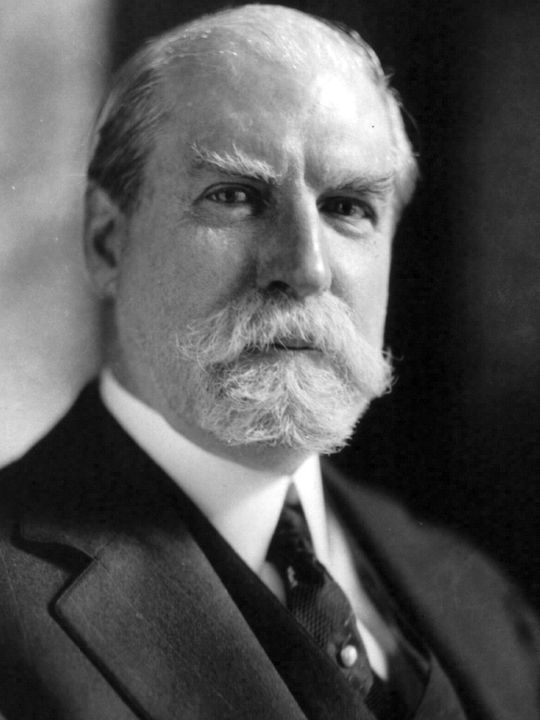
- Charles Evans Hughes: Chief Justice who wrote for a unanimous Court
- Benjamin N. Cardozo: Concurring justice who coined delegation running riot
- Harlan Fiske Stone: Justice who joined Cardozo
- Franklin D. Roosevelt: President whose recovery program was at issue

Summary
In June 1933, deep in the Depression, Congress passed the National Industrial Recovery Act. Its first title authorized the President to approve codes of fair competition for trades and industries, usually drafted by trade associations, and made violation of an approved code a federal misdemeanor. Hundreds of codes followed, fixing wages, hours and trade practices. The Live Poultry Code, approved in April 1934 for the New York metropolitan area, set a minimum wage and a forty-hour week for slaughterhouse workers and banned various trade practices, among them selling chickens other than by straight killing, under which a retail buyer had to take the run of a coop rather than choose particular birds. The Schechter brothers ran two wholesale poultry businesses in Brooklyn. They bought live chickens, mostly shipped from other states, at New York markets and terminals, had them slaughtered by shochtim, the ritual slaughterers in their employ, and sold them to local butchers and retailers. They were convicted on eighteen counts, including violations of the wage and hour rules, letting customers select individual birds, and selling an unfit chicken, which gave the litigation its popular name, the sick chicken case. The Court of Appeals affirmed most counts, and both sides sought review. The government argued that the Depression was a national emergency, that Congress had stated the act's policy and left details to the President as it had in earlier statutes, and that wages, hours and trade practices in the poultry business affected the flow of interstate commerce. The Schechters argued that Congress had handed lawmaking power to the President and private trade groups without any standard, and that their slaughtering and local sales were not interstate commerce at all. On 27 May 1935 the Court unanimously reversed the convictions. Chief Justice Hughes held first that extraordinary conditions do not enlarge constitutional power. He found that the act gave the President virtually unfettered discretion to approve whatever codes he thought would promote recovery, with no standard of fair competition, and that Congress may not abdicate or transfer its essential legislative functions. He held second that the Schechters' business was local: once the poultry reached Brooklyn, the flow of interstate commerce had ceased, and its effects on interstate commerce were only indirect. Without the distinction between direct and indirect effects, he wrote, there would be no limit to federal power. Justice Cardozo, joined by Justice Stone, concurred: delegation to eliminate unfair practices might be valid, but a power to make any rule helpful to an industry was delegation running riot, and activities local in their immediacy do not become national because of distant repercussions. The library text gives both opinions, minus footnotes. Congress let the act lapse. The Court's narrow view of the commerce power was largely abandoned in NLRB v. Jones & Laughlin Steel (1937) and Wickard v. Filburn (1942), while Schechter and Panama Refining Co. v. Ryan (1935) remain the only cases in which the Court struck down a statute as an unconstitutional delegation of legislative power.
Virtues in this work
- Prudence: Hughes declines to let the urgency of the Depression override the constitutional allocation of powers.
- Justice: The Court insists that criminal penalties rest on laws made by the body the Constitution entrusts with lawmaking.
- Temperance: Cardozo, sympathetic to reform, draws a measured line between delegation to curb unfair practices and an unlimited power over industry.
Plot or Argument
- The charges and the poultry trade
Hughes describes the New York live-poultry trade, the Schechters' Brooklyn slaughterhouse markets, the Live Poultry Code's wage, hour and trade-practice rules, and the eighteen counts on which the defendants were convicted.
- Emergency and constitutional power
Before reaching the questions, Hughes rejects the argument that the national crisis justifies the act: extraordinary conditions may call for extraordinary remedies, but they do not create or enlarge power.
- The delegation of legislative power
Hughes finds that fair competition is not defined, that the act's policy statement gives no real standard, and that the President may approve any code proposed by trade groups. He distinguishes earlier delegations to the Federal Trade Commission and other bodies that acted under defined standards and procedures.
- The flow of commerce had ceased
Turning to the commerce power, Hughes holds that the Schechters' slaughter and sales occurred after the poultry had come to rest in New York and were not transactions in interstate commerce.
- Direct and indirect effects
The government's argument that local wages and hours affect prices and therefore interstate commerce is rejected; only direct effects bring local activity within federal reach, or the federal system would become a completely centralized government.
- Cardozo's concurrence
Cardozo distinguishes a valid delegation to suppress unfair practices from a power to write any rule that helps an industry, which he calls delegation running riot, and agrees that wages and hours in a local business lie outside the commerce power.
Characters
- The Schechter brothers, petitioners
Joseph, Martin, Alex and Aaron Schechter, who operated A.L.A. Schechter Poultry Corporation and Schechter Live Poultry Market in Brooklyn.
- Chief Justice Charles Evans Hughes, author of the opinion of the Court
Former Secretary of State who wrote that Congress may not transfer its essential legislative functions.
- Justice Benjamin N. Cardozo, concurring
Former chief judge of the New York Court of Appeals who wrote that the code was delegation running riot.
- Justice Harlan Fiske Stone, joined the concurrence
Former Columbia law dean and Attorney General who joined Cardozo's opinion.
- Franklin D. Roosevelt, President of the United States
Approved the codes under the act and criticized the decision as returning the country to a horse-and-buggy definition of commerce.
Lessons
Emergencies and constitutional limits
Hughes begins by insisting that a national crisis, however grave, does not expand the government's powers. The Constitution's grants are adequate in war and peace, he writes, but they remain limited. The principle has been invoked in many later emergencies.
- What argument from emergency was the government making?
- How does Hughes distinguish between remedies and powers?
- Should the meaning of the Constitution change in a time of crisis?
Who makes the law?
The Constitution vests legislative power in Congress. Hughes and Cardozo agree that Congress may leave details to others under a standard, but not hand them the whole task of deciding what the law should be. The codes, drafted largely by trade groups and approved by the President, failed that test.
- Why does Hughes object to letting trade associations propose binding codes?
- What kind of delegation does Cardozo say would be valid?
- How detailed must Congress be before it hands a task to an executive agency?
Where commerce stops
The poultry crossed state lines, but Hughes holds that once it reached Brooklyn and was held for local slaughter and sale, the interstate movement had ended. His distinction between direct and indirect effects, and Cardozo's image of tremors spreading from the rim to the center, frame a question the Court would later answer very differently.
- Why does Hughes say the flow of interstate commerce had ceased?
- What does Cardozo mean by saying the law is not indifferent to considerations of degree?
- If everything in the economy affects everything else, can there be any limit to the commerce power?
A unanimous check on a popular program
The Court decided against the centerpiece of the early New Deal without a single dissent, joined by justices who later supported broad federal power. The case shows that structural limits can unite judges who differ on economic policy.
- Why might Brandeis and Cardozo, often sympathetic to reform, have joined this decision?
- What did the unanimity of the Court signify to the public and to Congress?
Context
By 1933 a quarter of the workforce was unemployed, prices had collapsed and thousands of banks had failed. The National Industrial Recovery Act, a centerpiece of President Roosevelt's first hundred days, sought recovery through industrial self-government: competitors would agree, under federal supervision, on wages, hours, prices and trade practices, in exchange for relief from the antitrust laws. The National Recovery Administration, symbolized by its Blue Eagle, oversaw more than five hundred codes.
Composition
The Live Poultry Code took effect in the spring of 1934, and federal prosecutors brought charges against the Schechters that summer. After conviction in the Eastern District of New York, the Second Circuit, in an opinion that included the views of Judge Learned Hand, sustained most counts but set aside those based on wages and hours. The Supreme Court heard argument in early May 1935 and decided the case on 27 May, the same day it decided Humphrey's Executor v. United States and Louisville Joint Stock Land Bank v. Radford against the administration.
Reception
Roosevelt responded at a press conference that the decision relegated the country to a horse-and-buggy definition of interstate commerce. Many in business, already weary of the codes, welcomed the end of the NRA, and Congress enacted parts of its labor program separately in the National Labor Relations Act and the Fair Labor Standards Act. Schechter's commerce holding was soon overtaken, but its nondelegation principle continues to be cited in debates over the scope of administrative power.
Comparisons
- nlrb-v-jones-and-laughlin-steel
Two years later Hughes himself wrote for a majority upholding federal labor regulation of a steel company, turning from Schechter's direct-indirect test toward a broader view of commerce.
- wickard-v-filburn
In 1942 the Court held that even a farmer's own wheat could be regulated for its aggregate effect on commerce, the kind of distant repercussion Cardozo had found insufficient.
- gibbons-v-ogden
Marshall's 1824 definition of commerce among the states, and his acknowledgment of commerce completely internal to a state, stand behind both Hughes's limit and later expansions.
- second-treatise-of-government
Locke wrote that the legislative cannot transfer the power of making laws to any other hands, an idea close to Hughes's holding on delegation.
- the-spirit-of-the-laws
Montesquieu's warning that liberty is lost when legislative and executive powers are united in one person informs the separation-of-powers concern in both opinions.
- standard-oil-v-united-states
The NIRA suspended much antitrust enforcement in favor of industry-wide agreements, a reversal of the approach to competition applied against Standard Oil in 1911.
Quotes
Frequently cited
“Extraordinary conditions do not create or enlarge constitutional power.”
Frequently cited
“This is delegation running riot.”
“The Congress is not permitted to abdicate or to transfer to others the essential legislative functions with which it is thus vested.”
“So far as the poultry here in question is concerned, the flow in interstate commerce had ceased.”
“Otherwise, as we have said, there would be virtually no limit to the federal power, and for all practical purposes we should have a completely centralized government.”
“Activities local in their immediacy do not become interstate and national because of distant repercussions.”
For Students
A reading companion for classical Christian high school students. See the student guide.
Reading Guide
Watch for
- The description of how the Schechters bought, slaughtered and sold poultry.
- The definition of straight killing and the counts based on it.
- Hughes's two sentences about extraordinary conditions.
- The question whether trade associations could be made into legislative bodies.
- Cardozo's image of motion at the outer rim recorded at the center.
Key terms and names
- Delegation of legislative power
- Congress's transfer of lawmaking authority to the executive or others; permitted only with an intelligible standard.
- Code of fair competition
- A set of binding rules for an industry approved by the President under the National Industrial Recovery Act.
- Straight killing
- A code rule requiring buyers to take the run of a coop rather than select individual birds.
- Shochtim
- Ritual slaughterers who prepare meat and poultry according to Jewish dietary law.
- Direct and indirect effects
- The distinction Hughes used to decide whether a local activity affected interstate commerce closely enough for federal regulation.
- Stream of commerce
- The idea that goods passing through a state on a continuing interstate journey remain in interstate commerce.
Seminar Questions
- Comprehension What did the Live Poultry Code require of slaughterhouse operators, and which provisions did the Schechters violate?
- Comprehension What two constitutional grounds does Hughes give for reversing the convictions?
- Interpretation How does Hughes distinguish the NIRA codes from the rules made by the Federal Trade Commission?
- Interpretation Why does Cardozo say a delegation to eliminate unfair practices might be valid while this one is not?
- Interpretation How does the government's chain of reasoning about wages, prices and commerce work, and why does Hughes reject it?
- Big Question In a complex economy, how should the work of making detailed rules be shared between elected legislators and experts?
Faith Connections
- Exodus 18:13-26 (Scripture)
Jethro advises Moses to appoint capable rulers over thousands, hundreds and tens while keeping the great matters for himself, a scriptural picture of delegating authority within limits.
- Leviticus 11:1-3 (Scripture)
The dietary laws distinguishing clean from unclean animals lie behind the work of the shochtim employed by the Schechters.
- John Locke, Second Treatise of Government, Chapter XI, section 141 (Great Conversation)
Locke argues that the legislative, having only a delegated power from the people, cannot pass it over to others, a principle echoed in Hughes's opinion.
Logic and Rhetoric
Central argument: Hughes reasons that emergencies do not enlarge power; that the act gave the President unfettered discretion to approve industry codes without a standard, an unconstitutional delegation; and that the Schechters' slaughter and local sales, occurring after the poultry came to rest, affected interstate commerce only indirectly. Cardozo concurs, distinguishing permissible delegation against unfair practices from a power to legislate for an industry's welfare.
Rhetorical device: antithesis. Hughes balances extraordinary remedies against extraordinary power in two short sentences (quote 0), and Cardozo sets near against distant effects (quote 5).
Debate: Resolved: that Congress should be required to set clear standards before delegating rulemaking to the executive branch.
Memory Work
Extraordinary conditions do not create or enlarge constitutional power.
This is delegation running riot.
Writing Prompts
Essay: Explain Hughes's two grounds for striking down the poultry code, and evaluate which ground has proved more lasting.
Comparison with Wickard v. Filburn: Compare the treatment of local activity in Schechter and Wickard v. Filburn, and explain how the Court moved from the direct-indirect distinction to the aggregation of effects.
Medical Lens
One count involved selling an unfit chicken, but the opinions treat it only as a code violation; the case concerns delegation of legislative power and the commerce power, not health or medicine.
Creative Prompts
- Classroom
Stage the May 1935 argument: the Solicitor General defends the codes as a response to national emergency, counsel for the Schechters argues delegation and local commerce, and nine student justices write a unanimous opinion together.
- Essay
Rewrite one section of the Live Poultry Code as Congress itself might have enacted it, with a clear standard, and explain whether your version would satisfy Hughes and Cardozo.
- Dialogue
Write a conversation in a Brooklyn poultry market in 1934 between a retail butcher who wants to pick his own chickens and an inspector enforcing the straight-killing rule.
- Essay
Trace a chicken from a farm in another state to a Brooklyn butcher's counter and mark the point at which, according to Hughes, interstate commerce ended.
Further Reading
- The Supreme Court Reborn: The Constitutional Revolution in the Age of Roosevelt, William E. Leuchtenburg
Essays on the Court and the New Deal, including the events of May 1935 and the struggle that followed.
- The New Deal and the Problem of Monopoly, Ellis W. Hawley
Study of the NRA codes and the competing ideas about competition and planning behind them.
- The Forgotten Man: A New History of the Great Depression, Amity Shlaes
Narrative history that tells the story of the Schechter family and their prosecution.
Verification notes
Four quotations from Hughes and two from Cardozo were found by Grep as exact substrings of content/texts/schechter-poultry-v-united-states.txt. The eighteen counts, the straight-killing rule, the unfit-chicken count, the shochtim and Stone's joining of Cardozo's concurrence all appear in the stored text. The brothers' names, the code's approval date, the argument date and Roosevelt's horse-and-buggy remark come from standard histories rather than the opinions.
- Confirm the names of the four Schechter brothers and the approval date of the Live Poultry Code (April 1934).
- Confirm the argument dates (2-3 May 1935) and the Second Circuit's disposition of the wage and hour counts.
- Confirm that Schechter and Panama Refining remain the only decisions invalidating a federal statute on nondelegation grounds.