Work record
Politics and the English Language
1946 · Postwar Contemporary · Essays · English
Abstract
Background. Written while wartime propaganda, Soviet purges and postwar population transfers filled the newspapers, the piece appeared in Cyril Connolly's monthly as Orwell was starting his last novel. The library describes it but does not hold its copyrighted text.
Argument. Slovenly English is both symptom and cause of muddled thinking, so the decline can be reversed by deliberate effort. Abstract, euphemistic phrasing serves those who must justify bombing, deportation and purges, because concrete words would show what is being done. Insincerity, a gap between real and declared aims, is named as the chief source of obscurity, and party orthodoxy as a breeder of lifeless imitation.
Structure. After the opening diagnosis come five sample passages, a four-part taxonomy of faults, a jargon rendering of a biblical verse, questions for the careful writer, the political analysis, and the closing rules.
Method. Orwell argues by example, quoting living authors and pamphlets, then supplies his own corrections, admitting that his prose is not free of the faults it names. The tone is brisk and practical: a working journalist addressing other writers, not a grammarian issuing decrees, and the last rule licenses breaking the others.
Significance. Anthologized constantly and cited by editors and teachers, it is also read as groundwork for the Newspeak of Nineteen Eighty-Four, though linguists dispute some of its prescriptions.
Key figures
- George Orwell: Journalist and novelist writing as a practical critic of prose
- Harold Laski: LSE political theorist quoted as the first specimen
- Lancelot Hogben: Scientist whose book on an international language supplies a specimen

Summary
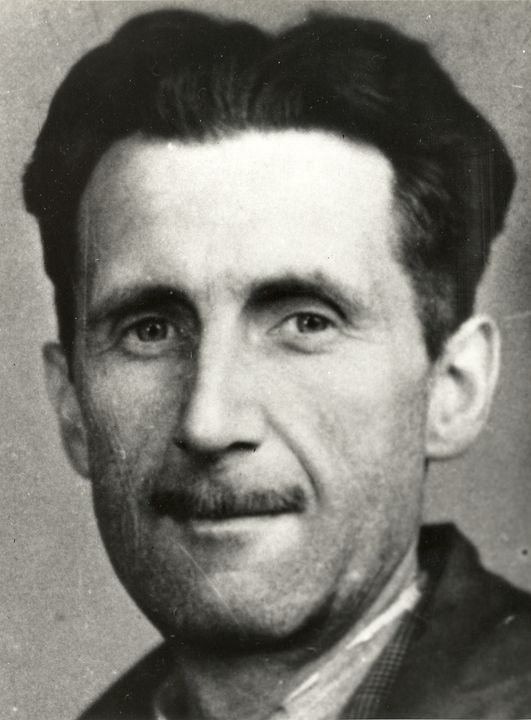
Politics and the English Language is an essay of about five thousand words by George Orwell, first published in the London literary monthly Horizon in April 1946, in the months after the Second World War when he was beginning Nineteen Eighty-Four. It argues that careless English and dishonest politics feed each other, and that the process can be reversed by writers who take trouble over their words. Because the essay is under copyright, the library holds this description, a guide and two short verified quotations, but not the text. Orwell opens by granting that most people think the language is in decline and that nothing can be done. He agrees that the causes are political and economic, but compares the decline to a man who drinks because he feels himself a failure and then fails all the more because he drinks: bad habits of language make foolish thoughts easier, and foolish thoughts make the language worse. He then sets out five specimens of contemporary prose, two of them by the professors Harold Laski and Lancelot Hogben, and the others from an essay on psychology in an American journal, a Communist pamphlet and a letter to Tribune. All five, he says, share stale imagery and a lack of precision. The central section catalogues the tricks by which writers avoid the work of thinking. Dying metaphors are used without regard to their meaning. Operators, or verbal false limbs, pad out a simple verb into a phrase. Pretentious diction dresses ordinary statements in foreign, Latinate or scientific words. Meaningless words, common in criticism and politics, such as democracy, freedom and fascism, have no agreed sense. To show the effect, Orwell rewrites a famous verse of Ecclesiastes, about the race not going to the swift, in the abstract jargon of modern social science. He describes modern prose as ready-made phrases glued together, and proposes questions a scrupulous writer should ask of every sentence. The essay then turns to politics. Political speech and writing, Orwell argues, are largely the defence of what cannot be defended openly: bombing villages is called pacification, and imprisonment and execution become the elimination of unreliable elements. Vague, euphemistic language lets a writer say what he would not say plainly, and insincerity is the great enemy of clarity. Orwell confesses that his own essay surely contains the faults it attacks, and suggests memorizing a sentence of absurd not-un- phrases as a cure for one of them. He closes with six rules, beginning with avoiding familiar figures of speech and long words where short ones will serve, and ending with permission to break any of them rather than write something barbarous. One cannot change the world's language at once, he concludes, but one can change one's own habits and throw worn-out phrases away. The essay has been reprinted in countless anthologies and is widely taught in courses on writing and rhetoric.
Virtues in this work
- Justice: The political section insists that violent acts be called by plain names so that readers can judge them honestly.
- Humility: Orwell admits that his own essay almost certainly commits the faults he is attacking.
- Temperance: The rules to cut every word that can be cut and prefer short words ask the writer to restrain the urge to inflate.
Plot or Argument
- The decline of English is reversible
Orwell grants that language reflects political and economic causes, but argues that the effect becomes a cause in turn, as drink and failure reinforce each other in a drunkard. Because the bad habits spread by imitation, they can be stopped by people willing to take trouble, and clearer language makes clearer thought possible.
- Five specimens of bad prose
He prints five passages: from Harold Laski, from Lancelot Hogben, from an essay on psychology in the New York journal Politics, from a Communist pamphlet and from a letter to Tribune. Each, he says, shows staleness of imagery and a lack of precision; the writers either cannot say what they mean or do not care whether they say anything.
- A catalogue of swindles and perversions
Under four headings, dying metaphors, operators or verbal false limbs, pretentious diction and meaningless words, Orwell describes how writers avoid choosing words for themselves. He translates a verse of Ecclesiastes into modern bureaucratic English to show how concrete images vanish, and describes modern writing as gumming together long strips of words already set in order by someone else.
- The scrupulous writer's questions
A careful writer, Orwell says, will ask of each sentence what he is trying to say, what words will express it, what image or idiom will make it clearer and whether that image is fresh, and then whether he could put it more shortly and whether he has said anything avoidably ugly. Ready-made phrases will otherwise think for him and partly conceal his meaning even from himself.
- Political language and the defence of the indefensible
Orwell argues that much political writing defends actions, such as the bombing of villages, the expulsion of peasants and the purges, that could only be defended in arguments too brutal for most people to face. Euphemism, question-begging and cloudy vagueness do the work. Insincerity is the great enemy of clear language, and orthodoxy of any party tends to produce a lifeless, imitative style.
- Six rules and a personal remedy
Orwell admits that his own essay surely commits the faults it describes. He offers six rules: avoid stale figures of speech, prefer short words, cut needless words, prefer the active voice, prefer everyday English to foreign phrases and jargon, and break any rule rather than say anything barbarous. Clear language will not make politics good, he concludes, but anyone can begin with his own habits and discard worn-out phrases.
Characters
- George Orwell, essayist
Writes in the first person as a working journalist, admitting his own lapses while setting out his diagnosis and rules.
- Harold Laski, specimen author
Political scientist at the London School of Economics whose sentence on freedom of expression is the first of the five specimens.
- Lancelot Hogben, specimen author
Scientist and popular writer whose book Interglossia supplies the second specimen.
- The Preacher of Ecclesiastes, model of good prose
The author of the biblical book, whose concrete verse on time and chance Orwell sets against a jargon parody.
Lessons
Clear words make clear thoughts possible
Orwell argues that language is not only a mirror of thought but a tool that shapes it. A writer who lets ready-made phrases assemble his sentences ends by not knowing exactly what he thinks. Choosing each word deliberately is a discipline of the mind as well as of style.
- How does Orwell's comparison with the drunkard explain the relation of language to thought?
- Which of the four tricks (dying metaphors, operators, pretentious diction, meaningless words) do you find most often in your own writing?
- Why does Orwell say ready-made phrases can conceal a writer's meaning even from himself?
Euphemism can hide wrongdoing
In the political section Orwell shows how vague, Latinate phrases let writers describe violence without calling up its picture. Naming things plainly is therefore a moral act, because it lets readers see what is actually being proposed or defended.
- Why does Orwell think the phrase for bombing villages is chosen instead of a plain description?
- What does he mean by calling insincerity the great enemy of clear language?
- Can you find a euphemism in a recent historical or public document and restate it plainly?
Rules serve judgment
Orwell's six rules end with a rule permitting the writer to break the other five rather than write something barbarous. The rules are aids to attention, not a mechanical code, and Orwell admits his own essay contains faults he condemns.
- Why might Orwell have ended his list with a rule that allows breaking the others?
- Is the rule about preferring the active voice always good advice? When might the passive be the honest choice?
- What does Orwell's admission of his own faults add to the essay's authority?
Context
Orwell wrote in the first year after the Second World War, when the language of wartime propaganda, the purges and show trials of the Soviet Union, the expulsions of Germans from eastern Europe and the end of the British Empire in India were all in the news. He had worked for the BBC's propaganda service to India from 1941 to 1943 and had seen in Spain how party newspapers reported events that had not happened. Debates about Basic English, a simplified international English promoted by C. K. Ogden, and about the language of officials and academics were also current.
Composition
The essay was published in Horizon, the literary monthly edited by Cyril Connolly, in April 1946. It belongs to the same period as Animal Farm (1945) and the early drafting of Nineteen Eighty-Four, and later appeared in Orwell's collection Shooting an Elephant and Other Essays (1950).
Reception
It has become one of the most reprinted English essays of the twentieth century and a fixture of school and university writing courses. Its rules are widely quoted in style guides and newsrooms. Linguists and writers have debated some of its claims, for example whether the passive voice is generally evasive and whether the decline of English is real, while many readers see its political section as a sketch for the Newspeak of Nineteen Eighty-Four.
Comparisons
- animal-farm
Squealer's speeches and the quietly altered commandments dramatize the essay's argument that political language can make the indefensible sound reasonable; the novel appeared the year before the essay.
- lewis-the-abolition-of-man
Lewis begins his 1943 lectures with a school textbook whose authors reduce statements of value to statements about feelings; both writers argue that careless or debunking language quietly changes how readers think.
- the-bible
Orwell's chosen model of concrete, vivid English is a verse of Ecclesiastes in the King James Version, which he parodies in jargon to show what modern prose loses.
- fahrenheit-451
Bradbury's 1953 novel imagines a society that has emptied words of meaning and burns books; Orwell's essay offers the everyday habits of mind that such a society would exploit.
- areopagitica
Milton defends free printing as the means by which truth is tested in open debate; Orwell argues that such debate depends on words that say plainly what is meant.
Quotes
Frequently cited
“In our time, political speech and writing are largely the defence of the indefensible.”
Frequently cited
“Never use a long word where a short one will do.”
For Students
A reading companion for classical Christian high school students. See the student guide.
Reading Guide
Watch for
- The comparison of the language's decline with a man who drinks because he fails and fails because he drinks.
- The five specimen passages and Orwell's verdict that they share stale imagery and imprecision.
- The four headings of bad habits: dying metaphors, operators or verbal false limbs, pretentious diction, meaningless words.
- The jargon parody of a verse from Ecclesiastes.
- The six closing rules, especially the last one, which allows breaking the rest.
Key terms and names
- Dying metaphor
- A figure of speech worn so smooth by use that writers repeat it without picturing what it says, sometimes using it wrongly.
- Operators, or verbal false limbs
- Orwell's name for padding that replaces a simple verb with a phrase built of a noun and a weak verb or of extra prepositions.
- Pretentious diction
- Foreign, Latinate or scientific words used to make plain statements sound weighty or impartial.
- Meaningless words
- Terms such as democracy or freedom that, in Orwell's view, have been used in so many incompatible senses that they no longer convey a definite meaning.
- Euphemism
- A mild or abstract phrase put in place of a plain one; Orwell's political examples use it to describe violence without calling up its image.
- Horizon
- The London literary monthly edited by Cyril Connolly in which the essay first appeared in April 1946.
Seminar Questions
- Comprehension What two faults does Orwell say the five specimen passages have in common?
- Comprehension What are the four kinds of bad habits Orwell catalogues, and what is one example of each from your own reading?
- Comprehension What does Orwell do to the verse from Ecclesiastes, and why?
- Interpretation Why does Orwell think political writing in particular tends toward vagueness and euphemism?
- Interpretation How can ready-made phrases think for a writer, according to Orwell?
- Interpretation Why does the sixth rule matter for understanding how Orwell means the other five to be used?
- Big Question Is careless language a moral failure or only a lapse of style? Defend your answer with Orwell's examples.
Faith Connections
- Ecclesiastes 9:11 (Scripture)
The verse Orwell parodies, on the race not going to the swift and time and chance happening to all, serves him as a model of concrete, memorable English that jargon destroys.
- Matthew 5:37 (Scripture)
Let your yes be yes and your no be no. Jesus' demand for plain, truthful speech parallels Orwell's claim that insincerity is the root of unclear language.
- Isaiah 5:20 (Scripture)
Woe to those who call evil good and good evil: the prophet condemns the same renaming of deeds that Orwell finds in political euphemism.
- Augustine, On Christian Teaching IV (Great Conversation)
Augustine teaches that the Christian speaker should seek above all to be understood, preferring clarity to ornament; Orwell, writing from a secular standpoint, reaches a similar rule.
Logic and Rhetoric
Central argument: Language shapes thought as well as expressing it; stale, imprecise and euphemistic language makes careless and dishonest thinking easier; political writing especially relies on such language to defend what plain words would expose; therefore writers who choose words deliberately can resist both bad prose and political deception.
Rhetorical device: parody. Orwell rewrites a verse of Ecclesiastes in modern abstract jargon, letting the reader feel the loss of concrete images rather than simply being told about it.
Debate: Resolved: that plain language is a civic duty.
Writing Prompts
Essay: Using Orwell's four headings and six rules, analyse a short piece of public writing and rewrite one paragraph of it in plain English, explaining each change.
Comparison with Animal Farm: Compare how Squealer's speeches in Animal Farm and the political examples in Politics and the English Language use vague or softened words to make actions acceptable.
Medical Lens
The essay has no medical content. Its advice on plain words over jargon is often applied to medical and scientific writing, but Orwell does not discuss medicine.
Creative Prompts
- Classroom
Take a paragraph of your own recent writing and apply Orwell's six questions to every sentence. Report which question changed the most words.
- Adaptation
Choose a short passage of the King James Bible other than the one Orwell uses and rewrite it in bureaucratic jargon, then explain what images and meaning were lost.
- Essay
Orwell claims that the decline of a language and the decline of thought reinforce each other. Test the claim against a historical example of propaganda you have studied.
- Dialogue
Write a conversation between Orwell and a press officer who must announce a government decision, in which Orwell keeps asking what each phrase actually means.
Further Reading
- Nineteen Eighty-Four, George Orwell
The novel, with its appendix on the principles of Newspeak, that carries the essay's concerns to their extreme.
- Why I Write, George Orwell
His 1946 essay on his own motives, including the wish to make political writing into an art.
- Orwell: The Life, D. J. Taylor
- Why Orwell Matters, Christopher Hitchens
- The Elements of Style, William Strunk Jr. and E. B. White
An American manual of plain style (White's revision 1959) with similar rules on omitting needless words.
Verification notes
The essay's contents, the five specimens and their sources, the four headings, the six questions, the political examples and the closing rules were checked against the text reproduced by the Orwell Foundation at https://www.orwellfoundation.com/the-orwell-foundation/orwell/essays-and-other-works/politics-and-the-english-language/, which gives first publication in Horizon, April 1946. Both quotations were checked word for word on that page; they are marked verified false because the essay is not stored in the library. The Ecclesiastes verse is not numbered in the essay; it is usually identified as Ecclesiastes 9:11.
- Text is under copyright; check quotations against an authorized edition before publication.
- The Horizon issue number and page range for April 1946.