Work record
Almagest
c. 150 CE · Ancient · Essays · Ancient Greek
Abstract
Background. Working in second-century Alexandria, Ptolemy inherited Hipparchus's records, Apollonius's geometry and centuries of Babylonian eclipse reports. No public-domain English version exists, since Taliaferro's and Toomer's renderings remain copyrighted, so the library holds no text and cites none.
Thesis. A spherical, motionless Earth sits at the centre, and every celestial motion can be reproduced by uniform circles: eccentrics, epicycles and, for planets, an offset equant point. A preface ranks mathematics above physics and theology for certainty and calls astronomy a training in love of divine order.
Structure. Opening books lay down premises and trigonometry; the next treat the Sun, Moon and eclipses; the middle pair catalogue over a thousand stars; the last five model each planet's longitude, stations and latitude. Tables of chords, mean motions and anomalies fill much of the work.
Method. Dated observations fix each model's parameters, and tables then allow prediction for any moment. Ptolemy proves that eccentric and epicyclic constructions can be equivalent, treating models as instruments for matching appearances. Precession is set at one degree per century.
Significance. Rendered into Arabic at Baghdad and into Latin at Toledo, the treatise governed astronomy in three civilisations until Copernicus. Critics from Ibn al-Haytham onward disputed the equant, and modern scholars still debate how Ptolemy handled his data.
Key figures
- Claudius Ptolemy: Alexandrian mathematician and astronomer
- Syrus: Dedicatee, otherwise unknown
- Hipparchus: Earlier observer whose data and theories underpin much of the work
- Aristotle: Philosophical source for the preface and cosmology

Summary
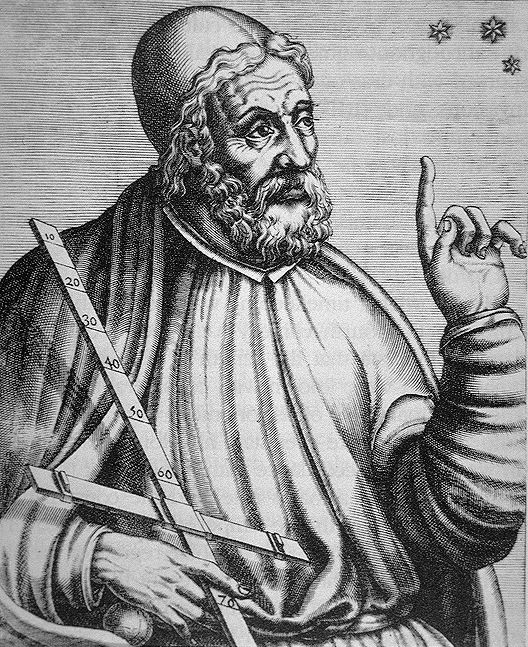
The Almagest is Ptolemy's complete mathematical account of the motions of the Sun, Moon, planets and fixed stars, written in Greek at Alexandria about AD 150 under the title Mathematike Syntaxis (Mathematical Compilation). Its familiar name comes from the Arabic al-majisti, from a Greek word meaning the greatest. The library stores no text of it and gives no quotations, because no public-domain English translation exists: the English versions by R. Catesby Taliaferro (1952) and G. J. Toomer (1984) are both under copyright. This record describes the work in its own words. The thirteen books proceed from first principles to detailed tables. Book I, after a preface on why mathematics gives the surest knowledge and leads the mind toward the divine, argues that the heavens are spherical and turn as a sphere, that the Earth is spherical, lies at the centre and does not move, and is as a point compared with the heavens; it then builds the trigonometry needed, a table of chords in steps of half a degree. Book II treats spherical astronomy for different latitudes: day lengths, rising times of the zodiac and the shadows of the gnomon. Book III sets out the theory of the Sun, fixing the length of the year with Hipparchus and showing that an eccentric circle and an epicycle on a concentric circle can produce the same motion. Books IV and V give the theory of the Moon, adding a second irregularity found by Ptolemy himself, describe an armillary instrument, and compute parallax and the distances of Sun and Moon. Book VI treats eclipses of the Sun and Moon. Books VII and VIII discuss precession, which Ptolemy sets at one degree in a hundred years, and give a catalogue of 1,022 stars in forty-eight constellations with their longitudes, latitudes and magnitudes. Books IX to XIII take up the five planets: their order, their models of epicycle and eccentric, the equant point about which the epicycle's centre moves uniformly, the tables of their positions, their retrograde motions and stations, their greatest elongations and their latitudes. Throughout Ptolemy states observations by date, many his own and many from Hipparchus and Babylonian records, derives parameters from them, and builds tables a reader can use to predict positions for any date. The work was translated into Arabic in ninth-century Baghdad and into Latin in the twelfth century, and it remained the foundation of astronomy until Copernicus, who followed its structure even as he moved the Sun to the centre.
Virtues in this work
- Industry: Ptolemy assembles and dates observations across nearly nine centuries and turns them into tables usable for any date.
- Piety: His preface presents astronomy as contemplation of divine and unchanging things that makes its students love their beauty.
- Prudence: He shows that eccentric and epicycle models can be equivalent and chooses between them by simplicity rather than claiming more than the evidence allows.
Plot or Argument
- Book I: preface, cosmological premises and chords
Ptolemy divides theoretical philosophy, after Aristotle, into theology, mathematics and physics, and argues that mathematics alone yields firm knowledge and makes its students lovers of divine beauty. He then gives reasons for a spherical heaven, a spherical, central and motionless Earth, and two primary motions, and builds a table of chords with the geometry that supports it.
- Book II: spherical astronomy
For an observer at a given latitude, Ptolemy computes the length of the longest day, the arcs of the zodiac that rise in a given time, and the angles and shadows that mark the climata, the latitude bands of the inhabited world.
- Book III: the Sun
Using equinox and solstice observations of Hipparchus and his own, Ptolemy fixes the length of the tropical year and models the Sun's unequal motion by an eccentric circle, proving that an epicycle model gives the same result. He defines the equation of time.
- Books IV-V: the Moon, instruments and distances
Lunar eclipse records give the Moon's mean motions and first irregularity on an epicycle. Ptolemy then reports a second irregularity at the quarters, models it with a moving eccentre, describes an armillary astrolabe, and calculates parallax and the distances and sizes of the Sun and Moon.
- Book VI: eclipses
Conjunctions and oppositions, the limits within which eclipses can occur, their magnitudes and durations, and tables for predicting both solar and lunar eclipses.
- Books VII-VIII: the fixed stars
Ptolemy argues that the stars keep their relative positions, confirms Hipparchus's discovery of precession and sets its rate, and gives a catalogue of over a thousand stars by constellation, followed by the Milky Way and the risings and settings of stars.
- Books IX-XI: the planetary models
After discussing the order of the planets, Ptolemy builds models for Mercury, Venus, Mars, Jupiter and Saturn, each with an epicycle carried on an eccentric deferent and an equant point from which the epicycle's motion appears uniform, deriving parameters from selected observations.
- Books XII-XIII: stations, elongations and latitudes
Ptolemy computes when planets appear to stop and reverse, the greatest distances of Mercury and Venus from the Sun, the planets' motions north and south of the ecliptic, and their first and last visibility, with tables throughout.
Characters
- Claudius Ptolemy, author
Alexandrian astronomer who builds a complete geometric model of the heavens from observation.
- Syrus, addressee
The otherwise unknown friend to whom Ptolemy dedicates the work.
- Hipparchus, predecessor
Astronomer of the second century BC whose observations, solar theory and discovery of precession Ptolemy uses and extends.
- Aristotle, authority
Philosopher whose division of theoretical knowledge and physical arguments shape Book I.
- Babylonian observers, sources
Recorders of eclipses from the reign of Nabonassar (747 BC), which Ptolemy uses as the epoch of his tables.
Lessons
Saving the appearances
Ptolemy's aim is to find combinations of uniform circular motions that reproduce what is actually seen in the sky. He shows that different geometric models, such as an eccentric and an epicycle, can give the same appearance, so the choice between them is guided by simplicity and fit. The Almagest is a lesson in what a mathematical model can and cannot claim.
- Why does Ptolemy show that the eccentric and the epicycle give the same motion of the Sun?
- If two models predict the same positions, what could decide between them?
- Is a model that predicts well necessarily a true picture of the world?
Reasons for a central, motionless Earth
Ptolemy argues in Book I that a rotating Earth would leave clouds and thrown objects behind, and that heavy bodies everywhere fall toward the centre. These were serious arguments from the physics of his day, answered only when a new account of motion was developed in the seventeenth century.
- What observations does Ptolemy use to argue that the Earth does not move?
- Which of his arguments would Galileo later answer, and how?
- Why can a strong argument still rest on a mistaken premise?
Astronomy as a path to the divine
In his preface Ptolemy says that the study of the unchanging heavenly motions makes its followers love their divine beauty and grow in nobility of character. For him precise calculation and contemplation belong together.
- Why does Ptolemy rank mathematics above theology and physics as a source of certain knowledge?
- How can studying the heavens shape character, according to his preface?
- Does exact science still have a moral or contemplative side?
Building on the records of others
Ptolemy uses Babylonian eclipse records and Hipparchus's observations stretching back centuries, and dates every result. The work shows astronomy as a long collaboration across cultures and generations.
- Why do older observations matter so much for measuring slow motions like precession?
- What does Ptolemy owe to Hipparchus?
- How should a scientist weigh his own observations against inherited ones?
Context
Greek astronomy had combined Babylonian records with geometry since the Hellenistic age. Eudoxus had modelled the heavens with nested spheres, Apollonius had introduced epicycles and eccentrics, and Hipparchus in the second century BC had made precise observations, discovered precession and produced solar and lunar theories. Ptolemy worked at Alexandria in the second century AD, when Egypt was a Roman province and the city remained the chief centre of Greek learning.
Composition
The Almagest was composed after AD 141, the date of its latest observations, and is usually dated about AD 150. It was written in Greek as the Mathematike Syntaxis in thirteen books and dedicated to Syrus. The Arabic name, al-majisti, gave the Latin Almagestum. No public-domain English translation exists; the English translations by Taliaferro (1952) and Toomer (1984) are copyrighted, so this library stores no text.
Reception
The work superseded earlier astronomies and was commented on by Pappus and Theon of Alexandria. It was translated into Arabic several times in ninth-century Baghdad, and astronomers of the Islamic world, among them al-Battani, Ibn al-Haytham and the school of Maragha, refined its parameters and criticised the equant as departing from uniform circular motion. Gerard of Cremona translated it from Arabic into Latin at Toledo about 1175, and Peurbach and Regiomontanus's Epitome (printed 1496) prepared the ground for Copernicus, whose De revolutionibus follows its order of topics. Modern historians have debated how far Ptolemy adjusted or selected observations to fit his models; some have charged him with fabrication, while others argue that he chose and rounded data in ways common to ancient practice.
Comparisons
- copernicus-on-the-revolutions
Copernicus follows the Almagest's order of topics and still uses epicycles, but moves the Sun to the centre and rejects the equant in the name of uniform circular motion.
- galileo-selected-writings
Galileo's telescopic discoveries of 1610 and his Letter to the Grand Duchess Christina challenge the Ptolemaic arrangement of the planets.
- kepler-new-astronomy-and-harmony-of-the-world
Kepler's work on Mars began from an equant model in the Ptolemaic tradition and ended by replacing circles with ellipses.
- aristotle-posterior-analytics-and-physics
Ptolemy takes his division of theoretical philosophy and his arguments for a central Earth from Aristotelian physics.
- euclid-elements-book-i
The geometry of chords and the deductive style of Book I of the Almagest depend on the Euclidean tradition.
- the-divine-comedy
Dante's Paradiso climbs through the planetary spheres of the Ptolemaic cosmos to the Empyrean, giving poetic and theological form to the order Ptolemy calculated.
Quotes
For Students
A reading companion for classical Christian high school students. See the student guide.
Reading Guide
Watch for
- The preface to Book I, where Ptolemy ranks mathematics above physics and theology for certainty and links astronomy to the love of divine beauty.
- The arguments in Book I for a spherical, central and unmoving Earth, especially the one about clouds and thrown objects.
- The demonstration in Book III that an eccentric circle and an epicycle produce the same motion of the Sun.
- The star catalogue of Books VII-VIII, arranged by constellation with magnitudes from first to sixth.
- The equant point introduced for the planets, which later astronomers from Ibn al-Haytham to Copernicus criticised.
Key terms and names
- Epicycle
- A small circle whose centre moves along a larger circle; a planet on the epicycle appears to loop backward at times, explaining retrograde motion.
- Deferent
- The larger circle carrying the centre of an epicycle around the Earth.
- Eccentric
- A circle whose centre is displaced from the Earth, so that a body moving uniformly on it appears to move faster and slower.
- Equant
- A point, offset from the Earth and from the deferent's centre, around which the epicycle's centre sweeps out equal angles in equal times.
- Precession
- The slow shift of the stars relative to the equinoxes, discovered by Hipparchus; Ptolemy sets it at one degree per century.
- Table of chords
- Ptolemy's table of the lengths of chords for given arcs of a circle, the ancestor of the sine table.
- Saving the phenomena
- The aim of ancient astronomy to account for observed motions by combinations of uniform circular motions.
Seminar Questions
- Comprehension What are Ptolemy's main reasons in Book I for holding that the Earth is at the centre and does not move?
- Comprehension How does an epicycle on a deferent explain why the planets sometimes seem to move backward?
- Interpretation Why did later astronomers object to the equant, even though it made Ptolemy's predictions better?
- Interpretation Ptolemy shows that two different models give the same appearances for the Sun. What does this suggest about how certain his geometry of the heavens can be?
- Interpretation Why does Ptolemy think the study of astronomy improves character, and how does that fit the technical work of the later books?
- Big Question The Ptolemaic system predicted the heavens well for over a thousand years and was still replaced. What makes one scientific account better than another that also works?
Faith Connections
- Genesis 1:14-18 (Scripture)
God sets lights in the firmament for signs, seasons, days and years. Ptolemy's tables serve exactly these purposes of reckoning time, though he describes the heavens without reference to a Creator who made them.
- Psalm 8:3-4 (Scripture)
When I consider thy heavens, the work of thy fingers, the moon and the stars, which thou hast ordained; what is man? The psalm joins wonder at the heavens to humility about man's place, a pairing Ptolemy's preface also sounds in a pagan key.
- Thomas Aquinas, Summa Theologiae I, q. 32, a. 1, ad 2 (Church Fathers)
Aquinas observes that the astronomers' theory of eccentrics and epicycles accounts for the appearances but is not thereby proved, since another theory might account for them as well. His caution shows how medieval Christian thinkers held Ptolemy's system: as a useful model rather than a demonstrated truth.
- Dante, Paradiso, Cantos I-II and XXVII-XXXIII (Great Conversation)
Dante ascends through the spheres of the Moon, planets and fixed stars to the Primum Mobile and the Empyrean, beyond all spheres. The Ptolemaic order becomes a ladder of love toward God.
Logic and Rhetoric
Central argument: The heavenly bodies move with regular motions that can be observed and dated. Every such motion can be represented by combinations of uniform circular motions about a central, motionless Earth, using eccentrics, epicycles and, for the planets, the equant. Parameters for these models can be derived from carefully chosen observations, old and new. Therefore the positions of the Sun, Moon, planets and stars can be calculated for any time, and the heavens are shown to be orderly, knowable and worthy of contemplation.
Rhetorical device: deductive exposition (more geometrico). Each book of the Almagest moves from stated premises and observations to geometric demonstrations and then to tables, so that the conclusions seem to follow step by step; Book I lays down the physical premises before any calculation begins.
Debate: Resolved: That the Ptolemaic system, given the evidence available before the telescope, was the most reasonable account of the heavens.
Writing Prompts
Essay: Ptolemy's preface claims that mathematics gives the firmest knowledge and that astronomy leads its students toward divine beauty, while the later books rely on models he admits are chosen to fit appearances. Explain how Ptolemy holds these two ideas together, and argue whether his astronomy should be read as a description of the real heavens or as a calculating device.
Comparison with On the Revolutions of the Heavenly Spheres: Copernicus kept Ptolemy's order of topics, his epicycles and his commitment to circular motion, but placed the Sun at the centre and rejected the equant. Compare the two systems and argue whether Copernicus's change was more a revolution or a reform of Ptolemy's astronomy.
Medical Lens
The Almagest itself contains no medicine. Its importance for the history of medicine is indirect: Ptolemy's companion work, the Tetrabiblos, set out the astrology that late antique, Islamic and medieval physicians used to time bloodletting and purges and to interpret the critical days of fevers, and that astrology relied on the planetary positions computed by Almagest methods. University medical curricula in medieval Europe often included astronomy for this reason. These connections belong to the reception of the work rather than to its text.
Creative Prompts
- Classroom
Build a working epicycle model with two paper circles and a pin, and trace the path of a point to show how retrograde motion appears to an observer at the centre.
- Essay
Ptolemy shows that an eccentric and an epicycle can produce the same motion. Explain what this teaches about the relation between a mathematical model and physical reality.
- Dialogue
Write a conversation between Ptolemy and Copernicus about the equant, in which each defends his choice by the standards of the astronomy he inherited.
- Classroom
Over several clear nights, have students record the position of a bright planet against the stars and compare its motion with Ptolemy's account of stations and retrogradation.
Further Reading
- Ptolemy's Almagest, Claudius Ptolemy, trans. G. J. Toomer
The standard modern English translation (1984; copyrighted).
- A Survey of the Almagest, Olaf Pedersen
- The Discarded Image, C. S. Lewis
Lewis's account of the medieval picture of the cosmos inherited from Ptolemy and Aristotle.
- The Copernican Revolution, Thomas S. Kuhn
Verification notes
This record is abstract-only by design: no public-domain English translation of the Almagest exists (Taliaferro 1952 and Toomer 1984 are copyrighted), so no text is stored and, following the manifest note, no quotations are given. The book-by-book outline follows the standard order of the thirteen books as described in Toomer's translation and Pedersen's survey. The star count of 1,022 is the usual figure; some counts differ slightly. The date of about AD 150 rests on the latest observation recorded (AD 141). The debate over Ptolemy's use of data is summarised without taking sides.
- The precise date and translators of the ninth-century Arabic versions (al-Hajjaj ibn Matar; Ishaq ibn Hunayn revised by Thabit ibn Qurra) vary in the literature.
- Before quoting any passage, a public-domain English source would need to be identified and checked word for word; none is known.