Work record
Reves v. Ernst & Young
1990 · Postwar Contemporary · Court Decision · English
Abstract
Question Presented. Were promissory notes payable on demand, sold by a farm cooperative to its members and the public, securities under the 1934 Exchange Act, or did they fall outside it as ordinary notes or as short-term paper maturing within nine months?
Arguments. Holders of the failed cooperative's notes said they had bought investments, advertised as such and offered to all comers, and that the short-term carve-out was written for commercial paper. The auditing firm answered that most notes are everyday commercial instruments and that paper payable on demand comes due immediately, placing it squarely inside the carve-out.
Holding. Every justice accepted a presumption that notes are securities unless they closely match a recognized non-investment type, judged by four considerations. Five held these instruments outside the nine-month exception, since federal law leaves a demand note's maturity uncertain and the exception's purpose did not fit; four would have applied the exception.
Why it matters for advisers. The family resemblance test decides whether promissory notes offered to investors are securities, and therefore whether registration, antifraud rules and the duties of those who recommend them apply. Notes sold broadly to the public as investments are generally treated as securities under this test.
Text. All three opinions are included without their notes, including the Chief Justice's survey of older commercial-law treatises.
Key figures
- Farmers Cooperative of Arkansas and Oklahoma: Issuer of uninsured demand notes marketed as an Investment Program
- Arthur Young & Co.: The cooperative's auditors, later merged into Ernst & Young
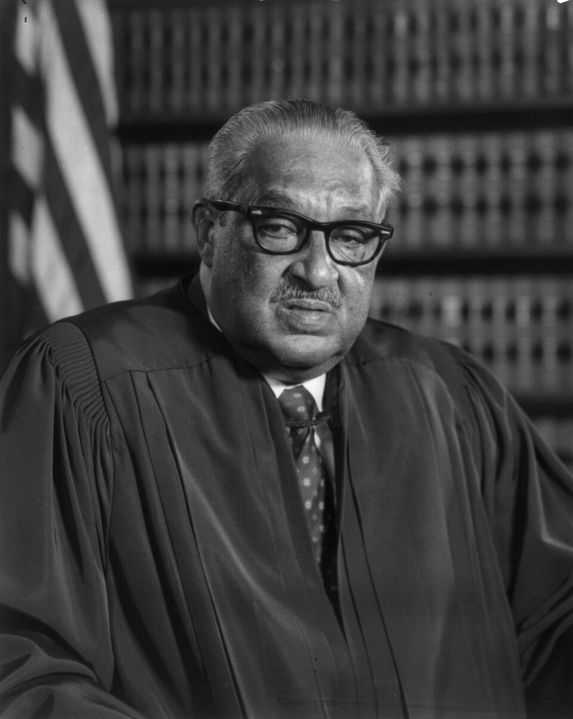
- Thurgood Marshall: Adopted the family resemblance test for notes
- William H. Rehnquist: Partial dissenter for four on the short-term exclusion

Summary
The Farmers Cooperative of Arkansas and Oklahoma, an agricultural cooperative with about 23,000 members, raised money for its general operations by selling promissory notes payable on demand. The notes were uncollateralized and uninsured but paid a variable interest rate set monthly to stay above what local banks paid. The Co-Op marketed them as an Investment Program, with newsletter advertisements describing them as safe, secure and available when needed. In 1984 the Co-Op went bankrupt, and more than 1,600 people held notes worth about $10 million. A class of noteholders sued Arthur Young & Co., the Co-Op's auditor and predecessor of Ernst & Young, claiming it had intentionally departed from accepted accounting principles in valuing a gasohol plant so as to inflate the Co-Op's assets. The noteholders won a $6.1 million judgment, but the Eighth Circuit reversed, holding that the demand notes were not securities. The question was whether these demand notes were securities under Section 3(a)(10) of the Securities Exchange Act of 1934, which lists any note but excludes notes with a maturity at issuance not exceeding nine months. The noteholders argued that the notes were sold to the public as investments and that the short-term exclusion was meant only for commercial paper traded among sophisticated parties. Ernst & Young argued that many notes are ordinary commercial instruments, that the notes resembled no recognized security, and that a demand note matures immediately and so falls within the nine-month exclusion. On 21 February 1990 the Court reversed. Justice Marshall adopted the family resemblance test drawn from the Second Circuit: a note is presumed to be a security unless it bears a strong resemblance to a recognized category of non-security notes, such as consumer loans or home mortgages, judged by four factors. Courts ask about the motivations of seller and buyer, the plan of distribution, the reasonable expectations of the investing public, and whether another regulatory scheme or risk-reducing factor makes the securities laws unnecessary. The Co-Op sold its notes to raise general capital, offered them widely, advertised them as investments and backed them with no collateral or insurance, so they were securities. On the exclusion, Marshall held that the maturity of a note is a question of federal law, that a demand note's maturity is ambiguous, and that read according to its purpose the exclusion did not cover these notes. Justice Stevens joined fully and added that the courts of appeals and the SEC had long read the exclusion as limited to commercial paper. Chief Justice Rehnquist, joined by Justices White, O'Connor and Scalia, joined the family resemblance analysis but dissented on the exclusion, arguing that by long legal usage a demand note is due at once and so has a maturity of less than nine months. The library text gives all three opinions without notes. The same litigation returned in Reves v. Ernst & Young (1993), which addressed the auditor's liability under the federal racketeering statute.
Virtues in this work
- Justice: Marshall extends the securities laws' protection to ordinary cooperative members who bought notes advertised as safe investments.
- Prudence: The four-factor test gives courts a measured way to separate investment notes from everyday commercial lending.
- Humility: Stevens defers to decades of settled interpretation by other judges and the SEC rather than reopening the question himself.
Plot or Argument
- The Co-Op's Investment Program
Marshall describes the demand notes, the newsletter advertising, the 1984 bankruptcy, the claims against Arthur Young over the gasohol plant, the $6.1 million verdict and the Eighth Circuit's reversal.
- Substance over form
Congress defined security broadly to reach the many schemes devised by those who seek the use of others' money, but did not mean to federalize all fraud. Courts therefore look to the economic reality of a transaction, though not every instrument requires case-by-case analysis.
- Why Howey does not govern notes
Because note covers instruments with widely varying characteristics, the Court declines to apply the investment-contract test of SEC v. W. J. Howey Co. to notes and chooses among the approaches developed in the courts of appeals.
- The family resemblance test
A note is presumed a security unless it strongly resembles one of the judicially recognized exceptions, measured by the motivations of the parties, the plan of distribution, the public's reasonable expectations and the presence of a risk-reducing factor.
- The Co-Op notes applied
The notes raised general business capital, attracted buyers with interest returns, were offered to members and nonmembers alike, were advertised as investments and lacked collateral, insurance or other regulation, so they are securities.
- The nine-month exclusion
Maturity is a matter of federal law, not Arkansas's statute of limitations, and a demand note could plausibly be said to mature immediately or decades later. Read in light of its purpose, the exclusion does not reach these notes.
- Stevens's concurrence
Stevens adds that a settled construction by the courts of appeals and the SEC, limiting the exclusion to commercial paper, should not be disturbed unless Congress acts.
- Rehnquist's partial dissent
The Chief Justice joins the family resemblance holding but argues that note and maturity were legal terms of art long before 1934, that treatises treated demand paper as at maturity all the time, and that the exclusion therefore covers these notes.
Characters
- Reves and other noteholders, petitioners
Class of holders of the Co-Op's demand notes who sued the Co-Op's auditor after its bankruptcy.
- Ernst & Young, respondent
Accounting firm, successor to Arthur Young & Co., which had audited the Co-Op's financial statements.
- Farmers Cooperative of Arkansas and Oklahoma, issuer of the notes
Agricultural cooperative of about 23,000 members that sold demand notes as an Investment Program and failed in 1984.
- Justice Thurgood Marshall, author of the opinion of the Court
Adopted the family resemblance test and held that the notes were securities outside the short-term exclusion.
- Justice John Paul Stevens, concurring
Relied on the settled view that the exclusion covers only commercial paper.
- Chief Justice William H. Rehnquist, concurring in part and dissenting in part
Agreed the notes passed the family resemblance test but read the nine-month exclusion to cover demand notes.
Lessons
Economic reality and the meaning of security
Marshall wrote that Congress meant to regulate investments in whatever form they are made and by whatever name they are called. The Court looks past labels to what an instrument does: here, notes sold widely to raise capital and paying interest to draw investors functioned as investments.
- How did the Co-Op's advertisements describe the notes, and why does that matter?
- Why does the Court say it is not bound by legal formalisms?
- Should the name a seller gives an instrument ever control how the law treats it?
Presumptions and families
The family resemblance test begins by presuming that a note is a security and then asks whether it closely resembles a familiar type of non-investment note, such as a home mortgage or a consumer loan. The four factors give courts a structured way to decide close cases.
- What are the four factors the Court uses to compare a note to the recognized exceptions?
- Why would a note secured by a home mortgage not usually be a security?
- Is a presumption with exceptions a better tool than a simple list?
Plain words and settled meanings
The justices divided over the nine-month exclusion. Rehnquist read maturity by its long-established legal meaning for demand paper; Marshall found the word ambiguous as applied and turned to purpose; Stevens relied on decades of consistent lower-court and SEC interpretation.
- Why does Marshall refuse to let Arkansas law determine the maturity of the notes?
- What evidence does Rehnquist offer for the meaning of maturity in 1934?
- How much weight should a long line of lower-court decisions carry when the Supreme Court first interprets a statute?
Protection for ordinary investors
The noteholders were members of a farm cooperative and members of the public, not professional traders. The Court's analysis of the plan of distribution and public expectations reflects the securities laws' concern with offerings made to people who rely on the issuer's representations.
- Why does the breadth of the Co-Op's offering matter to the analysis?
- Why did the absence of insurance or collateral weigh in favor of treating the notes as securities?
Context
The Securities Act of 1933 and the Exchange Act of 1934 define security with a long list that begins with any note, but notes are also used in countless ordinary commercial and consumer transactions. In the 1970s and 1980s the courts of appeals developed competing tests for sorting investment notes from commercial ones, including the Second Circuit's family resemblance test, the investment-versus-commercial test, and an application of the Howey investment-contract test. Farm cooperatives in the region had financed operations partly through notes sold to members.
Composition
The Co-Op filed for bankruptcy in 1984. The noteholders' class action against Arthur Young went to trial in federal district court, producing a $6.1 million verdict, and the Eighth Circuit reversed in 1988. The Supreme Court granted review on the federal question in 1989.
Reception
The family resemblance test became the governing standard for whether a note is a security and is applied by courts and the SEC to promissory notes sold to investors. The litigation returned to the Court in Reves v. Ernst & Young (1993), where the justices held that an outside auditor must participate in the operation or management of an enterprise to be liable under the RICO statute. Scholars have noted that Reves, together with Howey and Landreth Timber, gives separate tests for different parts of the statutory definition.
Comparisons
- sec-v-w-j-howey-co
Marshall quotes Howey on the countless and variable schemes devised to use others' money, but declines to apply Howey's investment-contract test to instruments called notes.
- sec-v-edwards
Fourteen years later the Court again read the securities definition broadly against a fixed-return scheme, this time under the Howey test for investment contracts.
- ernst-and-ernst-v-hochfelder
Both cases involve suits against outside auditors of a failed enterprise; Reves asks what counts as a security, Hochfelder what mental state a Rule 10b-5 claim requires.
- shearson-american-express-v-mcmahon
Stevens's concurrence in Reves quotes his own McMahon opinion on why a settled construction of a statute should stand until Congress changes it.
Quotes
Frequently cited
“Congress' purpose in enacting the securities laws was to regulate investments, in whatever form they are made and by whatever name they are called.”
Frequently cited
“A note is presumed to be a "security," and that presumption may be rebutted only by a showing that the note bears a strong resemblance (in terms of the four factors we have identified) to one of the enumerated categories of instrument.”
“In discharging our duty, we are not bound by legal formalisms, but instead take account of the economics of the transaction under investigation.”
“Finally, we examine whether some factor such as the existence of another regulatory scheme significantly reduces the risk of the instrument, thereby rendering application of the Securities Acts unnecessary.”
“In my view such a settled construction of an important federal statute should not be disturbed unless and until Congress so decides.”
“But the terms "note" and "maturity" did not spring full blown from the head of Congress in 1934.”
For Students
A reading companion for classical Christian high school students. See the student guide.
Reading Guide
Watch for
- The Co-Op's newsletter advertisement describing the notes as safe and secure.
- Marshall's explanation of why the Howey test is not used for notes.
- The four factors of the family resemblance test.
- The Court's treatment of Arkansas's statute of limitations as irrelevant to federal maturity.
- Rehnquist's appeal to legal dictionaries and treatises of the 1930s.
Key terms and names
- Demand note
- A promissory note payable whenever the holder asks for payment, with no fixed due date.
- Family resemblance test
- The test, adopted here, that presumes a note is a security unless it closely resembles a recognized category of non-investment notes.
- Plan of distribution
- How widely and to whom an instrument is offered; broad offerings to the public suggest a security.
- Commercial paper
- Short-term, high-quality notes issued by businesses to fund current operations and sold to sophisticated investors.
- Risk-reducing factor
- Something, such as insurance, collateral or another regulatory scheme, that makes securities-law protection unnecessary.
- Maturity
- The time when a debt instrument becomes due for payment.
Seminar Questions
- Comprehension How did the Co-Op sell its demand notes, and what happened to the noteholders in 1984?
- Comprehension What are the four factors of the family resemblance test, and how does each apply to the Co-Op notes?
- Interpretation Why does the Court decline to use the Howey test for instruments called notes?
- Interpretation How do Marshall and Rehnquist each reason about the maturity of a demand note?
- Interpretation What role does the reasonable expectation of the investing public play in deciding whether something is a security?
- Big Question When people lend money to an organization they belong to and trust, should the law protect them as investors or treat the loan as a private matter among members?
Faith Connections
- Psalm 15:1-5 (Scripture)
The psalm describes the one who may dwell in God's tabernacle as one who speaks truth and does not put out his money to usury or take reward against the innocent, a picture of honest lending.
- Matthew 7:16 (Scripture)
Ye shall know them by their fruits, a principle of judging things by what they do rather than what they are called, like the Court's attention to economic reality over labels.
- Aristotle, Categories (Great Conversation)
Aristotle's distinctions between things that share a name and things that share a nature bear on the Court's point that the word note covers instruments of very different kinds.
Logic and Rhetoric
Central argument: Marshall reasons that Congress meant to regulate investments whatever their form, that notes vary too widely for a single label to decide, that a presumption rebuttable by strong resemblance to known non-investment notes sorts them sensibly, and that these widely sold, uninsured notes are securities; Rehnquist answers that the statute's words, read by their 1934 legal meaning, exclude demand notes.
Rhetorical device: allusion. Rehnquist's remark that note and maturity did not spring full blown from the head of Congress (quote 5) alludes to the myth of Athena springing from the head of Zeus.
Debate: Resolved: that courts should read financial terms in securities statutes by their established legal meaning rather than by the statute's purpose.
Memory Work
Congress' purpose in enacting the securities laws was to regulate investments, in whatever form they are made and by whatever name they are called.
A note is presumed to be a "security," and that presumption may be rebutted only by a showing that the note bears a strong resemblance (in terms of the four factors we have identified) to one of the enumerated categories of instrument.
Writing Prompts
Essay: Apply the four family resemblance factors to a note of your own invention and argue whether it is a security, using Marshall's reasoning about the Co-Op notes as your model.
Comparison with SEC v. W. J. Howey Co.: Compare the Howey test for investment contracts with the family resemblance test for notes, explaining why the Court thought different instruments needed different tests.
Medical Lens
A dispute over whether a farm cooperative's demand notes were securities; the opinions concern statutory definitions and contain no medical subject matter.
Creative Prompts
- Classroom
Give students six imaginary notes (a car loan, a home mortgage, a bank loan to a store, a church bond drive, a startup's notes sold online and a cooperative's demand notes) and have teams apply the four family resemblance factors to each.
- Essay
Rewrite the Co-Op's newsletter advertisement so that it describes the demand notes accurately, including their lack of insurance and collateral.
- Dialogue
Write a conversation in 1984 between two Co-Op members who bought demand notes, one who saw them as a favor to the cooperative and one who saw them as an investment, after the bankruptcy is announced.
- Essay
Evaluate Rehnquist's argument from the historical meaning of maturity against Marshall's argument from the statute's purpose, and decide which approach better respects Congress.
Further Reading
- The Law of Securities Regulation, Thomas Lee Hazen
Treatise section on the definition of a security explains the family resemblance test alongside the Howey and Landreth Timber decisions.
- Fundamentals of Securities Regulation, Louis Loss and Joel Seligman
Covers the history of the statutory definition, including the competing tests for notes before Reves.
Verification notes
Six quotations (four from Marshall, one each from Stevens and Rehnquist) were confirmed by Grep as exact substrings of content/texts/reves-v-ernst-and-young.txt. The Co-Op's membership, the advertising language, the 1984 bankruptcy, the 1,600 noteholders, the $10 million in notes and the $6.1 million judgment come from the stored opinion. The vote (5-4 on whether the notes were securities, given the dissent on the exclusion) is as given in the task; all nine justices joined the family resemblance analysis in Part II. The 1993 sequel is from general references.
- Confirm the decision date of 21 February 1990 and the argument date.
- Confirm the lead petitioner's full name.
- Confirm the 1993 sequel's citation (507 U.S. 170) and holding.