Work record
SEC v. W. J. Howey Co.
1946 · Postwar Contemporary · Court Decision · English
Abstract
Question Presented. When a Florida company sells rows of orange trees together with a contract under which its affiliate tends the trees and sends the owner a share of the crop's earnings, has it offered an investment contract that federal law required it to register?
Arguments. The Commission saw a single package: absentee purchasers put up cash, the affiliate did all the work, and profits came back from a pooled harvest. The companies insisted they had simply sold real estate with recorded deeds, that customers walked the land beforehand, and that hiring the affiliate was optional.
Holding. Six justices sided with the agency, while Jackson, away at Nuremberg, did not vote. Murphy drew on how state courts had read the phrase and focused on economic reality rather than labels. Frankfurter would have left standing two lower courts' conclusion that land and caretaking were separate bargains.
Significance. The opinion supplied the yardstick for deciding what counts as a security when an arrangement fits no familiar category, from cattle-feeding programs to cryptocurrency.
Why it matters for advisers. Howey supplies the four-part test (money, common enterprise, expected profits, efforts of others) used to decide whether an arrangement is an investment contract and therefore a security, so advisers and Series 65 candidates meet it whenever an unfamiliar product must be classified.
Text. Murphy's and Frankfurter's opinions appear whole, notes excepted.
Key figures
- W. J. Howey Company: Florida grove owner that sold strips of citrus land to hotel guests
- Howey-in-the-Hills Service, Inc.: Affiliate that farmed and marketed the groves under ten-year contracts
- Securities and Exchange Commission: Agency seeking to halt an unregistered offering
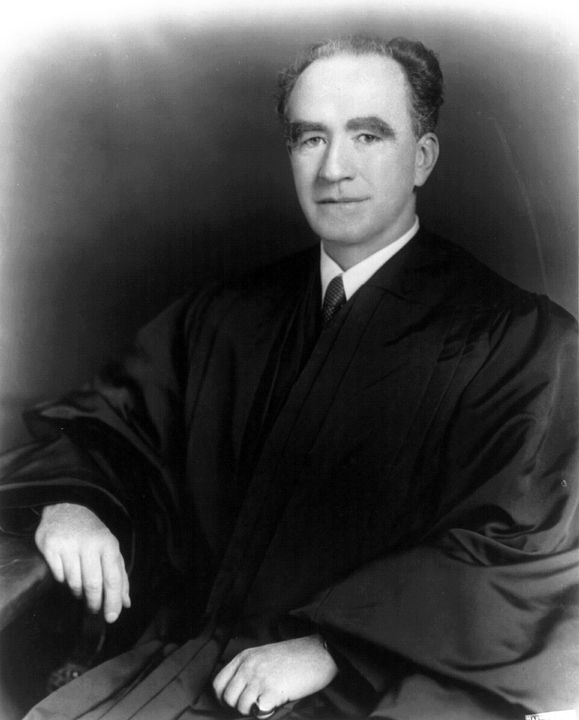
- Frank Murphy: Wrote the definition known as the Howey test
- Felix Frankfurter: Lone dissenter deferring to the trial court's findings

Summary
The W. J. Howey Company owned large citrus groves in Lake County, Florida, near a resort hotel it also operated. Each year it planted about five hundred acres, kept half and sold the rest to the public in narrow strips, explaining that the sales helped finance further planting. Buyers, mostly business and professional people from outside Florida, were shown the groves while staying at the hotel and were told that a grove was not a practical investment without a service arrangement. A sister company, Howey-in-the-Hills Service, Inc., offered ten-year contracts that could not be cancelled, giving it possession of the land and full control of cultivation, harvest and marketing; the fruit was pooled and each owner received an allocation of net profits. About eighty-five percent of the acreage sold over three years went with these service contracts. No registration statement had been filed. The Securities and Exchange Commission sued to stop the offerings as sales of unregistered securities under the Securities Act of 1933. The District Court refused an injunction and the Fifth Circuit affirmed, treating the transactions as ordinary sales of land with a separate, optional contract for farming services. The Commission argued that the land contract and service contract were in substance one offering of a share in a citrus enterprise, an investment contract within the statutory definition of a security. Howey answered that buyers received deeds to real land of independent value, inspected it before purchase and were free to hire any caretaker or none. On 27 May 1946 the Court reversed, 6–1, with Justice Jackson taking no part. Justice Murphy looked to the state blue sky laws from which Congress borrowed the term and defined an investment contract as a contract, transaction or scheme in which a person invests money in a common enterprise and is led to expect profits solely from the efforts of the promoter or a third party. The buyers here lacked the skill and equipment to farm, the small strips had value only as parts of a larger managed grove, and the transfer of land was incidental to a share of the profits. Because the Act forbids the offer as well as the sale, it did not matter that some buyers declined the service contract. Murphy rejected any requirement that the venture be speculative, calling the definition flexible enough to meet the countless schemes of those who seek other people's money on the promise of profits. Justice Frankfurter dissented. Whether a transaction is an investment contract depends on its circumstances, he wrote, and two lower courts had found that land and service contracts were separate agreements; the Court should not upset such concurrent findings or sweep innocent transactions into the Act. The library text gives both opinions without their notes. The test has since reached chinchillas, payphones and digital tokens; United Housing Foundation v. Forman (1975) restated it, and SEC v. Edwards (2004) held that a promised fixed return can satisfy it.
Virtues in this work
- Justice: Murphy insists that investors receive the disclosure the law requires whatever legal form the offering takes.
- Prudence: The definition is written to adapt to schemes not yet devised, anticipating that promoters will change the form while keeping the substance.
- Humility: Frankfurter defers to the trial judge who heard the evidence rather than substituting his own reading of the facts.
Plot or Argument
- The groves, the hotel and the two contracts
Murphy sets out the stipulated facts: half of each year's plantings offered to the public, buyers recruited among hotel guests, a land sale paired with a non-cancellable ten-year service contract, pooled fruit and an allocation of net profits.
- A term borrowed from the states
Congress did not define investment contract, but state courts had read the phrase in blue sky laws to reach any arrangement for placing capital so as to secure income from its employment, with substance favored over form. Murphy holds that Congress adopted that settled meaning.
- The definition
An investment contract is a contract, transaction or scheme in which a person invests money in a common enterprise and expects profits solely from the efforts of a promoter or third party, whether the interest is shown by certificates or by nominal interests in physical assets.
- Applying it to citrus
The buyers were distant, inexperienced and interested only in a return; their strips were too small to farm alone; the deeds merely measured each investor's share. All the elements of a profit-seeking business venture were present.
- Offers, intrinsic value and speculation
The Act reaches offers, so buyers who declined service do not change the result. Murphy rejects the Fifth Circuit's view that a venture must be speculative or that property with intrinsic value cannot be part of an investment contract.
- Frankfurter's dissent
Frankfurter argues that the existence of an investment contract is a question of fact, that the District Court found the land and service agreements separate, and that this Court should respect concurrent findings of two lower courts.
Characters
- W. J. Howey Company, respondent
Florida corporation that owned citrus acreage in Lake County and a nearby resort hotel, and sold strips of grove land to the public.
- Howey-in-the-Hills Service, Inc., respondent
Affiliated company that cultivated, harvested and marketed the groves under ten-year service contracts.
- Securities and Exchange Commission, petitioner
Federal agency that sought an injunction against the unregistered offering.
- Justice Frank Murphy, author of the opinion of the Court
Wrote the definition of an investment contract that became known as the Howey test.
- Justice Felix Frankfurter, dissenter
Argued that the lower courts' factual finding of separate contracts should stand.
- Justice Robert H. Jackson, did not participate
Absent from the Court while serving as chief prosecutor at the Nuremberg trials.
Lessons
Substance over form
Howey's buyers received warranty deeds, and on paper they owned land. Murphy looked past the paperwork to the economic reality: investors supplied money and the companies did the work and generated the profit. The principle that legal labels do not control has guided securities law ever since.
- What facts persuaded Murphy that the land deeds were merely incidental?
- Why does it matter that the strips of land were too small to farm on their own?
- Is it fair to treat a transaction as something other than what the parties called it?
A definition built to last
Murphy wrote that the definition embodies a flexible rather than a static principle, able to meet schemes no one had yet imagined. Its four elements, an investment of money, a common enterprise, an expectation of profits and reliance on the efforts of others, have since been applied to arrangements far removed from Florida citrus.
- What are the elements of the test Murphy announces?
- Why did Murphy reject a requirement that the venture be speculative?
- What are the advantages and risks of a flexible legal definition?
Respecting the trial court
Frankfurter did not defend the offering; he defended a rule of judicial administration. Two courts had found as a fact that the contracts were separate, and he believed the Supreme Court should not reweigh such findings. His dissent raises the lasting question of when an issue is one of fact and when it is one of law.
- What did the District Court find, according to Frankfurter's quotation from it?
- Is the existence of an investment contract a question of fact or of law?
- Why might a high court hesitate to overturn findings that two lower courts agreed on?
Disclosure as the remedy
The Securities Act of 1933 does not forbid risky investments; it requires that offerings be registered so investors receive full and fair disclosure. Howey's significance lies in deciding which offerings trigger that duty, which is why the definition of a security sits at the gateway of the whole federal system.
- What did Howey fail to file, and why did that matter?
- Why does Murphy say it is enough that the companies offered an investment contract, even to buyers who declined it?
Context
Before 1933 investors in the United States were protected mainly by state blue sky laws, so named because they aimed at promoters selling shares in the blue sky. After the crash of 1929, Congress passed the Securities Act of 1933, requiring registration and disclosure for public offerings, and the Securities Exchange Act of 1934, which created the Securities and Exchange Commission. Florida had seen a speculative land boom collapse in the mid-1920s, and citrus grove sales to absentee buyers were a familiar feature of central Florida's economy.
Composition
The Commission's suit was decided against it by the District Court for the Southern District of Florida in 1945 and by the Fifth Circuit later that year. The Court granted review in early 1946 because the Commission argued that the appellate ruling conflicted with other decisions and introduced an unworkable test. The case was argued and decided within a month during a term in which the Court had only eight sitting members and one of them was abroad.
Reception
The Howey test quickly became the standard measure for investment contracts in the lower courts. Later courts debated the word solely: some appellate decisions in the 1970s read it to require that the promoter's efforts be the undeniably significant ones rather than the only ones, and the Court in United Housing Foundation v. Forman (1975) restated the test without resolving every variation. In the twenty-first century the Commission and federal courts have applied Howey to digital assets, prompting renewed debate over whether a 1946 definition fits new forms of investment.
Comparisons
- sec-v-edwards
In 2004 the Court applied Howey to a payphone sale-and-leaseback promising a fixed return, holding that a fixed rather than variable profit can still satisfy the test Murphy wrote.
- reves-v-ernst-and-young
When the Court had to decide in 1990 whether promissory notes were securities, it chose a family resemblance test instead of Howey, showing that different instruments call for different measures.
- the-wealth-of-nations
Smith observed that directors of joint-stock companies manage other people's money rather than their own, the separation of capital from management that the Howey test identifies as the mark of an investment contract.
- wickard-v-filburn
Decided four years earlier, Wickard also involved farm produce and the reach of federal law, though there the question was congressional power rather than the meaning of a statutory term.
- sec-v-capital-gains-research-bureau
Like Howey, the 1963 decision reads a securities statute broadly to serve its protective purpose, there to find a fiduciary duty of disclosure in the Investment Advisers Act.
Quotes
Frequently cited
“In other words, an investment contract for purposes of the Securities Act means a contract, transaction or scheme whereby a person invests his money in a common enterprise and is led to expect profits solely from the efforts of the promoter or a third party”
Frequently cited
“It embodies a flexible rather than a static principle, one that is capable of adaptation to meet the countless and variable schemes devised by those who seek the use of the money of others on the promise of profits.”
Frequently cited
“The test is whether the scheme involves an investment of money in a common enterprise with profits to come solely from the efforts of others.”
“The statutory policy of affording broad protection to investors is not to be thwarted by unrealistic and irrelevant formulae.”
“'Investment contract' is not a term of art; it is conception dependent upon the circumstances of a particular situation.”
“I find nothing in the Securities Act to indicate that Congress meant to bring every innocent transaction within the scope of the Act simply because a perversion of them is covered by the Act.”
For Students
A reading companion for classical Christian high school students. See the student guide.
Reading Guide
Watch for
- How buyers were recruited among guests at the company's resort hotel.
- The terms of the ten-year service contract and the pooling of fruit.
- Murphy's appeal to the state blue sky laws for the meaning of investment contract.
- The four elements of the definition and the word solely.
- Frankfurter's reliance on the District Court's findings.
Key terms and names
- Security
- A financial instrument or interest covered by the securities laws; the 1933 Act lists stocks, bonds, notes and investment contracts, among others.
- Investment contract
- Under Howey, an arrangement in which a person invests money in a common enterprise expecting profits from the efforts of others.
- Registration statement
- The disclosure document an issuer must file with the Commission before offering securities to the public, unless an exemption applies.
- Blue sky laws
- State statutes regulating the sale of securities, many of them enacted before the federal laws of 1933 and 1934.
- Common enterprise
- A venture in which investors' fortunes are tied together or to the promoter's, such as pooled fruit and shared profits.
- Concurrent findings
- Factual conclusions on which both a trial court and an appellate court agree, which the Supreme Court is traditionally reluctant to disturb.
Seminar Questions
- Comprehension What did buyers of Howey grove land receive, and what did the service company do for them?
- Comprehension Why did the Commission sue, and what had the lower courts decided?
- Interpretation Why does Murphy think it irrelevant that some buyers did not sign service contracts?
- Interpretation How does Frankfurter's view of the question as one of fact lead him to a different result?
- Interpretation Why does Murphy look to state blue sky decisions to interpret a federal statute?
- Big Question When a person entrusts money to others in hope of gain, what duties of honesty should the law impose on those who receive it?
Faith Connections
- Matthew 25:14-30 (Scripture)
In the parable of the talents a master entrusts money to servants to be put to work in his absence, an image of capital placed in the hands of others in expectation of a return.
- Proverbs 14:15 (Scripture)
The simple believes every word, but the prudent looks well to his going, a counsel of care for buyers drawn by promises of profit.
Logic and Rhetoric
Central argument: Murphy reasons that Congress adopted the meaning state courts had given investment contract, that the meaning turns on economic substance, and that Howey's paired land and service contracts gave distant, inexperienced buyers a share in profits produced by the companies' efforts; Frankfurter replies that whether the contracts were one transaction was a factual question two lower courts had answered.
Rhetorical device: antithesis. Murphy contrasts a flexible principle with a static one and then sets realistic economic substance against unrealistic and irrelevant formulae (quotes 1 and 3).
Debate: Resolved: that the sale of land paired with an optional management contract should be treated as a security.
Memory Work
The test is whether the scheme involves an investment of money in a common enterprise with profits to come solely from the efforts of others.
It embodies a flexible rather than a static principle, one that is capable of adaptation to meet the countless and variable schemes devised by those who seek the use of the money of others on the promise of profits.
Writing Prompts
Essay: Explain each element of the Howey test using the facts of the citrus groves, and evaluate Frankfurter's objection that the case should have turned on the lower courts' factual findings.
Comparison with SEC v. Edwards: Compare how the Court applied the Howey test in 1946 to citrus groves with variable profits and in 2004 to payphones with a fixed promised return, and explain what Edwards added.
Medical Lens
A securities case about citrus grove offerings; it raises no medical or psychiatric questions.
Creative Prompts
- Classroom
Hold a moot court in May 1946 with counsel for the Commission, counsel for the Howey companies, and seven student justices who must each decide whether the land and service contracts were one transaction or two.
- Essay
Take three modern arrangements (a share of a racehorse, a vacation timeshare, a crowdfunding pledge) and apply each element of the Howey test, explaining where the answer is clear and where it is close.
- Dialogue
Write the sales conversation between a Howey salesman and a hotel guest from Ohio in 1943, then rewrite it as it would have to sound if the offering had been registered with full disclosure.
- Essay
Write Frankfurter's dissent as a one-page letter to a law student explaining why respect for trial courts mattered to him more than the result in this case.
Further Reading
- The Transformation of Wall Street: A History of the Securities and Exchange Commission and Modern Corporate Finance, Joel Seligman
Standard history of the Commission from its creation through the late twentieth century.
- Fundamentals of Securities Regulation, Louis Loss and Joel Seligman
Leading one-volume treatise, with extended discussion of the definition of a security and the Howey test.
Verification notes
All six quotations, four from Murphy and two from Frankfurter, were found by Grep as exact substrings of content/texts/sec-v-w-j-howey-co.txt. The first quotation stops before a typographical error in the stored text (as ets for assets). The vote of 6–1 with Justice Jackson not participating is stated in the opinion text. Facts about the Court's composition in May 1946 (Stone's death, Vinson's pending appointment, Jackson at Nuremberg) and later applications of the test come from standard histories. The meta file gives no text path, so fullText.path points to the stored text file.
- Confirm the argument date of 2 May 1946.
- Confirm the examples of later Howey applications (chinchillas, payphones, digital tokens) against reported decisions.