Work record
SEC v. Edwards
2004 · Postwar Contemporary · Court Decision · English
Abstract
Question Presented. Does a scheme stop being an investment contract under federal securities law simply because it promises buyers a set payment rather than a share of whatever the business earns?
Arguments. The promoter, following the appeals court, read earlier decisions to limit profits to growth in value or a cut of earnings, and said that a payment owed by contract does not depend on anyone's managerial work. The agency pointed to its consistent practice since the 1930s and to the state decisions underlying the 1946 test, some of which concerned guaranteed payouts.
Holding. All nine justices reversed the Eleventh Circuit. Profits in the Howey formula means the income investors are after, fixed or variable, and a contractual right to be paid does not change who generates the money. Reading the law otherwise would hand promoters a simple route around regulation and would leave cautious investors, often elderly, least protected.
Why it matters for advisers. Offerings that promise passive investors a set return, such as leaseback, note or similar programs, can be securities subject to registration and antifraud rules. Professionals who sell or recommend them must treat them accordingly.
Text. The whole opinion is reproduced, followed by the source's list of supporting briefs from AARP, state regulators and investor advocates.
Key figures
- Charles Edwards: Owner and chief executive of ETS Payphones
- Securities and Exchange Commission: Agency that sued over the unregistered payphone packages
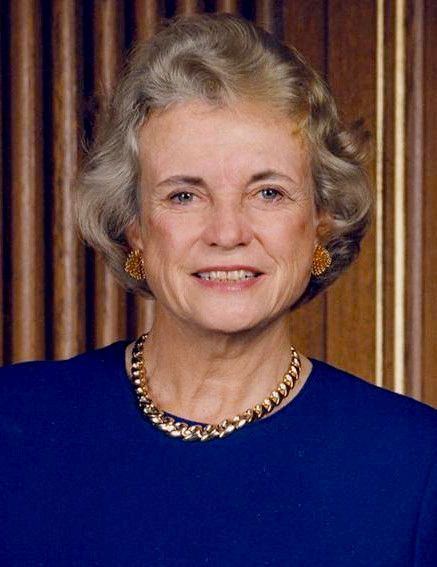
- Sandra Day O'Connor: Wrote that fixed returns can satisfy the Howey test

Summary
Charles Edwards was chairman, chief executive and sole shareholder of ETS Payphones, Inc. Through independent distributors ETS sold payphones to the public for about $7,000 each, packaged with a site lease, a five-year leaseback and management agreement, and a promise to buy the phone back at full price at the end of the lease or within 180 days of a request. Nearly all purchasers took the package. Under the leaseback they received $82 a month, a 14 percent annual return, while ETS chose the sites, installed and serviced the phones, and collected the coins. Its brochures promoted the payphone as an exciting business opportunity under the slogan that opportunity sometimes rings. About 10,000 people invested a total of $300 million. The phones did not earn enough to cover the promised payments, ETS relied on money from new investors to pay earlier ones, and in September 2000 it filed for bankruptcy. The SEC sued the same month for violations of the registration and antifraud provisions of the 1933 and 1934 Acts. The District Court held the arrangements were investment contracts; the Eleventh Circuit reversed. The question was whether a scheme falls outside the term investment contract because it promises a fixed rather than a variable return. Edwards relied on the Eleventh Circuit's reading of earlier cases, which described profits as capital appreciation or participation in earnings, and on its view that a return guaranteed by contract does not come from the efforts of others. The SEC argued that its longstanding position, the blue sky cases behind the Howey test and the purposes of the securities laws all treat fixed-return promises as investment contracts. On 13 January 2004 the Court unanimously reversed. Justice O'Connor began with the principle, quoted from Reves v. Ernst & Young (1990), that Congress meant to regulate investments in whatever form. Under SEC v. W. J. Howey Co. (1946), an investment contract involves an investment of money in a common enterprise with profits to come solely from the efforts of others, and profits there means the income or return investors seek, including fixed periodic payments. Two of the state blue sky cases on which Howey relied involved fixed returns, United Housing Foundation v. Forman (1975) had given only illustrations, not an exclusive list, and the SEC had consistently taken the same view. A contrary rule would let promoters evade the law by choosing a rate to promise, and fixed-return pitches are particularly attractive to older and less sophisticated investors. The Eleventh Circuit's second ground also failed, since bargaining for a return does not mean the return does not depend on others' efforts. The library text gives the complete opinion of the Court; the source's list of amicus briefs and a short procedural note appear at the end. The case was remanded for further proceedings on the SEC's claims.
Virtues in this work
- Justice: The Court refuses to let promoters escape the securities laws by the simple device of promising a fixed rate.
- Charity: O'Connor's opinion takes particular note of older and less sophisticated investors who are drawn to promises of guaranteed returns.
- Temperance: The case illustrates the danger of yielding to promises of steady, high returns without asking how they could be earned.
Plot or Argument
- Opportunity rings
O'Connor opens with the ETS slogan and its outcome, then describes the payphone package, the 14 percent leaseback payments, the marketing, the reliance on new investors' money, the September 2000 bankruptcy and the conflicting rulings below.
- The breadth of security
Citing Reves, the opinion recalls that Congress defined security broadly to reach virtually any instrument sold as an investment, and that investment contract, though undefined, was given meaning in Howey.
- What profits means in Howey
Howey drew on state blue sky decisions, and in context profits meant the income or return investors seek, including dividends, periodic payments or increased value, not the profits of the enterprise itself.
- Fixed and variable returns alike
Investors are drawn by promised income in either form, and fixed-return pitches particularly attract vulnerable investors; excluding them would let promoters evade the law by picking a rate. Two blue sky cases relied on in Howey involved fixed returns.
- Forman and the SEC's position
Forman's examples of profits were illustrations, not an exclusive list, and a passing remark in Reves did not change that. The SEC had treated fixed-return schemes as investment contracts in adjudications and enforcement actions since the 1930s.
- Contractual entitlement
The Eleventh Circuit's alternative ground, that a contractual right to payment removes the return from the efforts of others, conflicts with Howey itself, where investors also had service contracts. The Court reverses and remands.
Characters
- Charles Edwards, respondent
Chairman, chief executive and sole shareholder of ETS Payphones, Inc.
- ETS Payphones, Inc., seller of the payphone packages
Company that sold payphones with leaseback, management and buyback agreements and filed for bankruptcy in September 2000.
- Securities and Exchange Commission, petitioner
Brought the enforcement action alleging registration and antifraud violations.
- Justice Sandra Day O'Connor, author of the unanimous opinion
Held that a promise of a fixed return does not take a scheme outside the Howey test.
Lessons
Reading a precedent in its context
The Eleventh Circuit read Forman's two examples of profits as a complete list. O'Connor went back to Howey and the blue sky cases behind it to show that profits meant the return investors seek in any form. The case teaches how to read a precedent's words in light of what the earlier court was deciding.
- What were the two examples of profits in Forman, and why did the Eleventh Circuit treat them as exclusive?
- How do the blue sky cases on which Howey relied answer that reading?
- Why should courts avoid binding themselves to passing dictum?
Substance over labels, again
ETS sold its package as the purchase of a payphone with optional services, but nearly every buyer took the full package and did nothing but receive checks. The Court treated the arrangement by its economic reality as an investment, following the substance-over-form principle of Howey and Reves.
- Why did it matter that purchasers were not involved in operating the payphones?
- What made the payphone package look like a business purchase, and what made it an investment?
Guaranteed returns and vulnerable investors
O'Connor noted that offers of guaranteed fixed returns are especially attractive to older and less sophisticated investors. A rule exempting such offers would have left the securities laws' protection weakest where it was most needed, and would have invited promoters to pick a fixed rate simply to avoid regulation.
- Why might a promised fixed return appeal to someone who fears risk?
- How could a promoter have used the Eleventh Circuit's rule to avoid the securities laws?
- What questions should an investor ask about a promise of a steady, high return?
Context
Federal deregulation of the telephone industry in the 1980s and 1990s allowed private companies to own and operate payphones, and promoters marketed payphone ownership to individual investors as a business opportunity. State regulators and the SEC brought numerous actions against payphone, ATM and similar sale-and-leaseback programs in the late 1990s and early 2000s, and the courts of appeals divided over whether fixed-return arrangements were investment contracts.
Composition
The SEC filed suit in the Northern District of Georgia in September 2000, the month ETS entered bankruptcy. The Eleventh Circuit reversed in a 2002 per curiam opinion, relying in part on a note in Reves that had described Forman's examples. AARP, the North American Securities Administrators Association and state securities regulators filed amicus briefs urging reversal.
Reception
The unanimous decision settled that fixed-return schemes can be investment contracts, and regulators have relied on it in actions against promissory-note, leaseback and similar offerings promising steady payments. It is regularly cited with Howey as part of the modern statement of the investment-contract test.
Comparisons
- sec-v-w-j-howey-co
Edwards reaffirmed and clarified the 1946 test, holding that Howey's profits include fixed returns, much as the citrus-grove buyers' service contracts entitled them to a share of net profits.
- reves-v-ernst-and-young
O'Connor opens her analysis with Reves's statement that Congress regulated investments by whatever name they are called, and corrects a footnote in Reves that had been read to narrow the meaning of profits.
- aaron-v-sec
Both are SEC enforcement suits under the antifraud provisions; Aaron fixed the mental state required, while Edwards decided whether the instruments were securities at all.
Quotes
Frequently cited
“There is no reason to distinguish between promises of fixed returns and promises of variable returns for purposes of the test, so understood.”
Frequently cited
“We hold that an investment scheme promising a fixed rate of return can be an "investment contract" and thus a "security" subject to the federal securities laws.”
“So it did for the 10,000 people who invested a total of $300 million in the payphone sale-and-leaseback arrangements touted by respondent under that slogan.”
“Moreover, investments pitched as low risk (such as those offering a "guaranteed" fixed return) are particularly attractive to individuals more vulnerable to investment fraud, including older and less sophisticated investors.”
“Under the reading respondent advances, unscrupulous marketers of investments could evade the securities laws by picking a rate of return to promise.”
“The fact that investors have bargained for a return on their investment does not mean that the return is not also expected to come solely from the efforts of others.”
For Students
A reading companion for classical Christian high school students. See the student guide.
Reading Guide
Watch for
- O'Connor's opening use of the ETS slogan.
- The details of the payphone package and who did the work of running the phones.
- The meaning of profits in Howey as O'Connor explains it.
- The two blue sky cases involving fixed returns, one about breeding rabbits.
- The Court's handling of a footnote in Reves.
Key terms and names
- Investment contract
- An investment of money in a common enterprise with profits to come from the efforts of others, a type of security under the federal laws.
- Sale-and-leaseback
- An arrangement in which a buyer purchases an asset and leases it back to the seller, who operates it and pays rent.
- Fixed return
- A set payment promised regardless of how the underlying business performs.
- Blue sky laws
- State securities laws, older than the federal acts, named for promoters who would sell building lots in the blue sky.
- Dictum
- A remark in a judicial opinion not necessary to the decision and therefore not binding.
- Buyback agreement
- A promise by the seller to repurchase what it sold at a stated price.
Seminar Questions
- Comprehension What did a purchaser of an ETS payphone package pay, receive and do?
- Comprehension On what two grounds did the Eleventh Circuit hold the arrangement was not an investment contract?
- Interpretation How does O'Connor use the blue sky cases to show what the Howey Court meant by profits?
- Interpretation Why does O'Connor think excluding fixed-return schemes would particularly expose older investors?
- Interpretation Why does the Court say the investors in Howey also had a contractual entitlement to a return?
- Big Question If a promise sounds safer than any honest business could make, whose responsibility is it to see through it: the investor's, the seller's or the government's?
Faith Connections
- Proverbs 28:20 (Scripture)
A faithful man shall abound with blessings: but he that maketh haste to be rich shall not be innocent, a proverb on the danger of promised quick and easy gain.
- 1 Timothy 6:9-10 (Scripture)
Paul warns that they that will be rich fall into temptation and a snare, a caution that applies to both promoters and investors drawn by promised returns.
- Charles Dickens, Little Dorrit (Great Conversation)
The rise and collapse of the financier Merdle, whose schemes drew in investors of every rank, is a novelist's portrait of trust placed in promised returns.
Logic and Rhetoric
Central argument: O'Connor reasons that Congress meant to reach all investments, that Howey's profits means the return investors seek in any form, that the blue sky sources and the SEC's practice treated fixed returns as investment contracts, and that a contrary rule would give promoters an easy escape from the law.
Rhetorical device: extended metaphor. The opinion turns the ETS slogan about opportunity ringing into a brief story that ends with opportunity hanging up, leading into the figures in quote 0.
Debate: Resolved: that every arrangement promising investors a fixed return for passive participation should be regulated as a security.
Memory Work
We hold that an investment scheme promising a fixed rate of return can be an "investment contract" and thus a "security" subject to the federal securities laws.
Under the reading respondent advances, unscrupulous marketers of investments could evade the securities laws by picking a rate of return to promise.
Writing Prompts
Essay: Explain how O'Connor uses history, precedent, agency practice and the purposes of the securities laws to reach a single conclusion about fixed returns.
Comparison with SEC v. W. J. Howey Co.: Compare the Florida citrus groves of Howey with the payphones of Edwards, showing how the same test applied to two very different businesses sold to passive investors.
Medical Lens
An SEC enforcement case about payphone sale-and-leaseback contracts; the opinion's concern for older investors is financial and it contains no medical content.
Creative Prompts
- Classroom
Hand out a mock brochure for a fictional vending-machine leaseback promising 12 percent a year. Students apply each element of the Howey test, as clarified in Edwards, and decide whether the offering is a security.
- Essay
Write a one-page consumer alert, in the voice of a state securities regulator around 2004, warning older investors about guaranteed-return leaseback programs and explaining what the Court decided.
- Dialogue
Write a phone call between an ETS distributor and a retired couple considering a payphone package, then a second call six months after the bankruptcy.
- Essay
Explain O'Connor's opening wordplay on opportunity knocking, ringing and hanging up, and discuss whether humor has a place in a Supreme Court opinion.
Further Reading
- The Law of Securities Regulation, Thomas Lee Hazen
Its discussion of investment contracts places Edwards within the line of cases running from Howey through Forman.
- Fundamentals of Securities Regulation, Louis Loss and Joel Seligman
The treatise O'Connor cites for the origin of the term blue sky laws; it surveys the investment-contract cases.
Verification notes
All six quotations from O'Connor's opinion were checked by Grep as exact substrings of content/texts/sec-v-edwards.txt; the opening slogan was not quoted because it contains an ellipsis from the brochure. Facts about the payphone package, the $82 monthly payment, the 10,000 investors, the $300 million and the September 2000 bankruptcy come from the stored opinion. O'Connor cites Loss and Seligman's multivolume Securities Regulation; the furtherReading entry names the related one-volume Fundamentals treatise by the same authors. The 9-0 vote is as given in the task.
- Confirm the decision date of 13 January 2004 and the argument date.
- Confirm the outcome of the SEC's claims on remand.