Work record
The Gulag Archipelago
1973 · Postwar Contemporary · History · Russian
Abstract
Background. Letters from survivors who had read his camp novella gave the author a store of evidence, which he assembled clandestinely over a decade without access to state archives. He hid the drafts in several places, and only after secret police seized one copy in 1973 did he release the book to a Russian émigré press in France.
Content. The volumes move from the night knock and the interrogation room through convict trains and transit points to the slave-labour projects, then inward to the moral life of captives, before closing with postwar penal-servitude compounds, their revolts, mass banishment of nationalities, and the system's survival after the dictator died. Personal recollection alternates with case histories, statistics, bitter humour and meditation.
Themes. Ideology as the license that quiets conscience; good and evil divided inside each person rather than between camps of people; memory owed to the dead; the possibility of spiritual growth amid destruction; refusal to live by lies.
Significance. Its appearance abroad led to the author's deportation and altered Western opinion of the Soviet state. Later archival research has largely borne out its portrait while correcting numbers he could only estimate. Teachers should note its graphic accounts of cruelty and death and prepare readers accordingly.
Key figures
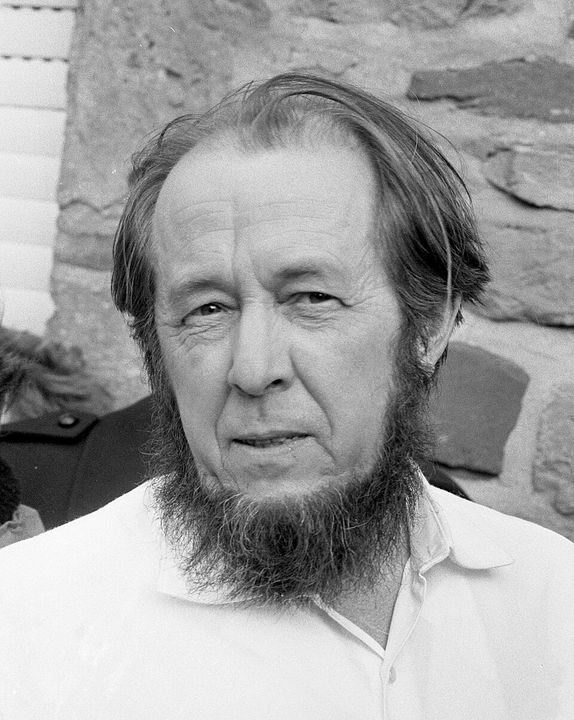
- Aleksandr Solzhenitsyn: Former prisoner and narrator-historian
- The zeks: The camp prisoners, a whole 'nation' of the condemned
- The 227 witnesses: Unnamed survivors whose testimony fills the work

Summary
The Gulag Archipelago, 1918–1956: An Experiment in Literary Investigation is Aleksandr Solzhenitsyn's history of the Soviet system of prisons, labour camps and exile, which he likened to an archipelago of islands scattered across the country, visible only to those taken there. Written in secret between 1958 and 1968, it draws on Solzhenitsyn's own eight years as a prisoner and on the testimony of some two hundred and twenty-seven other former prisoners, together with published Soviet sources. It is not a novel but a work that mixes history, memoir, reportage, irony and moral reflection. The work has seven parts in three volumes. Part I, The Prison Industry, begins with arrest: the night knock, the many ways people were taken, and Solzhenitsyn's own arrest at the front in 1945. It describes interrogation methods, the cell, the first prison friendships, and traces the waves of arrests from 1918 onward, including the peasants deported during collectivization, the purges of 1937–38 and the soldiers and repatriated prisoners of war arrested after 1945. It also examines the courts, the show trials and the law under which sentences were passed. Part II, Perpetual Motion, follows prisoners through transit prisons and the prisoner transports, including the railway cars and ships that carried them across the country. Part III, The Destructive-Labor Camps, recounts the history of the camps from the Solovetsky Islands and the White Sea Canal onward and describes daily camp life: hunger, cold, the norms of work, the trusties and criminals, women and children in the camps, the camp medical units, and death. Part IV, The Soul and Barbed Wire, turns inward. Solzhenitsyn reflects on how imprisonment corrupted some and refined others, and recounts his own change of heart, including the recognition that the line between good and evil passes through every human heart; he speaks of blessing the prison for what it taught him, while not forgetting those it destroyed. Part V, Katorga, describes the special hard-labour camps created in the 1940s and the strikes and uprisings in them after Stalin's death, among them the Kengir revolt of 1954. Part VI, Exile, treats the deportation of whole peoples and Solzhenitsyn's own exile in Kazakhstan. Part VII, Stalin Is No More, considers the period after 1953 and argues that the system had not ended. The first volume was published in Russian by YMCA-Press in Paris at the end of December 1973, after the KGB had seized a copy of the manuscript; within weeks Solzhenitsyn was arrested and expelled from the Soviet Union. The English translation appeared from 1974 to 1978, and the work was first published in the Soviet Union in Novy Mir in 1989.
Virtues in this work
- Fortitude: Solzhenitsyn wrote and hid the manuscript for a decade at great personal risk and published it knowing he would be punished.
- Justice: He gathered the testimony of hundreds of prisoners so that their wrongs, and the names of the dead, would be recorded.
- Humility: In Part IV he admits that, had his life gone differently, he too might have become an interrogator, and refuses to place himself above the guilty.
- Hope: He describes prisoners who kept their souls intact and his own moral and religious awakening behind barbed wire.
Plot or Argument
- Part I: The Prison Industry
Arrest, interrogation, the cell and the first friendships of prison; the history of the successive waves of arrests from 1918 to the late 1940s; the courts, the political trials and the criminal code under which millions were sentenced.
- Part II: Perpetual Motion
The transport system that moved prisoners: transit prisons, railway prison cars, convoys and ships, and the encounters among prisoners and guards along the way.
- Part III: The Destructive-Labor Camps
The origins of the camps from the Solovetsky Islands, the great construction projects such as the White Sea Canal, and the daily life of the camps: rations, work norms, the hierarchy of trusties and criminals, women and children, the medical unit, punishments and escapes.
- Part IV: The Soul and Barbed Wire
Reflection on what imprisonment did to the human soul: the corruption of some, the ascent of others, the informers, the loyalists who kept faith with the regime, and Solzhenitsyn's own moral and religious turning.
- Part V: Katorga
The special hard-labour camps of the postwar years, the prisoners' resistance, and the strikes and uprisings after Stalin's death, including the forty-day revolt at Kengir in 1954.
- Part VI: Exile
Banishment and the deportation of entire peoples to Siberia and Central Asia, and Solzhenitsyn's own years of exile in Kazakhstan after his release from camp.
- Part VII: Stalin Is No More
The years after 1953: releases and rehabilitations, the continuing camps, and Solzhenitsyn's argument that the law and the system behind the archipelago remained in place.
Characters
- Aleksandr Solzhenitsyn, author and witness
Former artillery captain and prisoner who narrates his own arrest, imprisonment and inner change while gathering the testimony of others.
- The zeks, collective subject
The prisoners of the camps, whom Solzhenitsyn describes ironically as a distinct 'nation' with its own customs and language.
- The 227 witnesses, sources
Former prisoners whose letters, memoirs and conversations supplied much of the material; Solzhenitsyn withheld their names for their safety.
- Interrogators, guards and camp officials, agents of the system
The officers of the security organs and the camp administration, whose motives Solzhenitsyn examines as well as their deeds.
- Boris Gammerov and other cellmates, fellow prisoners
Companions from Solzhenitsyn's own imprisonment, remembered with affection; Gammerov, a young believer, is among those who did not survive.
Lessons
The line through every heart
Solzhenitsyn refuses to divide the world neatly into the guilty and the innocent. Reflecting on how he too might have become an interrogator had his life gone differently, he concludes that the line between good and evil runs through every human heart and shifts over a lifetime. This is the moral centre of the work.
- Why does Solzhenitsyn say it would be simpler if evil people could be separated from the rest of us?
- What does he mean by saying the line between good and evil moves within a person over the years?
- How does this belief affect the way he writes about guards and interrogators?
Ideology and the conscience
Solzhenitsyn argues that what allowed the persecution of millions was an ideology that gave evildoers a justification, so that they could believe they were acting for the good. Without such a justification, he suggests, people's consciences would have held them back. The book examines how ordinary officials came to do what they did.
- What role does Solzhenitsyn assign to ideology in the history of the camps?
- Why did many prisoners who were loyal to the regime continue to defend it in camp?
- What safeguards help a conscience resist pressure from a powerful system?
Bearing witness
Solzhenitsyn wrote in secret, hid the manuscript in several places and gathered testimony at great risk to himself and others, so that the dead would be remembered and the truth known. The book shows literature acting as historical testimony when official records were closed.
- Why does Solzhenitsyn call the work 'an experiment in literary investigation'?
- What risks did he and his witnesses take, and why?
- Why does it matter to remember those who did not survive?
Suffering and inner freedom
In Part IV Solzhenitsyn describes how prison, which destroyed many, became for him the place of a moral and religious awakening. He does not praise suffering in itself and remembers those it broke, but he insists that a person may keep or regain the soul even behind barbed wire.
- What does Solzhenitsyn say prison taught him?
- Why does he refuse to claim that suffering always makes people better?
- How does his account compare with other testimonies of imprisonment you have read?
Context
The Soviet state used prisons, camps and exile from its first years, and the Main Administration of Camps (abbreviated GULAG) was established in 1930. The system expanded greatly during collectivization and the purges of the 1930s and again after the Second World War, and its prisoners worked on canals, mines, railways and timber. After Stalin's death in 1953 many prisoners were released, and in 1956 Khrushchev denounced Stalin's crimes in a closed speech. Within a few years, however, open discussion of the camps was again restricted.
Composition
Solzhenitsyn began collecting material after the publication of One Day in the Life of Ivan Denisovich brought him letters from former prisoners. He wrote the work between 1958 and 1968, largely in secret at a farmhouse in Estonia and elsewhere, hiding the manuscript in several places. In 1973 the KGB interrogated Elizaveta Voronyanskaya, a typist who knew where one copy was hidden, and seized it; she was found dead shortly after. Solzhenitsyn then authorized publication abroad. YMCA-Press in Paris issued the first volume in Russian at the end of December 1973, the second in 1974 and the third in 1975. Thomas P. Whitney translated the first two volumes into English (Harper & Row, 1974–75) and H. T. Willetts the third (1978); Edward E. Ericson Jr. prepared an authorized one-volume abridgement in 1985.
Reception
The Soviet government denounced the book, arrested Solzhenitsyn on 12 February 1974 and expelled him the next day. In the West it sold widely and changed the way many readers, including many on the European left, understood the Soviet Union. Historians have since been able to test it against Soviet archives opened after 1991; they have generally confirmed its picture of the system while revising some of its figures, which Solzhenitsyn had to estimate without access to records. The book was published in the Soviet Union in Novy Mir in 1989 and later became part of the Russian school curriculum.
Comparisons
- one-day-in-the-life-of-ivan-denisovich
The novella shows a single day of one prisoner's life in a special camp; the Archipelago gives the history and full extent of the system that Ivan Denisovich's day represents.
- arendt-the-origins-of-totalitarianism
Arendt analyzes the camp as the central institution of totalitarian rule from the outside; Solzhenitsyn describes it from within, through the testimony of its prisoners.
- mans-search-for-meaning
Frankl and Solzhenitsyn both describe how prisoners could preserve inner freedom in camps designed to destroy it, and both found meaning in the experience without praising the suffering.
- the-hiding-place
Corrie ten Boom's memoir of Ravensbrück is another Christian witness to imprisonment, faith and the struggle to forgive one's captors.
- the-brothers-karamazov
Solzhenitsyn's conviction that each person bears responsibility for evil echoes Dostoevsky's Father Zosima, who teaches that each of us is responsible for all.
- letters-and-papers-from-prison
Bonhoeffer's letters from a Nazi prison offer a parallel record of Christian faith and reflection under a totalitarian state.
Quotes
“But the line dividing good and evil cuts through the heart of every human being. And who is willing to destroy a piece of his own heart?”
For Students
A reading companion for classical Christian high school students. See the student guide.
Reading Guide
Watch for
- The image of the archipelago: islands of the camp system scattered through the country yet invisible to ordinary citizens.
- Solzhenitsyn's irony and sarcasm, which he uses to describe what could not be described plainly.
- The way he weaves his own story together with the testimony of other prisoners.
- Part IV's reflection on the line between good and evil and on his own moral change.
- The prisoners' resistance in Part V, especially the Kengir uprising.
Key terms and names
- GULAG
- Russian acronym for the Main Administration of Camps, the Soviet agency that ran the forced-labour camps.
- Zek
- Camp slang for a prisoner, from the abbreviation z/k used in official documents.
- Article 58
- The section of the Soviet criminal code covering 'counter-revolutionary' crimes, under which most political prisoners were sentenced.
- Katorga
- Hard-labour penal servitude, a tsarist term revived for the special camps of the 1940s described in Part V.
- Trusty
- A prisoner given an easier job inside the camp administration, kitchen or medical unit, and with it a better chance of survival.
- Rehabilitation
- The official clearing of a prisoner's record after Stalin's death, often granted after the prisoner had died.
Seminar Questions
- Comprehension Why does Solzhenitsyn compare the camp system to an archipelago?
- Comprehension How did Solzhenitsyn gather the material for the book, and why did he keep it secret?
- Comprehension What were the main 'waves' of arrests he describes in Part I?
- Interpretation Why does Solzhenitsyn say he might have become an interrogator himself?
- Interpretation What purpose does Solzhenitsyn's irony serve in a book about so much suffering?
- Interpretation Why does Solzhenitsyn speak of blessing the prison, and how does he qualify that blessing?
- Big Question What makes ordinary people willing to take part in great injustice, and what helps them refuse?
- Big Question What do we owe to the memory of those who suffered injustice?
Faith Connections
- Jeremiah 17:9 (Scripture)
'The heart is deceitful above all things': Solzhenitsyn's line through every human heart echoes the biblical teaching that evil is not confined to others.
- Romans 7:18-19 (Scripture)
Paul's confession that he does not do the good he wants but the evil he does not want is a scriptural parallel to Solzhenitsyn's account of the shifting line within each person.
- Hebrews 13:3 (Scripture)
'Remember them that are in bonds, as bound with them': the book is an act of remembrance of prisoners and of those who died.
- Fyodor Dostoevsky, The House of the Dead (Great Conversation)
Dostoevsky's account of his own Siberian imprisonment in the 1850s is the great Russian predecessor that Solzhenitsyn often recalls, contrasting tsarist katorga with the Soviet camps.
Logic and Rhetoric
Central argument: The Soviet camp system was not an accident of Stalin's rule but a permanent institution created from the first years of the state and sustained by law and ideology. Ideology gave its servants a justification that silenced their consciences, so that ordinary people could commit great evil. Yet the line between good and evil runs through every heart, not between groups; so the remedy lies not only in changing a system but in each person's refusal to take part in lies and in the recovery of conscience.
Rhetorical device: extended metaphor. The title image presents the camps as islands of an archipelago, with their own 'natives', the zeks, described with mock-scientific irony as a separate nation.
Debate: Resolved: Ideology is more dangerous than ambition as a source of political evil.
Writing Prompts
Essay: Solzhenitsyn insists that the line between good and evil runs through every human heart. Explain how this idea shapes the book and whether it makes the guilty less responsible or all of us more so.
Comparison with One Day in the Life of Ivan Denisovich: Compare how Solzhenitsyn presents camp life through the fiction of a single day and through the documentary history of the Archipelago. What can each form show that the other cannot?
Medical Lens
The work is a major source on the medicine of extremity: chronic starvation and the wasting the prisoners called dystrophy, scurvy and pellagra, frostbite, exhaustion from labour norms, and the high mortality of the camps. Solzhenitsyn describes the camp medical unit as both a refuge, where a few days' release from work could save a life, and an instrument of the system, since doctors certified prisoners fit for labour and punishment; prisoner-doctors appear among the trusties who held easier camp posts. The book also mentions the use of psychiatric hospitals for political prisoners. For the history of medical ethics it offers testimony on the position of physicians inside a coercive state. Statements about prisoners' mental states are the author's observations and readings, not clinical diagnoses.
- Part I, chapter on interrogation
Methods of interrogation, including sleep deprivation, cold, hunger and prolonged standing, and their effects on body and will.
- Part III, chapters on camp life
Rations, work norms and the progressive wasting of prisoners; the camp medical unit and the role of doctors in certifying fitness for work.
- Part IV
Reflections on how prisoners endured or were broken psychologically, and on Solzhenitsyn's own inner change.
Creative Prompts
- Classroom
Using a map of the former Soviet Union, mark the places named in the book (Solovki, the White Sea Canal, Kolyma, Karaganda, Kengir, Ekibastuz) and discuss why Solzhenitsyn chose the image of an archipelago.
- Essay
Explain what Solzhenitsyn means by the line dividing good and evil, and discuss how this idea shapes his treatment of both prisoners and guards.
- Dialogue
Write a conversation between Solzhenitsyn and one of his anonymous witnesses in the 1960s about the risk of telling her story.
Further Reading
- The Gulag Archipelago: The Authorized Abridgement, Aleksandr Solzhenitsyn, abridged by Edward E. Ericson Jr.
One-volume abridgement suitable for most readers.
- Gulag: A History, Anne Applebaum
Archive-based history of the camp system.
- Kolyma Tales, Varlam Shalamov
Stories by another former prisoner who doubted that the camps could improve anyone.
- The Oak and the Calf, Aleksandr Solzhenitsyn
Solzhenitsyn's memoir of his literary life in the Soviet Union, including the writing and publication of the Archipelago.
Verification notes
Copyrighted; summary and student layer are paraphrase. The single quotation was confirmed in identical wording at Quillette (https://quillette.com/2025/11/23/the-line-dividing-good-and-evil-solzhenitsyn-baldwin) and in Christian Scholar's Review (https://christianscholars.com/14363-2/), which cites the Whitney/Willetts translation as abridged by Ericson; it is marked unverified because no copy was consulted. Its location in Vol. 1, Part I, ch. 4 ('The Bluecaps') is from general knowledge of the work. Publication history (YMCA-Press, December 1973; Voronyanskaya; first Soviet publication in Novy Mir, 1989) was checked at https://en.wikipedia.org/wiki/The_Gulag_Archipelago. Part titles follow the Whitney/Willetts translation. The figure of 227 witnesses is the number Solzhenitsyn himself gave. Medical-lens passages are general pointers to parts, not exact chapter references.
- Text is under copyright; check quotations against an authorized edition before publication.
- Chapter location of the quotation (Vol. 1, Part I, ch. 4, 'The Bluecaps').
- Exact chapter titles for the medical-lens pointers.
- Publication years of Russian volumes 2 and 3 (1974, 1975) and English volumes (1974, 1975, 1978).
- Inclusion of the work in the Russian school curriculum (date).