Work record
The Boxcar Children
1924; revised 1942 · Early 20th Century · Novel · English
Abstract
Background. A Connecticut primary teacher wrote the tale in 1924 and later cut and simplified it so that children only beginning to read could finish a chapter book by themselves; the Cordyce siblings of the first version were renamed the Aldens.
Plot. Fleeing a baker's wife who would part them from their youngest brother, four orphans set up house in a disused freight car. Salvage from a dump, a dog rescued from a thorn, a dammed brook, and wages Henry brings home from a doctor's yard sustain them through a summer. A footrace introduces Henry to a wealthy stranger, Violet's fever sends them to Dr. Moore's care, and the stranger proves to be their grandfather.
Form. Thirteen brief chapters, each built around a single errand, discovery or meal, use plain words and short sentences, and the plot is told almost entirely through the children's practical problems and how they solve them.
Themes. Sibling loyalty, thrift and contrivance, honest labor, and the mistake of dreading a relative known only through rumor. The final gift of the old car, set in the grandfather's garden, keeps the woodland independence inside the new family life.
Significance. Generations of six- and seven-year-olds have met chapter books through it, and it launched a mystery series that publishers continued long after the author's death, now numbering well over a hundred titles.
Main characters
- Henry Alden: Oldest sibling, a fast runner who earns wages from the doctor
- Jessie Alden: Practical sister who runs the household and the purse
- Violet Alden: Quiet, shy sister whose illness ends the woodland life
- Benny Alden: Littlest Alden, attached to his chipped pink cup
- Watch: Rescued stray who becomes the family's guard dog
- Dr. Moore: Silver City physician, Henry's employer and the family's rescuer
- James Henry Alden: Rich grandfather in Greenfield whom the children wrongly fear

Summary
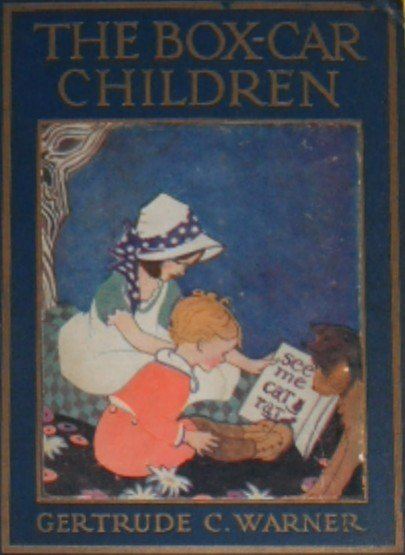
The Boxcar Children follows four orphaned brothers and sisters: Henry, fourteen; Jessie, twelve; Violet, ten; and Benny, six. After their parents die, the children set out on their own rather than go to their grandfather, whom they have never met and believe to be a hard man who disliked their mother. On their first evening they stop at a bakery to buy bread, and the baker's wife lets them sleep in the shop. In the night Henry and Jessie overhear her plan to keep the three older children to work for her and to send little Benny to a children's home. They slip away before dawn, walk by night, and sleep in a haystack. When a thunderstorm threatens, they find an old abandoned boxcar standing on a stretch of track in the woods and take shelter inside. The boxcar becomes their home. Jessie, the careful planner, keeps house and manages the money. A stray dog limps up with a thorn in its paw; Jessie pulls it out, and the dog, whom they name Watch, guards them from then on. At a dump near the woods the children find dishes, a kettle, spoons, and a cracked pink cup that Benny treasures above everything. They keep milk cool in the stream, build a dam of stones to make a swimming pool, and turn a little food into hearty meals. Henry walks to the nearby town of Silver City to earn money and is hired by a young doctor, Dr. Moore, to mow grass and do odd jobs; later all the children help pick cherries at the doctor's house. Dr. Moore invites Henry to a Field Day, where Henry enters a free-for-all race, runs his fastest, and wins a silver cup and twenty-five dollars from the man who sponsors the games, James Henry Alden. Neither knows that the other is family. Then Violet falls ill with a fever. Henry runs for Dr. Moore, who drives to the woods and takes all four children to his own house to nurse Violet. The doctor has seen Mr. Alden's notice asking for news of his missing grandchildren, and Mr. Alden comes to know the children at the doctor's house before they learn who he is. Finding him kind rather than cruel, they go to live with him in his large house in Greenfield, and as a surprise he has the boxcar brought there and set in his garden so that they can keep it. Warner, a first-grade teacher in Putnam, Connecticut, first published the story with Rand McNally in 1924 as The Box-Car Children. She revised it in a shorter form for Albert Whitman in 1942, with illustrations by L. Kate Deal, and that version began one of the longest-running series in American children's books.
Virtues in this work
- Industry: Henry walks to Silver City to mow grass and do odd jobs for Dr. Moore so that the family can buy food.
- Prudence: Jessie plans each meal and makes the children's small store of money last while they live in the boxcar.
- Charity: Dr. Moore takes all four children into his own house when Violet falls ill with a fever.
- Fortitude: The children walk by night and sleep in a haystack rather than let Benny be sent away to a children's home.
Plot or Argument
- Chapters 1-2: The bakery and the flight
The four Aldens buy bread at a bakery and sleep there; Henry and Jessie overhear the baker's wife planning to separate Benny from the others, and the children leave in the night, walking until they rest in a haystack.
- Chapters 3-4: The boxcar in the woods
Caught by a storm, they shelter in an empty boxcar and decide to stay. Henry goes to Silver City and finds work with Dr. Moore, and the dog Watch joins the family after Jessie draws a thorn from his paw.
- Chapters 5-8: Making a home
The children gather dishes and Benny's pink cup at the dump, investigate a strange noise in the night, make big meals from small supplies, and dam the brook to build a swimming pool.
- Chapters 9-10: Cherries and the race
The children pick cherries at Dr. Moore's. At the Field Day Henry wins the free-for-all race and receives his prize from James Henry Alden, who does not know him.
- Chapters 11-12: Violet's fever and the grandfather
Violet falls sick and Dr. Moore takes the children to his house. Mr. Alden, who has been searching for his grandchildren, comes to know them, and the children learn that the kind visitor is the grandfather they had run from.
- Chapter 13: A new home for the boxcar
The Aldens move to their grandfather's house in Greenfield, and he has the boxcar carried there and placed in the garden for them.
Characters
- Henry Alden, eldest brother
Fourteen-year-old who earns money doing jobs for Dr. Moore and wins the Field Day race.
- Jessie Alden, elder sister
Twelve-year-old housekeeper of the boxcar, orderly, thrifty and motherly toward the younger two.
- Violet Alden, younger sister
Gentle ten-year-old who sews and whose fever brings the children to Dr. Moore's house.
- Benny Alden, youngest brother
Six-year-old who loves his cracked pink cup and the dog Watch.
- Watch, the children's dog
Stray dog who joins the family after Jessie removes a thorn from his paw, and guards the boxcar.
- Dr. Moore, young doctor in Silver City
Employs Henry, nurses Violet, and brings the children and their grandfather together.
- James Henry Alden, the children's grandfather
Wealthy man of Greenfield who has been searching for his grandchildren and proves kind.
- The baker's wife, woman at the bakery
Gives the children a night's lodging but plans to send Benny to a children's home.
Lessons
A family that refuses to be split up
The children run from the bakery because the baker's wife would send Benny away from the others. Everything they do in the woods, from Henry's jobs to Jessie's careful housekeeping, serves the single aim of staying together.
- Why did Henry and Jessie decide to leave the bakery in the middle of the night?
- What does each of the four children do to help the family in the boxcar?
- Would you have left the bakery too? Why or why not?
Making much out of little
The Aldens furnish a home from a dump, cook meals from small purchases, and make a swimming pool from stones and a brook. The book delights in thrift and handiwork and makes ordinary chores feel like an adventure.
- Which things from the dump did the children find a use for?
- Why do you think Benny loved his cracked pink cup so much?
- What is something you could make from things other people throw away?
Fearing the wrong person
The children hide from their grandfather because they have heard he is unkind, but he turns out to be generous and loving. Warner shows how a fear built on hearsay can keep children from the help they most need.
- What did the children believe about their grandfather at the start?
- How did they find out what he was really like?
- Why do you think Grandfather moved the boxcar to his garden?
Honest work
Henry earns the family's money by mowing, cleaning, and picking cherries for Dr. Moore, and he wins his race fairly. The children never steal or beg; they work and save.
- What jobs did Henry do for Dr. Moore?
- What did Henry do with the money he won at the Field Day?
Context
The story belongs to an America of small towns, railroads and open woods, where an old freight car could be left standing on an unused siding and children could walk from one town to the next. Orphans without relatives might be sent to a children's home, which is the threat the Aldens flee. The 1942 revision appeared during the Second World War, but the book itself mentions no war or hard times beyond the children's own.
Composition
Warner said she drew on a childhood wish to live in a caboose or freight car. Rand McNally published the first version, The Box-Car Children, in 1924, in which the family name was Cordyce. In 1942 Albert Whitman & Company issued a shorter revision with a deliberately limited vocabulary for young readers, illustrated by L. Kate Deal; the family became the Aldens.
Reception
The 1942 version found a lasting audience among early readers, and from 1949 Warner continued the story in Surprise Island and eighteen further books. After her death Albert Whitman extended the series with many more mysteries by other writers, and the original book has been adapted as an animated film.
Comparisons
- heidi
Both turn on a grandfather feared at first, the Alm-Uncle in Spyri and James Henry Alden in Warner, who proves loving and gives the child a true home.
- the-swiss-family-robinson
Both delight in a family furnishing a home from salvage and wits, the Robinsons from their wreck and the Aldens from a town dump.
- my-side-of-the-mountain
Sam Gribley and the Aldens both make a home in the woods by their own work, though Sam chooses solitude while the Aldens flee to stay together.
- the-moffats
Two American books about four children managing with very little, where cheerfulness and family loyalty make small resources go far.
- robinson-crusoe
Crusoe's careful inventories and contrivances are the grown-up ancestor of Jessie's housekeeping and Henry's errands in the boxcar.
Quotes
“One warm night four children stood in front of a bakery. No one knew them. No one knew where they had come from.”
For Students
A reading companion for classical Christian high school students. See the student guide.
Reading Guide
Watch for
- What Henry and Jessie hear the baker's wife say in the night, and why it makes them run away.
- How the children turn the empty boxcar into a home, one thing at a time, from the dishes at the dump to the swimming pool in the brook.
- How Watch comes to the boxcar, and the ways he keeps the children safe.
- The Field Day race, where Henry meets his grandfather without either of them knowing it.
- What happens when Violet gets sick, and how Dr. Moore helps the family.
Key terms and names
- Boxcar
- A closed railroad car with sliding doors for carrying freight. The Aldens find an old one left in the woods and make it their house.
- Orphan
- A child whose parents have died. The four Aldens are orphans, and they are afraid of being split up or sent to live with a grandfather they think is unkind.
- Dump
- A place where people throw away old things. The children find dishes, a kettle and Benny's pink cup there.
- Field Day
- A day of races and games held in town. Henry wins the free-for-all race and is given his prize by Mr. Alden.
- Silver City
- The town near the woods where Henry works for Dr. Moore and buys food for the family.
- Greenfield
- The town where Grandfather Alden lives, and where the children and the boxcar finally go to live.
Seminar Questions
- Comprehension Who are the four Alden children, and how old is each one?
- Comprehension Where did the children find their dishes, and which dish did Benny love best?
- Comprehension How did the dog Watch come to live with the children?
- Interpretation Henry did not know the man who gave him the prize at the Field Day. Why is that meeting important later in the story?
- Interpretation Jessie keeps the money and plans the meals. Why do you think the other children trust her with those jobs?
- Interpretation The children were afraid of their grandfather. What changed their minds about him?
- Big Question Is it ever right for children to run away? What made the Aldens' choice different from just running off?
Faith Connections
- Psalm 68:5-6 (Scripture)
God is called a father of the fatherless who sets the lonely in families. The orphaned Aldens keep their little family together in the woods, and at the end they are welcomed into their grandfather's home.
- James 1:27 (Scripture)
James says that true religion means caring for orphans in their trouble. Dr. Moore does exactly this when he takes the four children, and sick Violet, into his own house.
- Proverbs 31:27 (Scripture)
The wise woman watches over her household and does not eat the bread of idleness. Twelve-year-old Jessie keeps the boxcar tidy, plans every meal, and makes the money last.
Logic and Rhetoric
Central argument: The children believe their grandfather is unkind, so they choose hardship in the woods over going to him. By working, saving and caring for one another they make a real home out of an abandoned boxcar. But when Violet falls ill they need help they cannot give themselves, and that help leads them to the grandfather they feared. Therefore the story suggests that their fear was mistaken, and that the virtues they practiced alone prepared them to be welcomed into a larger family.
Rhetorical device: dramatic irony. At the Field Day in Chapter 10, readers can guess that the man handing Henry his silver cup and prize money is his own grandfather, while Henry and Mr. Alden have no idea.
Debate: Resolved: The Alden children were right to run away from the bakery.
Writing Prompts
Essay: Tell how each of the four Alden children helped make the boxcar a home, and explain which child you think helped the most and why.
Comparison with Heidi: Heidi is afraid of her grandfather on the mountain at first, and the Aldens are afraid of theirs. Tell how each child learns that the grandfather is good, and how each story ends in a new home.
Medical Lens
The book's only medical episode is Violet's fever, which the children cannot manage alone and which brings them under the care of Dr. Moore. The young country doctor is drawn as employer, nurse and friend at once, taking a sick child into his own house, a picture of general practice before antibiotics were common. The illness is not named and is resolved quickly; its role is to end the children's independence and lead them to their grandfather.
- Chapters 11-12
Violet falls ill in the boxcar; Henry runs for Dr. Moore, who takes the children to his own house and nurses her back to health.
Creative Prompts
- Classroom
Make a list, with pictures, of everything the Aldens found at the dump and what each thing became in the boxcar.
- Fiction
Write one more day in the boxcar, told by Watch the dog, from morning milk to the children's bedtime.
- Dialogue
Write the conversation in which Dr. Moore tells Mr. Alden that he thinks he knows where the missing grandchildren are.
- Adaptation
Draw a floor plan of the boxcar as Jessie arranged it, showing where the children slept, ate and kept their dishes.
Further Reading
- Surprise Island, Gertrude Chandler Warner
The second book of the series (1949), in which the Aldens spend a summer on their grandfather's island.
- The Yellow House Mystery, Gertrude Chandler Warner
Verification notes
Publication history (Rand McNally 1924 as The Box-Car Children with the family named Cordyce; Albert Whitman 1942 revision; Warner's teaching in Putnam; her authorship of the first nineteen books) was checked at https://en.wikipedia.org/wiki/The_Boxcar_Children. The 1942 illustrator (L. Kate Deal) and the thirteen chapter titles (Four Hungry Children through A New Home for the Boxcar) were checked in library catalog records found by search. Plot details for Silver City, Dr. Moore, the free-for-all race, the silver cup and twenty-five dollar prize, and Violet's illness were checked against shmoop.com chapter and character summaries. The quotation (opening lines of the 1942 text) was checked against the Albert Whitman first-chapter excerpt served by the Riverside Public Library catalog (https://read.riversideca.gov/Mobile/BakerAndTaylor/Excerpt?ISBN=0807508527&position=1&UPC=) and SuperSummary's quote page.
- Text is under copyright; check quotations against an authorized edition before publication.
- Exact chapter placement of each episode in the plotOrArgument groupings (assigned from the chapter titles).
- How Mr. Alden first visits the children at Dr. Moore's house and how much they are told before they learn who he is.
- That Warner described the story as rooted in a childhood wish to live in a caboose or freight car.
- That Surprise Island (1949) is the second book and that later volumes were written by others under her name.