Work record
The True Story of My Life
1846 · 19th Century · Memoir · Danish
Abstract
Background. Asked by his German publisher for a life to preface a collected edition of his writings, the Danish author composed this account during a stay in southern France at the age of forty-one.
Scope. Four decades are covered, from a single rented room on Funen to drawing rooms in Berlin and Weimar; the narrative stops in the summer before its publication.
Content. Readers follow a shoemaker's son through an asylum garden, a father's last illness, a fortune-teller's prophecy, rejection by the capital's stage, cruel schooling, a southern journey that produced his first novel, and the slow victory of his children's stories, with portraits of the musicians, sculptors, kings and singers who befriended him. Tales such as the Ugly Duckling are mentioned through the delight of friends who asked to hear them again.
Method. He narrates warmly and selectively, quoting letters and praise, admitting wounded feelings, and treating every turn as a sign of providence.
Translation. Mary Howitt, already his English translator, rendered the sketch from a copy the author sent her and dedicated it to Jenny Lind; her plain, warm English carried his voice to British and American readers, though some Danish names lose their accents in the digital text.
Significance. The sketch fixed the image of its author as the poor boy turned fairy-tale master, remains the main source for his youth, and was later expanded into the longer autobiography of 1855.
Key figures
- Hans Christian Andersen: Narrator, poet and teller of tales
- Andersen's parents: A shoemaker and a washerwoman of Odense
- Giuseppe Siboni and C. E. F. Weyse: Musicians who helped the boy in Copenhagen
- Jonas Collin: Theatre director and lifelong patron
- Frederick VI and Christian VIII: Danish kings who supported and honoured him
- Bertel Thorvaldsen: Sculptor and friend in Rome and Denmark
- Jenny Lind: Soprano and friend; the translation's dedicatee
- Mendelssohn, the Grimms, Humboldt: German admirers he visited

Summary
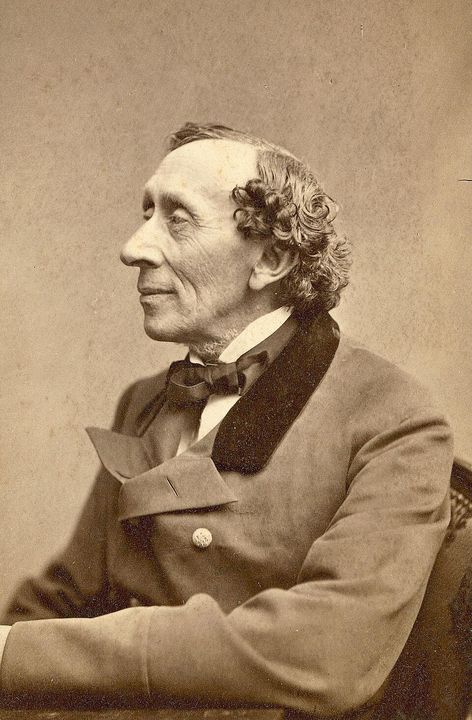
The True Story of My Life is the autobiographical sketch Hans Christian Andersen wrote in 1846, at forty-one, for a collected edition of his works. He opens by calling his life a lovely story, happy and full of incident, and says it shows that a loving God directs all things for the best. Born in Odense on the island of Funen in 1805, he grows up in one small room with his father, a young shoemaker who reads him the Arabian Nights and makes him toy theatres, and his mother, who goes out washing. His grandmother tends the garden of the town hospital and asylum, where the boy hears old women's stories and is terrified by a raving patient who reaches for him through a cell door. His father enlists as a soldier in the Napoleonic wars, returns broken in health, falls into a delirium about Napoleon and dies, and the boy is left to his puppet theatre, his songs and his dreams. Told by a fortune-teller that Odense will one day be illuminated in his honour, he persuades his mother to let him go to Copenhagen, and arrives on 5 September 1819 with a bundle and a few coins. He knocks on the door of a ballet dancer, is laughed at by the theatre, later stands among the ballet figurantes, and is helped by the singer Siboni, the composer Weyse and the poet Guldberg, who arrange lessons and small sums. After his voice breaks and the theatre dismisses him, the director Jonas Collin obtains a royal grant and sends him, at seventeen, to the grammar school at Slagelse and later Helsingør, where a severe rector mocks his poem The Dying Child and he passes the darkest time of his life. Released by Collin, he studies privately, becomes a student in 1828, and wins notice with comic and lyrical works while suffering from harsh Danish critics. A travel grant takes him in 1833 to Paris, Switzerland and Italy, which inspire his novel The Improvisatore (1835); in the same year he publishes his first small book of fairy tales, followed by others each Christmas. He describes his novels Only a Fiddler and O. T., his play The Mulatto, a journey to Greece and Constantinople told in A Poet's Bazaar, friendships with Thorvaldsen, Oehlenschläger and Ingemann, and the singer Jenny Lind, whom he admires deeply. The last chapters recount honours from the Danish and German courts and visits to Mendelssohn, Schumann, the Grimms, Liszt and Humboldt, and end at Vernet in the Pyrenees in July 1846 with thanks to God and men. The sketch first appeared in German in 1847, and Mary Howitt's English translation, dedicated to Jenny Lind, was published the same year; the prophecy about Odense came true when the town was illuminated for him in 1867.
Virtues in this work
- Hope: Laughed at by the theatre and nearly penniless in Copenhagen, the fourteen-year-old keeps seeking help instead of going home.
- Fortitude: He endures years of humiliation as an overgrown pupil under the harsh rector at Slagelse and Helsingør.
- Faith: He opens and closes his story by thanking a loving God who directs all things for the best.
- Friendship: He records with gratitude the friendship of Collin, Thorvaldsen, Ingemann and Jenny Lind.
Plot or Argument
- Chapter I: Childhood in Odense (1805-1819)
His parents and their single room, the asylum garden and the spinning-women's stories, his weak-minded grandfather, the Spanish soldiers of 1808, his father's soldiering, delirium and death, the puppet theatre, confirmation in new boots, and the decision to seek fame in Copenhagen.
- Chapter II: Copenhagen (1819-1822)
He arrives during the riots of September 1819, is turned away by the dancer and the theatre, and is helped by Siboni, Weyse and Guldberg; he sings, dances in the ballet chorus, writes plays that are rejected, and is placed in school by Jonas Collin and the king's grant.
- Chapter III: School at Slagelse and Helsingør (1822-1827)
A tall youth among small boys, he studies under a harsh rector, visits Ingemann, writes The Dying Child, and suffers his unhappiest years until Collin removes him to study privately in Copenhagen.
- Chapter IV: Student and young author (1828-1833)
He becomes a student, publishes his first books and plays, travels in Denmark and to Germany, meets Heine's poetry and his first critics, and wins a travelling stipend.
- Chapter V: Italy (1833-1835)
He crosses the Simplon on the anniversary of his arrival in Copenhagen, lives in Rome and Naples among Danish artists including Thorvaldsen, hears Malibran, and returns to write The Improvisatore.
- Chapter VI: Novels, fairy tales and travels (1835-1842)
The Improvisatore succeeds, the first fairy tales appear, Only a Fiddler and The Mulatto follow, and he journeys through Greece and Constantinople for A Poet's Bazaar.
- Chapter VII: Recognition (1842-1844)
The tide of opinion in Denmark turns with the stories of Christmas 1843; he describes Thorvaldsen's love of the Ugly Duckling, his friendship with Jenny Lind, and visits to German courts and writers.
- Chapter VIII: Fame abroad (1844-1846)
Honours from Christian VIII and German princes, evenings with Mendelssohn, the Grimms and Humboldt, travels to Vienna, Rome and Naples, and a closing reflection written in the Pyrenees in July 1846.
Characters
- Hans Christian Andersen, author and narrator
Poor, imaginative boy from Odense who becomes a celebrated writer.
- His father, shoemaker
Young, thoughtful craftsman who reads to his son and dies after returning from soldiering.
- His mother, washerwoman
Loving, superstitious woman who lets him go to Copenhagen after consulting a fortune-teller.
- His grandmother, family
Gentle old woman who tends the asylum garden and brings him flowers.
- Giuseppe Siboni, patron
Italian singer and director of the Copenhagen music academy who takes him in for voice training.
- Jonas Collin, chief patron
Theatre director and official who secures his schooling and becomes a second father.
- Bertel Thorvaldsen, friend
Danish sculptor who loves to hear the Ugly Duckling read aloud.
- Jenny Lind, friend
Swedish soprano whom Andersen admires and to whom the translation is dedicated.
- Mary Howitt, translator
English writer who translated the sketch from a copy sent by the author.
Lessons
Hardship on the road to a dream
At fourteen Andersen tells his mother that famous people first go through much adversity, then become famous. In Copenhagen he is laughed at, dismissed by the theatre and nearly penniless, and at school he is mocked by his rector. He keeps working and trusting, and his story shows that early failures need not decide the end.
- What does Andersen hope to become when he leaves Odense?
- Which of his disappointments in Copenhagen seems hardest to you?
- Why do you think he did not give up and go home?
Gratitude to helpers
Andersen names the people who helped him: Siboni, Weyse, Guldberg, Collin and the king. He calls Collin a father and says that from the prince to the poorest peasant he has met noble hearts. Students see that even a self-made life depends on the kindness of others.
- How does Jonas Collin help Andersen in Chapter II?
- Why does Andersen at first think Collin is only a man of business?
- Who has helped you in a way you did not understand at first?
Seeing life as a story guided by God
Andersen begins and ends by saying that his life is a fairy tale directed by a loving God. He sees good coming even from sorrow, such as his father's death and his years at school. His faith shapes how he tells every chapter.
- What does Andersen say his life teaches in the first paragraph of Chapter I?
- How does he describe God's care at the start of Chapter VI?
- Is it easier to see God's guidance looking back than while things are happening?
Criticism and humility
Andersen admits he is hurt by critics and pleased by praise, and wonders at the end whether telling of his honours is vanity. He hopes his heart has been both affected and humble. The book lets students think about how to receive praise and criticism honestly.
- How do Danish critics treat Andersen in Chapter IV?
- What changes in Denmark after Christmas 1843, according to Chapter VI?
- How can a person enjoy praise without becoming proud?
Context
Andersen grew up in the Denmark of the Napoleonic wars, the British bombardment of Copenhagen in 1807 and the state bankruptcy of 1813, when Odense still kept medieval guild customs. The Danish Golden Age of the early nineteenth century produced the poet Oehlenschläger, the sculptor Thorvaldsen, the theologian Grundtvig and the philosopher Kierkegaard, and the Royal Theatre was the centre of Copenhagen's cultural life. Royal and private patronage made it possible for a poor boy with talent to be educated, and travel grants sent young Danish artists to Italy.
Composition
Andersen wrote the sketch in 1846, finishing it at Vernet in the French Pyrenees in July, because his German publisher wanted a biographical introduction for a collected edition of his works. It appeared in German in 1847 as Das Märchen meines Lebens ohne Dichtung. Mary Howitt, who had already translated his novels, prepared the English version from a copy sent by Andersen and published it in 1847 as The True Story of My Life, with a dedication to Jenny Lind; an American edition was issued by Munroe and Company of Boston. In 1855 Andersen published a much longer Danish autobiography, Mit Livs Eventyr, which continued the story.
Reception
The sketch was widely read in Germany and England, where Andersen was already a favourite, and it helped fix his public image as the poor boy who became a fairy-tale king. Later biographers have used it alongside his diaries and letters and have noted that it is selective, written in a mood of gratitude and passing lightly over some hardships and quarrels. It remains a primary source for his childhood and an introduction to the background of tales such as The Ugly Duckling.
Comparisons
- andersen-fairy-tales
Andersen says his life is the best commentary on his works; the poor boy mocked for being different, the singer's longing for the stage and the honoured guest at court reappear in tales such as The Ugly Duckling and The Little Mermaid, which he discusses in Chapters VI and VII.
- grimms-fairy-tales
Andersen visits Jacob and Wilhelm Grimm in Berlin in Chapter VIII; the Grimms collected German folk tales, while Andersen, as he explains in Chapter VI, soon came to invent his own stories.
- david-copperfield
Dickens, whom Andersen visited in 1847 and 1857, wrote his own half-hidden memoir of a poor, humiliated boy who becomes a writer; both books turn early suffering into a story of rescue by kind patrons.
- up-from-slavery
Washington and Andersen both rise from one-room childhoods through the help of patrons and schools; Washington stresses work and character, Andersen imagination and providence.
- franklin-autobiography-and-poor-richard
Franklin also arrives in a capital city as a poor boy with a few coins and a bundle and tells his rise as an instructive story; Franklin credits his own industry, Andersen a loving God.
Quotes
Frequently cited
“My life is a lovely story, happy and full of incident.”
Frequently cited
“It is a joy to live and to believe in God and man.”
“There is a loving God, who directs all things for the best.”
“That was the first day of real sorrow which I remember.”
“at first an immense deal of adversity to go through, and then they will be famous.”
“and in honor of him, Odense will one day be illuminated.”
“That was the darkest, the most unhappy time in my life.”
“The story of my life, up to the present hour, lies unrolled before me, so rich and beautiful that I could not have invented it.”
For Students
A reading companion for classical Christian high school students. See the student guide.
Reading Guide
Watch for
- The first paragraph of Chapter I, where Andersen tells you how to read his whole life.
- Andersen's childhood in Odense: the one-room home, the asylum garden, the puppet theatre and his father's death.
- His first days in Copenhagen in Chapter II and each person who helps him.
- The unhappy school years in Chapter III and how Andersen describes the rector.
- Places where Andersen mentions his fairy tales, especially the Ugly Duckling, and what he says about them.
Key terms and names
- Odense
- Andersen's birthplace, the chief town of the Danish island of Funen.
- Royal Theatre
- Copenhagen's national theatre, where young Andersen hoped to become a singer, dancer or actor.
- Patron
- A person who supports a young artist with money or influence, as Collin and King Frederick VI supported Andersen.
- Grammar school
- A Latin school preparing boys for the university; Andersen attended the ones at Slagelse and Helsingør.
- Eventyr
- The Danish word for Andersen's tales, which the translator says means something between adventure and fairy tale.
- The Improvisatore
- Andersen's 1835 novel about a poor Italian boy who becomes a poet, inspired by his journey to Italy.
Seminar Questions
- Comprehension What did Andersen's father make for him, and what happened to his father?
- Comprehension Why did Andersen go to Copenhagen, and what happened when he first arrived?
- Comprehension Who sent Andersen to school, and why was school so hard for him?
- Interpretation Why do you think Andersen calls his life a fairy tale even though so much of it was hard?
- Interpretation How might the tall, mocked schoolboy in Chapter III be connected to the Ugly Duckling?
- Interpretation At the end, Andersen wonders whether telling about his honours is vanity. What do you think?
- Big Question Is it right to chase a dream even when everyone laughs at you?
Faith Connections
- Romans 8:28 (Scripture)
Paul writes that all things work together for good to those who love God. Andersen opens his book by saying his life proves that a loving God directs all things for the best.
- 1 Samuel 2:8 (Scripture)
Hannah sings that God raises the poor from the dust to sit with princes. Andersen's journey from a shoemaker's room to royal tables echoes her song.
- Psalm 27:10 (Scripture)
The psalmist says that when father and mother forsake him, the Lord will take him up. Andersen, left alone in Copenhagen at fourteen, finds new fathers in Collin and others.
- Hans Christian Andersen, The Ugly Duckling (Great Conversation)
Andersen's own tale of a mocked bird who becomes a swan reads like a parable of his life story, which he says is the key to all his works.
Logic and Rhetoric
Central argument: Andersen began as a poor, odd boy with no money or schooling. Again and again, at the moment of greatest need, someone helped him, and even sorrows led to good. Therefore, he argues, his life shows that a loving God guides all things for the best, and his story can be read like a fairy tale.
Rhetorical device: frame. Andersen opens Chapter I by imagining a good fairy offering to guide his life and closes Chapter VIII with the image of a star of good fortune, framing the true events as a fairy tale.
Debate: Resolved: that Andersen owed his success more to the kindness of others than to his own effort.
Memory Work
It is a joy to live and to believe in God and man.
My life is a lovely story, happy and full of incident.
Writing Prompts
Essay: Andersen calls his life a lovely story, but many of its chapters are sad. Using at least two hard moments and two happy ones, explain why he still sees it as a fairy tale.
Comparison with Fairy Tales (Selection): Read The Ugly Duckling and compare the duckling's journey with Andersen's own journey from Odense to fame. What does each story say about being different?
Medical Lens
Andersen's childhood memories give an unusual child's-eye view of an early nineteenth-century Danish provincial asylum. His grandmother tended the garden of the Odense hospital, where harmless patients walked the court and the boy followed attendants to the cells of the raving; he remembers a nearly naked woman singing beautifully who sprang at the door and reached for him, a terror that stayed with him. He calls his grandfather weak-minded, a wandering carver of strange wooden figures mocked by street boys, and says he hid in fear because he knew he was of his flesh and blood, a period anxiety about hereditary madness that biographers have often noted. His father, returning from soldiering with broken health, falls into a delirium about Napoleon; his mother sends not for a physician but for a wise woman who measures the boy's arm with woollen thread and lays a twig on his breast, and the father dies days later. The book also records childhood measles, the spinning-women's belief that a child who knows too much will not live long, and the deep distress of his school years, which he says nearly overwhelmed him. Andersen's lifelong nervous fears and hypochondria are documented in his diaries rather than here, and modern psychological readings of his temperament remain interpretive.
- Chapter I
The asylum garden, the harmless patients in the court, and the raving woman who reaches for the boy through her cell door.
- Chapter I
His weak-minded grandfather carving fantastic figures and the boy's fear of sharing his blood.
- Chapter I
His father's delirium about Napoleon, the visit to a wise woman instead of a physician, and the father's death.
- Chapter I
Sick with measles, he watches his father leave for war and hears his grandmother say it would be good if he died.
- Chapter III
The harsh rector at Slagelse and Helsingør and the misery that brings him near to sinking.
Creative Prompts
- Fiction
Write a short fairy tale, in Andersen's manner, about a poor child who leaves home with a bundle and a few coins, using a real event from Chapter I or II.
- Classroom
Draw a map of Andersen's journeys from Odense to Copenhagen, Italy, Constantinople and the Pyrenees, labelling each place with the year and what happened there.
- Dialogue
Write the conversation between fourteen-year-old Andersen and his mother on the night he asks to go to Copenhagen.
- Essay
Andersen says his life is the best commentary on his works. Choose one of his fairy tales and show which parts of his life story it seems to echo.
Further Reading
- Fairy Tales, Hans Christian Andersen
- The Fairy Tale of My Life, Hans Christian Andersen
His longer autobiography of 1855.
- The Improvisatore, Hans Christian Andersen, trans. Mary Howitt
- Hans Christian Andersen: A New Life, Jens Andersen
Verification notes
Contents, names and dates given in the text (arrival in Copenhagen on 5 September 1819, crossing the Simplon on 5 September 1833, the first stories in 1835, the collection of Christmas 1843, the closing date at Vernet in July 1846, Howitt's letter of 29 June 1847 and dedication to Jenny Lind) were checked against the attached Gutenberg text, whose Danish and German names are sometimes missing accented letters. The German first publication of 1847, the 1855 Mit Livs Eventyr, Dickens's later hospitality and the illumination of Odense in 1867 are standard facts not checked against a primary source. Whether Howitt translated from a Danish or a German copy is not stated in the text. Chapter year ranges are approximate. Quotes were checked against the attached text.
- Whether Mary Howitt's translation was made from Andersen's Danish manuscript or from the German version.
- Exact German title and publisher of the 1847 first edition (usually given as Das Märchen meines Lebens ohne Dichtung, in the Lorck collected edition).
- Year ranges assigned to Chapters IV-VIII.