Work record
Fairy Tales (Selection)
1835–1872 · 19th Century · Short Stories · Danish
Abstract
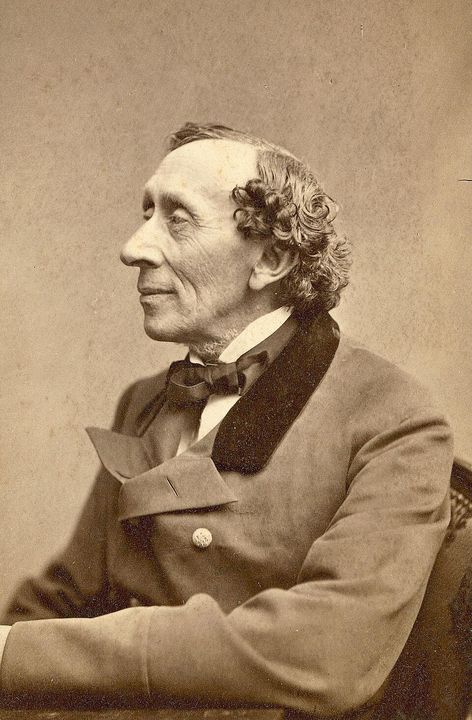
Background. A shoemaker's son from Odense who struggled for years as an actor, poet and novelist, Andersen found his true form in short tales for children and adults, issuing small booklets every few years from 1835. A leading Oxford lexicographer later revised the English versions used here.
Contents. Some pieces adapt Danish folk stories, like the soldier with the magic box or the pea under a pile of mattresses. Most are original: a mermaid who wants a human soul, a vain monarch fooled by tailors, a steadfast toy, a princess weaving nettles, a Chinese songbird, a misfit swan, a discontented tree, a quest through the frozen north, a dying child with matches, a spurned prince and a girl bewitched by her own shoes.
Style. Andersen writes in a conversational voice with ironic asides, gives inner feelings to objects and animals, and often closes with Christian consolation rather than a simple happy ending.
Themes. Steadfastness and sacrificial love; honesty against social pretense; true worth hidden beneath plain appearance; contentment; childlike faith. Several tales also gently mock vanity, snobbery and the fashions of court and drawing room.
Significance. Among the most translated works in literature, these stories created the modern literary fairy tale and have inspired ballets, operas, films and countless picture books.
Main characters
- The little sea maid: Mermaid princess who trades her voice for legs
- Gerda: Devoted girl who rescues her playmate from enchantment
- Kay: Boy with a shard of evil glass in his heart
- Thumbelina: Tiny girl born from a flower
- The tin soldier: One-legged toy who never flinches
- Eliza: Silent princess who disenchants eleven swan-brothers
- The ugly duckling: Scorned cygnet who becomes a swan

Summary
This selection gathers fourteen of Hans Christian Andersen's most loved fairy tales, written between 1835 and 1845, in the English versions revised and partly newly translated by the Scottish scholar W. A. Craigie for Oxford University Press in 1914. In The Tinder-Box a returning soldier fetches a magic tinder-box from a hollow tree for a witch, keeps it, and with the help of three dogs with enormous eyes wins a princess and a kingdom. The Princess on the Pea proves her royal birth by feeling a single pea through twenty mattresses and twenty eider-down quilts. Thumbelina, a girl no bigger than a thumb, is carried off by a toad and a cockchafer, nearly married to a mole, and flies south on the swallow she nursed through the winter to become queen of the flower-spirits. In The Little Sea Maid the youngest daughter of the sea king saves a prince from a shipwreck, gives her voice to the sea witch for human legs that feel like walking on knives, and, when the prince marries another, refuses to kill him to save herself; she rises with the daughters of the air, who may win an immortal soul by good deeds. Two swindlers in The Emperor's New Clothes weave invisible cloth that fools cannot see, until a little child says the emperor has nothing on. The one-legged tin soldier stands firm through a paper-boat voyage and a fish's belly, and melts in the stove into a little tin heart beside his beloved dancer. In The Wild Swans Eliza silently knits shirts of stinging nettles to free her eleven brothers, finishing them as she is led to the stake. The Nightingale shows a Chinese emperor preferring a jeweled mechanical bird to a real one, until the living bird's song drives Death from his bedside. The Ugly Duckling, mocked in the duck-yard and frozen in the marsh, discovers in spring that it is a swan. The Fir Tree longs always for the next thing and only appreciates its life once it lies chopped in the yard. In The Snow Queen, told in seven stories, a splinter from a devil's mirror enters Kay's heart and eye; his friend Gerda searches through a witch's garden, a palace, a robbers' castle and Lapland until her tears and a hymn about the Christ-child free him. The Little Match Girl dies of cold on New Year's Eve with visions of her grandmother. The prince in The Swineherd rejects a princess who scorns a rose and a nightingale but sells kisses for toys. In The Red Shoes Karen's vanity in church leaves her dancing helplessly until she repents and dies at peace.
Virtues in this work
- Fortitude: The one-legged tin soldier keeps his musket shouldered and never changes countenance through the flooded gutter, the rat and the fish's belly.
- Charity: Gerda walks barefoot through the world to rescue Kay, and her tears melt the ice in his heart.
- Humility: When the swan is praised as the most beautiful of birds, he hides his head under his wing, happy and not at all proud.
- Faith: Eliza keeps praying and knitting nettle shirts in silence even as she is led to the stake, and her brothers are freed.
Plot or Argument
- Early tales (1835): The Tinder-Box, The Princess on the Pea, Thumbelina
Andersen's first booklets retell and reshape folk material with a lively, spoken voice: a soldier's luck with a magic tinder-box, a test of a true princess, and a tiny girl's journey from a walnut shell to the kingdom of the flowers.
- The Little Sea Maid and The Emperor's New Clothes (1837)
A mermaid suffers silence and pain for love and the hope of an immortal soul; a vain emperor walks in procession in clothes that do not exist until a child speaks the truth.
- The Hardy Tin Soldier and The Wild Swans (1838)
A one-legged toy endures a perilous journey without flinching; a princess keeps silent and knits nettle shirts through accusation of witchcraft to free her brothers from enchantment.
- The Nightingale and The Ugly Duckling (1843)
A real songbird outlasts its mechanical rival and saves the emperor from Death; a scorned duckling endures a hard winter and finds that it is a swan.
- The Fir Tree and The Snow Queen (1844)
A restless young tree learns too late to enjoy the present; in seven stories, Gerda's love and innocence carry her to the Snow Queen's palace to rescue Kay from a heart of ice.
- The Swineherd, The Red Shoes and The Little Match Girl
A disguised prince exposes a princess's shallow values; a girl's vanity becomes a curse until she repents; a poor child dies on New Year's Eve and is taken by her grandmother to God.
Characters
- The little sea maid, heroine of The Little Sea Maid
The sea king's youngest daughter, who longs for the human world and an immortal soul and sacrifices her voice and life for the prince she loves.
- Gerda, heroine of The Snow Queen
A loyal girl who walks barefoot to Lapland and beyond to free her friend Kay, armed only with her innocence and prayer.
- Kay, Gerda's friend
A boy whose heart is chilled by a splinter of the devil's mirror and who is taken to the Snow Queen's palace.
- The Snow Queen, icy enchantress
A beautiful, cold ruler of the snows who kisses Kay and sets him a puzzle he cannot solve.
- Thumbelina, heroine of Thumbelina
A thumb-sized girl born from a flower who escapes unwanted marriages and is rewarded for her kindness to a swallow.
- The tin soldier, hero of The Hardy Tin Soldier
A one-legged toy soldier who loves a paper dancer and endures every danger without changing countenance.
- Eliza, heroine of The Wild Swans
A pious princess who keeps silent and knits nettle shirts for years to disenchant her eleven brothers.
- The ugly duckling, hero of The Ugly Duckling
A cygnet hatched among ducks, mocked for its looks, who grows into a swan and remains humble.
- The nightingale, songbird of The Nightingale
A plain grey bird whose living song moves the Emperor of China to tears and drives Death away.
- Karen, heroine of The Red Shoes
A poor girl adopted by an old lady, whose vanity over red shoes leads to suffering, repentance and peace.
- The little match girl, heroine of The Little Match Girl
A barefoot child who dares not go home on New Year's Eve and sees warm visions in the light of her matches.
Lessons
The courage to say what is true
In The Emperor's New Clothes everyone pretends to see the cloth so as not to seem foolish or unfit for office, and only a little child says that the emperor has nothing on. Andersen shows how fear of others' opinions can make a whole town lie, and how simple honesty can break the spell.
- Why do the emperor's ministers say they can see the cloth?
- Why is it a child who finally speaks?
- What does the emperor do after the child speaks, and what does that show?
Real beauty and false glitter
The emperor of China prefers a jeweled clockwork bird to the plain nightingale, and the princess in The Swineherd prefers a toy rattle to a real rose. Both learn, too late or nearly too late, that the living thing is worth more than the showy imitation.
- What happens when the mechanical bird breaks?
- Why does the nightingale say the emperor's tears are a better reward than a golden slipper?
- Why does the prince in The Swineherd turn away from the princess at the end?
Faithful love that suffers
Gerda walks barefoot across the world for Kay, Eliza keeps silent while her hands blister from nettles, and the little sea maid bears pain with every step. Andersen honors love that gives itself away, even when it is not repaid.
- What frees Kay from the Snow Queen's spell?
- Why does the little sea maid throw away the knife instead of using it?
- Why can't Eliza explain herself when she is accused?
Humility after hardship
The ugly duckling is mocked, chased and nearly frozen, yet when he becomes a swan he is happy and not at all proud. The tale teaches that suffering patiently borne can make a person gentle rather than bitter.
- Who is unkind to the duckling, and why?
- How does the swan act when the children call him the most beautiful of all?
Contentment and the present moment
The Fir Tree is always longing for the next thing, to be cut down, to be decorated, to be brought out again, and only appreciates the forest and the Christmas evening once they are gone. The story invites children to enjoy the good gifts they have now.
- What do the Sunbeams tell the young Fir Tree to do?
- When does the Fir Tree finally realize it had been happy?
Context
Andersen wrote in the Danish Golden Age, when Copenhagen was home to the philosopher Søren Kierkegaard, the theologian N. F. S. Grundtvig, the sculptor Bertel Thorvaldsen and the writer Adam Oehlenschläger. Romantic interest in folk tradition had already produced the Grimms' collection, and Andersen began by retelling Danish tales he had heard as a child in Odense. He soon wrote stories entirely his own, set among toys, flowers, animals and city streets, and mixed humor and satire with Christian hope and frequent sorrow.
Composition
Andersen's first small booklet, Fairy Tales Told for Children (1835), contained The Tinder-Box and The Princess on the Pea, and Thumbelina followed the same year. The Little Mermaid and The Emperor's New Clothes appeared in 1837, The Steadfast Tin Soldier and The Wild Swans in 1838, The Swineherd in 1841, The Nightingale and The Ugly Duckling in New Fairy Tales (1843), The Fir Tree and The Snow Queen in 1844, and The Red Shoes and The Little Match Girl in 1845. He continued publishing tales and stories until 1872. The library text uses Fairy Tales and Other Stories (Oxford University Press, 1914), in which W. A. Craigie revised older English translations and newly translated some tales; its titles The Little Sea Maid and The Hardy Tin Soldier differ from later familiar ones.
Reception
English translations began in 1846, and Andersen visited England in 1847 and 1857, meeting Charles Dickens. His tales spread across Europe and America within his lifetime and have since been translated into well over a hundred languages; Denmark celebrates his birthday, 2 April, which is also International Children's Book Day. Critics have discussed how much of Andersen's own life as a poor outsider who rose to fame appears in tales such as The Ugly Duckling; Andersen himself encouraged that reading in his autobiography, The Fairy Tale of My Life, though others caution against reading the tales too narrowly as autobiography.
Comparisons
- grimms-fairy-tales
The Grimms present gathered folk tales with swift reward and punishment; Andersen, who knew such tales, creates his own literary fairy tales with a personal narrator, satire and lingering sorrow. The Grimms' Six Swans and Andersen's Wild Swans tell the same story of a silent sister in two styles.
- christ-legends
Selma Lagerlöf, another Scandinavian storyteller, writes Christian legends with the same blend of tenderness, wonder and childlike faith that closes The Snow Queen and The Little Match Girl.
- aesops-fables
Andersen's talking ducks, hens and fir trees carry morals as Aesop's animals do, but Andersen gives them inner lives and lets the reader draw the lesson.
- a-christmas-carol
Published within two years of The Little Match Girl, Dickens's story also uses a winter holiday and a poor child to awaken compassion, though Dickens ends with a rescue and Andersen with heavenly consolation.
- the-princess-and-the-goblin
George MacDonald, who admired fairy tales as vehicles of Christian truth, writes of a child's faith and a hidden spiritual world much as Andersen does in The Snow Queen.
- on-fairy-stories
Tolkien's essay on fairy stories discusses the place of sorrow and joy in the genre and the eucatastrophe, the sudden joyous turn that Andersen's Snow Queen embodies when Gerda's tears melt Kay's heart.
Quotes
Frequently cited
“I have seen tears in the Emperor's eyes — that is the real treasure to me.”
Frequently cited
“Roses bloom and roses decay, But we the Christ-child shall see one day.”
“he stood as firmly upon his one leg as the others on their two”
“We can live to be three hundred years old, but when we cease to exist here, we are turned into foam on the surface of the water”
“No clothes of the emperor's had ever had such a success as these.”
“he was so happy, and yet not at all proud.”
“There they both sat, grown up, and yet children — children in heart”
“when a star fell down a soul mounted up to God.”
For Students
A reading companion for classical Christian high school students. See the student guide.
Reading Guide
Watch for
- Toys, trees, birds and flowers that think and speak, and what each one wants.
- Characters who suffer quietly for someone they love, like Gerda, Eliza and the little sea maid.
- The difference between real things and showy imitations in The Nightingale and The Swineherd.
- Prayers, hymns and churches, especially at the end of The Snow Queen and The Red Shoes.
- Which stories end happily and which end sadly, and how Andersen comforts the reader at the end of the sad ones.
Key terms and names
- Fairy tale
- A story of wonder and magic, often with talking animals or objects; Andersen invented many of his own.
- Tinder-box
- A small box holding flint, steel and dry tinder, used to strike a spark before matches were common.
- Swindler
- A person who cheats others by tricks, like the two false weavers in The Emperor's New Clothes.
- Lapland
- The far northern land of reindeer and snow where Gerda searches for Kay.
- Immortal soul
- The part of a person that lives forever; the little sea maid longs to receive one.
- Nettle
- A plant with stinging hairs, which Eliza must gather barehanded to make shirts for her brothers.
Seminar Questions
- Comprehension How does the queen find out that the girl at the door is a real princess?
- Comprehension What gets into Kay's eye and heart, and how does it change him?
- Comprehension What does the little sea maid give the sea witch in exchange for legs?
- Interpretation The emperor keeps walking in the procession even after the child speaks. Why do you think he does that?
- Interpretation Why is the nightingale's song worth more than the jeweled bird's song, even though the jeweled bird is prettier?
- Interpretation The little match girl dies, but Andersen says she went to joy. How can a sad story also be a hopeful one?
- Big Question Gerda wins against the Snow Queen without any weapon. What makes someone truly strong?
Faith Connections
- Matthew 18:3 (Scripture)
At the end of The Snow Queen the grandmother reads Christ's words that unless we become as little children we cannot enter the kingdom of God, and Kay and Gerda understand them.
- 1 Corinthians 13:7 (Scripture)
Paul says love bears all things and endures all things; Eliza's silent nettle-knitting and Gerda's long barefoot journey show this enduring love.
- 1 Samuel 16:7 (Scripture)
The Lord looks on the heart, not on outward appearance; the ugly duckling and the plain grey nightingale both turn out to be more precious than those who judged by looks.
- Augustine, City of God, Book XXII (Church Fathers)
Augustine writes of the resurrection and the soul's final rest in God; Andersen's little match girl and Karen of The Red Shoes are both carried at last to the joy of God's presence.
Logic and Rhetoric
Central argument: In The Emperor's New Clothes the swindlers argue that anyone who cannot see the cloth is stupid or unfit for office; each person reasons that admitting the truth would make him look foolish, so all agree to a lie, until a child, who has no office to lose, states the plain fact.
Rhetorical device: personification. In The Fir Tree the Sunbeams and the Air speak to the young tree, telling it to rejoice in its youth, and the tree answers with longings like a restless child's.
Debate: Resolved: that the little sea maid made the right choice when she threw the knife into the sea.
Memory Work
Roses bloom and roses decay, But we the Christ-child shall see one day.
he was so happy, and yet not at all proud.
Writing Prompts
Essay: Choose two of Andersen's characters who are brave in a quiet way, such as the tin soldier, Eliza, Gerda or the ugly duckling. Explain what each one endures and what you learn from them.
Comparison with Household Stories (Grimm's Fairy Tales): Read the Grimms' The Six Swans and Andersen's The Wild Swans. Make a list of what is the same and what is different, and say which version you like better and why.
Medical Lens
Andersen grew up in poverty in Odense and knew cold, hunger and early death at first hand; several tales give these realities a gentle but unflinching place. The little match girl dies of cold on New Year's Eve, and the ugly duckling and Thumbelina nearly freeze. The little sea maid's new legs cause pain like treading on knives at every step, a vivid image of suffering borne for love. Disability appears with dignity in the one-legged tin soldier, who stands as firmly as his brothers, and in Karen of The Red Shoes, who after her feet are taken lives on crutches in humble service. The Nightingale stages a deathbed: the emperor lies cold and pale, Death sits on his chest wearing his crown, the court physician can do nothing, and the bird's song restores him. These are imaginative treatments, not medical observations, but they record nineteenth-century attitudes to suffering, illness and the consolations of faith.
- The Little Sea Maid
The sea witch warns that every step on human feet will feel like treading on sharp knives; the sea maid bears it gladly at the prince's side.
- The Nightingale
When the mechanical bird breaks, the body physician is called in vain; later the sick emperor sees Death on his chest and is revived by the real nightingale's song.
- The Hardy Tin Soldier
A soldier cast with one leg for lack of tin stands as firmly as the others and endures every danger.
- The Red Shoes
At Karen's own plea the executioner removes her dancing feet and makes her wooden feet and crutches; she lives on in service and repentance.
- The Little Match Girl
A barefoot, hungry child dies of cold in a corner on New Year's Eve, seeing visions of a warm stove, a roast goose, a Christmas tree and her dead grandmother.
Creative Prompts
- Fiction
Choose an ordinary object in your house, such as a teacup, a pencil or a shoe, and write an Andersen-style story about what it thinks and longs for.
- Classroom
Act out The Emperor's New Clothes, with the class as the crowd, and talk afterward about how it felt to pretend.
- Poetry
Write a short song for the nightingale to sing to the sick emperor.
- Dialogue
Write what Gerda and the robber girl say to each other on the night the reindeer is set free.
Further Reading
- The Fairy Tale of My Life, Hans Christian Andersen
Andersen's own account of his life, first published in English in 1847 and expanded in 1855.
- Hans Christian Andersen: A New Life, Jens Andersen
- Hans Christian Andersen: The Life of a Storyteller, Jackie Wullschlager
- Andersen's Fairy Tales, Hans Christian Andersen, trans. Erik Christian Haugaard
A complete modern translation of the tales.
Verification notes
All quotations were checked by exact search against the library text, prepared from OCR of the 1914 Oxford University Press volume edited by W. A. Craigie; OCR spacing before punctuation was avoided by choosing clean passages. The tale contents follow that text (for example Eliza's nettle shirts and Karen's crutches). First-publication years for each tale follow standard Andersen chronologies; the Danish booklets were often dated the year after they appeared, so some sources differ by a year.
- Confirm which earlier English translations W. A. Craigie revised for the 1914 Oxford volume.
- The library text is cleaned OCR; check quotations against a page image of the 1914 edition before publication.