Work record
Tinker v. Des Moines Independent Community School District
1969 · Postwar Contemporary · Court Decision · English
Abstract
Question Presented. Does the First Amendment protect public school pupils who wear black armbands to class as a silent protest against the Vietnam war, when principals have banned such armbands in advance?
Arguments. The families contended that a quiet symbol harmed no one and that officials had picked out one opinion while tolerating other emblems. The district maintained that principals need power to keep classrooms calm, that the war stirred strong emotions likely to spark quarrels, and that courts should respect local educators.
Holding. Seven Justices reversed, two dissenting. Fortas treated the armbands as expression close to speech, found no evidence of material disruption or interference with others' rights, and held that vague apprehension cannot justify a ban aimed at a particular view.
Dissent. Black, a longtime champion of broad speech protection, insisted that nobody may protest wherever and whenever he likes, read the record as showing real distraction, and predicted that courts would end up running classrooms in place of elected boards.
Significance. The disruption test remains the starting point for disputes over pupil expression. Later rulings permitted discipline for lewd assembly remarks, editorial control of school newspapers and limits on pro-drug banners, and in 2021 the Justices addressed what pupils post away from campus.
Key figures
- Mary Beth Tinker: Junior high pupil sent home for a black armband
- John F. Tinker and Christopher Eckhardt: High school pupils suspended on the same grounds
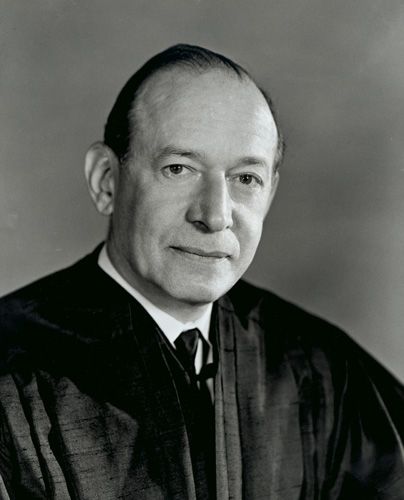
- Abe Fortas: Justice who wrote for seven members of the Court
- Hugo L. Black: Justice whose dissent defended school authority

Summary
In December 1965 a group of adults and students met at Christopher Eckhardt's home in Des Moines, Iowa, and decided to show their objection to the fighting in Vietnam and support for a truce by wearing black armbands over the holidays and fasting on 16 December and New Year's Eve. The principals of the Des Moines schools learned of the plan and on 14 December adopted a policy that any student wearing an armband would be asked to remove it and suspended if he refused. On 16 December Mary Beth Tinker, thirteen, and Christopher Eckhardt, sixteen, wore armbands to school; John F. Tinker, fifteen, wore his the next day. All three were suspended until after New Year's Day. Through their fathers they sued the school district, but the federal district court upheld the rule as a reasonable means of preventing disturbance, and the Court of Appeals for the Eighth Circuit, sitting en banc, divided evenly. The students argued that the armbands were a silent, peaceful expression of opinion, protected by the First Amendment, and that the schools had singled out one viewpoint while allowing other symbols. The school district answered that officials must be able to keep order and focus in classrooms, that the war was a highly emotional subject which could provoke disputes, and that judges should defer to the judgment of educators chosen by the community. By a vote of 7 to 2 the Court reversed. Justice Abe Fortas wrote that wearing an armband to express a view is closely akin to pure speech, and that neither students nor teachers shed their constitutional rights at the schoolhouse gate. School officials may regulate conduct that materially and substantially disrupts schoolwork or invades the rights of others, but undifferentiated fear of disturbance is not enough. The record showed no such disruption, and the schools had permitted political campaign buttons and even the Iron Cross while forbidding this one symbol. State schools, Fortas concluded, may not be enclaves of totalitarianism, and students are not closed-circuit recipients of only what the State chooses to communicate. Justice Hugo L. Black dissented. Although he had long read the First Amendment broadly, he denied that anyone has a right to give speeches or demonstrate wherever and whenever he pleases. The record, he argued, showed that the armbands distracted students, including a mathematics lesson largely given over to argument, and he held that taxpayers send children to school to learn, not to teach. He warned that schools would be subject to the whims of their loudest students. The library text gives Fortas's opinion and Black's dissent; the brief concurrences of Stewart and White, Harlan's short dissent and the footnotes are not included. Later decisions, including Bethel School District v. Fraser (1986), Hazelwood School District v. Kuhlmeier (1988) and Morse v. Frederick (2007), recognized further limits on student speech, and Mahanoy Area School District v. B. L. (2021) applied Tinker to speech off campus.
Virtues in this work
- Fortitude: Mary Beth Tinker and Christopher Eckhardt wore their armbands knowing that the principals had announced suspension as the penalty.
- Temperance: The students chose a silent armband and a fast rather than any disorderly form of protest, as Fortas emphasizes.
- Prudence: Black urges that schools be allowed to protect the singleness of purpose that learning requires.
Plot or Argument
- The armbands and the suspensions
Fortas recounts the December 1965 meeting at the Eckhardt home, the principals' policy of 14 December, the armbands worn by Mary Beth Tinker, Christopher Eckhardt and John Tinker, their suspensions, and the lower courts' decisions, including the Eighth Circuit's even division.
- Part I: a symbol akin to pure speech
The Court holds that wearing an armband to express opinion is symbolic expression closely akin to pure speech. Citing Meyer v. Nebraska and West Virginia v. Barnette, Fortas affirms both the authority of school officials and the constitutional rights of students, who do not shed them at the schoolhouse gate.
- Part II: no showing of disruption
The armbands caused no disorder or interference with schoolwork. Fortas holds that undifferentiated fear of disturbance cannot justify suppressing expression, adopting the Fifth Circuit's standard that a prohibition requires a showing of material and substantial interference with school discipline.
- One symbol singled out
The schools allowed political buttons and even the Iron Cross but forbade armbands opposing the war in Vietnam. Fortas concludes that the officials wished to avoid controversy over a particular opinion, which the First Amendment does not permit.
- Students as persons under the Constitution
State schools may not be enclaves of totalitarianism, and students may express opinions in the cafeteria, on the playing field and in class if they do not materially disrupt the work of the school or collide with the rights of others.
- Black's dissent: schools are for learning
Black argues that no one may speak where and when he pleases, that the record shows the armbands diverted students' minds to the war, and that courts should not take over the running of schools from elected officials. Citing Waugh v. Mississippi University, he defends the state's power to secure singleness of purpose in its schools and warns of a new era of permissiveness.
Characters
- John F. Tinker, petitioner
Fifteen-year-old high school student who wore an armband on 17 December 1965 and was suspended.
- Mary Beth Tinker, petitioner
John's thirteen-year-old sister, a junior high student, suspended for wearing an armband on 16 December.
- Christopher Eckhardt, petitioner
Sixteen-year-old high school student at whose home the armband plan was made.
- Justice Abe Fortas, author of the opinion of the Court
Wrote the majority opinion setting out the substantial-disruption standard.
- Justice Hugo L. Black, dissenter
Argued that students have no right to use the classroom as a platform for protest against the wishes of school authorities.
- Dan L. Johnston, counsel for the petitioners
Des Moines lawyer who argued for the students.
- Allan A. Herrick, counsel for the school district
Des Moines lawyer who defended the principals' policy.
Lessons
Rights at the schoolhouse gate
Fortas held that students keep their constitutional rights at school, but also affirmed the authority of officials to prescribe and control conduct. The case asks how those two truths fit together in the daily life of a school.
- What does Fortas mean by the schoolhouse gate?
- What kinds of student conduct may schools still forbid under Fortas's opinion?
- Should students have the same freedom of speech at school as adults have in a public square?
Fear of disturbance and actual disruption
The Court distinguished between a reasonable forecast of material disruption, which can justify restrictions, and an undifferentiated fear of disturbance, which cannot. Black read the same record and found real distraction, including a disrupted mathematics class.
- What evidence of disruption did the record contain?
- Why does Fortas think fear of controversy is not enough to forbid expression?
- How should school officials decide in advance whether a symbol will cause disruption?
Learn, not teach
Black argued that schools exist so that children can learn, and that taxpayers do not send them there to instruct their elders on public questions. His dissent defends the authority of parents, teachers and elected boards over the education of the young.
- What does Black mean when he says children need to learn, not teach?
- Why does Black think the decision transfers power from school officials to the courts?
- Is there a difference between expressing an opinion and teaching it?
Neutrality among viewpoints
The schools permitted campaign buttons and the Iron Cross but banned armbands against the war. Fortas found that a single opinion had been singled out; the district believed the Vietnam war was uniquely likely to provoke conflict in 1965.
- Why does it matter that other symbols were allowed?
- Could a school ever justify treating one subject differently because it is especially divisive?
Context
By late 1965 the United States had sent large numbers of combat troops to Vietnam, and public protest against the war was growing, especially among students. At the same time the Court had extended First Amendment protection to symbolic conduct and had recognized in West Virginia v. Barnette (1943) that public schools must respect students' freedom of belief. Lower federal courts disagreed about how far students' expression could be limited, as the Fifth Circuit's 1966 decision in Burnside v. Byars and the Iowa district court's ruling in Tinker showed.
Composition
The case was argued on 12 November 1968, with Dan L. Johnston, supported by the Iowa Civil Liberties Union, for the students and Allan A. Herrick for the school district. The decision was announced on 24 February 1969. The library text, from Wikisource, prints the opinion of the Court and Black's dissent.
Reception
Tinker became the leading decision on students' speech in public schools, and its substantial-disruption standard is still applied by lower courts. The Court later held that schools may discipline lewd speech at an assembly (Bethel School District v. Fraser, 1986), control the content of school-sponsored newspapers (Hazelwood School District v. Kuhlmeier, 1988), and restrict messages promoting illegal drug use at school events (Morse v. Frederick, 2007), while in Mahanoy Area School District v. B. L. (2021) it held that a school had gone too far in disciplining a student's off-campus post. Supporters see the decision as recognizing young people as citizens; critics, following Black, have argued that it weakened the authority of teachers and parents.
Comparisons
- west-virginia-v-barnette
Fortas relies on Barnette's holding that schools may not compel a flag salute; Tinker extends protection from refusing to speak to choosing to express a view.
- the-founding-documents
The First Amendment's protection of freedom of speech, applied to the states through the Fourteenth, is the text Fortas and Black interpret.
- rush-essays-on-education-in-a-republic
Benjamin Rush argued that republican schools should form obedient, virtuous citizens, a view of education closer to Black's emphasis on discipline than to Fortas's.
- on-liberty
Mill's defence of free discussion supports Fortas's reasoning, though Mill explicitly set children outside his principle, a point that bears on Black's dissent.
- minersville-school-district-v-gobitis
Gobitis (1940) deferred to school boards on the flag salute before Barnette overruled it, a precedent close to the deference Black urged in Tinker.
- the-federalist-papers
Madison's Federalist No. 10 treats the clash of opinions as the natural condition of a free people, a theme Fortas echoes when he calls open, disputatious debate the basis of national strength.
Quotes
Frequently cited
“It can hardly be argued that either students or teachers shed their constitutional rights to freedom of speech or expression at the schoolhouse gate.”
Frequently cited
“But, in our system, undifferentiated fear or apprehension of disturbance is not enough to overcome the right to freedom of expression.”
Frequently cited
“It may be that the Nation has outworn the old-fashioned slogan that "children are to be seen not heard," but one may, I hope, be permitted to harbor the thought that taxpayers send children to school on the premise that at their age they need to learn, not teach.”
“In our system, state-operated schools may not be enclaves of totalitarianism.”
“Uncontrolled and uncontrollable liberty is an enemy to domestic peace.”
“School discipline, like parental discipline, is an integral and important part of training our children to be good citizens—to be better citizens.”
For Students
A reading companion for classical Christian high school students. See the student guide.
Reading Guide
Watch for
- The dates of the principals' policy and of the students' armbands.
- Fortas's description of the armbands as closely akin to pure speech.
- The standard of material and substantial interference borrowed from the Fifth Circuit.
- The other symbols, including political buttons and the Iron Cross, that the schools allowed.
- Black's account of the mathematics class and his warning about the loudest students.
Key terms and names
- Symbolic speech
- Conduct, such as wearing an armband, that expresses an idea and may be protected like spoken words.
- Substantial disruption
- Tinker's test: schools may forbid expression that would materially and substantially interfere with schoolwork or the rights of others.
- En banc
- A case heard by all the judges of an appeals court rather than a panel of three.
- Nominal damages
- A small sum awarded to recognize that a right was violated, which the students requested.
- Viewpoint
- A particular opinion on a subject; Fortas found that the schools singled out one viewpoint on the war.
- In loco parentis
- Latin for in the place of a parent; the traditional idea of a school's authority over pupils, close to Black's view.
Seminar Questions
- Comprehension What did the Tinker children and Christopher Eckhardt do, and how did the schools respond?
- Comprehension What standard does Fortas say school officials must meet before forbidding student expression?
- Comprehension What evidence of distraction does Black point to in the record?
- Interpretation Why does Fortas think it significant that the schools allowed other political symbols?
- Interpretation What does Black fear will happen to schools after this decision, and why?
- Interpretation How does Fortas balance the authority of school officials against the rights of students?
- Big Question What is the purpose of a school, and how should that purpose shape the freedom of those who attend it?
Faith Connections
- 1 Timothy 4:12 (Scripture)
Paul tells Timothy, Let no man despise thy youth, but be an example in word and conduct, a charge that honours the voice of the young.
- Proverbs 1:8 (Scripture)
My son, hear the instruction of thy father, and forsake not the law of thy mother; Scripture places the young under the teaching of elders, as Black emphasized.
- Ecclesiastes 3:7 (Scripture)
There is a time to keep silence, and a time to speak; the case asks who decides which time a school day is.
Logic and Rhetoric
Central argument: Because students are persons under the Constitution and wearing an armband is a silent expression of opinion akin to pure speech, schools may forbid it only on a showing that it would materially and substantially disrupt schoolwork or invade the rights of others; fear of controversy alone, especially when only one viewpoint is singled out, is not enough.
Rhetorical device: metaphor. Fortas pictures the schoolhouse gate as a threshold where rights are not left behind (quote 0), turning a legal principle into a memorable image.
Debate: Resolved: that public school students should have the same freedom of political expression at school as adults have in public.
Memory Work
It can hardly be argued that either students or teachers shed their constitutional rights to freedom of speech or expression at the schoolhouse gate.
It may be that the Nation has outworn the old-fashioned slogan that "children are to be seen not heard," but one may, I hope, be permitted to harbor the thought that taxpayers send children to school on the premise that at their age they need to learn, not teach.
Writing Prompts
Essay: Explain how Fortas and Black read the same record of events in the Des Moines schools and why they reached opposite conclusions.
Comparison with West Virginia State Board of Education v. Barnette: Compare Barnette's protection of students who refused to salute the flag with Tinker's protection of students who chose to wear armbands, and consider whether the two cases rest on the same principle.
Medical Lens
The case concerns students' symbolic expression and school discipline; the planned fast is mentioned only as part of the protest and has no medical significance in the opinions.
Creative Prompts
- Classroom
Hold a moot court in which one side represents the Tinker and Eckhardt families and the other the Des Moines principals, using the record of disruption that Fortas and Black read differently.
- Essay
Write a school policy on student symbols and clothing that would satisfy Fortas's substantial-disruption standard while addressing Black's concern for order in the classroom.
- Dialogue
Write a conversation in December 1965 between Mary Beth Tinker and her mathematics teacher about the armband and the lesson.
- Classroom
Compare Tinker with Fraser, Hazelwood, Morse and Mahanoy in a chart showing what kind of student speech each involved and what the Court decided.
Further Reading
- The Struggle for Student Rights: Tinker v. Des Moines and the 1960s, John W. Johnson
History of the case and its setting in the Landmark Law Cases series.
- Hugo Black: A Biography, Roger K. Newman
Biography that discusses Black's late-career views on protest and order, including his Tinker dissent.
- Abe Fortas: A Biography, Laura Kalman
Life of the lawyer and Justice who wrote the majority opinion.
Verification notes
All six quotations were found by Grep in content/texts/tinker-v-des-moines.txt; the em dash without spaces in quote 5 is copied from the text. The vote (7 to 2) and the facts of the armbands and suspensions come from the opinion. Names of counsel and later history follow standard references.
- Confirm the names of counsel (Dan L. Johnston, Allan A. Herrick).
- Confirm that Burnside v. Byars was decided by the Fifth Circuit in 1966.