Work record
Transamerica Mortgage Advisors, Inc. v. Lewis
1979 · Postwar Contemporary · Court Decision · English
Abstract
Question Presented. When a 1940 federal statute governing investment advisers says nothing about private lawsuits, may an investor nonetheless go to federal court to cancel an adviser's contract, to stop its performance, or to recover money for losses caused by breaches of fiduciary duty?
Arguments. The investor, backed by the Commission, maintained that the law exists to shield advisory clients and that every appellate court to consider it had let them recover. The adviser and its affiliates countered that lawmakers had chosen prosecution, agency lawsuits and license sanctions, and that judges should not supply extra remedies.
Holding. A bare majority found that the provision declaring unlawful contracts void lets a party seek cancellation and return of fees, while the antifraud provision supports no private claim for money. Four justices objected that a duty written for clients carries a full remedy.
Significance. The decision marked the Court's turn toward legislative intent in deciding whether federal statutes permit private suits.
Why it matters for advisers. Under Transamerica, a client may sue under the Advisers Act only to rescind an advisory contract made in violation of the Act and recover fees paid, not for damages, while enforcement of the antifraud provision rests with the Commission; advisers and Series 65 candidates study it as the rule on private remedies under the Act.
Text. Stewart's and Powell's opinions are complete; White's is partial.
Key figures
- Transamerica Mortgage Advisors, Inc.: Adviser to a real estate investment trust
- Lewis: Trust shareholder suing for the trust and its investors
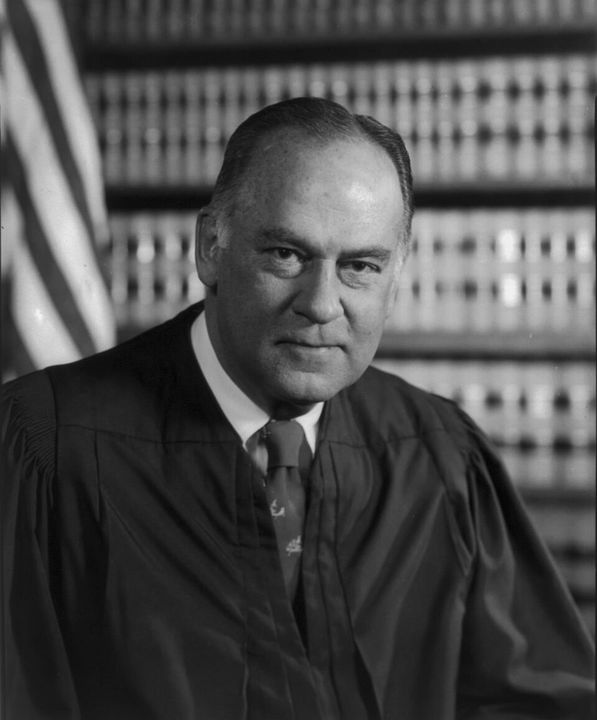
- Potter Stewart: Found only a narrow rescission remedy in the statute
- Lewis F. Powell Jr.: Concurred in line with his skepticism of implied suits
- Byron R. White: Led four dissenters who would allow damages

Summary
Mortgage Trust of America was a real estate investment trust advised by Transamerica Mortgage Advisors, Inc., known as TAMA, a subsidiary of the Transamerica Corporation. A shareholder of the trust sued in federal court, both derivatively on the trust's behalf and for a class of shareholders, naming the trust, several trustees, TAMA, Transamerica and another affiliate, Land Capital, Inc. The complaint alleged that the advisory contract was unlawful because TAMA and Transamerica were not registered as investment advisers and because the fees were grossly excessive, that the defendants had caused the trust to buy inferior securities from Land Capital, and that profitable opportunities had been diverted to other Transamerica companies. The shareholder sought an injunction, rescission of the contract, restitution of fees, an accounting and damages, all under the Investment Advisers Act of 1940. The Act contains no express provision allowing private suits. The District Court therefore dismissed the complaint, but the Ninth Circuit reversed, holding that a private right to injunctive relief and damages was needed to achieve the goals of Congress. Before the Court, the shareholder and the Securities and Exchange Commission, as amicus curiae, argued that the Act was written to protect advisory clients, that every court of appeals to address the question had allowed damages. The defendants answered that Congress had carefully provided criminal penalties, Commission injunctions and administrative sanctions, and that courts should not add remedies Congress chose not to enact. On 13 November 1979 the Court divided 5–4. Justice Stewart framed the question as one of congressional intent, not judicial policy. Section 215 declares contracts made in violation of the Act void, and by its terms contemplates that voidness will be litigated somewhere; the customary consequences of a void contract include a suit for rescission and restitution of what was paid. The trust could therefore sue to rescind the advisory contract and recover fees. Section 206, by contrast, forbids fraudulent conduct but creates no civil liability. Where Congress has expressly provided particular remedies, courts must be chary of reading in others, and the Act's jurisdictional section, which omits actions at law, pointed the same way. The Court held that there is a limited private remedy to void an advisory contract and no other private cause of action. Justice Powell joined, noting that the opinion fit his recent dissent in Cannon v. University of Chicago. Justice White, for four dissenters, followed the four-factor approach of Cort v. Ash (1975). Section 206 plainly benefits advisory clients, nothing in its history shows an intent to deny them a remedy, and the Court confused the existence of a cause of action with the relief available in it, reaching what all parties agreed was an anomalous result. The library text gives the majority and Powell's concurrence in full and the first portion of White's dissent, without notes. Later decisions, including Alexander v. Sandoval (2001), continued the emphasis on statutory intent, and advisory clients seeking damages generally rely on state law or arbitration.
Virtues in this work
- Temperance: Stewart restrains the Court from adding remedies Congress did not enact, however useful they might seem.
- Justice: White insists that duties owed to clients should be enforceable by the clients they protect.
- Prudence: The majority finds a middle path, preserving the client's power to escape a tainted contract while leaving broader enforcement to the agency Congress designated.
Plot or Argument
- The trust, its adviser and the complaint
Stewart describes the shareholder's derivative and class claims: an unregistered adviser charging excessive fees, purchases of inferior securities from an affiliate, and diverted investment opportunities.
- Intent as the governing question
Whether a statute creates a private cause of action is a matter of statutory construction, Stewart writes; decisions like J. I. Case Co. v. Borak that stressed effective remedies give way to the question whether Congress intended the remedy.
- Section 215 and void contracts
By declaring offending contracts void, Section 215 necessarily contemplates litigation over voidness, and the customary incidents of a void contract include rescission, injunction against further performance and restitution of consideration.
- Section 206 and the canon against added remedies
Section 206 forbids fraud but creates no civil liability, and Congress supplied criminal penalties, Commission suits and administrative sanctions. It is highly improbable that Congress forgot to mention a private damages action.
- Answering the Cort v. Ash argument
The shareholder and the Commission urged the Court to weigh the Cort factors, but Stewart, following Touche Ross & Co. v. Redington, treats congressional intent as the decisive factor and finds the inquiry ended.
- Powell's brief concurrence
Powell joins the opinion as consistent with his dissent earlier that year in Cannon v. University of Chicago, which urged courts to stop implying private actions Congress had not created.
- White's dissent
White argues that Section 206 was enacted for the special benefit of advisory clients, that no legislative intent to deny them a remedy appears, and that once a right of action exists courts may award whatever relief fits the statute's purpose, including damages.
Characters
- Transamerica Mortgage Advisors, Inc. (TAMA), petitioner
Investment adviser to Mortgage Trust of America and subsidiary of the Transamerica Corporation.
- Mortgage Trust of America, petitioner
Real estate investment trust whose advisory contract with TAMA was challenged.
- Lewis, respondent
Shareholder of the trust who sued derivatively and for a class of shareholders.
- Justice Potter Stewart, author of the opinion of the Court
Held that the Act allows only a suit to void an advisory contract, not a damages action.
- Justice Lewis F. Powell Jr., concurring
Joined the opinion as consistent with his skepticism of implied private actions.
- Justice Byron R. White, dissenter
Wrote for four justices that advisory clients may sue for damages under Section 206.
Lessons
Rights without remedies?
Everyone agreed that Section 206 imposes enforceable fiduciary duties on advisers. The disagreement was over who may enforce them. The majority held that Congress entrusted enforcement to the Commission and prosecutors, leaving clients only the power to undo the contract; the dissent saw a duty owed to clients as implying a remedy for clients.
- What enforcement tools did Congress expressly provide for violations of Section 206?
- Why does Stewart conclude that a client may rescind a contract but not collect damages?
- Does a duty owed to a person imply that the person may sue when it is broken?
From purpose to intent
In the 1960s the Court sometimes implied private suits to make statutes effective. By 1979 it had turned to asking what Congress actually intended. Transamerica is a clear example of that shift, and it shows how a change in interpretive method can change outcomes for an entire industry.
- How does Stewart describe the approach of J. I. Case Co. v. Borak, and why does he set it aside?
- What role do the Cort v. Ash factors play in the majority and in the dissent?
- Which approach better respects the division of power between Congress and the courts?
The meaning of void
Stewart found a private remedy in the single word void. A void contract can be challenged in court, and courts have long allowed a party to rescind it and recover what was paid. The reasoning shows how ordinary legal concepts carry their customary consequences into a statute.
- What are the customary legal incidents of voidness, according to the Court?
- Why does a declaration that contracts are void imply that someone may sue?
Cause of action and relief
White's dissent turns on a distinction between whether a plaintiff may sue at all and what relief a court may grant. Once a right to sue exists, he argued, courts traditionally award complete relief. The majority's split between rescission and damages struck him as reviving an old divide between equity and law.
- What does White mean by saying the Court confused the existence of a cause of action with the relief available?
- Why do the parties describe the result as anomalous?
- Is it reasonable for a statute to allow one kind of relief but not another?
Context
From J. I. Case Co. v. Borak (1964) through the early 1970s, federal courts readily implied private rights of action under securities statutes, most notably under Rule 10b-5. Cort v. Ash (1975) set out four factors for deciding whether to imply a remedy, and in 1979 the Court decided several cases on the question, including Cannon v. University of Chicago, which allowed a private suit under Title IX, and Touche Ross & Co. v. Redington, which refused one under the Securities Exchange Act. Real estate investment trusts had grown rapidly in the early 1970s and suffered heavy losses in the 1973-1975 downturn, prompting shareholder litigation against their advisers.
Composition
The shareholder's suit was dismissed by the District Court for the Central District of California, and the Ninth Circuit reversed in 1978. The Court granted review the following term. The decision was announced early in the October 1979 term, with the Commission participating as amicus curiae in support of the shareholder.
Reception
The decision confirmed that the Investment Advisers Act gives private parties only a narrow remedy, so that advisory clients seeking damages turned to state fiduciary and contract law and to arbitration. Scholars have debated the broader approach the case represents: some praise its fidelity to the text Congress enacted, while others argue that it left fiduciary duties without effective private enforcement. The intent-focused method was carried further in Alexander v. Sandoval (2001).
Comparisons
- sec-v-capital-gains-research-bureau
Stewart cites the 1963 decision for the federal fiduciary standards Section 206 imposes, while holding that those standards are enforced by the Commission rather than by private damages suits.
- ernst-and-ernst-v-hochfelder
Decided three years earlier, Hochfelder limited private damages under Rule 10b-5 by requiring scienter, another step in the Court's narrowing of private securities litigation in the 1970s.
- commentaries-on-the-laws-of-england
Blackstone's maxim that where there is a legal right there is also a legal remedy stands behind the dissent's view that duties owed to clients imply a remedy for clients.
- marbury-v-madison
Marshall's insistence that the laws furnish a remedy for the violation of a vested legal right is the classic American statement of the principle the majority confined and the dissent invoked.
- lowe-v-sec
Both decisions read the Advisers Act closely to fix its boundaries, one for who may sue and the other for who must register.
Quotes
Frequently cited
“The question whether a statute creates a cause of action, either expressly or by implication, is basically a matter of statutory construction.”
Frequently cited
“Yet it is an elemental canon of statutory construction that where a statute expressly provides a particular remedy or remedies, a court must be chary of reading others into it.”
“By declaring certain contracts void, § 215 by its terms necessarily contemplates that the issue of voidness under its criteria may be litigated somewhere.”
“For the reasons stated in this opinion, we hold that there exists a limited private remedy under the Investment Advisers Act of 1940 to void an investment advisers contract, but that the Act confers no other private causes of action, legal or equitable.”
“I join the Court's opinion, which I view as compatible with my dissent in Cannon v. University of Chicago”
“By resurrecting distinctions between legal and equitable relief, the Court reaches a result that, as all parties to this litigation agree, can only be considered anomalous.”
For Students
A reading companion for classical Christian high school students. See the student guide.
Reading Guide
Watch for
- The three causes of action in the shareholder's complaint.
- The difference in wording between Section 215 and Section 206.
- The enforcement tools Congress expressly gave the Commission and prosecutors.
- How Stewart treats the Cort v. Ash factors.
- White's distinction between a cause of action and the relief available in it.
Key terms and names
- Private right of action
- The ability of a private person, rather than the government, to sue to enforce a statute.
- Implied cause of action
- A right to sue that courts find in a statute although the statute does not expressly create one.
- Rescission
- The undoing of a contract, restoring the parties as nearly as possible to their positions before it was made.
- Restitution
- Return of money or property paid under a contract that has been undone.
- Derivative action
- A suit brought by a shareholder on behalf of a corporation or trust to enforce rights the entity itself has not pursued.
- Amicus curiae
- Latin for friend of the court: a non-party that files a brief offering its views, as the Commission did here.
Seminar Questions
- Comprehension What did the shareholder allege that TAMA and its affiliates had done?
- Comprehension What relief does the Court allow under Section 215, and what relief does it deny?
- Interpretation Why does Stewart treat the express enforcement provisions as evidence against a private damages action?
- Interpretation How does White use the Cort v. Ash factors to reach the opposite result?
- Interpretation What does Powell's one-sentence concurrence reveal about the debate on the Court in 1979?
- Big Question When a law imposes duties for someone's protection, who should have the power to enforce them?
Faith Connections
- Leviticus 6:1-5 (Scripture)
The law requires one who has dealt falsely with a neighbor in a matter of deposit or trust to restore what was taken and add a fifth, an ancient model of restitution.
- Luke 19:8 (Scripture)
Zacchaeus promises to restore fourfold anything he has taken by fraud, an example of voluntary restitution beyond what was required.
Logic and Rhetoric
Central argument: Stewart reasons that implied rights of action depend on congressional intent; that Section 215's declaration of voidness implies a suit for rescission; and that Section 206, which creates no civil liability and sits beside express public enforcement tools, implies no damages action; White replies that a statute enacted for clients' benefit implies a right of action, and that relief should then be whatever the statute's purpose requires.
Rhetorical device: canon of construction. Stewart invokes the maxim that a statute limiting a thing to a particular mode excludes other modes, compressing his reasoning into the elemental canon of quote 2.
Debate: Resolved: that clients harmed by an investment adviser's breach of fiduciary duty should be able to sue for damages under federal law.
Memory Work
The question whether a statute creates a cause of action, either expressly or by implication, is basically a matter of statutory construction.
For the reasons stated in this opinion, we hold that there exists a limited private remedy under the Investment Advisers Act of 1940 to void an investment advisers contract, but that the Act confers no other private causes of action, legal or equitable.
Writing Prompts
Essay: Explain why the Court allowed a suit to rescind an advisory contract but not a suit for damages, and evaluate White's argument that the distinction is anomalous.
Comparison with Marbury v. Madison: Compare Marshall's 1803 statement that every right must have a remedy with the 1979 majority's view that Congress may assign enforcement of a duty to the government alone, and explain how the two can be reconciled.
Medical Lens
A dispute over remedies under the Investment Advisers Act; no medical, psychiatric or public-health matter is involved.
Creative Prompts
- Classroom
Divide the class into the five-justice majority and four-justice dissent and have each side draft a two-sentence rule for when courts should recognize a lawsuit Congress did not expressly create; then test both rules on a hypothetical statute.
- Essay
Write a memorandum from the shareholder's lawyer after the decision, explaining which of the original claims survive, what relief remains available, and what other forums might be tried.
- Dialogue
Imagine a conversation between a trust shareholder and a Commission staff lawyer in 1980 about why the agency, rather than investors, now bears the burden of enforcing advisers' fiduciary duties.
- Essay
Draft a short bill that Congress could have passed to overrule Transamerica, and explain whether you would include damages, attorney's fees or limits on class actions.
Further Reading
- Fundamentals of Securities Regulation, Louis Loss and Joel Seligman
Treatise that discusses implied private rights of action under the securities laws, including the Advisers Act.
- Fiduciary Law, Tamar Frankel
Examines the duties of fiduciaries such as advisers and the remedies available for breach.
Verification notes
All six quotations (four from Stewart, one from Powell, one from White) were found by Grep as exact substrings of content/texts/transamerica-mortgage-advisors-v-lewis.txt; the Powell quotation stops before its citation string. The stored opinion does not give the respondent's first name, so the record calls the shareholder Lewis. White's dissent is an excerpt that ends during his discussion of the jurisdictional section. The 5–4 vote follows the task brief and the dissent's caption. The meta file gives no text path, so fullText.path points to the stored text file.
- Confirm the respondent's full name (often reported as Harry Lewis, a frequent shareholder plaintiff).
- Confirm whether the case was first argued in the October 1978 term and reargued in October 1979.
- Confirm that the District Court was the Central District of California.