Work record
Veazie Bank v. Fenno
1869 · 19th Century · Court Decision · English
Abstract
Question Presented. Could Congress lay an unapportioned levy of ten percent on circulating notes of state-chartered banks, and does such a levy unlawfully strike at a charter granted by a state?
Arguments. The Maine bank called the levy a direct tax that needed apportionment by population, and claimed that its crushing size revealed a design to abolish banks the states were free to create. The government treated it as an excise on property and a measure guarding the currency Congress had established during the war.
Holding. Six justices sustained the levy. Chase read Convention debates, the 1796 carriage case and decades of federal practice as confining direct taxes to head taxes and land taxes; he located the burden on circulating notes, not the charter; and he left heavy taxation to the judgment of voters. He also held that Congress may shield its own currency from rival issues. Nelson and Davis saw an assault on reserved state sovereignty.
Significance. The ruling secured federal control of paper money and became a leading precedent for regulatory taxation. Its definition of direct taxes governed until 1895, and the notes of state banks soon vanished from circulation.
Text. Both opinions appear complete: Chase's for the Court and Nelson's dissent, with Davis concurring in it.
Key figures
- Veazie Bank: Maine-chartered bank of issue that challenged the levy
- Fenno: Federal revenue collector
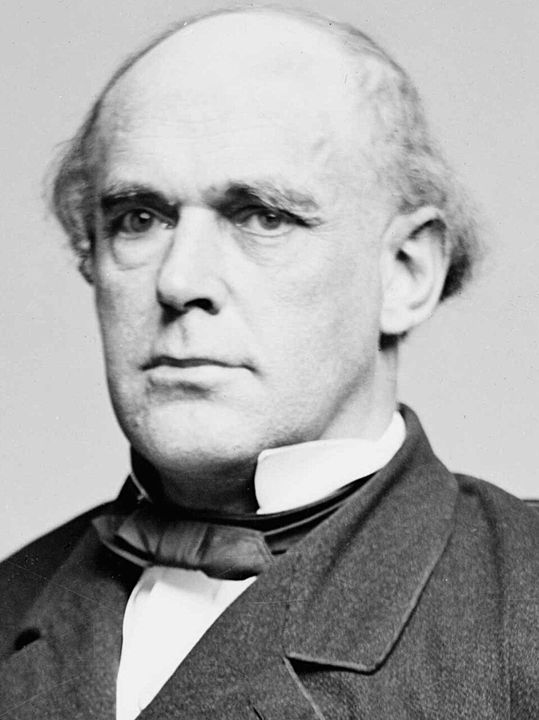
- Salmon P. Chase: Chief Justice and former Treasury Secretary who wrote for the Court
- Samuel Nelson: Senior associate justice who dissented
- David Davis: Justice who joined the dissent

Summary
Before the Civil War the paper money of the United States consisted chiefly of notes issued by hundreds of state-chartered banks, of uneven credit and value. During the war Congress created a national currency: United States notes issued by the Treasury, and notes of new national banks chartered under the National Bank Acts of 1863 and 1864. To drive the state notes out of circulation, Congress in 1865 and 1866 imposed a tax of ten percent on any state-bank notes paid out by a bank after mid-1866. The Veazie Bank of Bangor, chartered by Maine in 1848, paid the tax and then challenged it in a suit against Fenno, the federal revenue collector. The judges of the federal circuit court in Maine divided and certified questions to the Supreme Court. The bank pressed two arguments. First, the levy was a direct tax, which the Constitution requires to be apportioned among the states by population, and this one was not. Second, it struck at a franchise the state had lawfully granted, and its very size showed an intent to destroy the state banks, an object outside federal power. The government answered that the tax was an ordinary duty on contracts or property and that Congress could protect the currency it had created. On 13 December 1869 the Court upheld the tax, six to two, in an opinion by Chief Justice Chase. Reviewing the Constitutional Convention, the 1796 carriage-tax case Hylton v. United States and the practice of Congress since 1798, Chase concluded that direct taxes had been understood to mean only capitation taxes and taxes on land, so a tax on bank notes was an excise or duty that need not be apportioned. The tax fell not on the bank's franchise but on the notes issued under it. To the charge that it was excessive, Chase replied that the courts cannot limit the legislature's acknowledged powers; the remedy for a burdensome tax lies with the voters. He added that Congress, having undertaken to provide a uniform national currency, may restrain the circulation of notes not issued under its authority. Justice Nelson, joined by Justice Davis, dissented: the power to charter banks was reserved to the states, and a federal tax on that power, plainly intended to destroy it, invaded state sovereignty much as a state tax on federal bonds would invade federal authority. The library text gives Chase's opinion and Nelson's dissent in full, without the reporter's headnotes. Chase's narrow definition of direct taxes was later limited by Pollock v. Farmers' Loan & Trust Co. (1895). The ten percent tax remained in force, and state-bank notes largely disappeared, leaving national bank notes and greenbacks as the country's paper currency.
Virtues in this work
- Prudence: Chase builds his definition of direct taxes patiently from the Convention, early decisions and seventy years of congressional practice.
- Humility: Chase declines to substitute the Court's judgment of a tax's wisdom for that of elected legislators answerable to the people.
- Fortitude: Nelson, the Court's senior member, defends the reserved powers of the states against a strong current of wartime national legislation.
Plot or Argument
- The currency before and during the war
Chase surveys the state-bank notes that made up the circulating medium in 1861 and the wartime statutes that created United States notes, national banks and, by 1866, a ten percent tax on state-bank circulation.
- Is it a direct tax?
After noting that political economists offer no settled definition, Chase turns to the Convention debates, the carriage-tax decision of 1796 and every federal direct tax from 1798 to 1861, and concludes that direct taxes have meant capitation taxes and taxes on land.
- The franchise objection
The tax is laid not on the bank's charter but on notes issued under it, much as a tax might fall on a railroad's tickets; franchises themselves are property and may in many cases be taxed.
- Excessive taxation and the courts
Chase declines to strike down a tax as too heavy, holding that the legislature answers to the people for burdensome taxation, and adds that Congress may restrain notes not issued under its authority in order to secure a sound and uniform currency.
- Nelson's dissent
Nelson traces the unbroken history of state banks since 1787 and the Court's recognition of their legitimacy, argues that the power to charter them is a reserved power of sovereign states, and concludes that a tax aimed at that power, and fatal to the banks in practice, is unconstitutional.
Characters
- Veazie Bank, plaintiff
Bangor, Maine, bank chartered in 1848 with a capital of $200,000 that paid the ten percent tax under protest and sued to recover it.
- Fenno, defendant
Federal collector of internal revenue in Maine who collected the tax.
- Chief Justice Salmon P. Chase, author of the opinion of the Court
Architect of the national banking system as Treasury Secretary, who upheld the tax protecting the national currency.
- Justice Samuel Nelson, dissenter
New York jurist who defended the reserved power of the states to charter banks of issue.
- Justice David Davis, joined the dissent
Illinois lawyer and Lincoln's former campaign manager who joined Nelson.
Lessons
What is a direct tax?
The Constitution requires direct taxes to be apportioned among the states by population but never defines them. Chase answers the question by consulting the Convention debates, an early decision and seventy years of congressional practice, a model of interpreting an uncertain term by history and usage.
- Why does Chase say the definitions of political economists, including Adam Smith, give little help?
- What kinds of evidence does Chase use to determine the meaning of direct taxes?
- Should long practice by Congress count as evidence of what the Constitution means?
Taxing to regulate
The ten percent tax raised little revenue; its purpose was to remove state notes from circulation. Chase upholds it both as a duty on property and as a means of securing the national currency, while Nelson regards a tax designed to destroy as no tax at all but an attack on reserved state power.
- What two grounds does Chase give for upholding the tax?
- Why does Nelson think the consequences of the tax reveal its purpose?
- May a legislature use a tax to accomplish something it could not order directly?
Who checks the taxing power?
Chase holds that judges cannot limit an acknowledged power because it is exercised heavily; the check is the ballot. Nelson, drawing on McCulloch's warning about the power to tax, argues that the federal system itself protects each government's essential functions from the other's taxation.
- According to Chase, to whom is the legislature responsible when it taxes oppressively?
- How does Nelson use the rule that states may not tax federal bonds?
- Is the voters' judgment a sufficient safeguard against excessive taxation?
A uniform national currency
Chase describes a currency for the entire country made up of coin, United States notes and national bank notes, and holds that Congress may protect it from competing issues. The opinion marks a shift from a patchwork of local paper to a national monetary system.
- What problems with state-bank notes does Chase describe at the start of the war?
- Why does Chase think Congress's power over the currency would be futile without the power to restrain other notes?
Context
From the expiration of the Second Bank of the United States in 1836 until the Civil War, the country's paper money consisted of notes of state-chartered banks, which varied widely in soundness and were often discounted far from home. Wartime finance led Secretary Chase and Congress to create the greenbacks and a system of nationally chartered banks whose notes were backed by federal bonds. When few state banks converted to national charters, Congress used the tax power to make continued note issues unprofitable.
Composition
The tax provision was enacted in March 1865 and re-enacted in broader form in July 1866. The Veazie Bank's suit reached the Court on certified questions from the Circuit Court for the District of Maine, and the decision was announced in December 1869. Chase's opinion carefully reserved the separate question of legal tender, which the Court decided two months later in Hepburn v. Griswold.
Reception
The decision confirmed the federal government's control of the paper currency and became a leading authority for the use of taxation to regulate, cited in later cases on federal taxes with regulatory aims. Its narrow reading of direct taxes guided Congress until Pollock in 1895. Many state banks survived by turning to deposit banking and checks instead of notes, a development economic historians link to the decision.
Comparisons
- mcculloch-v-maryland
Marshall's line that the power to tax involves the power to destroy is reversed in direction here, as a federal tax is used against state-chartered banks.
- hepburn-v-griswold
Two months later Chase, who in Veazie reserved the legal tender question, held that greenbacks could not be legal tender for earlier debts.
- pollock-v-farmers-loan-and-trust
In 1895 the Court held a tax on income from property to be a direct tax, departing from the narrow definition Chase drew from congressional practice.
- the-wealth-of-nations
Chase mentions Smith's treatise as the leading work of economics known to the framers while finding that it does not settle the constitutional meaning of direct taxes.
- hamiltons-reports-and-opinion-on-the-bank
Hamilton's case for a national bank and a uniform currency foreshadows the national banking system that the tax was designed to protect.
Quotes
Frequently cited
“The power to tax may be exercised oppressively upon persons, but the responsibility of the legislature is not to the courts, but to the people by whom its members are elected.”
“There was, then, no National currency except coin; there was no general regulation of any other by National legislation; and no National taxation was imposed in any form on the State bank circulation.”
“It may be rightly affirmed, therefore, that in the practical construction of the Constitution by Congress, direct taxes have been limited to taxes on land and appurtenances, and taxes on polls, or capitation taxes.”
“Without this power, indeed, its attempts to secure a sound and uniform currency for the country must be futile.”
“It is, simply, a mode by which the powers or faculties of the States, to incorporate banks, are subjected to taxation, and, which, if maintainable, may annihilate those powers.”
“It is sufficient to add, that the burden of the tax, while it has encouraged these banks, has proved fatal to those of the States; and, if we are at liberty to judge of the purpose of an act, from the consequences that have followed, it is not, perhaps, going too far to say, that these consequences were intended.”
For Students
A reading companion for classical Christian high school students. See the student guide.
Reading Guide
Watch for
- Chase's description of the bank notes in circulation at the start of the war.
- The question Rufus King asked at the Convention about direct taxation.
- Chase's list of federal direct taxes from 1798 to 1861.
- The comparison between bank notes and a railroad's tickets and bills of lading.
- Nelson's comparison with the exemption of federal bonds from state taxation.
Key terms and names
- Direct tax
- A tax the Constitution requires to be divided among the states according to population; the Court here limited it to head taxes and taxes on land.
- Apportionment
- Dividing a tax among the states in proportion to their populations as counted in the census.
- Excise
- A tax on the making, sale or use of goods or on an activity, which must be uniform throughout the country.
- Franchise
- A special right conferred by a government, such as a corporate charter allowing a bank to issue notes.
- Capitation tax
- A tax of a fixed amount on each person; also called a poll tax.
- Certificate of division
- A procedure by which two circuit judges who disagreed on a legal question sent it to the Supreme Court for decision.
Seminar Questions
- Comprehension What were the two main arguments made against the ten percent tax?
- Comprehension What three kinds of paper and coin does Chase say make up the national currency?
- Interpretation How does Chase distinguish a tax on a bank's franchise from a tax on the notes it issues?
- Interpretation Why does Nelson think that taxing the power to create banks threatens other state corporations as well?
- Interpretation In what way does this case turn McCulloch v. Maryland's concern about the power to tax in the opposite direction?
- Big Question Should courts ever look past the form of a tax to judge whether its real purpose is to regulate or destroy?
Faith Connections
- Matthew 22:19-21 (Scripture)
Shown a coin, Jesus asks whose image and inscription it bears and says to render to Caesar what is Caesar's, a text often cited on the relation of currency to the authority that issues it.
- Proverbs 20:10 (Scripture)
Divers weights and divers measures are called an abomination, a standard relevant to Chase's concern for a currency uniform in value across the country.
- Adam Smith, The Wealth of Nations, Book II, Chapter 2 (Great Conversation)
Smith's discussion of bank paper and its circulation formed part of the economic learning Chase consulted and found inconclusive on the constitutional question.
Logic and Rhetoric
Central argument: Chase argues that direct taxes, by history and practice, mean only capitation and land taxes, so a tax on bank notes needs no apportionment; that it falls on property issued under a franchise rather than on the franchise; that courts cannot curb a tax for being heavy; and that Congress may protect the national currency it has created. Nelson replies that the states' reserved power to charter banks cannot be taxed out of existence by the federal government.
Rhetorical device: argument from historical practice. Chase lists each federal direct tax from 1798 to 1861 before concluding, in quote 1, how Congress itself had construed the term.
Debate: Resolved: that Congress may use its taxing power to drive state-bank notes out of circulation.
Memory Work
The power to tax may be exercised oppressively upon persons, but the responsibility of the legislature is not to the courts, but to the people by whom its members are elected.
It is, simply, a mode by which the powers or faculties of the States, to incorporate banks, are subjected to taxation, and, which, if maintainable, may annihilate those powers.
Writing Prompts
Essay: Explain Chase's reasons for holding that the tax on state-bank notes was not a direct tax, and evaluate the strength of his historical evidence.
Comparison with McCulloch v. Maryland: Compare Marshall's 1819 refusal to let Maryland tax a federal bank with Chase's 1869 approval of a federal tax that drove state-bank notes from circulation, and explain whether the two decisions rest on a consistent principle.
Medical Lens
The case turns on bank notes, the meaning of direct taxation and the reserved powers of the states; nothing in it touches health or medicine.
Creative Prompts
- Classroom
Run a moot court on the certified questions from Maine: one team argues for the Veazie Bank that the tax is direct and destructive, another for the collector that it is a valid duty protecting the national currency.
- Essay
Imitating Chase's method, write a short historical brief on what the framers meant by direct taxes, using the Convention exchange in which Rufus King asked the question and no one answered.
- Dialogue
Write a conversation in 1866 between the cashier of a small Maine state bank and a merchant deciding whether to accept its notes or insist on greenbacks.
- Essay
Compare a pre-1860 state bank note with a national bank note of the 1870s, using images from a museum collection, and explain what the change in currency shows about the growth of federal power.
Further Reading
- Sovereignty and an Empty Purse: Banks and Politics in the Civil War, Bray Hammond
Account of Chase's wartime finance, the greenbacks and the national banking acts.
- Banks and Politics in America from the Revolution to the Civil War, Bray Hammond
Pulitzer Prize-winning history of the state and national banks whose notes the tax addressed.
- Salmon P. Chase: A Biography, John Niven
Life of the Treasury Secretary and Chief Justice who designed and then defended the national currency.
Verification notes
Four quotations from Chase and two from Nelson were each found by Grep as exact substrings of content/texts/veazie-bank-v-fenno.txt. The bank's 1848 Maine charter and $200,000 capital appear in Nelson's dissent; the procedural posture (certified questions from the Maine circuit court) appears in Chase's closing lines. The vote is stated as 6-2 following the task file; the collector's given name and the decision date are from standard references rather than the stored text.
- The vote is given here as 6-2 (Chase with Grier, Clifford, Swayne, Miller and Field; Nelson and Davis dissenting), but some references give 7-2 or 5-2; confirm against the U.S. Reports.
- Confirm the decision date of 13 December 1869 and the collector's full name.
- Confirm that the bank paid the tax and sued to recover it, rather than resisting collection.