Work record
Watership Down
1972 · Postwar Contemporary · Novel · English
Abstract
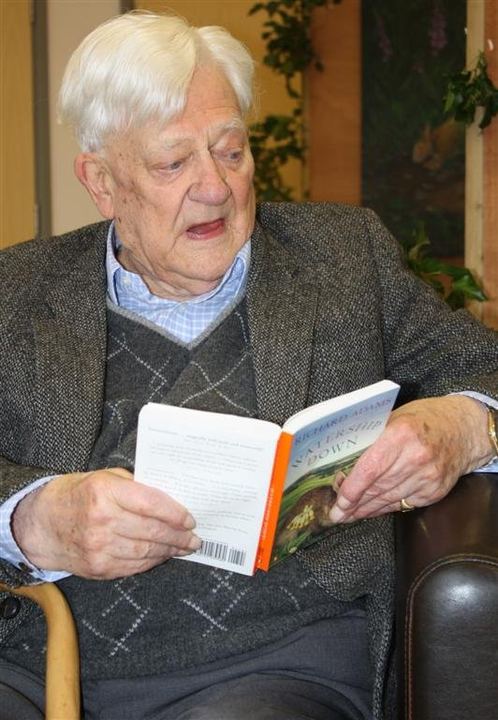
Background. A civil servant and veteran of Arnhem improvised the tale on drives to Stratford for his two girls, borrowing rabbit biology from Lockley's field study and the geography of his own boyhood downs.
Plot. Warned by a seer of coming slaughter, a few young bucks desert their doomed home, escape a warren that tolerates a farmer's wires, and dig in on a chalk ridge. Lacking mates, they turn to a regimented stronghold commanded by a scarred general; a spy's rescue of its does provokes a siege, broken only when the chief looses a farm dog on the besiegers.
Structure. Realistic adventure alternates with myths of the trickster El-ahrairah told round the burrows, and the narrator steps back at times to explain rabbit senses and ways. A glossary of Lapine words closes the book, and the quotations heading each chapter set the animals' ordeal beside human literature from Greek tragedy to Victorian verse.
Themes. Good rule versus tyranny, the courage of the weak, the cost of comfortable silence, exile and refounding, and storytelling as the memory of a people.
Significance. Turned down repeatedly before a small London house took it, the debut won Britain's chief children's book award, crossed over to adult readers worldwide, and inspired a celebrated 1978 animated film.
Main characters
- Hazel: Unassuming buck who grows into the founder-chief of a new warren
- Fiver: His runt brother, gifted with prophetic sight
- Bigwig: Fighter and spy behind enemy lines
- Blackberry: Inventive thinker of the group
- Kehaar: Gull nursed back to health who becomes an ally
- General Woundwort: Despotic master of Efrafa
- Hyzenthlay: Doe who conspires to escape Efrafa

Summary
Watership Down is the epic of a small band of rabbits who leave their home to found a new one. In the Sandleford warren in Berkshire, a small, nervous rabbit named Fiver, who has visions, sees the field covered in blood and begs his brother Hazel to warn the Chief Rabbit, the Threarah, who dismisses them. Hazel leads a handful of followers away by night, among them Bigwig, a strong officer of the Owsla, the warren's guard; clever Blackberry; Dandelion, the fast runner and storyteller; Silver; and tiny Pipkin. They float the weakest across the river Enborne on a board, cross a road and a heath, and are welcomed by a warren of large, sleek, well-fed rabbits led by Cowslip, who make art and poetry but will not answer questions about where they go. Fiver senses death there, and when Bigwig is caught in a wire snare the truth comes out: a farmer feeds the warren and harvests it, and the rabbits have learned not to speak of it. Freed, Bigwig and the band move on with Strawberry, a rabbit of that warren, and climb to the high, quiet chalk down of Watership. Two survivors, Holly and Bluebell, arrive with the news that men gassed and bulldozed Sandleford for a housing development. The new warren has no does. Hazel befriends Kehaar, an injured black-headed gull, who scouts and finds Efrafa, a large warren run as a police state by General Woundwort, where rabbits are marked, confined and kept underground. A raid on Nuthanger Farm frees hutch rabbits but leaves Hazel shot in the leg; Fiver finds him in a drain by following a dream. Bigwig enters Efrafa in disguise as a would-be officer, wins the trust of the doe Hyzenthlay and the mutilated prisoner Blackavar, and in a thunderstorm leads a breakout to the river, where Kehaar attacks the pursuers and the rabbits escape on a moored punt. Woundwort follows to Watership Down with his army. While Bigwig holds a tunnel against Woundwort, Hazel goes to Nuthanger, gnaws through the farm dog's rope, and leads the dog back to the down, where it routs the Efrafans; Woundwort stands to fight and is never seen again. Hazel, caught by a cat, is rescued by Lucy, the farmer's daughter, and taken back to the down in a doctor's car. Peace follows, with a shared warren at Caesar's Belt under Captain Campion. In the epilogue the aged Hazel is invited by the Black Rabbit of Inlé to join his Owsla and goes gently. Throughout, Dandelion and others tell tales of the rabbit trickster-hero El-ahrairah. Rejected by several publishers, the book was issued by Rex Collings in London in November 1972 and won the Carnegie Medal.
Virtues in this work
- Prudence: Hazel heeds Fiver's warning and leads the band away from Sandleford and later from Cowslip's warren.
- Fortitude: Bigwig holds the narrow run against Woundwort himself during the siege of the Honeycomb.
- Magnanimity: Hazel offers Woundwort a shared peace between the warrens before the attack, and the final settlement spares Efrafa.
- Friendship: Fiver follows his dream to find his wounded brother in the drain after the Nuthanger raid.
Plot or Argument
- Part I: The Journey
Fiver's vision, the flight from Sandleford, the crossing of the Enborne and the heath, the tale of Frith's blessing, the stay at Cowslip's warren, Bigwig in the snare, and the climb to Watership Down.
- Part II: On Watership Down
Digging the Honeycomb; Holly and Bluebell's account of Sandleford's destruction; Kehaar the gull; the raid on Nuthanger Farm, Hazel's wound and Fiver's dream that finds him; Holly's failed embassy to Efrafa.
- Part III: Efrafa
Bigwig infiltrates Woundwort's warren, plots with Hyzenthlay and Blackavar, and leads the does out in a thunderstorm to the river and the punt while Kehaar strikes the patrol.
- Part IV: Hazel-rah
Woundwort's attack on Watership Down, Bigwig's stand in the tunnel, Hazel's release of the Nuthanger dog, Woundwort's disappearance, Lucy's rescue of Hazel, and the peace with Efrafa.
- Epilogue
Years later, in a flourishing warren, the old Hazel is visited by the Black Rabbit of Inlé and leaves his body to follow him.
- Interpolated tales of El-ahrairah
Told at intervals: the Blessing of El-ahrairah by Frith, King Darzin's lettuce, the Trial of El-ahrairah, El-ahrairah and the Black Rabbit of Inlé, and Rowsby Woof and the Fairy Wogdog.
Characters
- Hazel, leader, later Hazel-rah
Thoughtful young buck who becomes Chief Rabbit by courage, fairness and listening to others.
- Fiver, seer
Hazel's small brother, whose visions warn of danger and guide the band.
- Bigwig (Thlayli), warrior
Big former Owsla officer who goes undercover in Efrafa and holds the tunnel against Woundwort.
- Blackberry, planner
Clever rabbit who works out the raft, the punt and other tricks.
- Dandelion, storyteller
Swift runner who tells the band's tales of El-ahrairah.
- Pipkin, youngest of the band
Small, frightened rabbit devoted to Hazel.
- Holly, former Captain of the Owsla
Officer who first tried to arrest the deserters and later joins them after Sandleford falls.
- Kehaar, black-headed gull
Wounded, blustering seabird who repays the rabbits' care as scout and ally.
- General Woundwort, ruler of Efrafa
Huge, fearless, tyrannical founder of a warren run by marks, patrols and fear.
- Hyzenthlay, Efrafan doe
Wise doe with a touch of Fiver's insight who helps plan the escape.
- Cowslip, rabbit of the snared warren
Polished host whose warren lives fed and silent beside the farmer's wires.
- El-ahrairah, folk hero of the rabbits
Prince with a Thousand Enemies, trickster of the rabbits' legends.
Lessons
Leadership that listens
Hazel is neither the strongest nor the cleverest rabbit in the band, but he trusts Fiver's visions, uses Blackberry's ideas and Bigwig's strength, and takes the dangerous jobs himself. Woundwort, by contrast, commands by fear and cannot imagine an enemy who will not fight on his terms.
- Why do the others follow Hazel when Bigwig is stronger?
- How does Hazel's leadership differ from Woundwort's?
- What does Hazel do when he makes a mistake, as in the Nuthanger raid?
The comfortable trap
Cowslip's warren has food, shelter and poetry, but its rabbits have bought comfort by agreeing not to see the snares. Adams shows how a community can grow polished and sad by refusing to name the truth about its own life.
- Why does Fiver refuse to stay at Cowslip's warren?
- Why will no rabbit there answer a question beginning with where?
Order and freedom
Efrafa is safe from elil because Woundwort controls every movement, but no one there may choose anything. The book weighs three kinds of warren: the careless one at Sandleford, the deceived one at Cowslip's, and the tyrannous one at Efrafa, against the free and cooperative warren Hazel builds.
- Is Efrafa a bad place to live, or only a bad place to be free?
- What does Hazel's warren have that none of the others do?
- Why does the peace at the end place Efrafa under Campion rather than destroying it?
Stories that hold a people together
The rabbits carry no possessions, only their tales of El-ahrairah, and they tell them when they are most afraid. By the epilogue Hazel's own deeds have become stories, and it is hard to tell them apart from the legends.
- Why does Dandelion tell a story on the first dangerous nights of the journey?
- How does the tale of El-ahrairah and the Black Rabbit prepare for the epilogue?
Context
Adams set the story in the real landscape of north Hampshire and Berkshire, around Sandleford, Nuthanger Farm, Watership Down and the river Test, and based the rabbits' habits on the naturalist R. M. Lockley's The Private Life of the Rabbit (1964). Postwar Britain saw rapid building on farmland, and the destruction of Sandleford for a housing estate reflects that. Adams drew on his wartime service: he said Hazel was modelled on an officer he served under in 1944, and the rabbits' comradeship and danger recall soldiers in the field. Each chapter opens with an epigraph from writers such as Aeschylus, Shakespeare, Malory, Bunyan and Tennyson.
Composition
The story began as tales Adams told his daughters Juliet and Rosamond on car journeys, and the book is dedicated to them. He wrote it down over about eighteen months, invented the rabbit language Lapine for it, and saw it rejected by several publishers before the small firm of Rex Collings published it in November 1972. Macmillan issued it in the United States in 1974.
Reception
It won the Carnegie Medal and the Guardian Children's Fiction Prize and became a best-seller in Britain and America, read by adults as much as children. Martin Rosen's animated film of 1978 was a major success, and later television adaptations followed. Adams returned to the rabbits in Tales from Watership Down (1996).
Comparisons
- the-aeneid
Both follow refugees fleeing a destroyed home, guided by prophecy, through false resting places toward a new settlement, and both end with war to secure wives and a future for the new people.
- the-odyssey
Hazel's band meets a seductive land of comfort and forgetting at Cowslip's warren, as Odysseus's crew meets the Lotus-eaters, and survives by cunning more than force.
- animal-farm
Both use animal societies to examine political order: Orwell satirises a revolution become tyranny, while Adams sets Woundwort's police-state warren against a free one founded by consent.
- the-wind-in-the-willows
Two English classics of the southern countryside with talking animals, though Grahame's riverbank is a gentle refuge and Adams's downland is a place of real predators and death.
- the-lord-of-the-rings
Both give a small people an invented language, a legendary past and a perilous journey, and both close with a departure into death or the West that is gentle rather than tragic.
- the-jungle-book
Kipling and Adams both give animal societies their own laws, councils and lore, and both make leadership in those societies earned rather than inherited.
Quotes
Frequently cited
“All the world will be your enemy, Prince with a Thousand Enemies, and whenever they catch you, they will kill you. But first they must catch you”
For Students
A reading companion for classical Christian high school students. See the student guide.
Reading Guide
Watch for
- Each time Hazel trusts Fiver's warnings, and the one time the others nearly ignore them at Cowslip's warren.
- The epigraphs at the head of each chapter, and how each one comments on what follows.
- Where the tales of El-ahrairah are told, and how each tale matches the danger the band is facing.
- How Woundwort's Efrafa is organised: Marks, Owsla patrols, Silflay at set times, and the Council Police.
- The help the rabbits receive from creatures outside their kind: Kehaar, the mouse Hazel saves, the dog, and the girl Lucy.
Key terms and names
- Owsla
- A warren's guard of strong rabbits around the Chief Rabbit. Bigwig and Holly both served in Sandleford's, and Efrafa's is a secret police.
- Tharn
- Lapine for frozen and stupefied with fear, the state rabbits fall into before headlights or a predator.
- Elil
- The thousand enemies of rabbits: foxes, stoats, hawks, cats, dogs and men.
- Silflay
- To go above ground to feed; in Efrafa it is allowed only by Mark and at fixed hours.
- El-ahrairah
- The Prince with a Thousand Enemies, the trickster hero of rabbit legend whose cunning Hazel's band imitates.
- The Black Rabbit of Inlé
- The cold, silent figure of death in rabbit lore, who in the epilogue comes kindly for the old Hazel.
- Efrafa
- General Woundwort's large, hidden warren, safe from predators but governed by strict marks and fear.
Seminar Questions
- Comprehension What does Fiver see at the start of the book, and why does the Threarah refuse to act on it?
- Comprehension What is the secret of Cowslip's warren, and how does the band discover it?
- Comprehension How does Hazel use the Nuthanger dog to save the warren from Woundwort?
- Interpretation Why does Adams interrupt the action with stories of El-ahrairah? Choose one tale and explain how it fits the moment it is told.
- Interpretation Bigwig could have challenged Hazel for leadership. Why does he follow him instead, and when does he show he has chosen to?
- Interpretation Woundwort is brave and has kept his rabbits safe. What makes him a villain?
- Big Question Is it better to live in a safe community where you have no freedom or in a free one full of danger?
Faith Connections
- Jeremiah 6:14 (Scripture)
The prophet condemns those who say peace, peace, when there is no peace. Cowslip's warren, comfortable and silent about the snares, lives by exactly that kind of false peace, and Fiver plays the unwelcome prophet.
- Genesis 12:1 (Scripture)
God calls Abram to leave his country for a land he will be shown. Hazel's band leaves Sandleford with no clear destination, trusting Fiver's sense that a high, safe place lies ahead.
- Mark 10:42-44 (Scripture)
Jesus contrasts rulers who lord it over others with the one who leads by serving. Woundwort rules Efrafa by force, while Hazel takes the risky tasks, such as the trip to free the dog, upon himself.
- Virgil, Aeneid, Books II-III (Great Conversation)
Aeneas flees burning Troy with a remnant of his people and is turned back from false resting places by omens until he reaches the land promised to him. Hazel's flight from Sandleford and his refusal to settle at Cowslip's warren follow the same founding pattern.
Logic and Rhetoric
Central argument: A community can fail by ignoring warnings, as Sandleford does, by living with a hidden evil for the sake of comfort, as Cowslip's warren does, or by trading freedom for safety, as Efrafa does. Hazel's warren survives because its leader listens to the weak, shares danger, and joins each member's gift to the common good. Therefore the strongest society is not the most controlled but the one bound by trust, courage and truthful speech.
Rhetorical device: epigraph. Every chapter opens with a quotation from a writer such as Aeschylus, Shakespeare, Malory or Bunyan, setting the rabbits' adventures beside the great human stories of war, exile and courage.
Debate: Resolved: Hazel was right to offer Woundwort peace before the siege rather than preparing only for battle.
Writing Prompts
Essay: Compare Hazel and Woundwort as leaders using three scenes, and argue what Adams believes makes a rabbit, or a person, fit to lead.
Comparison with Animal Farm: Both Efrafa and Animal Farm are animal societies that become tyrannies. Compare how each one controls its members and argue which book offers more hope that such tyranny can be resisted.
Medical Lens
Medicine is not a subject of the novel, but its attention to fear and injury interests a clinical reader. Fiver's visions come in trance-like states and dreams that leave him exhausted, and the book treats them as true foresight, not illness. Adams describes being tharn, the rabbit's freezing in terror before headlights or danger, with a naturalist's precision; readers sometimes connect it with the freeze response in modern stress physiology, a comparison the book itself does not make. Holly and Bluebell arrive from the gassed Sandleford warren shaken and half-incoherent, and Holly's account of the poisoned runs is often read as a portrait of survivor shock, an interpretation in keeping with Adams's own war service. Physical wounds are frequent: Bigwig is half-strangled in the snare, Hazel is shot in the leg at Nuthanger and nursed back, and Blackavar's ears are torn as a punishment in Efrafa.
- Part I, opening chapters
Fiver's vision of the field covered in blood and his collapse into fear before the flight from Sandleford.
- Part I, the snare at Cowslip's warren
Bigwig is caught by a wire noose and nearly dies before the others dig out the peg.
- Part II, Holly's story
Holly and Bluebell, exhausted and shocked, tell how men gassed the Sandleford warren and filled in the runs.
- Part II, the Nuthanger raid
Hazel is shot by the farmer and lies wounded in a drain until Fiver, led by a dream, finds him.
Creative Prompts
- Fiction
Write a new tale of El-ahrairah in the style of Dandelion, in which the Prince outwits an enemy the rabbits have only recently met, such as a car or a gull.
- Classroom
Using an Ordnance Survey map of north Hampshire, trace the route from Sandleford to Watership Down and mark each stopping place.
- Essay
Compare the warrens of Sandleford, Cowslip, Efrafa and Watership Down as four kinds of society, and argue which flaw is most dangerous.
- Dialogue
Write the conversation between Hazel and Woundwort at the parley before the siege, then a second one in which Woundwort accepts Hazel's offer.
Further Reading
- Tales from Watership Down, Richard Adams
- The Private Life of the Rabbit, R. M. Lockley
- The Day Gone By, Richard Adams
Adams's autobiography.
- Shardik, Richard Adams
Verification notes
Plot, four-part structure with epilogue, origin as stories for Adams's daughters, the Lockley source, the rejections and Rex Collings's November 1972 publication, and the Carnegie Medal and Guardian Prize were checked at https://en.wikipedia.org/wiki/Watership_Down. The quote (a contiguous excerpt from Frith's blessing, Chapter 6) was checked at https://en.wikiquote.org/wiki/Richard_Adams (with chapter) and https://writersdigest.com/be-inspired/epic-quotes-from-watership-down-by-richard-adams. The line beginning My heart has joined the Thousand could not be located to a chapter and was not used.
- Text is under copyright; check quotations against an authorized edition before publication.
- Dating of the oral tellings to the late 1960s and the chapter count of 50.
- Year of the Guardian Children's Fiction Prize (believed 1973) and exact number of publishers who rejected the book.
- That the doctor who drives Lucy and Hazel to the down is visiting the farm on a house call.
- Exact chapter numbers for the snare, Holly's story and the Nuthanger raid (locators here are by part).
- Adams's unit and role in 1944; Wikipedia names Major John Gifford as the model for Hazel.