Work record
God's Grandeur
written 1877; published 1918 · 19th Century · Poetry · English
Abstract
Background. A Jesuit seminarian a few months from priesthood wrote this sonnet in the Clwyd hills, the same fertile season that produced The Windhover. Friends saw it in manuscript, yet print had to wait until Bridges assembled the posthumous edition after the First World War.
Content. Opening with a declaration that divine majesty saturates creation, the octave compares that majesty to flashing metal leaf and to oil pressed from fruit. It then laments that humanity ignores its Maker's authority, and describes ground tramped flat, blackened by commerce, coated in grime, and separated from feet by shoe leather. In the sestet the speaker insists that nature still holds an inexhaustible inner vitality, that dawn breaks again after dusk, and that this happens because the Third Person of the Trinity shelters the curved earth like a nesting bird.
Form. Clotted consonants, echoing vowels, and run-on syntax strain the traditional Italian frame. The sound grows thick and laborious in lines five through eight, then opens into airier music after the turn.
Themes. Sacramental vision of the created order, spiritual numbness brought on by industrial labor, and providential renewal are the poem's chief concerns.
Significance. Among the most frequently reprinted Christian poems of the Victorian era, it is now also read as one of the earliest English protests against the ecological cost of the factory age.
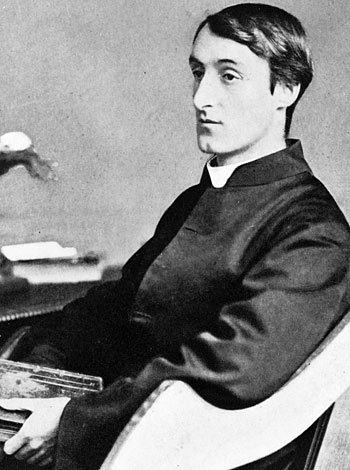

Summary
God's Grandeur is an Italian sonnet that Hopkins wrote in February and March 1877 at St Beuno's College in North Wales, where he was studying theology in the final months before his ordination as a Jesuit priest. Like most of his poems it went unpublished in his lifetime; Robert Bridges printed it in 1918, almost thirty years after the poet's death. The octave opens with a bold claim: the world is charged with the grandeur of God, charged as a battery or a storm cloud is charged. Two similes show how that hidden power breaks out. It flames like shaken gold foil catching the light, and it gathers like oil welling up from crushed olives or seeds. Then comes a question: why do men not reck his rod, that is, heed God's authority? The answer is a picture of industrial England. Generations have trod, have trod, have trod; everything is seared with trade, smeared with toil, and wears man's smudge and smell. The soil is bare, and the shod foot can no longer feel it. The sestet turns on the words And for all this. Nature is never spent; a dearest freshness lives deep down things. Even when the last light leaves the black West, morning springs at the brown brink of the east, because the Holy Ghost broods over the bent world with warm breast and with ah! bright wings. The closing image joins the Spirit brooding over the waters in Genesis to a mother bird warming her nest, and the interjection ah! lets the poet's own wonder break into the line. The poem is famous for its sound: dense alliteration, internal rhyme (seared, bleared, smeared), and heavily stressed lines that push against the iambic frame. It has become one of the most anthologized religious poems in English, read both as a hymn to the sacramental presence of God in creation and as an early lament for a landscape worn by industry.
Virtues in this work
- Piety: The sonnet's opening claim that the world is charged with God's grandeur calls the reader to reverent attention to the Creator in ordinary things like foil and oil.
- Hope: The sestet grounds confidence that morning will spring again not in human effort but in the Holy Ghost brooding over the bent world.
- Temperance: The picture of a land seared with trade and smeared with toil warns against a life so absorbed in getting and working that the senses go numb, being shod.
Plot or Argument
- The charged world (lines 1-4)
God's grandeur fills the world like a charge waiting to discharge. It flashes out like shaken foil and gathers like crushed oil, and the quatrain ends by asking why people no longer reck God's rod.
- The trodden earth (lines 5-8)
The answer is a vision of human labor wearing the world down: generations tramping the same ground, a land seared by trade and smeared with toil, bearing man's smudge and smell, the soil bare and the shod foot cut off from it.
- The freshness deep down things (lines 9-12)
The volta, And for all this, reverses the mood. Nature is never spent; freshness lives at the root of things, and after the last light leaves the West, morning springs up again at the eastern brink.
- The brooding Spirit (lines 13-14)
The reason for this renewal is given in the final couplet of the sestet: the Holy Ghost broods over the bent world like a bird over its nest, with warm breast and bright wings.
Lessons
Creation as a charged world
Hopkins treats God's presence in nature not as a decoration but as a power stored in things, ready to flame out. The poem trains the reader to expect glory in ordinary matter, such as foil or oil, and to see it as the work of a Creator who is still present.
- What does charged suggest in line 1 that a word like filled would not?
- Why might Hopkins choose humble images like foil and crushed oil to show divine grandeur?
- Where in your own surroundings might the charge flame out, if you were looking for it?
The weariness of trodden ground
Lines 5-8 imitate the grind of labor with repeated words and heavy stresses. Hopkins does not reject work, but he shows how a life of trade and toil can numb the senses, so that the foot, being shod, can no longer feel the earth.
- How does the triple have trod change the pace of the line?
- What is lost when the foot is shod, in the poem's terms?
- Is the fault in trade itself, or in the failure to reck God's rod while trading?
Hope grounded in the Spirit
The sestet's hope does not rest on human reform but on the Holy Ghost, who keeps brooding over the bent world. Renewal comes each morning as a gift, and the poem's last word, wings, leaves the reader under protection rather than judgment.
- Why does the poem begin its turn with And for all this?
- What two pictures does the word broods combine in line 14?
- How does the image of morning springing after the black West express Christian hope?
Context
Hopkins wrote in the high Victorian age of coal, railways, and factory towns, when writers such as John Ruskin were protesting the damage industry did to landscape and labor. As a Jesuit he was formed by the Spiritual Exercises of Ignatius of Loyola, which close with a contemplation of God dwelling and working in all creatures, and he admired the medieval theologian Duns Scotus, whose stress on the individual thisness of things fed his idea of inscape.
Composition
The sonnet dates from early 1877 at St Beuno's, during a year in which Hopkins wrote several of his best-known nature sonnets, including The Starlight Night and The Windhover. He sent copies to Robert Bridges, and in a letter he explained that shook foil meant gold leaf or tinsel shaken so that it gives off broad flashes of light. Hopkins was ordained priest in September 1877.
Reception
Bridges's 1918 edition of the Poems sold slowly, but the second edition of 1930 found a generation of modernist readers who prized Hopkins's compressed syntax and stressed rhythm. God's Grandeur is now one of his most widely taught poems and a staple of anthologies of religious verse, often read alongside The Windhover and Pied Beauty.
Comparisons
- tintern-abbey
Wordsworth senses a presence that rolls through all things, while Hopkins names that presence as the Holy Ghost; both poems set the deep life of nature against the din of towns and cities.
- the-tyger
Blake and Hopkins both face creation with hammering stresses and questions, but Blake's poem asks what hand could frame the tiger, whereas Hopkins's poem already knows whose grandeur charges the world.
- the-bible
Psalm 19 and Romans 1:20 teach that the heavens declare God's glory and that His invisible power is seen in the things He made, the claim of Hopkins's first line; Genesis 1:2 supplies the Spirit moving over the waters behind his final image.
- paradise-lost
Milton's opening invocation pictures the Spirit sitting dove-like and brooding on the vast abyss at creation, the same scriptural image Hopkins renews in his last two lines.
Quotes
Frequently cited
“THE world is charged with the grandeur of God.”
Frequently cited
“Generations have trod, have trod, have trod; And all is seared with trade; bleared, smeared with toil; And wears man's smudge and shares man's smell: the soil Is bare now, nor can foot feel, being shod.”
Frequently cited
“And for all this, nature is never spent; There lives the dearest freshness deep down things;”
Frequently cited
“Because the Holy Ghost over the bent World broods with warm breast and with ah! bright wings.”
“It will flame out, like shining from shook foil;”
For Students
A reading companion for classical Christian high school students. See the student guide.
Reading Guide
Watch for
- The two similes of lines 2-3: shining from shook foil and the ooze of oil crushed, with Crushed pushed onto the next line.
- The question at the end of line 4 and how lines 5-8 answer it.
- The triple have trod and the internal rhymes seared, bleared, smeared in lines 5-6.
- The turn at line 9, And for all this, and the movement from the black West to the brown brink eastward.
- The interjection ah! inside the last line, where the poet's own wonder interrupts the description.
Key terms and names
- Charged
- Filled with stored power, like an electrical battery or a loaded gun; in line 1 it also hints at a charge or responsibility laid on the world.
- Reck his rod
- To reck is to heed or take account of; the rod is God's authority or discipline, which the trading generations ignore.
- Shook foil
- Gold leaf or tinsel shaken so that it flashes; Hopkins chose the image to show grandeur breaking out suddenly.
- Petrarchan sonnet
- A fourteen-line poem divided into an eight-line octave and a six-line sestet; here the octave states the problem and the sestet answers it.
- Volta
- The turn in a sonnet's argument; in this poem it comes with the words And for all this at line 9.
- Broods
- Sits over eggs or young to warm them, and also thinks long and deeply; both senses describe the Holy Ghost in line 14.
- Sprung rhythm
- Hopkins's name for a metre counted by stresses rather than syllables; this sonnet keeps an iambic base but loads its lines with extra stresses in the same spirit.
Seminar Questions
- Comprehension What two comparisons does Hopkins use in lines 2-3 to show how God's grandeur appears?
- Comprehension What has happened to the soil and to the human foot by the end of line 8?
- Interpretation Why does the poem ask why men do not reck God's rod immediately after describing His grandeur? What connection is Hopkins drawing between neglect of God and the state of the land?
- Interpretation How does the sound of lines 5-8 differ from the sound of lines 9-14, and how does that difference support the argument?
- Interpretation Why does Hopkins describe the world as bent in line 13? What might bent mean beyond the curve of the horizon?
- Interpretation What does the image of a bird brooding with warm breast add to the doctrine of the Holy Spirit as Creator and Giver of life?
- Big Question If nature is never spent, does human carelessness toward creation matter less, or more?
- Big Question Can a person learn to perceive God's grandeur in the world, and if so, what habits make that possible?
Faith Connections
- Genesis 1:2 (Scripture)
The Spirit of God moving upon the face of the waters lies behind the final image of the Holy Ghost brooding over the bent world.
- Psalm 19:1-4 (Scripture)
The heavens declare the glory of God without speech or language, the same wordless proclamation Hopkins hears in flaming foil and morning light.
- Lamentations 3:22-23 (Scripture)
God's mercies are new every morning; Hopkins makes the daily return of morning at the eastern brink a sign of that faithfulness.
- Ignatius of Loyola, Spiritual Exercises, Contemplation to Attain Love (Church Fathers)
The closing contemplation of the Exercises asks the retreatant to see God dwelling and laboring in all creatures, a discipline Hopkins practiced as a Jesuit and turned into verse here.
Logic and Rhetoric
Central argument: The world is filled with God's grandeur; people have dulled themselves to it through generations of trade and toil; yet nature's freshness is never exhausted, because the Holy Ghost continually broods over creation; therefore renewal remains possible however worn the world becomes.
Rhetorical device: Alliteration and internal rhyme. Lines 5-8 pile up seared, bleared, smeared and smudge, smell, soil, so that the sound itself feels trodden and heavy before the sestet lightens it.
Debate: Resolved: In God's Grandeur, the cause of the world's dullness lies in human perception rather than in the world itself.
Memory Work
THE world is charged with the grandeur of God.
Because the Holy Ghost over the bent World broods with warm breast and with ah! bright wings.
Writing Prompts
Essay: Analyze how Hopkins uses the octave-sestet structure of the Petrarchan sonnet to move from complaint to hope in God's Grandeur, paying close attention to sound in lines 5-8 and 13-14.
Comparison with Lines Composed a Few Miles above Tintern Abbey: Wordsworth and Hopkins both find a deep life within nature that outlasts human weariness. Compare what each poet names as the source of that life and how each poem's form expresses it.
Creative Prompts
- Poetry
Write a fourteen-line poem about a worn place you know (a parking lot, a school hallway, a highway shoulder) whose first eight lines show its wear and whose last six find a freshness deep down in it.
- Classroom
Have students read lines 5-8 aloud in groups, marking every stressed syllable and every repeated sound, then discuss how the sound of the lines imitates the grind of generations treading the same ground.
- Essay
Explain how the volta at line 9 changes both the argument and the sound of God's Grandeur, and why Hopkins grounds the sestet's hope in the Holy Ghost rather than in nature alone.
Further Reading
- Gerard Manley Hopkins: The Major Works, Catherine Phillips (ed.)
Oxford World's Classics edition with poems, letters, journals, and notes on the 1877 sonnets.
- Gerard Manley Hopkins: A Life, Paul Mariani
- Gerard Manley Hopkins: A Very Private Life, Robert Bernard Martin
- A Reader's Guide to Gerard Manley Hopkins, Norman H. MacKenzie
Verification notes
The date of composition (early 1877, St Beuno's) and first publication by Bridges in 1918 are standard. Hopkins's explanation of shook foil comes from a letter to Bridges; it is paraphrased here, not quoted. The text follows Bridges's 1918 edition as stored, including the capitalized THE and the double hyphen after springs; the source file rejoins lines that the edition wraps for width.
No verification flags recorded.